
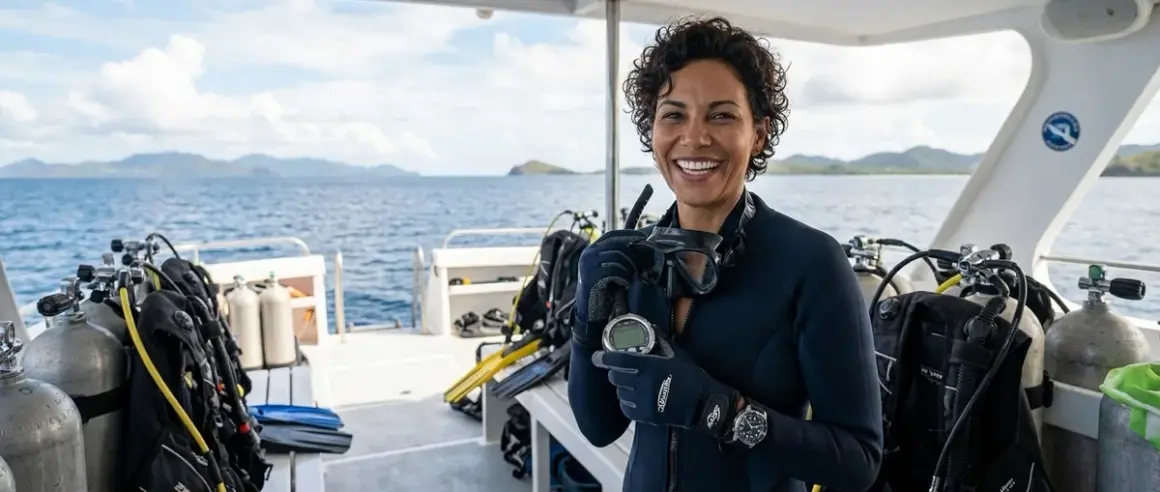

The first time I booked a liveaboard trip to a remote atoll, I was so excited I could barely sleep. Then, three days before departure, panic hit: what if something breaks? What if I forget something crucial? When you're diving from a boat that's hours from the nearest dive shop—or days from a proper repair facility—the essential gear for remote liveaboards becomes less about nice-to-haves and more about what keeps you in the water safely.
I learned this the hard way when my mask strap snapped on day two of a seven-day trip to the outer atolls. Thankfully, I'd packed a spare (after reading way too many forum posts about liveaboard disasters). That experience taught me that packing for remote diving is its own skill—one that's worth getting right before you're bobbing in the middle of nowhere with a gear problem.
What Are Remote Liveaboards?
Remote liveaboards are diving vessels that take you to dive sites far from shore—often to locations that can't be reached by day boats. We're talking about places like the Tubbataha Reef in the Philippines, the far-flung atolls of the Maldives, the Socorro Islands off Mexico, or the distant reefs of Indonesia's Banda Sea.
These trips typically last anywhere from five to fourteen days, and you're living on the boat the entire time. The boat becomes your hotel, your dive center, your restaurant, and your entire world. Some remote liveaboards travel eight to twelve hours overnight to reach dive sites, anchoring in protected waters where you might not see another vessel for days.
What makes them "remote" isn't just the distance—it's the lack of infrastructure. There's no running back to shore if you forget your wetsuit boots. There's no popping into a dive shop if your regulator starts breathing funny. The closest help might be a full day's travel away, and in some cases, emergency evacuation requires a helicopter or seaplane.
This isolation is exactly what makes these trips magical—you're diving pristine sites with almost no other divers around. But it also means you need to be completely self-sufficient with your gear. The essential gear for remote liveaboards isn't just about having the right equipment; it's about having backups, spares, and the knowledge to handle basic repairs when there's no technician around to bail you out.
How Remote Liveaboard Diving Works (And Why Your Gear Choices Matter)
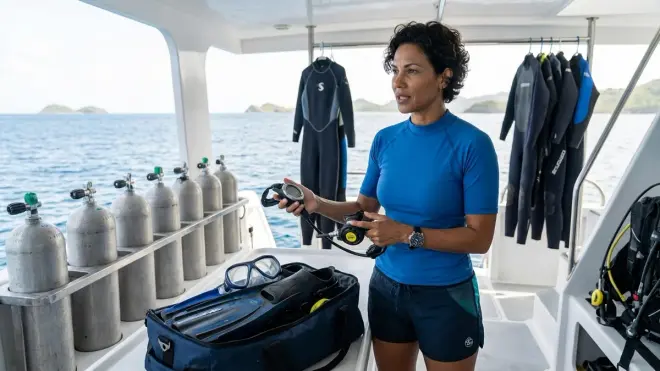
Understanding how a typical liveaboard operates helps you see why certain gear becomes crucial. Most remote liveaboard trips follow a rhythm: you'll do three to four dives per day, sometimes including night dives. Your gear stays set up in a designated area—usually a dive deck—and you rinse it in communal tanks between dives.
Here's where it gets different from shore diving: you're diving constantly. Your equipment doesn't get a full day to dry between dives. It lives in a humid, salt-soaked environment for days on end. O-rings that might last months in your local quarry can suddenly start to leak. Zippers that worked fine on weekend trips can seize up from the constant salt exposure.
The boat provides the tanks, weights, and basic rental gear if needed, but you're responsible for everything else. Most remote liveaboards have minimal spare equipment—maybe a few rental BCDs or regulators, but they're not stocked like a dive shop. I've seen boats with one spare mask in a size that fit nobody, or a single backup fin that was three sizes too large.
The diving itself tends to be more challenging than resort diving. You might encounter strong currents that require you to hold onto reef hooks. You'll do deeper dives that push your no-decompression limits. The water temperatures can vary dramatically—I've done trips where the surface was 82°F but thermoclines at 80 feet dropped it to 68°F.
This means your gear needs to perform reliably under varying conditions, and you need to be comfortable maintaining it yourself. When your dive computer battery dies at 3 a.m. while you're anchored off a deserted island, there's no running out to find a replacement. You either have a backup plan or you miss dives.
The Complete Liveaboard Diving Gear Checklist goes into more detail about daily routines and what you'll actually use, but the big takeaway is this: redundancy isn't paranoia on a remote liveaboard. It's smart planning.
Why Essential Gear for Remote Liveaboards Matters More Than Regular Dive Trips
I used to think I was being overly cautious when I packed two of everything for my first serious liveaboard. Then I watched a guy on day three realize his only dive computer had flooded. He spent the rest of the week either buddy-diving with shorter bottom times or sitting out dives entirely. That's a heartbreaking situation when you've paid thousands of dollars and traveled halfway around the world.
The cost-benefit equation changes completely when you're remote. On a day boat, if something breaks, you miss one dive and hit a shop afterward. On a liveaboard in the middle of the Pacific, one equipment failure can cost you three, five, or even ten dives—sometimes half your trip.
The safety implications are even bigger. When you're doing four dives a day for a week straight, sometimes in challenging conditions with deep profiles and occasional decompression obligations, your equipment needs to be absolutely reliable. There's no "I'll just skip today and get it checked tomorrow." The boat is moving, the dive sites are changing, and tomorrow's dives might be the highlight of the entire trip—the hammerhead cleaning station or the manta aggregation that only happens at dawn.
I've also learned that crew resources are limited. The dive guides on remote liveaboards are incredibly skilled, but they're focused on guiding, safety, and navigation. They're not equipment technicians. Most can help with basic troubleshooting—they've fixed more gear in the field than I'll ever touch—but they can't rebuild a regulator or replace a dive computer. Their spare parts locker usually contains O-rings, zip ties, and maybe some wetsuit cement, not replacement parts for every piece of equipment on board.
Environmental factors matter more too. The combination of constant salt exposure, high humidity, intense sun, and no proper drying time between dives is tough on gear. Equipment that's perfectly fine for weekend diving can start showing problems after three days of non-stop use. I've had a mask strap that lasted two years suddenly crack on day four of a liveaboard. I've watched wetsuit zippers that seemed fine start sticking after a week of never fully drying.
Understanding Understanding Liveaboard Equipment Requirements and Restrictions helps you know what boats expect from you and what they'll provide, but the bottom line is this: you're the backup plan. If you don't have it with you, it probably doesn't exist.
Core Equipment You Absolutely Need (Not Just "Should Have")
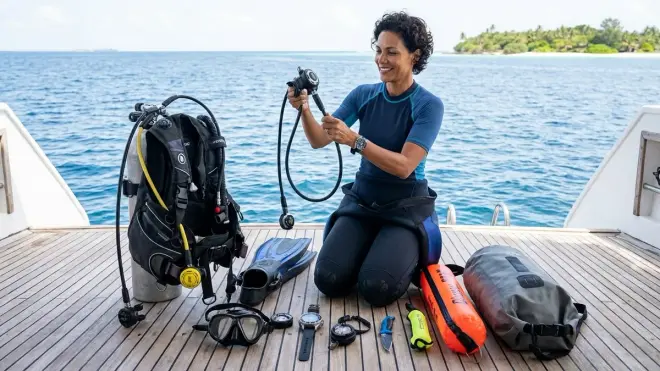
Let me walk you through what I actually pack now, after learning some lessons the expensive way. This isn't about bringing your entire garage—liveaboards have limited storage space—but about having the right redundancy where it counts.
Primary Dive Computer and Backup
Your dive computer is non-negotiable. I run a primary wrist computer and always bring a second one. This used to feel excessive until I talked to a technical diving instructor who pointed out something obvious: if your computer dies or floods, you're either done diving or you're relying on someone else's computer and their conservatism settings, which means shorter dives than you planned.
My primary is a Shearwater Peregrine, which I love for its readable screen and simple interface. My backup is an older console computer that I keep in my spare parts kit. It doesn't need to be fancy—it just needs to work. Some divers use a simple bottom timer and dive tables as their backup, which works if you're comfortable with tables and conservative planning.
The Best Dive Computers for Extended Liveaboard Trips breaks down what features actually matter for multi-day trips, but at minimum, make sure whatever backup you bring has a fresh battery and has been tested recently. I check both computers before every trip by doing a shallow pool dive or quarry dive to confirm they're tracking correctly.
Two Masks (Including One You've Actually Dived With)
This is where I see people make mistakes. They'll pack their favorite mask and then throw in a cheap spare they bought years ago but never used. Then the primary mask strap breaks, and they discover the "backup" leaks like crazy or the fit is terrible, and now they're miserable for a week.
I pack two masks that I've both used extensively. My primary is my everyday mask—perfectly fitted, comfortable, and fog-free with proper preparation. My backup is a slightly older mask that I rotate into service occasionally so I know it still works well. Both live in hard cases to prevent scratching or crushing in my luggage.
If you wear prescription lenses, this becomes even more critical. Bring the prescription mask as your primary and a standard mask with contact lenses as backup, or vice versa. Just don't find yourself remote with no vision options.
Regulator with Backup Second Stage or Complete Spare Regulator
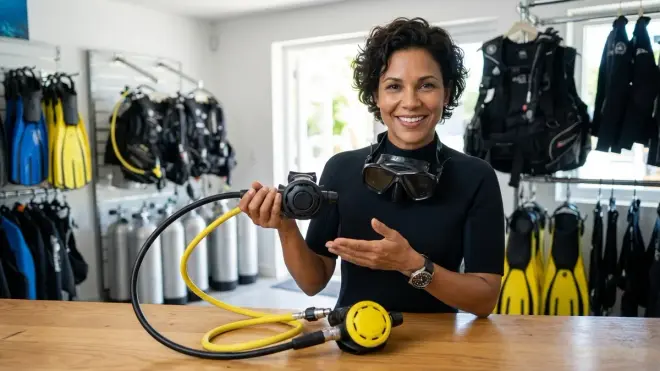
Here's where opinions split. Some divers bring one regulator setup with an octopus (alternate air source) and trust that system completely. Others bring a complete spare regulator. I fall somewhere in the middle, leaning toward the spare.
I bring my primary regulator setup—first stage, primary second stage, octopus, and gauges. Then I bring a compact second regulator in my checked luggage, completely separate. The Complete Guide to Scuba Regulators: How They Work, What to Look For, and How to Choose explains why regulators are so reliable that a spare might seem excessive, and that's fair—modern regulators rarely fail catastrophically.
But here's what I've seen happen: a first stage develops a slight freeflow that gets worse throughout the trip. An octopus holder breaks and the octopus keeps dragging on the reef. A LP hose develops a pinhole leak. None of these are dangerous failures, but they're annoying enough that you'd want to swap to backup equipment if you had it.
If you're doing a shorter liveaboard (five days or less) and your primary regulator is recently serviced, a backup might be overkill. For longer trips or if your regulator is approaching its service interval, I'd bring a spare. The How to Service a Scuba Regulator: Complete Maintenance Guide and Schedule article explains service timing in detail, but as a rule of thumb, if your regulator is within three months of needing service, get it done before the trip or bring a backup.
One thing I never skip: making sure my regulator is DIN or yoke compatible with the boat's tanks. Most liveaboards will specify what connection type they use, and some provide adapters, but you don't want to discover a compatibility problem on boarding day. The DIN vs Yoke Regulator Connection: Which Valve Type Should You Choose? guide covers this in depth.
BCD That Fits Your Diving Style and Travel Constraints
Your BCD needs to work reliably for days straight without developing problems, and it needs to fit in your luggage without eating up all your weight allowance. This is one area where I see people struggle with the trade-off between features and packability.
I use a back-inflate BCD that packs down reasonably small—not the absolute lightest travel BCD, but one that I know works well in current and provides enough lift for all my gear. The Best Travel BCDs for Liveaboard Adventures compares options specifically for this use case, and the Jacket BCD vs Back Inflate BCD: Which Is Better for Your Diving Style? article helps you figure out which style suits you better.
Whatever you choose, make sure it's been thoroughly tested. A liveaboard is not the place to break in brand-new equipment. I want to know that my inflator button doesn't stick, that my dump valves work smoothly, that the straps stay adjusted where I set them, and that nothing weird happens when I'm hovering at my safety stop in current.
I don't bring a backup BCD—that's one place where I draw the line on redundancy. BCDs rarely fail completely, and if something does go wrong, boats usually have rental BCDs available as a last resort. But I do bring a BCD Pre-Dive Safety Checklist: Complete Buoyancy Compensator Inspection Guide mentality—I check it carefully before the trip and do quick inspections throughout the week.
Wetsuit or Drysuit Appropriate for the Destination
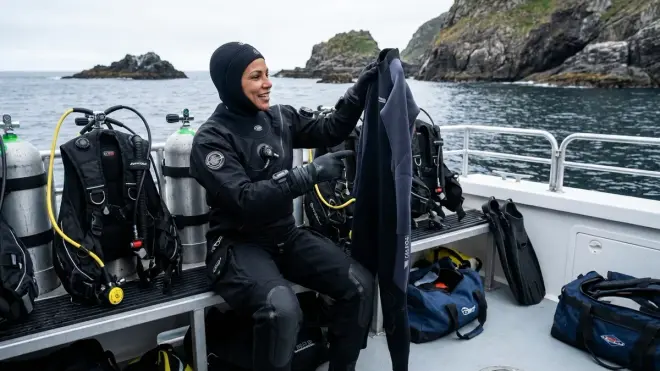
This seems obvious, but I've watched people suffer through entire trips because they brought the wrong thermal protection. The essential gear for remote liveaboards absolutely includes proper exposure protection, because being cold makes you miserable, burns through your air faster, and can even be dangerous on repetitive deep diving.
Research your destination's actual water temperatures at depth, not just surface temps. I made this mistake once diving the Galapagos—the surface was 76°F, so I brought a 3mm, but every dive hit thermoclines dropping to 60°F. I was freezing and couldn't enjoy some of the best diving of my life.
For most tropical liveaboards, a 3mm to 5mm wetsuit works well. For cooler destinations like California liveaboards or the Galapagos, you'll want 7mm or even a drysuit. The 5mm vs 7mm Wetsuit: Which Thickness Is Right for You? article helps you nail down the thickness, while How to Choose a Wetsuit for Scuba Diving covers fit and features.
I usually bring my primary wetsuit plus a rash guard or thin hooded vest I can layer underneath if I'm unexpectedly cold. A spare wetsuit is heavy and bulky—not practical for most people—but having some layering option gives you flexibility without killing your luggage weight.
Pay attention to wetsuit condition before a long trip. Check the zippers, seams, and any velcro closures. The Wetsuit Care and Maintenance Checklist for Divers walks through what to look for. A wetsuit that's fine for weekend dives might start showing problems when it never fully dries between dives for a week.
Fins That Actually Fit and Won't Cause Problems
Fins are easy to overlook because they seem simple, but a bad fin situation on a liveaboard is genuinely miserable. Blisters, cramping, or fins that keep falling off will wreck your week. Make sure your fins fit perfectly with the booties you're actually bringing—I've seen people pack fins that fit with thick-soled booties but then bring thin-soled ones on the trip.
I bring one pair of fins that I know work well for me. I don't bring backup fins unless I'm traveling to a destination known for extreme currents where fin failure would be a serious problem. Fins are bulky, and the risk-benefit doesn't justify the luggage space for most trips.
What I do bring: spare fin straps or spring straps. Straps break, buckles fail, and these parts are lightweight and easy to pack. I've fixed my own fins and helped other divers fix theirs more than once. Spring straps are more reliable than traditional rubber straps in my experience, but either way, having spares is smart.
Small Critical Items That Save Trips (The Stuff People Forget)
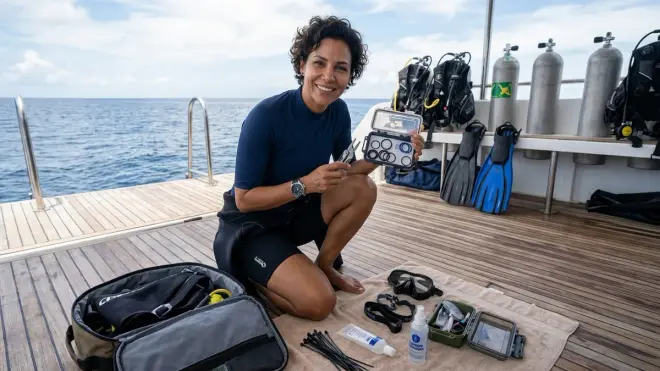
Beyond the big equipment, there are smaller items that become absolutely critical on remote liveaboards. I keep a dedicated "liveaboard spares kit" that lives in a small dry bag in my carry-on. Here's what's in it:
Multiple mask straps and a mask strap cover. Straps are cheap, lightweight, and they fail more often than anything else. I bring two spare straps for each mask. Takes up almost no space, costs almost nothing, but has saved my trip once and helped out other divers multiple times.
Extra O-rings in various sizes. Most liveaboards will have some O-rings, but having your own kit means you're not dependent on anyone else. I'm still figuring out exactly which sizes to bring—this confused me at first too—but generally you want O-rings that fit your DIN/yoke connection, your BCD inflator hose connection, and any camera housing you're using. A basic O-ring assortment kit from most dive shops covers the common sizes.
Silicone grease for O-rings. A small tube lasts forever and lets you maintain your own equipment. Every time you remove an O-ring or it gets dry, you should grease it before putting it back.
Cable ties (zip ties). These fix an astonishing number of problems: securing dangling hoses, repairing broken buckles, attaching accessories. I bring about ten in various sizes.
Wetsuit/drysuit cement or aquaseal. Small tears happen. Being able to patch them means you don't spend the rest of the trip with water seeping in.
Defog solution or baby shampoo. Your mask will fog. A lot. The standard spit method becomes less effective after multiple dives per day. Proper defog solution works better and is more hygienic. I prefer the gel type over spray.
Sunscreen and reef-safe after-sun care. You're going to get more sun exposure than you expect, even in a wetsuit. Hands, face, neck—everything exposed gets hammered. Many remote destinations have restrictions on sunscreen types, so research what's allowed. PADI's environmental guidelines provide good information about reef-safe products.
Basic tools: a multi-tool or small adjustable wrench can help with basic equipment adjustments. I bring a small screwdriver and Allen key set that fits my BCD and camera housing screws.
Spare batteries for everything: dive computer, camera, strobes, flashlight. This is one area where you can never have too many backups.
Seasickness medication. Even if you never get seasick on day boats, a multi-day ocean passage might be different. Better to have it and not need it.
Small flashlight or backup dive light. Even if you're not planning night dives, a small light helps you see into crevices, signal the divemaster, or navigate the boat at night. I bring a small primary light and a tiny backup that clips to my BCD.
The How to Maintain Dive Equipment During Multi-Day Liveaboards article goes deeper into daily maintenance routines, but having these spare parts means you can actually do the maintenance when needed.
Luggage and Organization: Getting Your Gear There and Back
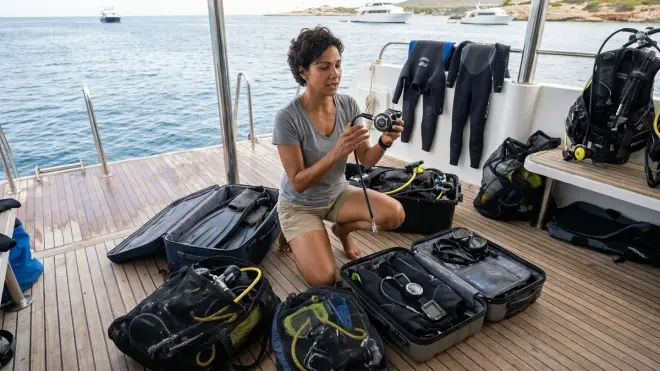
Here's something I didn't fully appreciate until my second liveaboard: how you pack matters almost as much as what you pack. The best gear in the world doesn't help if it's lost, damaged in transit, or so disorganized you can't find what you need.
I use a combination approach: a rolling duffel bag for most of my dive gear and a carry-on backpack with all my critical items and electronics. The How to Pack Scuba Gear for Remote Liveaboard Trips guide breaks down specific packing strategies, but my basic rule is this: anything that would ruin my trip if lost goes in carry-on.
That means my dive computers, regulators, mask, camera body, and spare parts kit all travel in my carry-on. Yes, it makes for a heavy carry-on, but I've never had issues with airlines when I explain it's dive equipment. My BCD, wetsuit, fins, and everything else goes in checked luggage.
For the checked bag, I use a Best Mesh Dive Bags for Quick-Draining Gear Storage on most trips, but for remote liveaboards I actually prefer a roller duffel with better structure and padding. My BCD needs some protection, and the long transit times to remote destinations mean luggage takes more abuse.
Inside my luggage, I use packing cubes and dry bags to organize by category: one bag for wetsuit and booties, one for tools and spare parts (except what's in my carry-on kit), one for non-dive clothing. This matters when you're living on a boat—you need to find things quickly in limited space.
Weight management is real. Most liveaboards are in remote destinations reached by smaller aircraft or boats, and weight restrictions can be stricter than you expect. I've learned to weigh my bags before I leave home. If you're over, you need to make hard choices: can you rent something at the boat? Can you leave behind a less-essential item?
Camera Gear and Underwater Photography Equipment
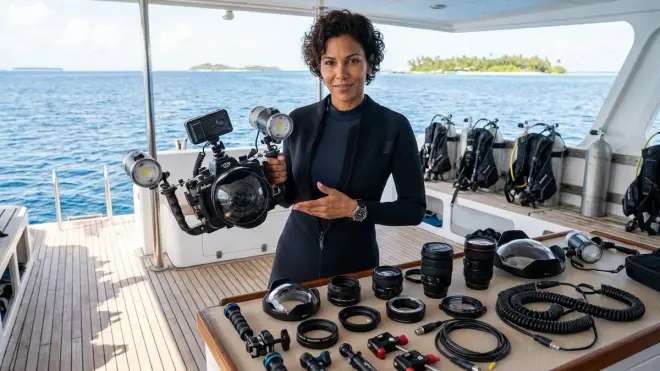
I'll admit I'm biased here—I love underwater photography and I always bring my camera on liveaboards. But camera gear adds complexity, weight, and risk. If you're into photography, the essential gear for remote liveaboards includes some camera-specific planning.
My complete camera kit includes my housing, strobes, arms, wet lenses, and all the associated accessories. This is where organization becomes critical. I keep my camera body, housing, and main lens in my carry-on. Strobes, arms, and extra lenses go in checked luggage, heavily padded with wetsuit pieces and towels.
O-ring maintenance becomes critical with camera housings. I check and grease my main housing O-ring before every single dive, not just once per day. A flooded housing on day two of a ten-day trip is heartbreaking. The Underwater Camera Maintenance Checklist: Pre-Dive and Post-Dive Care walks through the full routine I follow.
I bring extensive backup gear for photography: spare strobe batteries, backup sync cords, extra O-rings for the housing and any ports, silica gel packets to reduce internal condensation, and a rocket blower for sensor cleaning. I also bring basic tools to adjust my strobe arms and tighten any loose connections.
The Underwater Photography Gear Checklist: Everything You Need on Every Dive covers the complete list, but one thing I've learned: you need a system for managing memory cards and batteries on the boat. I use a small organizer that holds four memory cards—empty cards on one side, full cards on the other. I charge batteries every night and keep them in a labeled case so I always know which are charged.
Understanding your camera settings before the trip is essential. The How to Set Up Your Camera Settings for Underwater Photography guide and the Understanding Underwater Color Loss and White Balance Correction article help you dial in settings, but definitely test everything before you go. A liveaboard is not the time to be figuring out how your strobes sync or why your white balance is off.
If you're trying to decide between strobes and video lights, the Strobes vs Continuous Video Lights: Which Is Better for Underwater Photography? article compares both options. For liveaboards, I prefer strobes because the battery life is better for multiple dives per day, but video lights are simpler if you're just learning.
Documentation, Insurance, and Non-Gear Essentials
This section isn't fun or exciting, but it's part of the essential gear for remote liveaboards that people often overlook until they need it desperately.
Dive certification cards: I bring my physical certification card and also keep a photo of it on my phone and in my email. Some boats want to see your actual card, others accept photos. Having multiple backups means you're covered.
Dive insurance: I use DAN (Divers Alert Network) insurance, which covers emergency evacuation and chamber treatment. When you're in a remote location, evacuation costs can be astronomical—tens of thousands of dollars. The peace of mind is worth the relatively small annual fee. DAN's website has information about coverage options and what's included.
Dive log with recent dives: Many liveaboards want to see recent dive experience to assess your skill level. I keep a digital log (my dive computer tracks everything) and also maintain a paper logbook with my last 20 dives summarized. If you're doing advanced sites—deep dives, strong currents, or challenging conditions—having proof of recent experience matters.
Passport, visas, and copies: Obvious, but worth stating. I keep photos of my passport and any necessary visas on my phone in addition to the physical documents. For really remote destinations, you might need specific permits or documentation to enter certain marine areas.
Medical kit: Most boats have a first aid kit, but I bring personal medications, seasickness pills, antihistamines, and pain relievers. If you have any prescription medications, bring extra—don't pack just barely enough for the trip duration.
Emergency contact information: Written down, not just in your phone. If something happens to you, the crew needs to know who to contact and any relevant medical history.
How to Test Everything Before You Go
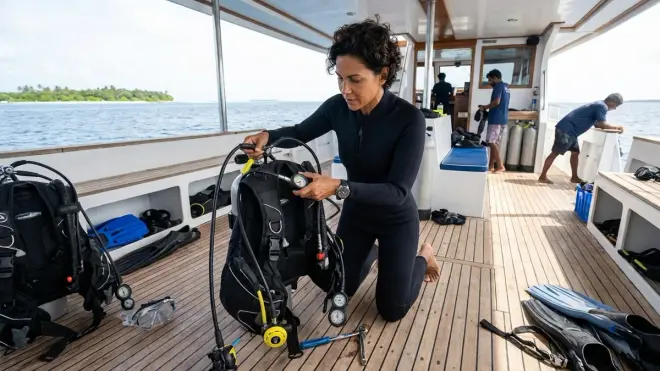
One lesson I've learned the hard way: never bring untested gear on a remote liveaboard. I once bought a new dive computer three weeks before a trip, figured it was fine since it was new, and discovered on the first dive that I'd misconfigured the nitrox settings. Not dangerous—I caught it—but frustrating and avoidable.
Now I have a pre-liveaboard testing routine. About two weeks before departure, I do a full gear checkout dive at my local site. Full equipment, exactly as I'll use it on the trip. This means:
Test both dive computers on the same dive, confirm they're tracking similarly and that all settings are correct. If you're diving nitrox on the liveaboard, set the computers to nitrox for the test dive even if you're using air. You want to practice changing the gas mix settings. The What Is Nitrox Mode on Dive Computers? EAN Settings Explained article explains how to configure these settings properly.
Check your regulator for any unusual breathing resistance or bubbles. If anything seems off—slight freeflow, harder breathing at depth, weird noises—get it checked out. Don't assume minor issues will stay minor.
Test your BCD inflation and dump valves underwater. Make sure your low-pressure inflator button doesn't stick and that your dump valves respond smoothly. Check all straps and buckles for wear.
Verify your wetsuit still fits well and check the zipper action. If it's sticky or hard to close, it might fail during your trip.
If you're bringing camera gear, do a full test dive with your complete setup: housing, strobes, focus lights, everything. Test every button and control underwater. Confirm your strobes are firing correctly. Take test shots at various distances and settings.
After the test dive, rinse everything thoroughly and inspect it carefully. This is your chance to spot and fix problems before they ruin your trip. Replace any questionable O-rings, tighten loose screws, and address anything that doesn't feel quite right.
The Pre-Dive Computer Checklist: Setup and Safety Verification and BCD Pre-Dive Safety Checklist: Complete Buoyancy Compensator Inspection Guide both provide detailed inspection procedures that work great for this pre-trip shakedown.
Types of Remote Liveaboards and How Gear Needs Vary
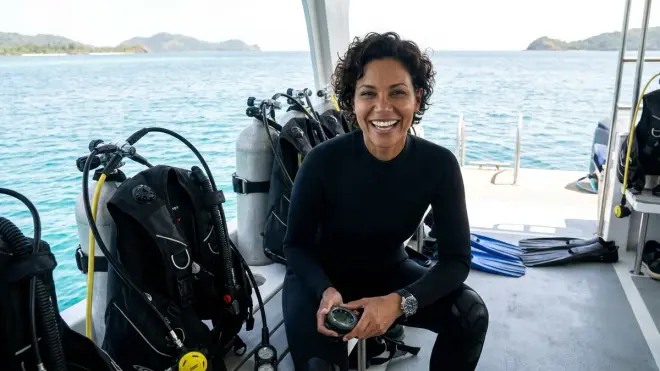
Not all remote liveaboards are the same, and your gear needs might shift depending on the destination and diving style. Here are the main categories I've experienced:
Tropical coral reef liveaboards (like the Red Sea, Maldives, or Raja Ampat): These generally offer the easiest diving conditions—warm water, good visibility, moderate depths. You can get away with lighter gear: 3mm wetsuit, standard recreational equipment, basic camera setup. The remoteness is more about distance from shore than technical difficulty.
Big animal pelagic liveaboards (like Socorro, Cocos Island, or Galapagos): These trips focus on sharks, mantas, and whale sharks, often in cooler water with more current and deeper dives. You'll want a thicker wetsuit (5-7mm), experience with currents and reef hooks, and potentially a more robust camera setup for big animal photography. The diving is more physically demanding, so equipment reliability matters even more.
Wreck-focused liveaboards (like Truk Lagoon or the Red Sea wrecks): These involve more penetration diving or at least close-up wreck exploration. You'll want excellent light management—primary and backup lights are essential. Your gauges and computer need to be easily readable in dark spaces. Dive planning is more precise, so having a reliable computer with good dive planning features matters.
Cold water liveaboards (like California, British Columbia, or Norway): These require drysuit skills and cold water regulators. The Best Cold Water Scuba Regulators: 6 Top-Rated Models for Ice and Drysuit Diving covers regulator choices, and the Best Wetsuits for Cold Water Diving in 2026 discusses thermal protection. Cold water diving is more gear-intensive, and equipment failures can have more serious consequences.
The key is researching your specific destination and being honest about your experience level. A remote liveaboard isn't the place to push way beyond your comfort zone with new conditions or environments.
Space and Weight Constraints: Making Hard Choices
Every remote liveaboard I've done has had some combination of baggage restrictions: airline weight limits, boat storage space limits, or tender weight limits for small skiffs that ferry you to dive sites. You can't bring everything, so you need to prioritize.
My prioritization framework:
Critical (can't dive without it): Mask, dive computer, regulator, BCD, wetsuit, fins. If there's a backup version that's lighter or more compact, bring that as your spare.
Important (significantly degrades experience if missing): Camera gear for photographers, reef hooks for current diving, backup mask and computer.
Nice to have (improves comfort or convenience): Extra wetsuit layering pieces, full tool kit, extensive spare parts beyond basics.
Leave it home: Backup fins, backup BCD, anything you can rent in an emergency, single-use items you can improvise.
I've seen divers show up with 200 pounds of gear for a one-week trip. It's excessive. With smart packing and good gear choices, you can cover everything you actually need in 50-70 pounds of checked luggage plus a 20-25 pound carry-on.
The Scuba Travel Bag vs Dive Gear Bag: Which Is Better for Your Trip? and How to Choose a Dive Bag: Size, Material, and Feature Guide articles help you pick the right luggage to maximize packing efficiency.
Weight-saving strategies I use:
- Choose lightweight versions of key gear: Travel BCDs are typically 4-6 pounds lighter than full-featured BCDs. The Best Travel BCDs Under 5 Pounds for 2026 reviews the lightest options.
- Coordinate with your dive buddy: If you're traveling with a buddy, split some backup items—one person brings the tool kit, the other brings extra O-rings and spare parts.
- Rent what you can: If the boat rents weights (most do) or tanks (obviously), don't bring your own.
- Pack multipurpose items: A buff or bandana can work as a mask strap cover, hair tie, sun protection, or towel. A dive light can serve as a night navigation light and an emergency flashlight on the boat.
Common Mistakes and What I Wish I'd Known Sooner
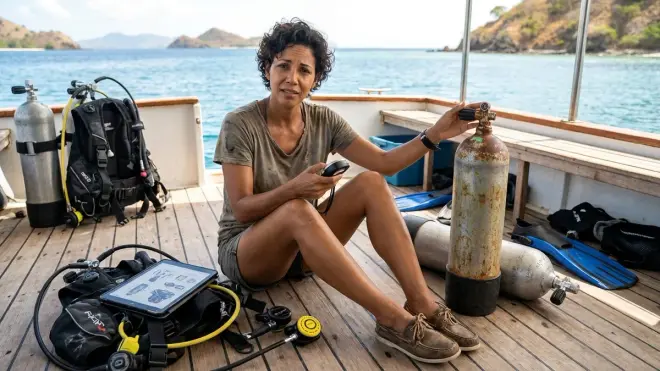
Looking back at my first few liveaboards, I made basically every mistake possible. Here's what I wish someone had told me:
Mistake 1: Not breaking in new gear before the trip. I once brought brand-new booties that gave me blisters by day two. Always test new equipment thoroughly before a remote trip—ideally multiple dives in similar conditions.
Mistake 2: Bringing too much instead of too little. My first liveaboard, I packed like I was moving abroad. I had three masks, backup everything, and enough spare parts to open a small dive shop. It was ridiculous and unnecessary. I've gradually trimmed down to just what actually matters.
Mistake 3: Ignoring service intervals. I took a regulator on a liveaboard when it was six months overdue for service. It worked fine for most dives, but developed a slight freeflow on the last day. I should have just gotten it serviced beforehand—the peace of mind is worth the cost.
Mistake 4: Not protecting electronics properly. I once packed my dive computer loose in my luggage where it got banged around by fins and tanks. The screen didn't crack, but it definitely got scratched. Everything sensitive now goes in a hard case or protected pouch.
Mistake 5: Assuming the boat would have spare parts. On my second liveaboard, my low-pressure inflator hose developed a slow leak. The boat didn't have a replacement, and I spent the rest of the trip manually inflating my BCD. Now I bring spare hoses.
Mistake 6: Not bringing enough memory cards for photography. I ran out of card space on day five of a seven-day trip. Either bring enough cards or bring a laptop to offload images. Running out of storage when you're surrounded by incredible subjects is painful.
Mistake 7: Packing my dive computer in checked luggage instead of carry-on. When my checked bag was delayed by two days on the way to a liveaboard in Indonesia, I didn't have my computer for the first several dives. Thankfully the boat rented computers, but I lost all that dive data and had to use an unfamiliar computer in advanced conditions.
Frequently Asked Questions
What happens if my essential gear breaks during a remote liveaboard and I don't have a backup?
If critical gear like your dive computer or regulator fails without a backup available, your options are limited but not hopeless. Most liveaboards carry some rental equipment—usually a few BCDs, regulators, and dive computers—though the selection is typically minimal and often lower quality than what you'd find at a dive shop. You might be able to borrow from another diver if they have spares, which is why it's worth being friendly with your fellow passengers. In the worst case, if you can't safely dive without that piece of equipment and no substitute exists, you'll have to sit out dives until the boat returns to port where you can replace the gear. This is heartbreaking after investing thousands in the trip, which is exactly why bringing backups for critical items isn't paranoia—it's practical planning that lets you keep diving when something inevitably goes wrong.
Should I bring my own weights on a remote liveaboard or rent them from the boat?
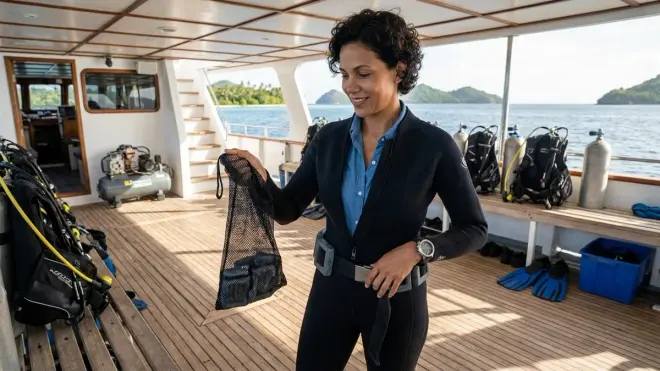
Definitely rent weights from the boat—every liveaboard I've been on provides weights included in the trip cost, and bringing your own would destroy your luggage weight allowance for no benefit. The boat will have plenty of weight blocks and usually several weight belt options or integrated weight pockets you can use with your BCD. What you should bring instead is any specialized weight configuration you prefer: if you use a particular style of weight belt with a specific buckle you like, bring the empty belt and load it with the boat's weights. Some divers who use ankle weights or trim weights bring those specifically if they have unusual placement preferences, but even that's optional for most recreational diving. Save your baggage weight for equipment that matters—weights are universally available and standardized.
How do I know if my dive computer battery will last through an entire liveaboard trip?
Most modern dive computers will easily last a week-long liveaboard on a single battery charge, but you should verify your specific model's battery life before the trip. Check your computer's battery indicator before you leave—if it's showing anything less than 75% full, either charge it or replace the battery depending on your model. User-replaceable battery computers like many Suunto models should get a fresh battery if the current one has been in for more than six months of regular diving. Rechargeable computers like the Shearwater Peregrine or Teric should be fully charged before departure and can usually be topped up on the boat if needed—bring your charging cable in your carry-on. For longer trips of 10+ days with 4-5 dives per day, you might want to bring a spare battery (if your model uses replaceable batteries) or plan to recharge mid-trip. When in doubt, consult your manual for the estimated battery life based on dive frequency—manufacturers typically specify how many hours or dives you'll get per charge or battery.
Can I rely on the liveaboard crew to help repair my equipment if something breaks?
Liveaboard crews are generally experienced and helpful with basic troubleshooting, but you shouldn't count on them for significant repairs or specialized technical work. Most dive guides and crew members can handle simple fixes like replacing O-rings, adjusting BCD straps, patching minor wetsuit tears, or troubleshooting common problems like mask leaks or inflator button issues—I've seen crew members perform minor miracles with zip ties and wetsuit cement. However, they're not certified technicians and won't have the parts or expertise to rebuild a regulator, fix a dive computer malfunction, or repair complex camera housing problems. The crew's priority is guiding dives safely and running the boat, not functioning as an on-board repair shop. Think of them as a helpful resource for minor issues, but bring your own spare parts kit and backup equipment for anything critical. If you need their help, approach them during non-dive times when they're not busy with boat operations or dive briefings, and always be appreciative—they're going out of their way to help you rather than performing their primary job duties.
Is it worth bringing a spare regulator on a liveaboard if I've never had regulator problems before?
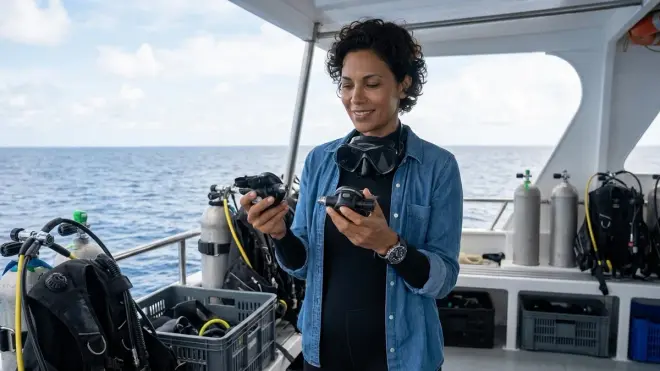
This depends on the length and remoteness of your specific trip, plus when your regulator was last serviced. For shorter liveaboards of five days or less in relatively accessible locations, and if your regulator was professionally serviced within the last year, a backup is probably unnecessary—modern regulators are extremely reliable and catastrophic failures are rare. However, for longer trips of 7-10+ days in truly remote locations, or if your regulator is approaching its service interval, bringing a spare makes more sense. I've personally seen regs develop slow leaks, freeflows, or breathing resistance issues mid-trip that weren't dangerous but made diving less enjoyable—having a backup meant swapping to the spare and continuing without stress. A reasonable middle ground is bringing a compact, lightweight second regulator in your checked bag rather than a full duplicate of your primary setup—you can find used or basic regulators specifically for this backup purpose that don't cost much and provide peace of mind. Consider your own comfort level with risk versus reward: is potentially sitting out multiple days of diving after flying halfway around the world worth saving a few pounds of luggage space?
Making Your Own Essential Gear List Work for You
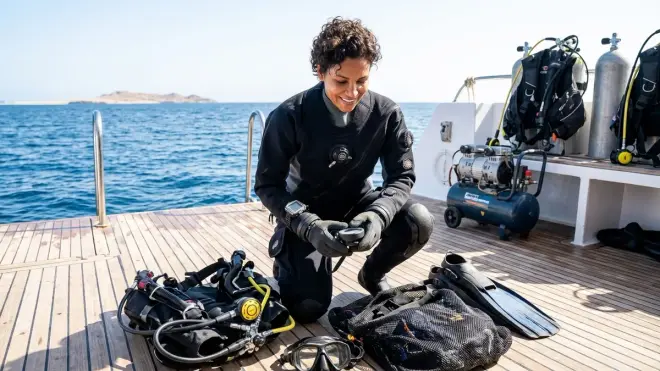
The essential gear for remote liveaboards isn't a one-size-fits-all checklist—it's a framework you adapt to your specific trip, diving style, and experience level. The gear that's essential for me as a warm-water photographer might be totally different from what's essential for a cold-water tech diver or a beginner making their first liveaboard trip.
Start with the absolute basics: mask, computer, regulator, BCD, exposure protection, and fins. Those six items are non-negotiable for any dive trip. Then add one layer of redundancy for the items that would end your trip if they failed: backup mask, backup computer.
From there, customize based on your specific destination and diving style. Research the conditions you'll encounter—water temperature at depth, current strength, typical visibility, type of diving (reef, wreck, big animals). Read trip reports from the specific boat or destination. Ask on diving forums what other people found essential. The Complete Liveaboard Diving Gear Checklist provides a comprehensive starting point you can modify.
Test everything before you go, not just once but ideally multiple times in conditions similar to what you'll encounter. Pack smart, prioritizing weight and space for critical items. Bring spare parts and tools for basic maintenance. Keep your most valuable and essential items in carry-on luggage.
Most importantly, remember that gear is just what enables the experience—it's not the experience itself. The goal isn't to have perfect equipment or to bring every possible backup item. The goal is to have reliable gear that lets you focus on the incredible diving, the amazing marine life, and the adventure of being in remote places that most people never get to see. When your equipment just works—when you don't have to think about it or stress over it—that's when you're free to fully experience why you traveled so far in the first place.
I'm still learning and refining my own liveaboard packing with each trip. What worked on one destination might not work on another. But having the foundation of essential gear dialed in means I spend less time worrying about equipment and more time enjoying being underwater in some of the most incredible places on Earth.