
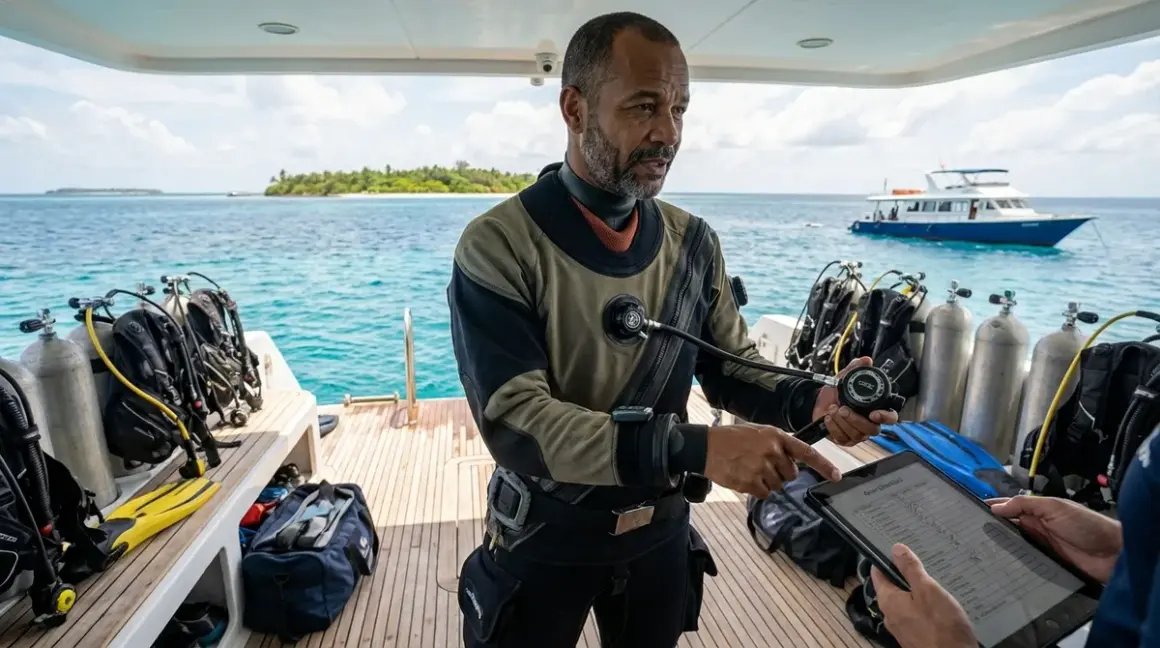

I've watched divers get turned away at the dock, their week-long trip to Raja Ampat ending before it started—all because they brought the wrong gear or didn't understand the boat's equipment restrictions. Liveaboard diving equipment requirements aren't just bureaucratic hoops to jump through; they're the difference between an unforgettable week of diving and a very expensive disappointment. Whether you're planning your first multi-day dive trip or your fiftieth, understanding what boats require, what they restrict, and why those rules exist will make you a better guest and a safer diver.
What Are Liveaboard Equipment Requirements?
Liveaboard diving equipment requirements are the mandatory gear specifications, safety standards, and equipment restrictions that dive boats enforce for guests during multi-day offshore trips. These aren't universal rules—each operator sets their own standards based on the diving conditions they operate in, the dive sites they visit, the certifications they accept, and the logistical constraints of their vessel.
Most liveaboards have two categories of requirements: mandatory equipment (gear you must bring or they won't let you dive) and restricted equipment (gear they limit or prohibit for safety, space, or operational reasons). Mandatory items typically include dive computers, surface signaling devices, and dive insurance verification. Restricted items often include certain tank valve types, underwater scooters in some locations, and oversized camera rigs that won't fit in the camera rinse tanks.
I've dived with operators in Indonesia who required every guest to carry a dive computer, surface marker buoy, whistle, and mirror—no exceptions, even for technical divers with redundant systems. Meanwhile, a Red Sea liveaboard I worked with only mandated a computer and certification card, trusting experienced divers to bring appropriate safety gear for their dive plan.
The key difference between liveaboard requirements and day boat policies is duration and remoteness. Day boats operate close to shore with easy emergency access; liveaboards might be 12 hours from the nearest recompression chamber. That geographic reality shapes every equipment decision. When you're doing 20+ dives over seven days in remote waters, equipment reliability isn't just preferred—it's critical. A failed regulator on dive three of twenty-seven is a very different problem than a failed reg on a single-tank shore dive.
How Liveaboard Equipment Requirements Work
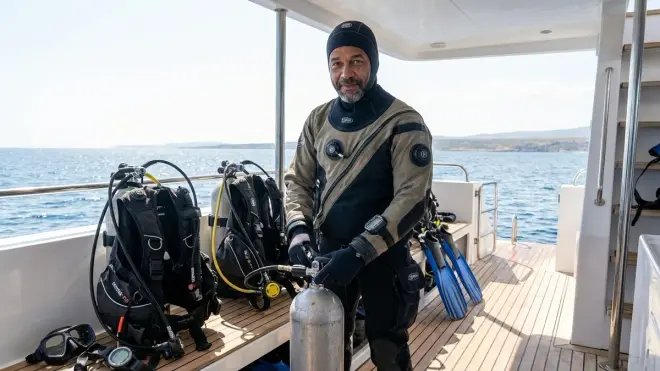
Liveaboard diving equipment requirements function as a risk management system that protects both the operator and the guests. The process starts months before you board, typically with a detailed equipment questionnaire in your booking confirmation. Some operators use honor-system questionnaires; others verify your gear during check-in with physical inspections before departure.
Here's how the verification process typically works: You'll receive a pre-trip equipment list 60-90 days before departure. This document specifies certification requirements (minimum level, specialty certifications for certain sites), mandatory safety gear (computer, SMB, dive insurance), tank valve compatibility (DIN vs yoke), and any restricted items. About two weeks before departure, better operators send a reminder email confirming you've reviewed requirements and asking about specialty gear like cameras, rebreathers, or sidemount configurations.
At check-in, the dive briefing officer or cruise director inspects certification cards, dive computers, and logbooks. They're checking three things: certification validity (not expired, appropriate level for planned dives), equipment functionality (your computer powers on, your SMB inflator works), and compatibility (your regulator fits their tanks, your dive computer handles nitrox if they're filling enriched air).
The inspection isn't always thorough—I've checked in with operators who barely glanced at my gear, and others who pressure-tested my regulator, verified my computer's battery percentage, and made me demonstrate deploying my SMB in the pool. The difference usually correlates with dive site difficulty and operator professionalism.
Tank valve compatibility deserves special attention. Many liveaboards run either exclusively DIN or exclusively yoke tank valves, though some high-end operations carry pro-valves that accept both connections. If you show up with a DIN regulator and the boat only has yoke tanks (or vice versa), you'll need an adapter—and if you don't have one, you're renting theirs or not diving. I learned this the hard way in the Maldives in 2019, when I brought only DIN regs to a boat that ran yoke-only tanks. They had adapters available for rent, but it was an unnecessary expense and a rookie mistake. Now I always carry a DIN-to-yoke adapter regardless of what the boat claims to provide.
Some operators enforce service date requirements for regulators and BCDs. They'll ask for proof your gear was serviced within the last 12 months, particularly for technical diving operations or cold-water trips where regulator reliability is critical. This isn't universal, but it's becoming more common among premium operators who've dealt with guests whose gear failed mid-trip. If you can't provide service records, they may require you to rent their equipment.
Why Liveaboard Equipment Requirements Matter
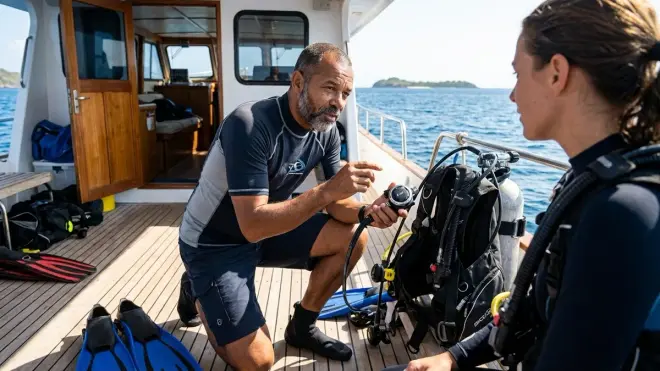
The practical significance of understanding liveaboard diving equipment requirements goes beyond avoiding dock-side rejection. These requirements exist because of three operational realities that don't apply to day boats: equipment failure rates over extended trips, limited emergency response options, and group safety dependencies.
Over seven days and twenty dives, equipment failure probability compounds. A regulator that might survive three day-boat dives without issue can develop a slow leak or IP creep over a week of heavy use, saltwater exposure, and temperature cycling. I've watched gear that passed pre-dive checks on day one catastrophically fail by day four—o-rings that dried out, computer batteries that died prematurely, BCD inflators that stuck open. Liveaboard operators know this pattern, which is why they're more stringent about equipment age and service history than day boats. They're not being difficult; they're trying to prevent your trip from becoming a rental-gear scramble after your primary rig fails.
Remote location response limitations fundamentally change the risk equation. When the nearest recompression chamber is 14 hours away by boat plus helicopter evac, and the nearest dive shop is three days' sail, you can't afford preventable equipment failures. If your dive computer dies and you don't have a backup, you're done diving for the week—and unlike a day boat where you'd just sit out one dive and buy a new computer that evening, on a liveaboard you've just paid $3,000-5,000 for a week you can't complete. This is why many operators either require backup computers or maintain a limited rental inventory (usually budget-friendly options that they can loan out for the week).
The group dependency factor is less obvious but equally important. Liveaboard diving follows a schedule—the tender leaves for the dive site at 7 AM, 11 AM, 2 PM, and sometimes for a night dive. If you're the diver whose equipment failure delays a tender departure, you're not just inconveniencing yourself; you're impacting 18 other divers who are now losing bottom time waiting for you to sort out your gear issue. Operators build equipment requirements partially to minimize these delays. When everyone's gear meets baseline standards, the group moves smoothly.
Types and Variations of Equipment Requirements
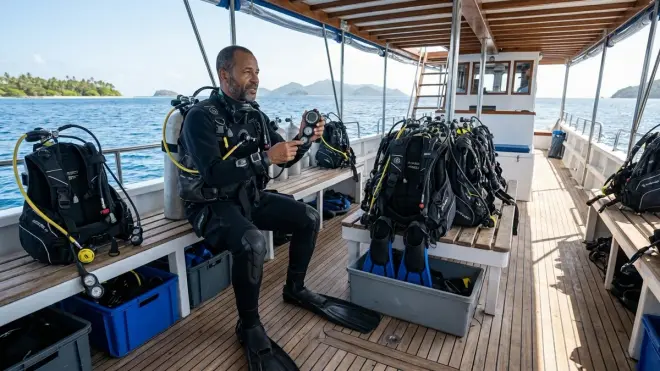
Liveaboard diving equipment requirements vary significantly based on destination, diving style, and operator philosophy. Understanding these categories helps you anticipate what different boats will demand.
Tropical recreational liveaboards (Caribbean, Maldives, Thailand, Indonesia) typically have the most lenient requirements. They'll mandate a dive computer, valid certification, and basic safety gear (SMB, whistle), but they're usually flexible about backup equipment and rental options. These boats know most guests are vacation divers bringing personal gear that might not meet technical diving standards. As long as your gear functions and meets recreational depth limits, they'll let you dive. I've done dozens of trips in this category, and equipment rejections are rare—I've only seen it happen when someone brought truly unsafe gear like an ancient regulator with visible corrosion or a computer that wouldn't power on.
Cold-water liveaboards (Pacific Northwest, Scotland, Norway, Chile) enforce stricter standards because environmental conditions punish equipment weaknesses. They'll often require DIN connections (better sealing in freezing water), environmentally sealed regulators rated for temperatures below 50°F, dry suit certification for most sites, and redundant safety equipment. Some explicitly prohibit certain regulator types—I've seen boats ban unsealed piston regulators for cold-water diving because of free-flow risk. If you're planning a cold-water trip and you're unsure whether your regulator meets their standards, check out our guide to cold-water regulators to understand what "environmentally sealed" actually means.
Technical diving liveaboards (deep wrecks, cave systems, rebreather trips) have the most demanding requirements because the diving inherently carries higher risk. Expect mandatory redundant systems (backup computers, backup lights, dual bladder BCDs or wing failures management), staged decompression gas compatibility verification, and sometimes required specialty certifications beyond just "tech certified." These boats will inspect your gear carefully—I've had tech boat operators check my backup light battery levels, verify my computer supports the gases I'm planning to carry, and confirm my reel and spool configurations meet their standards.
Photography-focused liveaboards sometimes restrict camera equipment based on camera table space, rinse tank capacity, and charging station availability. Some limit guests to one camera system plus one video light or two strobes; others have dedicated camera rooms with unrestricted capacity. If you're planning to bring extensive underwater camera gear, confirm the boat's camera facilities before booking. I made the mistake once of bringing a full wide-angle rig, macro rig, and video setup to a boat that could only accommodate one system per guest in their rinse tanks. I spent the week carefully fresh-water rinsing one system in my cabin shower while the other sat in salt water—not ideal for expensive camera housings.
Frequently Asked Questions
What happens if my dive computer fails during a liveaboard trip?
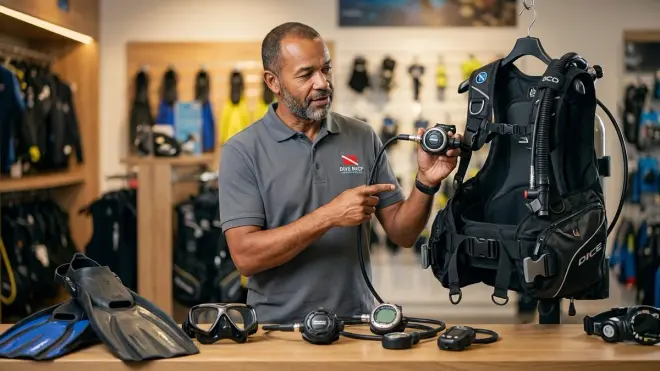
Most liveaboards keep 2-3 basic rental dive computers onboard for exactly this situation, though availability isn't guaranteed and you'll pay daily rental fees for the remainder of the trip. The immediate consequence is that you'll sit out the rest of that dive day—standard protocol is no diving for 24 hours after a computer failure to allow residual nitrogen to off-gas, since you've lost your decompression tracking. Some operators will let you borrow a backup computer and continue diving after a surface interval if your dive profile was conservative, but this varies by operator. This is why I always pack a backup dive computer even for recreational trips—not just for the gear redundancy, but because it eliminates the 24-hour timeout. If you have a backup that's been tracking your dives alongside your primary, you can swap computers during a surface interval and continue your dive schedule. The rental computer option usually costs around $10-15 per day, which adds up over a week-long trip.
Do liveaboards provide equipment rental or do I need to bring everything?
The vast majority of liveaboards rent basic equipment—regulators, BCDs, wetsuits, masks, fins—but the quality varies dramatically and availability for less common sizes isn't guaranteed. Budget liveaboards often have limited rental inventory that's seen heavy use; premium operators typically stock newer gear and more size options. Here's what most boats don't rent: dive computers (beyond the 2-3 emergency backup units I mentioned), exposure suits beyond standard wetsuits (dry suits, custom-thickness suits), specialty gear (camera systems, dive scooters, surface signaling devices beyond basic SMBs). Tank valve adapters are hit-or-miss—some boats provide them free, others rent them for around $5-10 per day, some don't have them at all. If you're planning to rent critical gear like a regulator, confirm with the operator at least a month before departure that they have your size range available. I've seen tall divers struggle with rental BCDs that were all sized for average heights, and divers with large feet discover the boat's largest fins were still too small. For week-long trips, I personally bring at least my own regulator, computer, mask, and exposure suit—these are the comfort and fit items that most impact your experience, and rental gear rarely fits as well as equipment you've selected for your body.
Can I bring my own tanks and compressor on a liveaboard?
No liveaboard I'm aware of allows guests to bring their own tanks—it creates liability issues, weight problems, and storage complications that operators won't accept. Tanks are always provided as part of your trip package, typically unlimited air fills and sometimes included nitrox depending on the operator. You also cannot bring a personal compressor; the boat's compressor is the only fill station allowed for insurance and safety certification reasons. What you can bring: portable tank o-rings if you dive unusual valve types, DIN-to-yoke adapters, nitrox analyzer for verifying fill percentages yourself (many divers bring their own rather than trusting boat analyses), and spare tank valve dust caps. If you dive specialized gases for technical diving (trimix, heliox, high-oxygen deco bottles), you'll need to coordinate with the operator months in advance—some boats can blend these gases, most cannot, and none will let you bring pre-filled personal tanks. The PADI equipment guidelines outline standard cylinder requirements that most liveaboards follow for tank specifications and testing intervals.
Are there restrictions on underwater camera equipment and strobes?
Yes, and they vary significantly by boat. The most common restrictions are based on physical space limitations: camera rinse tank capacity (typically limits you to one housing plus two strobes or one video light), charging station availability (many boats limit you to two battery chargers running simultaneously to avoid overloading electrical systems), and camera table workspace (some boats limit you to one assembled rig on the camera bench at a time). A few liveaboards restrict total strobe lumens or require diffusers on powerful video lights to prevent divers from blinding each other during night dives. I've encountered one operator in the Philippines that banned video lights above 5,000 lumens for this reason. The more critical restrictions apply to some marine parks: certain protected areas prohibit strobes entirely during spawning seasons to avoid disturbing fish behavior, and some wrecks prohibit lights inside the structure. Always ask about camera restrictions during booking if you're planning to bring extensive photography gear. Most importantly, confirm the rinse station can accommodate your equipment—there's nothing worse than doing four dives in saltwater only to discover the camera rinse tank is too small for your housing, forcing you to jury-rig fresh-water rinses in your cabin.
Do I need redundant equipment for recreational liveaboard diving?
For recreational diving on most liveaboards, redundant equipment isn't mandatory, but a backup dive computer and spare mask are highly recommended. Here's why: a failed primary computer grounds you for at least 24 hours while your tissue nitrogen off-gases, costing you multiple dives. A cracked or lost mask means you're borrowing someone else's or hoping the boat has a rental that fits—neither ideal. Beyond those two items, redundancy becomes optional based on your risk tolerance and the remoteness of your destination. I personally bring backup fins (the compact travel type that fold into my gear bag), spare mask straps, an extra SMB, and backup signaling devices (whistle, mirror, dive alert), but that's probably more than most recreational divers need. What you don't need to duplicate for recreational diving: regulator systems (boats always have rental regs available), BCDs (again, rentals exist), wetsuits, or weights. Technical diving is a different story—those operations will explicitly require redundant life-support equipment including backup regulators, computers, and buoyancy systems. The line between "paranoid" and "prepared" depends entirely on where you're diving. For a Cozumel liveaboard with daily port access and dive shops nearby, minimal redundancy makes sense. For a 10-day Tuamotu crossing with no land contact and no way to replace failed gear, more redundancy is justified.
Summary
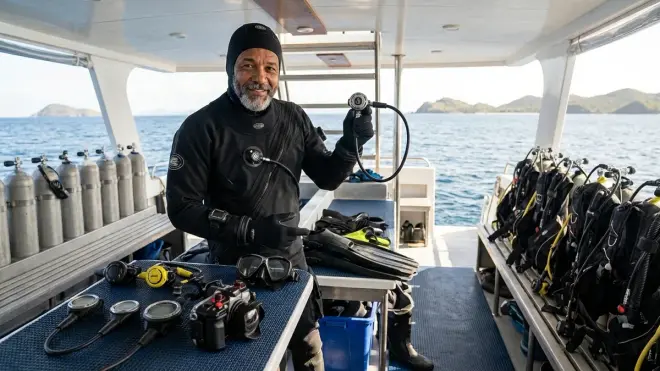
Liveaboard diving equipment requirements exist at the intersection of safety management, operational logistics, and remote location realities. The boats that enforce strict standards aren't being bureaucratic—they're trying to prevent equipment failures from ending your trip prematurely and managing group safety in environments where emergency support is hours away. Understanding requirements before you book saves you from dock-side surprises and ensures your gear matches the diving you've planned.
The specifics vary dramatically: tropical recreational boats have minimal requirements beyond functioning personal gear and basic safety items; cold-water and technical operations demand redundant systems, specific equipment ratings, and verified service histories; photography liveaboards add capacity restrictions based on rinse station and charging limitations. But the underlying pattern is consistent—the more remote the destination and the more challenging the diving, the stricter the requirements become.
Before you book any liveaboard, download their equipment list, verify your gear meets their specifications, and ask specific questions about anything unclear. Check your regulator service history, confirm your tank valve compatibility, verify your dive computer battery life, and consider backup equipment for the items that will truly ruin your trip if they fail. The divers who have the best liveaboard experiences aren't the ones with the most expensive gear—they're the ones who showed up with the right gear, properly maintained, and fully compatible with the boat's systems. That preparation starts months before departure, with understanding exactly what your chosen liveaboard expects you to bring.