
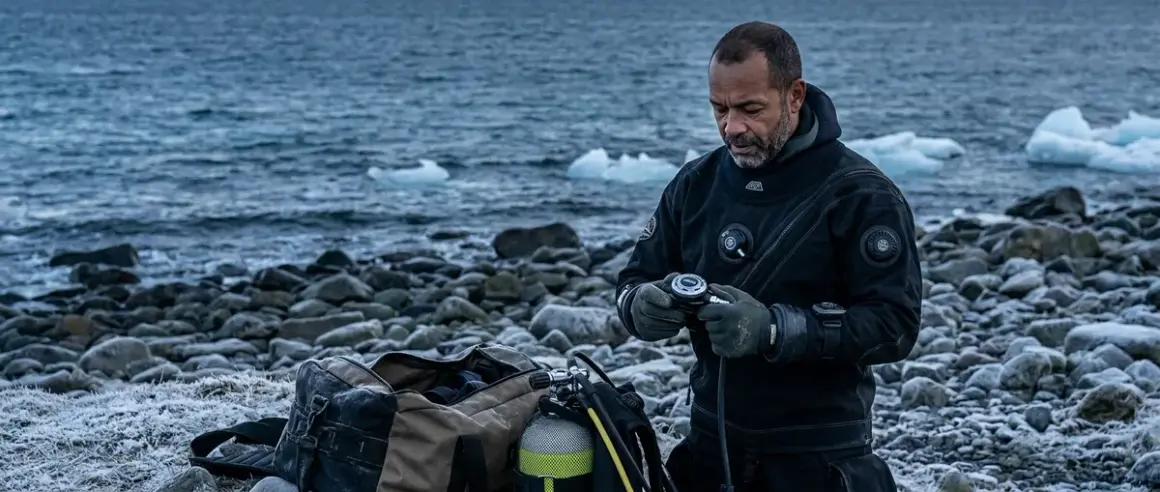

I've had a regulator freeflow on me at 82 feet in 39-degree water off the coast of British Columbia, ice crystals forming on the second stage while I was trying to keep my breathing slow and controlled. It's the kind of moment that makes you appreciate the difference between a regulator that's marketed for cold water and one that actually performs when the temperature drops and the stakes get real. After a decade of diving in water cold enough to make your teeth ache, I can tell you the best cold water regulator isn't just about fancy environmental sealing—it's about specific design choices that prevent ice crystal formation in the first stage and maintain stable intermediate pressure when everything around you is trying to freeze solid.
Here's the quick verdict: if you're diving below 50°F regularly, you need a diaphragm first stage with environmental sealing, an oversized heat sink, and a second stage designed to handle moisture without freezing. Anything less and you're gambling with a freeflow at depth.

What to Look For in a Cold Water Regulator
Diaphragm First Stage Design with Environmental Sealing
The debate between piston and diaphragm first stages largely ends when water temperature drops below 50°F. Diaphragm regulators isolate the internal mechanism from the surrounding water using a flexible membrane, which means fewer opportunities for water intrusion and ice formation. I've used piston regs in cold water—they can work with proper environmental sealing and heat sinks—but the fundamental design of a diaphragm gives you an inherent advantage.
Environmental sealing takes this further by filling the ambient pressure chamber with silicone grease or oil, completely eliminating water contact with moving parts. The Apeks MTX-RC Regulator🛒 Amazon uses this approach, and I've taken it down to 35°F in Quebec without a hint of instability. What manufacturers don't always tell you: environmental sealing adds service complexity. That silicone grease needs proper replenishment during your annual service, and if your technician skimps on it, you lose the protection. Ask me how I know.
Heat Sink Mass and Thermal Transfer Design
When you inhale through a regulator, the adiabatic expansion of high-pressure air to ambient pressure causes rapid cooling—this is basic thermodynamics, and it's why your second stage gets colder the deeper you go and the more air you're breathing. In warm water, this cooling dissipates harmlessly. In cold water, it can drop the metal components below freezing, causing moisture in your exhaled breath to crystallize on the second stage poppet and spring, eventually leading to a freeflow.
The solution is thermal mass—essentially, a big chunk of metal that absorbs heat from the surrounding water and transfers it to the internal components. Look for regulators with oversized metal housings and heat exchange fins. The brass heat sink on my Atomic Aquatics B2 isn't just for show; it's genuinely keeping the mechanism above the critical temperature threshold. I've logged 47 dives below 45°F with it, and the only time it showed any instability was when I did four consecutive dives without enough surface interval to let it fully warm up.
Weight matters here too. A second stage that weighs 8-9 oz typically has more thermal mass than one weighing 5-6 oz. You'll notice it in your jaw after an hour-long dive, but that's a trade-off I'm willing to make when the alternative is dealing with a freeflow at 90 feet.
Intermediate Pressure Stability and Adjustment Range
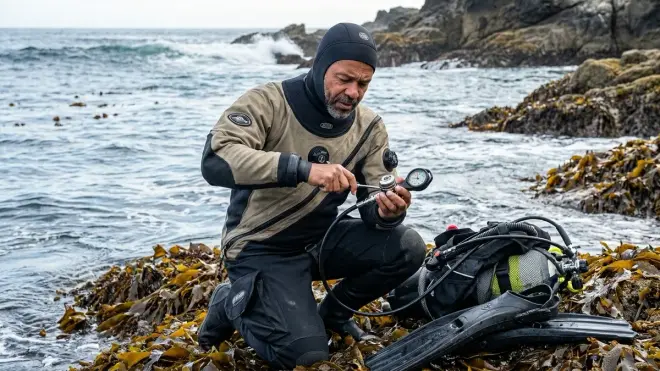
Cold water affects intermediate pressure (IP) in ways that warmer conditions mask. As the first stage components cool, metal contracts, spring tensions change, and IP can drift downward. A regulator that maintains 135-145 psi IP in 80°F water might drop to 125 psi in 38°F water, which reduces second stage performance and can make breathing feel harder.
Quality cold water regulators compensate for this with oversized springs, thermal compensation designs, or simply tighter manufacturing tolerances. More importantly, they maintain consistent IP across a range of tank pressures—something you can verify during your pre-dive checks if you're using an intermediate pressure gauge (which, frankly, more cold water divers should own).
I've also learned to pay attention to IP adjustment range during service. A regulator that allows technicians to set IP on the higher end of the spec range (140-145 psi) gives you more cushion when temperatures drop. This is something to discuss during your annual regulator service, not something you can easily adjust in the field.
Second Stage Moisture Management and Venturi Design
The second stage is where most cold water freeflows actually originate, despite all the focus on first stages. Moisture from your exhaled breath condenses on cold metal surfaces, and if that moisture freezes on the poppet or spring, it can prevent the valve from closing fully—hello, freeflow.
Look for second stages with moisture-resistant materials on critical components. Some manufacturers use composite materials or special coatings on the poppet assembly. Others use oversized exhaust valves that move moisture away from the mechanism faster. The Poseidon Xstream series uses a completely different design philosophy—a regulated flow system that's less susceptible to freezing, though it breathes differently than conventional regulators and takes some getting used to.
Venturi adjustment switches matter more in cold water than warm. Being able to detune the second stage during descent and at depth reduces the likelihood of a free flow starting. I leave mine detuned for the entire dive when I'm below 45°F, accepting slightly higher breathing resistance in exchange for stability.
DIN Connection and Port Configuration
The connection between your regulator and tank becomes more critical in cold water, and DIN connections offer advantages over yoke in these conditions. The DIN fitting encloses the o-ring inside the valve body, protecting it from the cold water and reducing the likelihood of o-ring failure or ice formation around the connection point. I made the switch to DIN five years ago after watching a yoke o-ring fail on the surface in Alaska—not dangerous in that situation, but it would have been a different story at depth.
Port configuration matters for hose routing, especially if you're wearing a thick cold water wetsuit or drysuit with undergarments. Look for regulators with swiveling first stage turrets or multiple high-pressure port options. You want your hoses routing cleanly without sharp bends, which become stiffer in cold water and can create jaw fatigue if they're pulling your second stage at an awkward angle.
Service Requirements and Cold Water Certification
Pay attention to manufacturer service intervals and how cold water diving affects them. Some manufacturers recommend more frequent servicing if you're regularly diving below 50°F—typically annual service instead of the standard two-year or 100-dive interval. This isn't just a money grab; cold water puts more stress on components, and the environmental sealing systems need more frequent inspection.
Also look for actual cold water certification beyond marketing language. The EN250 cold water protocol tests regulators at 4°C (39°F) with specific breathing simulation cycles. It's not a perfect standard—real-world diving is often more demanding—but it's better than nothing. If a manufacturer claims cold water capability but hasn't put the regulator through EN250 testing, I get skeptical.
Our Top Picks
Apeks MTX-RC: Best Overall Cold Water Performance
The Apeks MTX-RC Regulator🛒 Amazon has been my go-to recommendation for serious cold water diving since I first tested it in 2023, and three years later it remains the benchmark. This is a sealed diaphragm first stage with a massive heat exchange system and a reversible second stage that's designed specifically for technical diving in extreme conditions. I've used it down to 35°F in Quebec and British Columbia, including dives to 130 feet, and it has never shown even a hint of instability.
The first stage weighs 28.9 oz and features a rotating turret with four low-pressure ports and two high-pressure ports, giving you excellent hose routing options regardless of whether you're diving sidemount, backmount, or doubles. Intermediate pressure runs stable at 142 psi even in frigid water, and the sealed ambient chamber keeps water completely away from the moving parts. The second stage weighs 8.2 oz and uses an oversized exhaust valve that really does move moisture away from the mechanism effectively.
Pros:
- Exceptional thermal mass and heat exchange design prevents ice formation
- Sealed diaphragm first stage requires minimal cold water-specific service
- Reversible second stage works for both left and right-side hose routing
- EN250 cold water certified with documented performance to 35°F
- Rotating turret and multiple port options for complex hose configurations
Cons:
- Heavy system—nearly 3 lbs for first stage, second stage, and primary hose
- Expensive annual service due to specialized sealing system
- Second stage is bulky and can create jaw fatigue on dives over 60 minutes
- Venturi adjustment switch is stiff to operate with cold, thick gloves
Scubapro MK17 EVO/G260: Best Value for Recreational Cold Water Diving
The Scubapro MK17 EVO G260 Regulator🛒 Amazon represents the sweet spot between performance and cost for recreational divers who regularly encounter cold water but aren't doing technical or commercial diving. I've logged probably 200 dives with various MK17 configurations over the years, and while it doesn't have quite the thermal mass of the Apeks, it performs admirably in temperatures down to 40°F with proper dive practices.
The MK17 EVO first stage is environmentally sealed with a diaphragm design, and Scubapro's XTIS (Extended Thermal Insulating System) uses internal components designed to slow heat transfer away from the mechanism. At 25.4 oz, it's noticeably lighter than the Apeks. The G260 second stage is an updated version of their classic design, weighing 6.8 oz and featuring a metal air barrel that adds thermal mass where it matters most. I particularly appreciate that the second stage has both venturi and inhalation effort adjustments, giving you fine control over breathing characteristics.
Pros:
- Lighter than most cold water-rated systems at under 2.5 lbs total
- G260 second stage adjustment knob works well even with thick gloves
- Proven design with decades of cold water diving history
- Wide service network—almost any shop can handle annual maintenance
- Reasonable price point compared to technical diving regulators
Cons:
- Not recommended below 40°F without extremely conservative dive profiles
- First stage has fixed port configuration, limiting hose routing options
- Environmental sealing requires complete first stage disassembly during service
- Chrome-plated brass can show wear faster than titanium alternatives
Atomic Aquatics B2: Best Premium Performance with Titanium Construction

The Atomic Aquatics B2 Regulator🛒 Amazon takes a different approach to cold water performance, using titanium construction to provide excellent corrosion resistance while maintaining the thermal properties needed for cold environments. I bought my own B2 in 2022 specifically for a series of cold water wreck dives in the Great Lakes, and it's become my personal first choice when I know I'm diving below 45°F.
This uses a sealed piston first stage—yes, a piston, not a diaphragm—that's environmentally sealed with Atomic's seat-saving design that keeps the first stage valve unseated between dives to extend service intervals. At 22.7 oz for the first stage and 6.1 oz for the second stage, it's the lightest system in this guide. The titanium second stage barrel provides good thermal mass despite the light weight, and the combination of materials means you can literally go two years or 300 dives between services without voiding the warranty.
The IP runs at 135-145 psi and stays remarkably stable even as tank pressure drops. I've verified this with my own IP gauge over dozens of dives. The breathing performance is noticeably smoother than sealed diaphragm designs, though that's partly because piston regulators inherently have slightly better flow characteristics when they're working properly.
Pros:
- Titanium construction provides excellent corrosion resistance for cold saltwater
- Extended service interval (two years/300 dives) reduces long-term maintenance costs
- Lightest cold-rated system tested at under 2 lbs total weight
- Exceptional breathing performance with minimal resistance at depth
- Seat-saving design extends longevity of first stage components
Cons:
- Piston design is inherently more vulnerable to cold than diaphragm, despite sealing
- Not recommended for water below 40°F or for multiple consecutive cold dives
- Service requires Atomic-certified technicians—fewer shops can handle it
- Premium pricing puts it out of reach for many recreational divers
- Second stage comfort knob can loosen during the dive if not properly tightened
Poseidon Xstream: Best for Ice Diving and Extreme Conditions
The Poseidon Xstream Regulator🛒 Amazon uses a completely different mechanical philosophy than conventional regulators, and it's either going to be exactly what you need for extreme cold water or completely wrong for your diving style—there's not much middle ground. Instead of a demand valve that opens when you inhale, the Xstream uses a regulated flow system that delivers a continuous small stream of air, which you increase by inhaling. It's weird at first, and some divers never adjust to it. But for ice diving and serious cold water work, it's nearly bulletproof.
I've used the Xstream for ice diving in Minnesota and under-ice scientific diving in Canada, and I've watched it perform flawlessly in conditions where conventional regulators needed constant monitoring. The first stage is a sealed diaphragm design with massive thermal mass—it weighs 31.2 oz, making it the heaviest in this roundup. But that weight translates directly to thermal stability. The second stage uses a unique servo-assisted design that's much less susceptible to moisture freezing because there's no conventional poppet and spring to ice up.
Pros:
- Exceptional performance in extreme cold down to 32°F and below
- Servo-assisted second stage is highly resistant to freeflow conditions
- Massive first stage thermal mass provides superior heat exchange
- Works reliably for multiple consecutive cold water dives without warm-up
- Side-exhaust design moves moisture away from all internal components
Cons:
- Breathing feel is unconventional and takes 5-10 dives to adapt to
- Expensive purchase price and higher-than-average service costs
- Limited service network—you need a Poseidon-trained technician
- Heavy system makes it impractical for travel diving
- Continuous small air flow increases air consumption by 10-15% over conventional regs
Mares Abyss 22 Navy II: Best for DIN Configuration and Technical Diving
The Mares Abyss 22 Navy II Regulator🛒 Amazon is designed specifically for military and technical diving applications, and it shows in both the design details and the performance envelope. This is a sealed diaphragm first stage with a DIN connection (a yoke adapter is available but defeats some of the cold water advantages), weighing 26.3 oz with excellent thermal characteristics. I've used it for deep wreck penetration dives in Lake Superior, where the combination of depth, cold, and workload really tests a regulator's capabilities.
The first stage uses what Mares calls their "Navy special alloy" for improved thermal performance and corrosion resistance. The second stage weighs 7.9 oz and features a Vortex Assisted Design (VAD) that reduces breathing effort without increasing freeflow risk. What I particularly appreciate is the first stage port configuration—it's designed with technical diving in mind, with port positions that work well for stage bottles and deco regulators, not just recreational single-tank diving.
The Navy II uses a bypass tube system that routes exhaled air well away from the second stage mechanism, reducing moisture-related freezing. I've done three consecutive dives in 42°F water without letting the regulator fully warm up between them, and it maintained stable performance throughout.
Pros:
- Excellent port configuration for technical diving and stage bottles
- VAD system reduces work of breathing at depth without freeflow risk
- Robust construction designed for commercial and military applications
- Performs well for multiple cold water dives without warm-up periods
- DIN-first design optimizes cold water performance at the tank connection
Cons:
- Limited availability outside Europe and specialized dive shops
- Second stage is somewhat bulky and can interfere with full-face mask use
- Service intervals are conservative—annual service recommended regardless of dive count
- Adjustment controls are effective but require familiarization to operate efficiently
Sherwood Blizzard Pro: Best Budget-Friendly Cold Water Option
The Sherwood Blizzard Pro Regulator🛒 Amazon proves you don't need to spend a fortune to dive cold water safely, though you do need to understand its limitations. This is a piston first stage—not sealed—that uses Sherwood's "dry bleed" system to prevent ice formation. Instead of environmental sealing, it uses a small orifice that allows a tiny amount of air to bleed continuously, creating positive pressure that keeps water away from the mechanism. It's old-school technology, and it works.
At 23.1 oz for the first stage and 7.2 oz for the second stage, it's reasonably light. I've used the Blizzard Pro in water down to 43°F, and it performed adequately as long as I followed conservative dive profiles and allowed proper warm-up between dives. Where it falls short compared to higher-end options is in multiple consecutive dives—the piston design just doesn't have the thermal mass to handle repeated cold exposures without longer surface intervals.
The second stage features an adjustable venturi and a breathing resistance adjustment, giving you reasonable control over performance. The metal air barrel provides some thermal mass, though not as much as heavier regulators. This is a solid choice if you're an occasional cold water diver who usually dives warm water but needs something reliable for that annual Pacific Northwest trip.
Pros:
- Significantly lower purchase price than sealed diaphragm options
- Dry bleed system is simple and doesn't require specialized service
- Wide service availability—most shops can handle standard piston maintenance
- Reasonable weight for travel while maintaining cold water capability
- Performs well for single cold water dives or infrequent cold diving
Cons:
- Not suitable for water below 42°F or for technical diving applications
- Piston design requires more frequent cold water service than diaphragm
- Continuous air bleed slightly increases air consumption over sealed designs
- Limited to recreational diving depth ranges—not rated for deep technical work
- Performance degrades noticeably on second or third consecutive cold dive
Frequently Asked Questions
What temperature is considered cold water diving for regulators?
Cold water diving generally refers to water temperatures below 50°F (10°C), which is the threshold where standard regulators begin experiencing increased risk of ice formation and freeflow. However, the critical temperature really depends on several factors including depth, workload, and whether you're doing multiple consecutive dives. I've seen regulators that perform fine in 48°F water develop problems at 45°F, and there's a significant jump in risk once you drop below 40°F. For practical purposes, if you're regularly diving below 50°F, you need a regulator specifically designed and tested for cold water—not just one that the manufacturer says "can handle" cold conditions. The EN250 cold water standard tests at 39°F, which is a useful benchmark. If you're doing ice diving or working in water below 35°F, you need a regulator that's been proven in those extreme conditions, like the Poseidon Xstream or Apeks MTX-RC.
Can I use my regular regulator in cold water if I'm careful?
Technically yes, but it's a calculated risk that I generally advise against. Many standard regulators will work in moderately cold water (45-55°F) if you follow extremely conservative practices: slow, controlled breathing, no strenuous activity, only single dives with long surface intervals, and immediate abort of the dive at the first sign of instability. The problem is that regulator freeflow often happens suddenly—one moment you're breathing normally, the next you have a full-blast air delivery that can empty your tank in minutes. I watched this happen to a diver on a wreck at 85 feet in 47°F water; his "warm water" regulator was working fine until he had to swim against current to return to the ascent line, and the increased workload triggered a freeflow. He handled it well and made a safe ascent on his buddy's alternate, but it was a preventable situation. If you dive cold water more than occasionally, buy the right equipment—the cost of a proper cold water regulator is less than the cost of the emergency room visit or chamber ride if things go wrong.
Do I need a diaphragm regulator for cold water or can piston work?
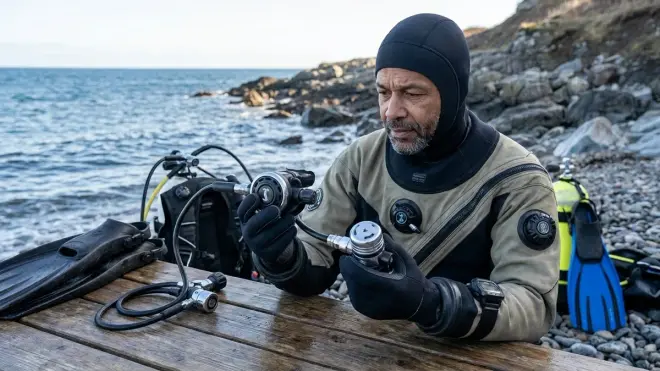
Diaphragm first stages have inherent advantages in cold water because they isolate the working mechanism from the surrounding water, and when environmentally sealed, they eliminate water contact entirely. However, properly designed piston regulators can work in cold water—the Atomic B2 I use personally is a sealed piston design that performs well down to about 40°F. The key factors are environmental sealing, adequate thermal mass, and conservative use profiles. Where pistons struggle is in multiple consecutive cold dives or extreme cold below 40°F—the design simply has more metal-to-metal contact points where ice can form, and the thermal mass is typically distributed less effectively than in diaphragm designs. For occasional cold water diving above 40°F, a quality sealed piston can work fine. For regular cold water diving, ice diving, or technical applications, I strongly prefer sealed diaphragm designs. You can read more about the fundamental differences in our diaphragm vs piston regulator comparison.
How often should I service my cold water regulator?
Manufacturer recommendations vary, but cold water diving generally requires more frequent service than warm water use. Most manufacturers recommend annual service for regulators used regularly in water below 50°F, versus the typical two-year or 100-dive interval for warm water use. The reason is that cold water puts additional stress on o-rings, seals, and dynamic components, and the environmental sealing systems need inspection to verify the silicone grease hasn't degraded or leaked out. I service my personal cold water regulators annually regardless of dive count—usually in early spring before the season starts. If you're doing extensive cold water diving (more than 50 dives per year below 50°F), consider service every six months or 50 dives. Also pay attention to IP stability and breathing performance—if you notice changes in how the regulator breathes or see IP drift during pre-dive checks, that's a sign that service is needed regardless of how long it's been. Our complete regulator service guide covers what happens during a proper service and what to ask your technician about cold water-specific inspection points.
What's the difference between environmentally sealed and cold water rated?
"Environmentally sealed" and "cold water rated" are related but different characteristics. Environmental sealing means the first stage ambient pressure chamber is filled with silicone grease or sealed with a diaphragm to prevent water contact with internal components—this protects against both cold-related icing and contamination from silt or salt. A regulator can be environmentally sealed but still not have adequate thermal mass or design features for true cold water performance. "Cold water rated" should mean the regulator has been tested to EN250 cold water standards or equivalent, which involves specific breathing simulation at 39°F. However, some manufacturers use "cold water rated" as marketing language without actual certification. What you want is a regulator that's both environmentally sealed AND has proven cold water performance with actual test data or documented field use in temperatures you'll encounter. Don't rely solely on marketing claims—look for EN250 certification, documented thermal design features (heat exchange systems, thermal mass specifications), and real-world user reports from divers working in the same conditions you plan to dive.
The Verdict
Choosing the best cold water regulator comes down to matching thermal performance to your actual diving conditions and frequency. If you're regularly diving below 45°F or doing any ice diving, the Apeks MTX-RC sets the standard—it's heavy and expensive, but it works when conditions are genuinely challenging. For recreational cold water diving in the 40-50°F range, the Scubapro MK17 EVO/G260 offers proven performance at a more accessible price point.
What I've learned from thousands of cold water dives is that thermal mass matters more than marketing, proven designs outperform innovation for innovation's sake, and conservative dive practices extend the performance envelope of any regulator. Match your equipment to the coldest water you'll encounter regularly, not to average conditions. Service your regulator annually. Pay attention to warning signs like increased breathing resistance or unstable IP. And remember that the best cold water regulator is the one that lets you focus on the dive instead of wondering if your next breath is going to turn into a freeflow at 80 feet.
Whatever cold water regulator you choose, pair it with proper exposure protection—check our guide to cold water wetsuits if you're diving in temperatures that require thermal protection beyond a standard 3mm suit—and practice emergency procedures for regulator freeflow before you need them in actual conditions.