


When you're 80 feet down on a wall dive and your breathing feels effortless, you're not thinking about your regulator—and that's exactly the point. The best dive regulator is the one you forget you're using, the one that delivers air smoothly whether you're hovering over a reef at 20 feet or pushing bottom time at 130. After testing dozens of regulators across cold-water wrecks, tropical drift dives, and everything in between, I've learned that finding the right reg isn't about the most expensive option—it's about matching performance characteristics to how and where you actually dive.
What Is a Dive Regulator?
A dive regulator is the mechanical system that reduces high-pressure air from your tank (typically 3,000 psi) down to ambient pressure so you can breathe it comfortably at depth. It's the critical link between your cylinder and your lungs, and it's comprised of two main stages that work in sequence.

The first stage attaches directly to your tank valve and reduces tank pressure to an intermediate pressure (IP) of around 135-145 psi over ambient. This reduced pressure flows through your low-pressure hose to the second stage—the part you hold in your mouth—which further reduces that intermediate pressure to match exactly the water pressure around you. When you inhale, you create a slight vacuum that opens a valve in the second stage, delivering air on demand.
Modern regulators also include additional low-pressure ports for your BCD inflator and dive computer if you're running an air-integrated model, plus high-pressure ports for your SPG (submersible pressure gauge). The whole system has to maintain consistent performance across a massive range of pressures and temperatures, which is why the internal design of first and second stages matters so much.
Here's what most marketing materials won't tell you: a regulator from 2010 and one from 2026 aren't fundamentally different in terms of core function. The physics haven't changed. What has improved are materials, environmental sealing for cold water, weight reduction for travel, and manufacturing tolerances that reduce breathing resistance. But a well-maintained 15-year-old regulator will still outperform a poorly serviced new one every single time.
How a Dive Regulator Works
Understanding regulator mechanics isn't just gear-nerd stuff—it actually helps you diagnose problems underwater and choose the right system for your diving. Let's walk through what happens from the moment you turn on your tank to that first breath at depth.
First Stage: Pressure Reduction and IP Control

When you crack open your tank valve, 3,000 psi of air slams into the first stage. Inside, you've got one of two basic mechanisms: a piston or a diaphragm.
In a piston first stage, a spring-loaded piston moves back and forth in response to pressure changes. When you inhale through the second stage, the intermediate pressure drops slightly, which allows the piston to move and open the valve seat. High-pressure air rushes in, the IP rises back to its set point (usually around 140 psi), and the piston closes again. This happens dozens of times per minute. Piston designs—especially unbalanced ones—are mechanically simple, fewer moving parts, easier to service, but they expose the internal mechanism to the surrounding water unless they're environmentally sealed.
Diaphragm first stages use a flexible membrane that responds to pressure changes without exposing internal components to water. When IP drops, the diaphragm flexes inward, opening a valve and allowing high-pressure air to flow. The design inherently seals out water and contaminants, which makes it the go-to for cold water and silty environments. The tradeoff is usually a bit more complexity and slightly higher breathing resistance in some models, though modern balanced diaphragms have mostly eliminated that gap.
I've used both types extensively. My Scubapro MK25 EVO/S620 Ti piston reg breathes like air on tap in the Caribbean, but I won't take it into 40°F water because I've had it freeflow on me in Monterey. My sealed diaphragm Apeks XTX200 is bulletproof in cold conditions but weighs more—something I notice when I'm packing for a liveaboard.
Second Stage: Demand Valve and Breathing Resistance
The second stage is where you actually feel regulator performance. Inside that plastic or metal casing is a lever connected to a poppet (a spring-loaded valve). When you inhale, you create negative pressure that pulls on a diaphragm, which pushes the lever, which opens the poppet, which lets air flow from the intermediate pressure hose into your mouth.
Breathing resistance is determined by how much effort it takes to crack that valve open (cracking effort) and how much effort it takes to keep air flowing (breathing work). High-performance second stages use lighter springs, finely machined poppets, and larger diaphragms to minimize both. You'll see specs like "cracking resistance below 1.0 joules/liter" in technical documentation—lower is better, but honestly, anything under 1.5 J/L feels pretty smooth to most divers.
What I actually notice underwater isn't joules—it's how the reg behaves during a safety stop when I'm nearly vertical and breathing shallow, or how it performs at 100 feet when I'm working against current. A reg that breathes wet (delivers a bit of water with each breath), chatters on inhale, or requires a hard suck to initiate flow is annoying at 30 feet and potentially dangerous at depth when CO₂ retention becomes a real risk.
Balancing and Environmental Sealing
A balanced regulator maintains consistent breathing effort regardless of tank pressure or depth. As your tank drains from 3,000 psi down to 500 psi, a balanced first stage keeps intermediate pressure stable. As you descend from 30 feet to 130 feet, a balanced second stage doesn't get noticeably harder to breathe.
Unbalanced regulators—usually budget models—work fine, but you'll notice breathing gets slightly harder as your tank empties and at greater depths. For recreational diving above 60 feet, it's barely perceptible. For deeper dives or technical work, it's a real performance gap.
Environmental sealing fills the first stage chamber with oil, grease, or a sealed air pocket so freezing water can't reach internal components. This is non-negotiable for cold-water diving below 50°F. I've watched unsealed regs turn into ice machines on a single breath at depth in the Pacific Northwest—the expanding air cools rapidly (thermodynamics), any moisture freezes, and suddenly you've got a freeflowing regulator dumping your entire tank in about 90 seconds. Not fun.
For more detail on the mechanical differences and when they matter, check out our deep dive on how scuba regulators work.
Why the Best Dive Regulator Actually Matters

Here's the thing about regulators: you can technically dive with almost any functioning reg and survive. I've done training dives on rental equipment that was barely held together with hope and an annual service sticker. You breathe, you ascend, you're fine.
But there's a massive difference between "technically functional" and "performs well under stress." The best dive regulator isn't just about comfort—it's about reducing task loading, maintaining safety margins, and adapting to conditions that change mid-dive.
Breathing Resistance and CO₂ Retention
When you're working hard underwater—swimming against current, ascending a ladder in full gear, managing an out-of-air emergency—your respiratory rate spikes. A regulator with high breathing resistance forces you to work harder to pull each breath, which increases CO₂ buildup in your bloodstream. Elevated CO₂ triggers anxiety, increases narcosis susceptibility at depth, and in extreme cases contributes to panic.
I've experienced this firsthand on a drift dive in Cozumel using a rental reg with a stiff second stage. Fighting three-knot current at 70 feet, I was sucking hard on every inhale. My air consumption went through the roof, and I started feeling that creeping edge of anxiety—not because anything was wrong with my dive, but because my regulator was making me work too hard to breathe. Switched to my own Atomic Aquatics T3 on the next dive in identical conditions, and my SAC rate dropped by nearly 30%.
Cold Water Performance and Freeflow Risk
A freeflow is when your regulator starts delivering air continuously without you asking for it. In warm water, it's an annoyance—you lose air, maybe surface early. In cold water at depth, it's a potential emergency.
Most freeflows happen when supercooled air expanding through the first stage freezes moisture in the mechanism, jamming the valve open. An environmentally sealed, cold-water-rated regulator prevents this through careful thermal management and sealed chambers. But here's what the marketing won't tell you: cold-water ratings are self-certified by manufacturers. There's no universal standard. Some regs rated for cold water will freeflow at 45°F under heavy breathing. Others handle ice diving at 34°F without a hiccup.
I test this stuff personally because I have to—I teach drysuit courses in Puget Sound where water temps sit around 48°F year-round. I've had sealed piston regs fail. I've had budget diaphragm regs perform flawlessly. The best cold-water regulators combine environmental sealing with heat-sink materials (metal second stages, not plastic), oversized exhaust valves to prevent ice buildup, and first-stage designs that minimize turbulence. If you're diving below 50°F regularly, this isn't optional—it's life-support equipment that needs to match conditions.
Our full guide on best cold water scuba regulators covers specific models and real-world testing data.
Travel Weight and Packing Constraints

If you're doing 3-4 dive trips per year, regulator weight matters. A typical balanced regulator setup—first stage, two second stages, octopus, and hoses—weighs anywhere from 3 to 6 pounds depending on materials. That might not sound like much, but when you're trying to stay under a 50-pound checked bag limit and you're also packing a BCD, wetsuit, fins, and dive computer, every pound counts.
Titanium components, composite materials, and streamlined hose routing can cut a pound or more off total weight. I carry a travel reg for liveaboards—it's not my primary cold-water workhorse, but it breathes well in tropical conditions and saves me two pounds in my gear bag. That's two pounds I can allocate to camera equipment or a backup mask.
For divers who travel frequently, our breakdown of the best travel scuba regulators compares weight, pack size, and performance tradeoffs.
Service Intervals and Long-Term Cost
Every regulator requires annual service or service after a certain number of dives (usually 100-200, depending on manufacturer recommendations). Service includes disassembly, inspection, replacement of o-rings and seats, lubrication, IP adjustment, and performance testing. This runs anywhere from $75 to $150 per stage depending on your shop and parts availability.
Here's where brand and design matter: some manufacturers use proprietary parts that only certified techs can access. Others use standard components that any competent shop can service. Some brands have dealer networks everywhere; others require shipping your reg to a specialty shop.
I've owned regulators that cost less upfront but required expensive proprietary service kits and had limited shop support. I've also owned premium regs with widely available parts and techs on every island in the Caribbean. Over 5-10 years of ownership, that service accessibility and parts cost adds up to more than the initial purchase price difference.
Our guide on how to service a scuba regulator walks through maintenance schedules and what you can inspect yourself between services.
Types and Variations: Matching Design to Dive Profile
Not every regulator is built for the same diving. A high-performance balanced reg optimized for 200-foot technical dives is overkill (and unnecessary weight) for shallow reef diving in the Red Sea. A budget unbalanced reg is a liability on deep wrecks or cold water. Here's how to match regulator type to actual use.
Recreational Warm-Water Regulators
For tropical diving, resort diving, and recreational depths (60 feet and shallower), you don't need environmental sealing or extreme cold-water performance. What you want is balanced breathing, reliability, and reasonable weight. Piston first stages work great here—less to go wrong, easy service, excellent breathing performance.
Most recreational regs use plastic second-stage housings to save weight and cost. They breathe fine in warm water, but the plastic can crack if you drop it on a boat deck or leave it in direct sun for hours. I don't worry about that on my own gear, but I notice it on rentals that take a beating.
Cold-Water and Technical Regulators

Below 50°F water temperature or deeper than 100 feet, you need a balanced, environmentally sealed diaphragm first stage and a metal second stage. Period. Don't let anyone tell you otherwise based on one good experience—cold-water freeflows are low-probability but high-consequence events.
The best cold-water regulators use marine-grade brass or stainless steel for the second stage body (acts as a heat sink to prevent internal icing), oversized exhaust tees to prevent ice formation in the exhaust valve, and sealed first stages that eliminate water contact with moving parts. Some designs use heat exchangers to warm air before it enters the second stage.
I've tested extensively in 40-48°F water, and the performance gap between a proper cold-water reg and a "rated for cold water" reg is dramatic. If you're serious about cold-water diving, read our detailed performance testing in best cold water scuba regulators.
Travel-Optimized Lightweight Regulators
Travel regs prioritize weight reduction, compact packing, and TSA-friendly design. They use titanium or aluminum first stages, lightweight hose materials, and compact second stages. Performance is still solid—this isn't bargain-bin equipment—but they trade some cold-water capability and maximum depth ratings for portability.
I use a travel reg for liveaboard trips in Indonesia, the Maldives, anywhere I'm doing 3-4 dives per day in 80°F water at recreational depths. It packs into a carry-on, weighs under 3 pounds for the full setup, and breathes perfectly well down to 100 feet. Would I take it to 180 feet on a Great Lakes wreck? Absolutely not. But that's not what it's designed for.
DIN vs Yoke Connection
Your first stage connects to the tank valve via either a yoke clamp (the A-clamp that screws over the valve) or a DIN threaded connection. Yoke is standard in North America and most recreational diving. DIN is standard in Europe, technical diving, and on tanks rated for pressures above 3,000 psi.
DIN is mechanically superior—the threaded connection can handle higher pressures (up to 4,500 psi vs 3,000 psi for yoke), it's less prone to o-ring extrusion, and it's more secure. But if you're diving recreational tanks in the Caribbean, you'll probably encounter yoke valves 90% of the time.
Most first stages can be converted between DIN and yoke with a simple adapter, but you need to plan ahead. I dive DIN on my own tanks and carry a yoke adapter for travel. For a detailed comparison of connection types, check out DIN vs yoke regulators.
Understanding Regulator Performance Specifications
Marketing materials love to throw around specs—flow rates, IP settings, depth ratings—but most of that data is meaningless without context. Here's what actually matters and how to interpret it.
Intermediate Pressure (IP)

IP is the pressure delivered by the first stage to the second stage, typically measured as psi over ambient. Standard IP is 135-145 psi. A properly tuned first stage maintains stable IP across the full range of tank pressures (3,000 psi down to 500 psi) and depths.
When IP drifts—creeps upward or drops under load—you get performance issues. High IP can cause freeflows or make the second stage breathe wet. Low IP increases breathing resistance and can cause the reg to stop delivering air under heavy demand.
You can't check IP yourself without a pressure gauge and some technical knowledge, but your dive shop measures it during annual service. If they tell you IP is drifting more than 10-15 psi from spec, it's time for a rebuild or replacement of internal components.
For a deeper look at how IP affects performance, see our explainer on regulator intermediate pressure.
Breathing Resistance and Work of Breathing
Technically measured as joules per liter, breathing resistance quantifies how much effort is required to inhale and exhale through the reg. Lower numbers mean easier breathing. High-performance regs measure around 0.8-1.2 J/L. Budget regs might hit 1.8-2.2 J/L.
But here's the catch: manufacturers test this in ideal conditions—new reg, perfect IP tuning, shallow depth. Real-world performance depends on depth, water temperature, tank pressure, and how hard you're working.
I care less about lab specs and more about how a reg feels at 100 feet after 30 minutes when I'm starting to get cold and my tank is half-empty. That's when high breathing resistance starts to affect your dive. A reg that tests at 1.1 J/L in the lab might feel like you're sucking through a straw at depth if it's not balanced or properly tuned.
Flow Rate and Air Delivery
Flow rate measures how many liters per minute the regulator can deliver under maximum demand. You'll see numbers like 1,800 L/min or 2,400 L/min in specs. This matters if you're sharing air in an emergency, doing heavy work at depth, or running multiple regulators off one first stage in a technical configuration.
For normal recreational diving, even a modest flow rate of 1,500 L/min is more than sufficient—your lungs can't actually process air that fast. Where it matters is during a freeflow or an out-of-air emergency when you're buddy breathing or using an octopus. A high-flow first stage keeps both second stages supplied without either one starving for air.
Depth Ratings and Pressure Limits
Most regulators are rated to 130-150 feet for recreational use. Technical regs extend that to 200+ feet. But depth ratings are conservative—I've taken recreational regs to 180 feet on wreck dives without issues (though I wouldn't recommend that for most divers).
What actually limits depth performance is breathing resistance, IP stability, and cold-water performance. A reg that breathes fine at 60 feet might labor at 120 feet, not because it's going to fail, but because the increased ambient pressure makes it harder to crack the valve open and maintain flow.
Choosing the Best Dive Regulator for Your Diving Style
The "best" regulator is the one that matches where you dive, how often, and what kind of conditions you encounter. Here's how I'd approach the decision.
For Warm-Water Recreational Diving (Above 70°F, Shallower Than 80 Feet)

You want balanced breathing, reliability, and light weight. Environmental sealing is optional. Piston or diaphragm both work fine. Focus on ease of service and parts availability in your region.
A quality balanced regulator like the Scubapro MK11 C370 delivers excellent breathing performance without the weight or cost of a technical reg. It's not the lightest option out there, but it's bombproof reliable and easy to service almost anywhere in the world. The only real downside is the plastic second-stage housing, which is fine for personal use but shows wear faster than metal if you're rough on gear.
For Cold-Water Diving (Below 50°F or Ice Diving)
This is non-negotiable: you need an environmentally sealed, balanced diaphragm first stage and a metal second stage. Anything else is asking for a freeflow.
I trust my sealed diaphragm rig in Puget Sound and on Great Lakes wrecks because I've tested it in the worst conditions. The Apeks XTX200 mentioned earlier is a workhorse—heavy as hell, but it just works. The metal second stage is cold to the touch on the surface, but underwater it prevents ice formation that would lock up a plastic housing.
If you're diving cold water regularly, also check out our guide on the best cold water scuba regulators for specific model recommendations and testing data.
For Travel and Liveaboards
Weight and pack size matter. Look for titanium or aluminum components, compact hose routing, and TSA-friendly design. You'll sacrifice some cold-water capability, but if you're diving the Maldives or Red Sea, that's not a concern.
Travel regs also need to be easy to service internationally. Stick with major brands that have parts and service networks in common dive destinations. Nothing worse than having a reg fail on day two of a 10-day liveaboard and discovering the nearest authorized service center is three islands away.
For specific recommendations, see our roundup of best travel scuba regulators.
For Technical and Deep Diving
You're looking at high-flow balanced first stages, metal second stages, DIN connections, and multiple LP/HP ports for stage bottles and backup systems. Technical regs need to perform flawlessly at 150-200+ feet under high narcosis load when your brain isn't processing information quickly.
This is also where you start thinking about redundant dive gear—backup regulators, independent systems, and gas-switching configurations that go beyond recreational setups.
Regulator Maintenance and Service Requirements
Even the best dive regulator is only as good as its last service. Here's what you need to know about keeping your reg functioning safely.
Annual Service and Inspection Intervals
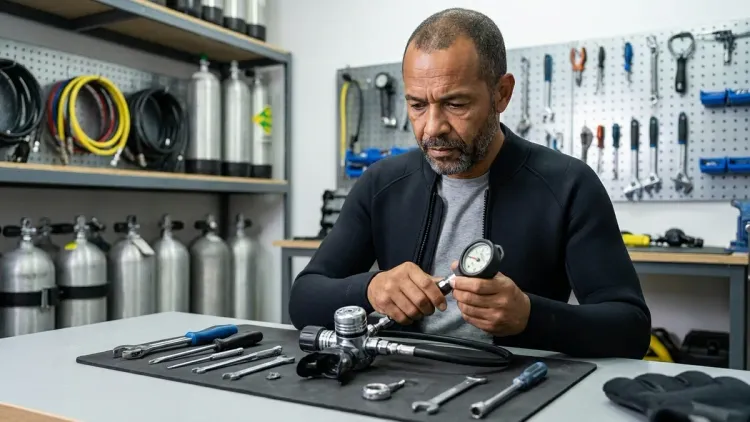
Manufacturers recommend annual service or service after 100-200 dives, whichever comes first. Service includes complete disassembly, ultrasonic cleaning, replacement of all o-rings and dynamic seals, inspection of valve seats and springs, lubrication, IP adjustment, and flow testing.
I'm diligent about annual service on my cold-water reg because the consequences of failure are higher. On my travel reg that sees 30-40 dives per year, I sometimes stretch it to 18 months if I'm between dive trips and the reg is performing perfectly. But I always service before a major trip.
Skipping service is false economy. A $100 service is cheap compared to a flooded first stage or a freeflow that ends your dive—or worse, causes a safety issue underwater.
For a detailed walkthrough of what happens during service and what you can check yourself between services, read our guide on how to service a scuba regulator.
Pre-Dive Safety Checks
Before every dive, you should run through a basic regulator check:
- Pressurize the system and listen for leaks (hissing at the first stage or hose connections)
- Purge both second stages and listen for immediate shutoff when you release the purge button
- Take several breaths from each second stage and verify smooth airflow with no chattering or wet breathing
- Check the octopus and verify it's accessible and breathing freely
- Inspect all hoses for cracks, abrasion, or bulging (signs of internal damage)
This takes 30 seconds and catches 90% of issues before you descend. I've caught slow leaks, sticky purge buttons, and loose hose fittings during pre-dive checks that would have caused real problems at depth.
Our pre-dive regulator safety checklist walks through every inspection point in detail.
Rinsing and Storage
After every dive day, rinse your regulator thoroughly in fresh water. Don't just dunk it—run fresh water through the hoses by submerging the second stages in a bucket and pressing the purge button gently a few times (with the first stage unpressurized and dust cap on).
This flushes salt, sand, and biological gunk out of the internal pathways. Salt crystals left to dry in a second stage will score the valve seat and cause leaks. I've seen divers destroy a $600 regulator by never rinsing it properly during a week-long liveaboard.
Store your reg in a cool, dry place away from direct sunlight. Don't coil the hoses tightly (causes kinks and internal damage). Don't store it pressurized (puts constant stress on o-rings and seals).
Frequently Asked Questions
What makes a dive regulator the "best" choice for a new diver?
The best dive regulator for a new diver is one that's balanced for easy breathing, easy to service in your region, and appropriate for the type of diving you'll be doing most often—usually warm-water recreational diving at depths shallower than 80 feet. You don't need the most expensive technical reg on the market, but you also shouldn't cheap out on life-support equipment. Look for a balanced regulator from a major manufacturer with good dealer support, and prioritize ease of breathing over weight savings or advanced features you won't use. A quality balanced reg will make learning easier because you won't be fighting to get each breath, which reduces task loading when you're already managing buoyancy, mask clearing, and navigation.
How often does a scuba regulator need to be serviced?

Scuba regulators should be professionally serviced annually or after every 100-200 dives, whichever comes first, according to most manufacturer recommendations. Service includes disassembly, cleaning, replacement of all o-rings and seals, inspection of internal components, lubrication, intermediate pressure adjustment, and performance testing. Even if your regulator seems to be working fine, internal wear on valve seats, o-ring degradation, and debris buildup can cause failures underwater if not addressed during regular service. Some divers stretch service intervals slightly if they dive infrequently and the reg performs flawlessly, but annual service is cheap insurance compared to the cost and risk of equipment failure at depth.
Can I use the same regulator for cold water and warm water diving?
You can use a cold-water regulator in warm water without any issues, but you cannot safely use a warm-water regulator in cold water below 50°F. Cold-water regulators are environmentally sealed to prevent internal icing caused by rapid air expansion at depth, and they typically use metal second-stage housings that act as heat sinks to prevent ice formation in the valve mechanism. A warm-water regulator in cold conditions risks freeflow—uncontrolled air delivery that can dump your entire tank in minutes and create a genuine emergency underwater. If you dive in both warm and cold water, buy a cold-water-rated regulator and use it everywhere, or own two regulators and use the appropriate one for conditions.
What is the difference between a balanced and unbalanced regulator?
A balanced regulator maintains consistent breathing effort regardless of tank pressure or depth by mechanically compensating for changes in ambient pressure and supply pressure, while an unbalanced regulator's breathing resistance increases as your tank empties and as you descend deeper. In practical terms, a balanced first stage keeps intermediate pressure stable from 3,000 psi down to 500 psi, and a balanced second stage requires the same cracking effort at 30 feet as it does at 130 feet. Unbalanced regulators work fine for shallow recreational diving, but you'll notice breathing gets harder near the end of the dive and at depth. For deeper diving, technical diving, or just a better breathing experience overall, a balanced regulator is worth the additional cost.
Do I really need to buy my own regulator or are rentals sufficient?
You should buy your own regulator if you dive more than a few times per year, dive in challenging conditions, or want consistent performance and the confidence that comes from knowing your life-support equipment has been properly maintained. Rental regulators vary wildly in quality, service history, and performance—I've used rental regs that breathed beautifully and others that felt like sucking air through a coffee stirrer. Owning your own reg means you know its service history, you can tune it to your preferences, and you develop familiarity with how it performs in different conditions. It's also more hygienic and often more cost-effective if you dive regularly, since rental fees add up quickly over time.
Summary
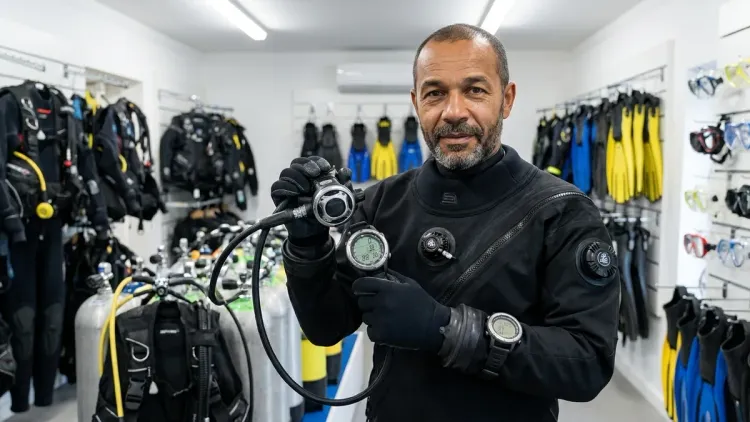
The best dive regulator isn't the one with the most impressive specs or the highest price tag—it's the one that matches your actual diving conditions, breathes effortlessly at the depths you dive, and maintains that performance over years of proper maintenance. After thousands of dives testing regulators in cold Pacific wrecks, warm Caribbean reefs, and everything in between, I've learned that mechanical simplicity, proven reliability, and appropriate environmental sealing matter far more than marketing hype about marginal performance gains.
For most recreational divers, a quality balanced regulator from a major manufacturer with good service network availability will serve you perfectly for a decade or more. Cold-water divers need to prioritize environmental sealing and metal second stages without exception. Technical divers need high-flow first stages and DIN connections. Travel-focused divers benefit from titanium and lightweight designs that don't sacrifice performance for pack weight.
Choose based on where and how you actually dive, maintain it religiously, and don't overthink the specs. A well-maintained mid-range regulator will outperform a neglected premium model every single time. Your regulator is literally life-support equipment—treat it that way, and it'll take care of you for thousands of dives to come.