
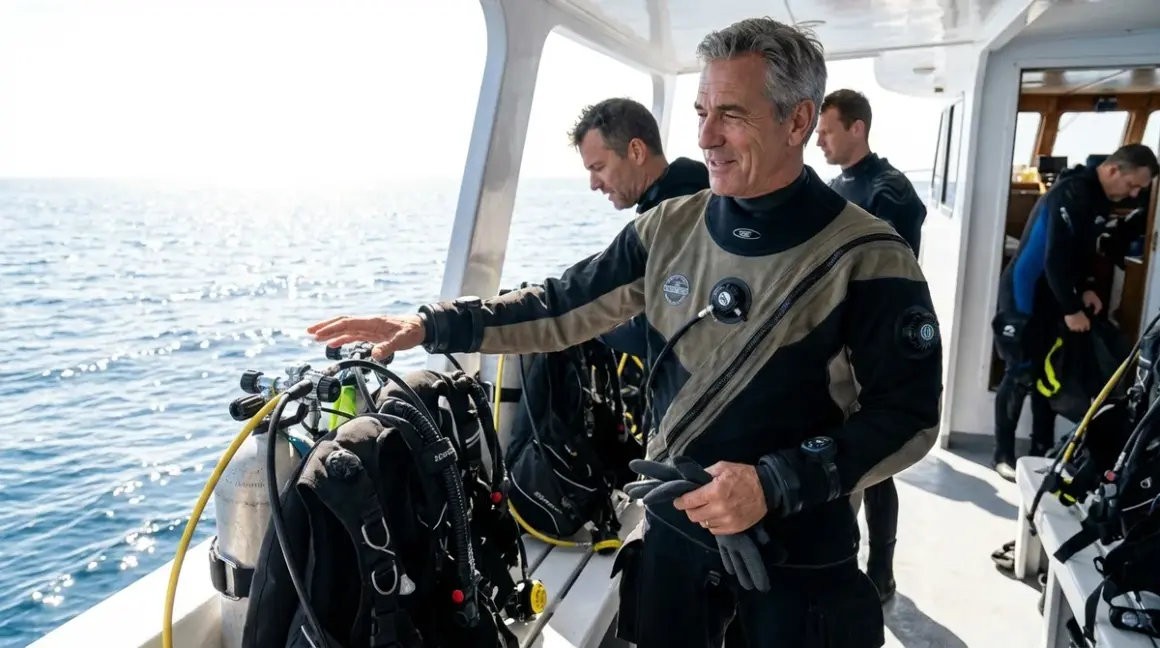

I've seen divers board a liveaboard with thousands of dollars worth of camera equipment and a single backup mask shoved in their bag as an afterthought. Then I watch that same diver lose three days of diving when their regulator first stage develops a slow leak 200 miles from the nearest dive shop. Here's the thing: redundant dive gear for liveaboards isn't about being paranoid—it's about maintaining your dive schedule when you're completely cut off from shore support. After more than forty years running dive operations and logging dives from the Bahamas to the Pacific, I've learned that the best divers pack like pessimists and dive like optimists.
What Is Redundant Dive Gear?
Redundant dive gear means carrying backup equipment that duplicates the critical functions of your primary life-support and dive-enabling systems. We're not talking about packing two of everything—that's impractical and expensive. Smart redundancy means identifying single points of failure in your dive setup and ensuring you have a functional alternative if that component fails.
In my experience, most recreational divers understand redundancy in the context of technical diving: pony bottles, dual bladder BCDs, and independent doubles. But redundant dive gear for liveaboards operates on a different principle. You're not planning for catastrophic equipment failure underwater—you're planning for the mechanical reality that O-rings fail, first stages develop creep, dive computers flood, and mask straps snap at the worst possible moment.
The difference between shore diving and liveaboard diving is access. When I'm running day charters out of Florida, a diver with a failed computer can rent one at the shop before the next morning's departure. On a liveaboard, especially those operating in remote locations like the Revillagigedo Islands or Papua New Guinea, you're working with whatever spare parts and backup gear you brought onboard. The boat might have some rental equipment, but I've seen liveaboards where the only backup regulator was a 20-year-old rental unit with a breathing resistance that felt like sucking concrete through a coffee stirrer.
The U.S. Coast Guard and PADI both emphasize equipment readiness, but neither organization has specific redundancy requirements for recreational diving. That leaves the decision entirely up to you. I tell people: if missing a dive would ruin your trip—financially or emotionally—then you need redundancy for that gear category.
How Redundant Dive Gear Works
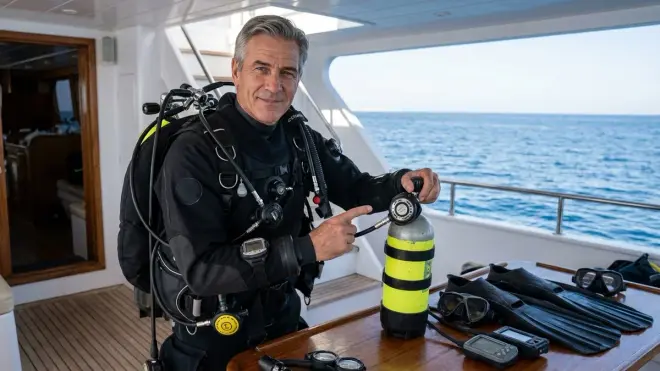
Redundancy works by eliminating single points of failure. Every piece of diving equipment falls into one of three categories: life-support critical (regulator, dive computer, depth gauge), dive-enabling critical (mask, fins, BCD, wetsuit), and convenience items (camera, lights, slate). Your redundancy planning should prioritize in that exact order.
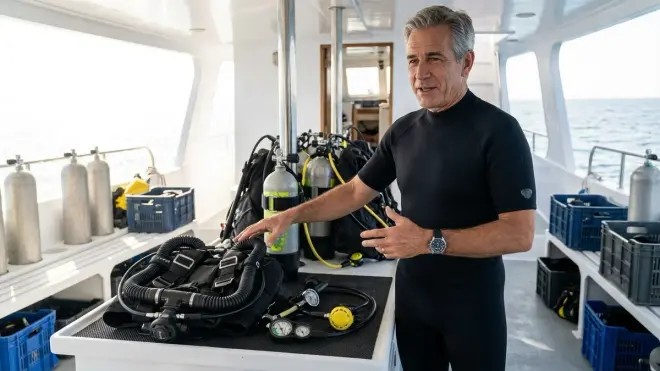
Let's start with regulators. Your primary regulator system includes a first stage, primary second stage, alternate second stage (octopus), and SPG or air-integrated computer. The most common failure modes I've witnessed over 8,000 dives include: first stage intermediate pressure drift (usually from a worn piston edge or seat deterioration), second stage freeflow (frozen environmental seal in cold water or debris in the lever mechanism), low-pressure hose blowout (usually at the crimped connection), and high-pressure spool O-ring failure.
A complete backup regulator—first stage, second stage, and SPG—solves all of these failure modes. I pack a full spare regulator on every liveaboard trip, and I've used it on roughly 15% of those trips. Not because my primary reg failed catastrophically, but because I developed a slow leak that would have cost me the rest of the week if I couldn't swap to a backup. The boat's onboard technician could service my primary regulator during surface intervals while I continued diving with the spare. That's the practical application of redundancy: maintaining dive operations while repairs happen in parallel.
For dive computers, redundancy means a second computer or a backup depth gauge and dive timer. Modern dive computers have failure modes that include flooded battery compartments (even with intact O-rings—I've seen pressure differentials push water past perfectly good seals), stuck piezoelectric depth sensors (rare but catastrophic), and software failures that display nonsense data or freeze mid-dive. I've witnessed two total computer failures on liveaboards in the past five years, and in both cases the divers had no backup. They spent the rest of the week doing shore-based surface interval calculations with dive tables—basically sitting out half their dives to stay conservative.
I carry a second dive computer on every liveaboard, and I run both computers throughout the trip. Some divers prefer a simple depth gauge and bottom timer as backup, and that's a valid approach if you're comfortable with dive table calculations. But given that a basic wrist-mounted dive computer runs around $200-300, and a week-long liveaboard costs between $2,000 and $5,000, the economics favor electronic redundancy.
Masks are the most commonly forgotten redundancy item, and it drives me crazy. I've seen divers pack $4,000 worth of camera gear and show up with one mask. Mask straps fail—the silicone degrades from UV exposure and age, and the buckle mechanisms crack from repeated stress cycling. Mask lenses crack from impact, and frame skirts tear. A backup mask costs around $50-80, weighs almost nothing, and saves your entire trip if your primary mask fails. I pack two backup masks: one identical to my primary, and one low-volume backup that works well enough if both my primary and first backup fail.
Buoyancy compensators have three main failure modes: bladder puncture, inflator mechanism failure, and dump valve failure. BCD redundancy is more complex because a full backup BCD adds significant weight and bulk to your luggage. Most liveaboards carry rental BCDs, so your redundancy strategy depends on whether you trust the boat's rental inventory. I've seen liveaboard rental BCDs that were perfectly maintained, and I've seen rental BCDs held together with zip ties and hope. If you're diving a high-end liveaboard, their rental gear is usually adequate. If you're on a budget operation, pack your own backup or at least inspect the rental options immediately upon boarding.
Why Redundant Dive Gear Matters
The financial math is simple: redundant dive gear for liveaboards costs between $300 and $800 depending on what you choose to duplicate, while a liveaboard trip averages $300-500 per day once you factor in airfare and opportunity cost. Missing two days of diving because your regulator failed pays for an entire backup regulator setup. Missing an entire week because your dive computer flooded costs you thousands in non-refundable expenses.
But the real value isn't financial—it's psychological. I've watched divers spiral into anxiety after equipment failures because they're suddenly dependent on the boat's repair capability or the generosity of other divers to loan gear. That stress bleeds into every subsequent dive, even after the problem is resolved. When you pack proper redundancy, you maintain control over your dive schedule. Equipment failures become minor inconveniences instead of trip-ending catastrophes.
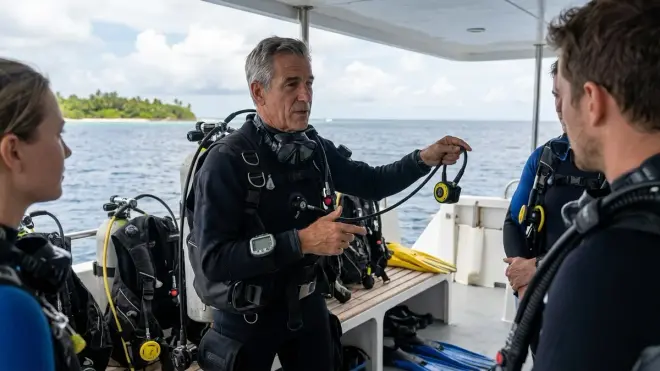
Liveaboards also operate on tight schedules. Most boats run 4-5 dives per day with surface intervals planned around food service and travel time between sites. If you miss a dive because you're troubleshooting a regulator issue, you're not just losing that dive—you're potentially disrupting the boat's schedule and inconveniencing other divers. Boat crews appreciate divers who can swap to backup gear and get in the water on schedule.
There's also a safety dimension that nobody likes to talk about. Equipment failures underwater are manageable with proper training—that's why we practice air-sharing drills and CESA procedures. But equipment failures underwater when you're diving from a liveaboard in remote locations add layers of complexity. Your nearest chamber might be eight hours away by boat. Your surface support might be minimal if the boat is short-staffed. I'm not suggesting redundancy eliminates risk, but it does give you more options for managing problems before they become emergencies.
Types & Variations of Redundant Dive Gear Systems
Minimal redundancy covers the absolute essentials: backup mask, spare dive computer or depth gauge/timer, and a save-a-dive kit with O-rings, mask strap, and fin straps. This approach keeps your luggage light and costs under $300. It works well for liveaboards with good onboard rental inventory and repair capability, or for divers doing single-week trips in accessible locations.
Standard redundancy adds a complete backup regulator system to the minimal setup. This is my recommended baseline for any liveaboard longer than four days or any destination more than a few hours from major dive infrastructure. You're looking at around $500-700 in additional gear, but you're covered for the vast majority of failure scenarios. For most divers, this is the sweet spot between preparedness and practicality.
Full redundancy duplicates every critical system: two complete regulator setups, two dive computers (both run throughout the trip), backup BCD (usually a lightweight travel BCD), backup mask, backup fins, and backup exposure suit if you're diving cold water. This is overkill for recreational tropical liveaboards, but it makes sense for technical diving expeditions, extended multi-week trips, or destinations with zero equipment support. I see this level of redundancy on Papua New Guinea trips and Antarctica expeditions where gear failure might end not just your dive but the entire expedition for logistical reasons.
Some divers also build redundancy through buddy coordination—two divers with identical equipment who agree to share gear if one system fails completely. This works if both divers are the same size and use compatible gear configurations. I've done this on several liveaboards where my dive buddy and I both ran DIN connections and could swap regulators between tanks if needed. The downside is that you're now dependent on another person's packing decisions and gear maintenance, which reintroduces a single point of failure.
Frequently Asked Questions
What redundant dive gear do I absolutely need for a liveaboard trip?
You absolutely need a backup mask and either a second dive computer or a mechanical depth gauge with bottom timer, because mask failures and computer failures are the most common trip-ending equipment problems on liveaboards and most boats don't stock adequate backup options for these items.
Should I pack a backup regulator for liveaboard diving?
You should pack a complete backup regulator system for any liveaboard longer than four days or any trip to a remote destination, because regulator repairs require specialized tools and parts that most boats don't carry, and a failed regulator will end your diving until you can source a replacement or complete a proper rebuild.
How do I choose which dive gear to duplicate for redundancy?
Choose redundancy for gear where failure would end your diving and where the boat is unlikely to have adequate rental replacements—this typically means masks, computers, and regulators—while skipping redundancy for gear like BCDs and fins where boats usually maintain decent rental inventory.
Can I rely on liveaboard rental gear instead of packing backups?
You can rely on liveaboard rental gear for BCDs and sometimes fins on high-end liveaboards with well-maintained equipment, but you should never rely on rental inventory for masks, dive computers, or regulators because rental quality varies dramatically between boats and rental computers are frequently out of calibration or running outdated algorithms.
How much extra luggage weight does redundant dive gear add?
Minimal redundancy with a backup mask, basic dive computer, and save-a-dive kit adds about 3-4 pounds to your luggage, while standard redundancy including a complete backup regulator adds approximately 8-10 pounds, and full redundancy with backup BCD and all systems duplicated can add 20-25 pounds depending on your gear choices.
What's the most commonly forgotten redundant gear on liveaboards?
The most commonly forgotten redundant gear is a backup mask, which I see missing from dive bags on about 40% of liveaboard trips despite masks being lightweight, inexpensive, and prone to strap failures and frame cracks that can end your diving immediately.
Is redundant dive gear necessary for beginner divers on liveaboards?
Redundant dive gear is especially necessary for beginner divers on liveaboards because newer divers are less skilled at troubleshooting equipment problems, less comfortable borrowing gear from other divers, and more likely to experience anxiety when equipment fails, making backup gear essential for maintaining their confidence and dive schedule.
Summary
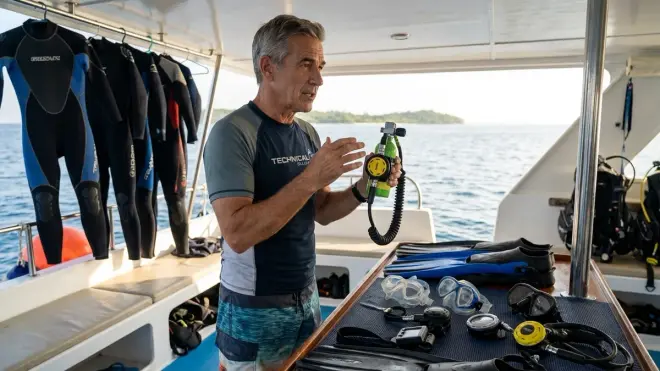
Redundant dive gear for liveaboards isn't paranoia—it's trip insurance. After four decades of watching divers pack for remote destinations, I can tell you that the divers who enjoy their trips most are the ones who never needed their backup gear but brought it anyway. The divers who have miserable trips are the ones explaining to themselves why they didn't pack a $60 backup mask.
Start with the basics: pack a backup mask and a second dive computer or at minimum a depth gauge and bottom timer. Add a complete spare regulator setup if you're doing anything longer than a long weekend or anything more remote than the Caribbean. Build from there based on your destination's remoteness and your tolerance for dive schedule disruption. And for what it's worth, pack your redundant gear in your carry-on bag if you're checking your primary gear—that way if the airline loses your checked luggage, you've at least got enough equipment to rent the rest and still dive. I learned that lesson the hard way on a Palau trip in 1994, and I've never made that mistake again.
Your liveaboard gear planning should assume Murphy's Law will strike at the worst possible moment, because in my experience, it absolutely will. Pack accordingly, dive confidently, and save your stress for the moments that actually matter—like that hammerhead shark cruising past at 90 feet while you're perfectly weighted, perfectly buoyant, and perfectly equipped with gear that works.