
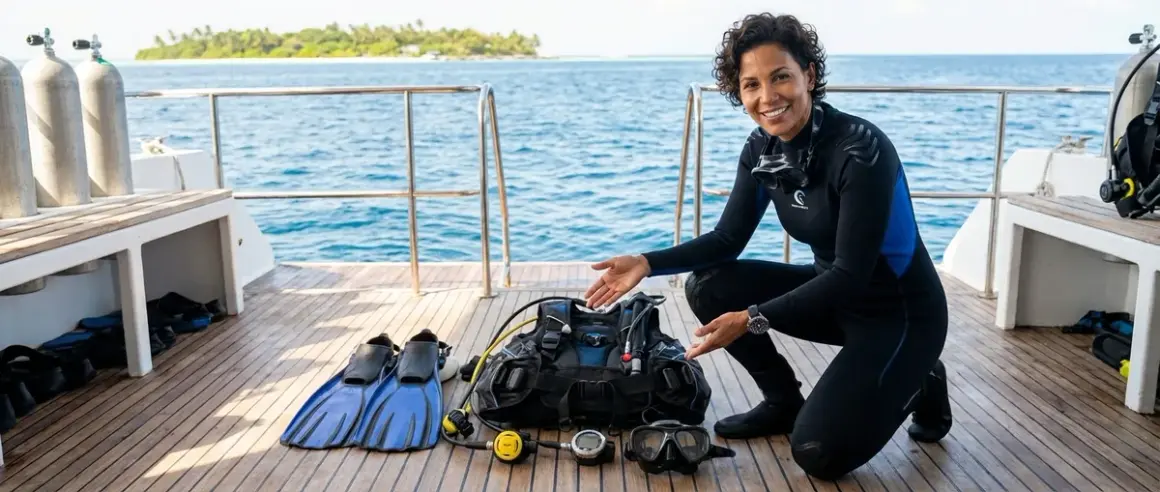

I'll never forget my first liveaboard trip to the atolls off Belize—I was so excited that I packed my gear bag the night before, zipped it up, and only realized halfway through the boat ride that I'd forgotten my dive computer charging cable. Not ideal when you're heading out for a week with no way to get back to shore! That experience taught me to always use a proper liveaboard diving gear checklist, and I've been refining mine ever since. Whether you're heading out for three days or three weeks, having everything organized before you board makes the difference between a relaxing adventure and a stressful scramble. This liveaboard diving gear checklist covers the essentials for recreational divers who want to enjoy multiple dives per day without equipment headaches or forgotten items.
Essential Diving Equipment
This is the core gear you absolutely need to get in the water. I pack these items first because if something's missing from this list, my trip is basically over before it starts.
Dive computer with fully charged battery: Your dive computer tracks your depth, bottom time, and surface intervals across multiple dives per day, which is crucial on liveaboards where you might do 3-4 dives daily. I learned the hard way to check the battery level before leaving—some boats have charging stations, but don't count on it. If you're curious about picking the right model for extended trips, check out best dive computers for extended liveaboard trips.
Regulator (first and second stage) with pressure gauge: Your regulator is what lets you breathe underwater, so this one's non-negotiable. Make sure you've had it serviced recently—most manufacturers recommend service every year or every 100 dives, whichever comes first. I always do a quick breath test before I pack mine just to make sure everything feels smooth.
BCD (Buoyancy Compensator Device) with all straps and buckles: Your BCD controls your buoyancy throughout the dive, and liveaboards are tough on gear with all that salt spray and constant use. Double-check that all your straps are secure and your inflator valve works properly—I use the BCD pre-dive safety checklist before every trip.
Mask and spare mask: I always bring two masks because a broken or flooded mask can ruin your entire trip, and there's no dive shop around the corner when you're out at sea. Make sure both fit well and have been defogged recently. I keep my spare in a hard case so it doesn't get crushed in my bag.
Snorkel: Even though you won't use it during dives, a snorkel is essential for surface swimming and conserving air when you're waiting for the boat to pick you up. Some liveaboards also have amazing snorkeling sites during surface intervals.
Fins with proper fit: Your fins provide propulsion and help you conserve energy over multiple dives per day. I prefer open-heel fins with adjustable straps for liveaboards because they're easier to get on and off when you're doing several dives. Make sure the straps aren't cracked or brittle—salt water ages them quickly.
Wetsuit or dive skin appropriate for water temperature: Water temperature varies dramatically depending on your destination, so check ahead. For tropical liveaboards like the ones I do in Belize, a 3mm wetsuit or even a dive skin works great, but if you're heading somewhere cooler, you might need 5mm or thicker. I wrote more about choosing the right thickness in 5mm vs 7mm wetsuit.
Dive boots and gloves: These protect your feet and hands from sharp coral, rocks, and boat ladders. Even in warm water, I always bring at least thin gloves because boat ladders get slippery and you'll be climbing them multiple times per day.
Safety and Navigation Gear
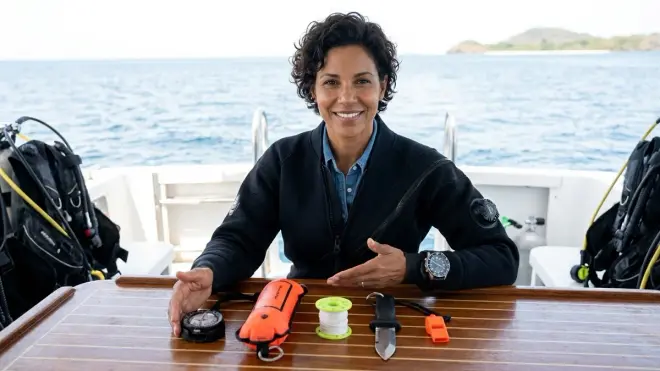
These items might seem like extras until you actually need them—then they become absolute lifesavers. I pack these in an easy-to-access pocket so I always know where they are.
Surface marker buoy (SMB) and reel: This is probably the single most important safety item for liveaboard diving because you might surface far from the boat after drift dives or when currents shift. An SMB makes you visible from a distance. I use a bright orange one that inflates to about 5-6 feet, and I practice deploying it regularly because it's not as intuitive as it looks the first few times.
Dive knife or cutting tool: You never know when you'll need to cut through fishing line or free yourself from entanglement. I wear mine on my BCD where I can reach it easily with either hand. Even in protected marine areas, you can run into ghost nets or discarded line.
Dive light or torch (primary and backup): Even if you're not planning night dives, a dive light is essential for liveaboards. You'll use it to look into crevices, restore colors at depth, and for any early morning or evening dives. I always bring a backup light too because batteries fail, and you don't want to miss a night dive because your primary light died.
Whistle attached to BCD: A simple whistle can get the boat crew's attention if you surface far away or in choppy conditions where your voice won't carry. I attach mine directly to my BCD inflator hose so it's always within reach.
Dive slate or wrist slate: Communication underwater is tricky, and on liveaboards you'll be diving with new buddies and seeing marine life you want to identify or share. I use mine constantly to point out interesting stuff or share air levels with my buddy.
Compass for underwater navigation: Most dive sites on liveaboards involve some navigation, especially on drift dives where you need to maintain a specific heading. My dive computer has a digital compass built in, but I still bring a backup analog one because electronics can fail.
Personal Comfort and Health Items
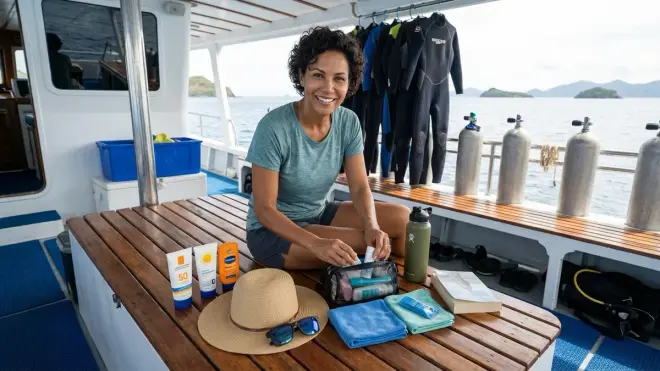
This is where I made most of my early mistakes—forgetting the small stuff that makes life aboard actually comfortable. You're living on a boat for days or weeks, not just day-tripping, so these matter more than you'd think.
Seasickness medication: Even if you've never been seasick before, liveaboards often travel overnight to reach remote dive sites, and the motion can be intense. I take medication the night before travel and the first morning aboard just to be safe. Ginger candies help too.
Prescription medications (full supply plus extra days): Bring more than you think you'll need because there's no pharmacy at sea. I pack mine in my carry-on, not my checked gear bag, and I keep the prescriptions in their original labeled bottles.
Sunscreen (reef-safe formula): You'll be in intense sun all day on deck between dives, and reef-safe sunscreen is often required by responsible liveaboard operators. I go through way more sunscreen than I expect on these trips.
After-sun lotion or aloe vera: Even with sunscreen, you'll probably get some sun exposure. I learned this the hard way after my first liveaboard when my shoulders turned bright red by day two.
Lip balm with SPF: Your lips get destroyed by sun, salt, and wind on liveaboards. I go through an entire tube on a week-long trip.
Personal toiletries and quick-dry towel: Boat showers are usually small and shared, so bring travel-sized everything. A quick-dry towel is essential because regular towels never fully dry in the humid marine environment. I use a microfiber one that packs down tiny.
Motion sickness relief (wristbands or additional medication): Beyond the pills, I like having acupressure wristbands as a backup option, especially for people who get drowsy from medication but still want to dive.
Photography and Documentation Gear
As someone who fell in love with diving because of underwater photography, this section is close to my heart. But even if you're not into photography, you'll want some way to document your trip.
Underwater camera or housing with fully charged batteries: If you're serious about photography, bring your dedicated underwater setup. I use a mirrorless camera in a housing, but even an action camera like the GoPro HERO13 Black works great for liveaboards since you'll be diving constantly. Make sure all your O-rings are clean and properly lubed—I check mine before every trip using the underwater camera maintenance checklist.
Spare batteries and memory cards: You'll shoot way more than you expect when you're doing multiple dives per day for a week. I bring at least three spare batteries and twice as many memory cards as I think I'll need. Trust me, running out of storage halfway through the trip is heartbreaking.
Charging cables and plug adapters: Liveaboards often have limited charging stations and may use different plug types depending on where the boat is registered. I bring a universal adapter and a power strip so I can charge multiple devices at once from a single outlet. Some boats run on 110V, others on 220V, so check ahead.
Lens cleaning supplies and defog solution: Salt water and condensation are constant enemies of camera housings and masks. I bring lens cleaning cloths, defog solution for my mask, and compressed air to blow out any moisture or salt from my camera housing seals.
Underwater strobes or video lights: If you're shooting serious photos, lighting makes a huge difference. I covered the options in detail in strobes vs continuous video lights, but for liveaboards, I prefer strobes since they don't drain batteries as fast as video lights.
Dry bag for electronics during transport: Getting from dock to boat often involves small tender boats where everything gets splashed. I keep all my electronics and camera gear in a waterproof dry bag until I'm safely aboard.
Clothing and Personal Items
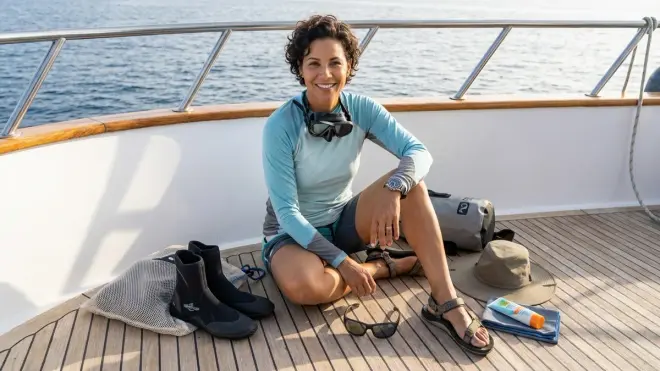
Living on a boat is different from hotel-based dive trips. Space is limited, laundry is usually not available, and everything gets damp from salt air. Pack smart and pack light.
Lightweight, quick-dry clothing (3-4 days' worth): I bring moisture-wicking shirts and shorts that dry overnight because there's usually nowhere to properly dry heavy cotton clothes. Everything lives in a slightly damp state on boats.
Light jacket or windbreaker: Even in tropical destinations, early morning boat rides and evening air can be surprisingly cool, especially when you're wet from diving. I always pack a thin water-resistant jacket that packs down small.
Hat with brim or cap: Sun protection for your face is critical during surface intervals. I prefer a hat with a chin strap so it doesn't blow away in the wind.
Sandals or boat shoes with non-slip soles: You'll be climbing wet ladders and walking on wet decks constantly. I wear sandals with back straps that stay secure but can handle being wet all day.
Modest clothing for local customs if stopping at ports: Some liveaboards visit local islands where covering shoulders and legs is respectful. I bring one light long-sleeve shirt and long pants just in case.
Gear Bags and Organization
This is where I made some of my biggest packing mistakes early on. The right bags make life aboard so much easier, and the wrong ones create chaos.
Large dive gear bag (mesh or roller): You need something big enough for all your bulky gear but that also drains and dries quickly. I use a mesh dive bag that lets water drain and air circulate. If you're trying to decide between options, check out scuba travel bag vs dive gear bag.
Small waterproof bag for daily essentials: During dives, I keep things like my room key, cash, and phone in a small dry bag. Boats are wet environments and nothing stays dry unless it's sealed.
Gear organization pouches or bags: I use separate smaller bags inside my main gear bag to organize things like spare O-rings, tools, medications, and camera accessories. This keeps me from digging through everything to find a tiny item.
Carabiners and gear clips: These are lifesavers for hanging wet gear to dry, attaching things to your BCD, or clipping your SMB reel. I bring at least five or six in different sizes.
Spare Parts and Repair Supplies
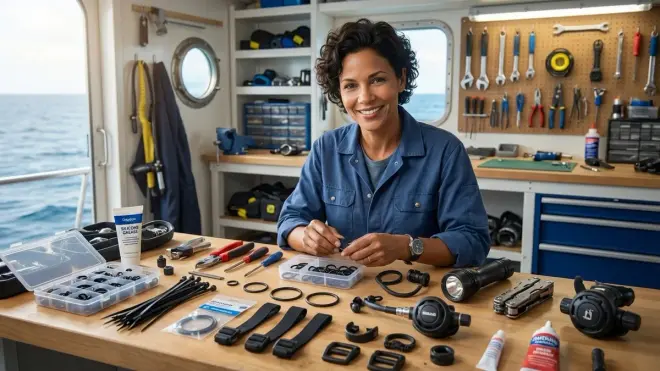
This section saved me on my second liveaboard when my fin strap snapped on dive three of a week-long trip. Remote locations mean you can't just buy replacements, so bring backups of anything that might fail.
Spare mask strap and fin straps: These rubber parts degrade over time, especially in intense sun and salt water. A spare strap weighs almost nothing and can save your entire trip.
Extra O-rings (multiple sizes): O-ring failures are one of the most common equipment problems on liveaboards. I bring a small assortment in a labeled container, plus a bit of silicone grease to lube them.
Save-a-Dive kit with basic tools: These kits usually include zip ties, O-rings, straps, buckles, and a few basic tools. Mine has saved not just my dives but also those of dive buddies who forgot something crucial.
Regulator mouthpiece and zip ties: Mouthpieces can tear or come loose, and zip ties fix about a hundred small problems. I've used them to repair fin straps, secure dangling hoses, and temporarily fix a broken buckle.
Super glue or repair adhesive: Not for any critical safety gear, but useful for minor repairs to non-essential items like the lining of your wetsuit or a torn gear bag.
Small multi-tool or dive tool: I carry a compact multi-tool with pliers, screwdrivers, and a blade. It's useful for adjusting gear, tightening loose screws, and dozens of small fixes.
Documentation and Administrative Items
These aren't diving gear, but forgetting them can prevent you from diving at all. I keep all of these in a waterproof document pouch that stays in my carry-on, not my checked luggage.
Certification cards (C-card) and dive log: Most liveaboards require proof of certification and may want to see your logged dives to verify your experience level. I keep both my original card and a photo backup on my phone.
Dive insurance information and policy number: Dive insurance is essential for liveaboards because you're often far from medical facilities. I use DAN (Divers Alert Network) and keep my policy card with me at all times. Make sure your policy covers liveaboard diving and remote locations.
Passport and any required visas: This seems obvious, but I've seen people almost miss boats because of passport issues. Check visa requirements well in advance—some countries require passports valid for six months beyond your travel dates.
Printed or digital copies of all bookings and confirmations: Cell service is unreliable or nonexistent once you're at sea. I keep PDF copies of my liveaboard booking, flights, and transfers saved offline on my phone.
Emergency contact information: I give my family the liveaboard's satellite phone number and departure/return schedule. Some boats have limited or no internet, so setting expectations ahead of time prevents worry.
Medical questionnaire (if required by operator): Many liveaboards ask for a medical form, especially if you have any conditions that might affect diving. Fill these out honestly and ahead of time.
Final Check Before You Go
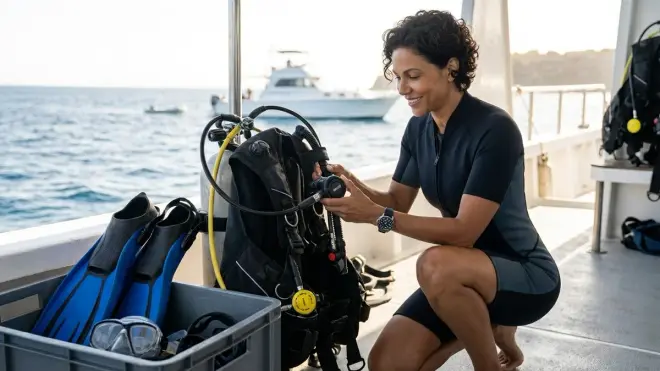
Here's my condensed liveaboard diving gear checklist that I print out and physically check off before every trip. This covers the absolute essentials—if something's on this list, it's critical.
Core Equipment:
- Dive computer (charged)
- Regulator with gauge
- BCD (inflator tested)
- Mask + spare mask
- Fins
- Wetsuit
- Boots and gloves
Safety Gear:
- SMB and reel
- Dive knife
- Primary and backup lights
- Whistle (on BCD)
- Compass
Personal Health:
- Prescription medications
- Seasickness medication
- Reef-safe sunscreen
- First aid supplies
Photography (if applicable):
- Camera/housing (O-rings checked)
- Spare batteries and memory cards
- Charging cables and adapters
- Strobes or lights
Documentation:
- Certification card
- Dive insurance card
- Passport/ID
- Booking confirmations
Spare Parts:
- Mask and fin straps
- O-rings and silicone grease
- Save-a-Dive kit
- Multi-tool
Before you zip everything up, lay it all out and go through this liveaboard diving gear checklist one final time. I do this the night before I leave, then do a quick visual check the morning of departure. It takes ten minutes and has saved me from forgotten items more times than I can count.
Frequently Asked Questions
What's the most commonly forgotten item on liveaboard diving trips?
The most commonly forgotten items are charging cables and plug adapters, followed closely by spare mask straps and seasickness medication. I recommend making a liveaboard diving gear checklist specific to your setup and checking it twice—once when you pack and once before you leave home. Keep a digital copy of your checklist on your phone so you can reference it for future trips.
Should I bring my own dive gear or rent on the liveaboard?
Bring your own gear if possible, especially your regulator, mask, dive computer, and exposure protection, because you'll be diving multiple times per day for consecutive days and comfort matters enormously. Most liveaboards have rental gear available, but fit and familiarity become critical when you're doing 20+ dives in a week. I always bring my own regulator and mask at minimum because these are the items where personal fit affects your entire dive experience.
How much luggage space do I need for a week-long liveaboard trip?
Most divers need a large dive gear bag (around 100-120 liters) for equipment and a smaller carry-on for clothing and personal items. I use a mesh roller bag for gear and pack light on clothes since you'll live in swimwear and quick-dry clothing most of the time. Check your liveaboard's luggage restrictions ahead of time—some boats have limited storage space and prefer soft-sided bags that can be compressed or stowed. For more detailed packing strategies, see how to pack scuba gear for remote liveaboard trips.
Final Thoughts
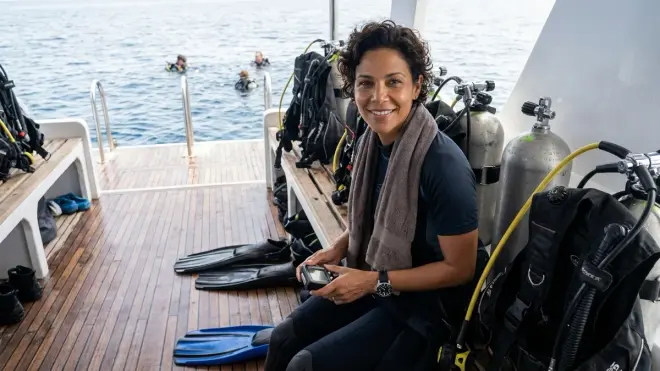
My first liveaboard taught me that preparation makes the difference between a stressful trip and an incredible adventure. When you're living on a boat with limited storage, no nearby shops, and multiple dives per day, having the right gear organized and ready matters way more than it does on day trips. I still get excited packing for liveaboards three years into my diving journey because I know each trip will be packed with marine life encounters I couldn't see any other way.
The liveaboard diving gear checklist I've shared here comes from real experience—including the mistakes I made and watched other divers make. Start with this list, customize it for your specific destination and photography goals, and then review it twice before you leave. Once you're out at sea with the sun rising over endless blue water and nothing but incredible dive sites ahead, you'll be glad you took the time to pack properly. The most relaxing liveaboard trips are the ones where your gear works perfectly and you can focus entirely on the diving.
Safe travels, and I hope you see amazing things down there!