
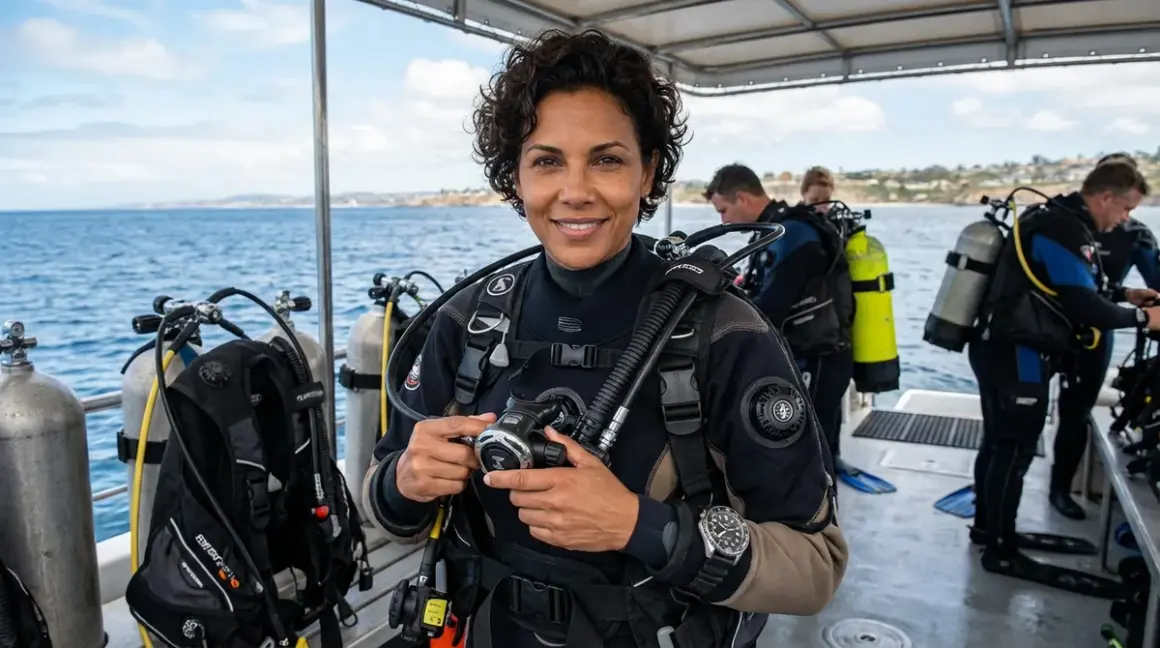

When I first started diving, I thought a scuba buoyancy compensator was just a fancy backpack that held your tank. I was so wrong. Your BCD is actually one of the most important pieces of gear you'll own—it controls whether you're floating, sinking, or hovering perfectly still to snap that perfect photo of a seahorse. After three years and 80 dives, I'm still learning new things about how my BCD affects every single dive I do, and I wish someone had explained all this to me from the beginning.
What Is a Scuba Buoyancy Compensator?
A scuba buoyancy compensator (usually called a BCD or BC) is the piece of equipment that lets you control your position in the water by adding or releasing air from an internal bladder. Think of it as your personal flotation device that you have complete control over—you can make yourself float on the surface before a dive, sink down to explore a wreck, or hover motionless at 60 feet while a turtle swims past your camera lens.
The BCD does more than just help you float, though. It's also the harness system that holds your scuba tank on your back, provides attachment points for all your accessories (dive computer, camera, lights, whatever you're carrying), and keeps you comfortable during the entire dive. I learned pretty quickly that a poorly fitting BCD makes every dive miserable—I borrowed one on my tenth dive that was too big, and I spent the whole time fighting against it shifting around on my back.
Your BCD connects directly to your tank's air supply through a low-pressure inflator hose that attaches to your regulator's first stage. This means you're using the same air you breathe to control your buoyancy, which honestly confused me at first because I was worried about "wasting" my air. (Spoiler: the amount you use for buoyancy control is pretty minimal compared to what you're breathing.)
The basic concept is straightforward—add air to go up, release air to go down—but mastering buoyancy control is one of those skills that takes real practice. I'm still working on it, especially when I'm trying to stay perfectly still for underwater photography.
How It Works
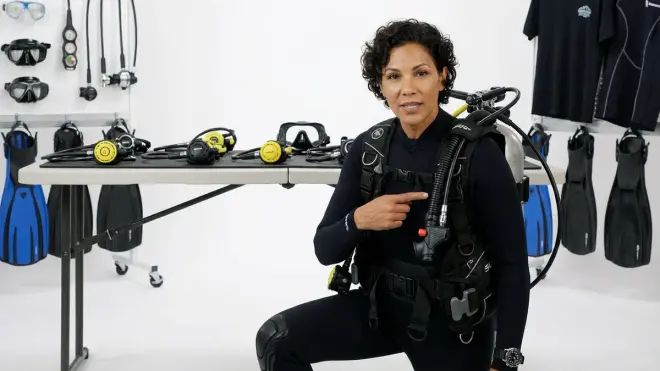
The core of any BCD is the air bladder—a flexible, airtight compartment that expands when you add air and contracts when you release it. When you press the inflator button on your inflator hose (the corrugated hose on your left shoulder), air flows from your tank into the bladder, increasing your overall volume. Since you're not getting any heavier, just bigger, you become more buoyant and start to rise.
To release air, you have a few options depending on your BCD model. The most common method is using the dump valve at the top of your inflator hose—you hold the hose above your head and press the deflate button, and air escapes out the top. Most BCDs also have additional dump valves on the shoulders or lower back that you can pull with toggles. I'll be honest, it took me probably 15 dives before I stopped fumbling with these different valves and could release air smoothly without thinking about it.
Here's the physics part that actually matters: as you descend deeper, the water pressure increases and compresses the air in your BCD bladder (and in your wetsuit, if you're wearing one). This compression makes you less buoyant, so you'll start sinking faster unless you add more air. The opposite happens when you ascend—the air expands, you become more buoyant, and you need to release air to avoid an uncontrolled ascent. This is why buoyancy control is something you're constantly adjusting throughout a dive, not something you set once and forget.
According to PADI, proper buoyancy control is one of the most important skills for safe diving and protecting marine environments, and your BCD is the primary tool for achieving that control. I definitely kicked some coral with my fins before I got better at hovering in place—not my proudest moment, but it taught me how important this skill really is.
The inflator mechanism itself is pretty simple—there's a button you press with your thumb that opens a valve, allowing air to flow from your low-pressure hose into the bladder. The deflate button (usually pressed with your index finger) opens the exhaust valve at the top. Some BCDs also have an "overpressure" or "relief valve" that automatically releases air if you inflate too much, which is a nice safety feature that's saved me from turning into a balloon more than once.
Different BCD styles distribute this air bladder in different ways. Jacket-style BCDs wrap the bladder around your torso like a life vest, which gives you that characteristic "hugged" feeling when inflated. Back-inflate BCDs keep all the air behind you, and wing BCDs (used mostly by technical divers) have the bladder completely separate from the harness. Each style affects how you float and move in the water, which I'll get into more in a bit.
The BCD also includes the weight integration system on many modern models, which lets you load weight pockets directly into the BCD instead of wearing a separate weight belt. This was a game-changer for me—I find integrated weights way more comfortable than a belt digging into my hips. The pockets are designed to be easily removable in an emergency, which is an important safety feature I hope I never have to use.
Why It Matters
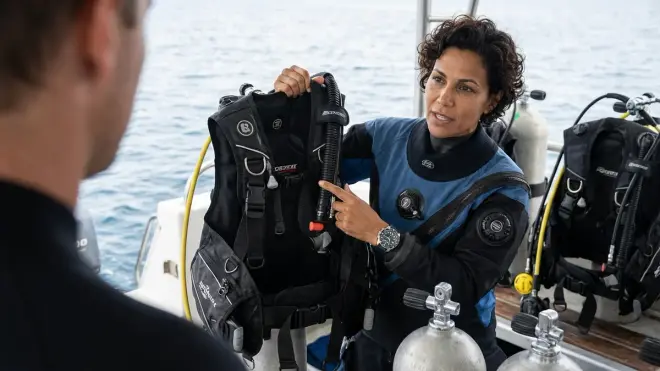
Your BCD affects literally every aspect of your dive experience. Buoyancy control determines whether you're relaxed and enjoying the reef or constantly fighting to maintain your position. When I first started, I was terrible at buoyancy—I'd add too much air, start rising, panic and dump all my air, then sink like a rock. It was exhausting. A good BCD that fits properly and responds smoothly makes learning this skill so much easier.
For underwater photography (my main obsession these days), precise buoyancy is absolutely critical. If you're bobbing up and down or drifting past your subject, you'll never get sharp shots. I've learned that even tiny adjustments—just a tiny tap of the inflator button—can make the difference between nailing a macro shot and completely missing it. This is where a responsive BCD with good control mechanisms really matters.
Safety is another huge factor. Your BCD is an essential piece of safety equipment because it provides positive buoyancy at the surface. After every dive, I inflate my BCD fully before removing my regulator, so I'm floating comfortably while I wait for the boat pickup. In an emergency situation, being able to establish positive buoyancy quickly can be lifesaving. This is also why the quick-release buckles and weight releases are designed the way they are—you need to be able to ditch weight or remove the BCD fast if something goes wrong.
Comfort matters more than I initially thought it would. I've done dives wearing rental BCDs that dug into my shoulders, shifted around constantly, or put pressure on my lower back in weird ways. After 60 minutes underwater, these annoyances become genuinely painful. A well-fitted BCD distributes the weight of your tank evenly, stays secure without restricting movement, and doesn't create pressure points. If you're planning to dive regularly, finding a BCD that fits your body properly is worth every penny.
The BCD also serves as your attachment platform for all your other gear. I've got D-rings for clipping off my camera, my dive light, my safety sausage, and my backup mask. Some BCDs have more attachment points than others, which is something to think about based on what kind of diving you do. Technical divers need way more D-rings than I do as a recreational diver, but I still want at least four or five in useful positions.
Types & Variations
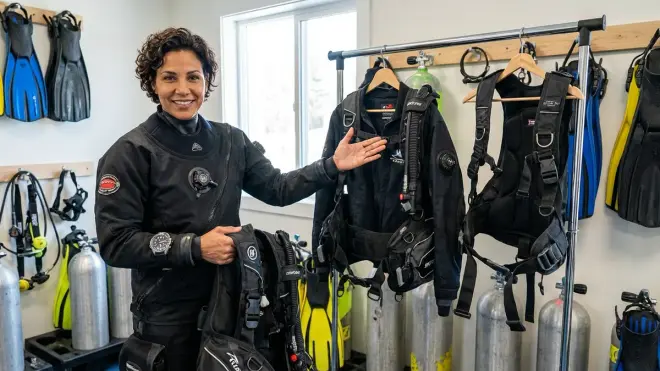
Jacket-style BCDs were what I learned on, and they're still the most common type you'll see in rental fleets and beginner courses. The air bladder wraps around your sides and front, which gives you an upright, comfortable position when you're floating on the surface. I like that they're intuitive—when you inflate them, you feel the squeeze around your torso, so it's obvious they're working. The downside is that when fully inflated, they can push you forward into a face-down position, which feels a bit awkward. They're great for beginners and recreational diving, but some experienced divers find them too bulky. If you want specific recommendations for starting out, check out the best buoyancy control devices for beginner divers.
Back-inflate BCDs keep all the air behind you in a single bladder against your back. When I first tried one, it felt strange because you don't get that "hug" sensation when you add air—the pressure is all on your back and shoulders. The big advantage is that they give you a more horizontal, streamlined position in the water, which is better for photography and reduces drag when swimming. At the surface, though, they tend to push your face forward unless you lean back, which took some getting used to. For a detailed comparison, I found the article on jacket BCD vs back inflate BCD really helpful when I was deciding what to buy.
Wing BCDs (also called BP/W systems for backplate and wing) are modular systems where the buoyancy bladder is a separate "wing" attached to a metal or plastic backplate. These are popular with technical divers and cave divers because they're customizable and offer better trim control. I haven't used one yet—they seem a bit complicated for where I am in my diving journey—but I know divers who swear by them once you get past the learning curve.
Travel BCDs are lightweight, compact versions designed specifically for divers who fly to dive destinations frequently. Since I'm based in Belize, I don't travel as much as some divers, but when I do go on dive trips, I really appreciate that my travel BCD weighs under five pounds and packs into a small space. The trade-off is usually less padding and fewer features compared to full-size BCDs. If you're constantly flying to dive destinations, take a look at the best travel BCDs under 5 pounds for options that won't destroy your baggage allowance.
Choosing the Right Scuba Buoyancy Compensator for Your Needs
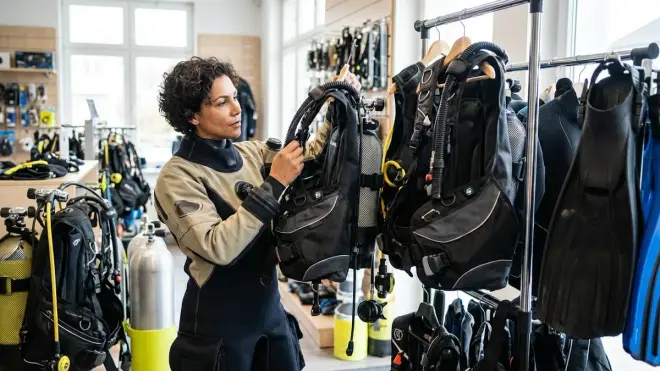
Figuring out which BCD to buy was honestly one of the most overwhelming decisions when I was building my gear collection. There are so many options, and they all claim to be the best. Here's what I learned through trial and error (and a few rental BCD disasters).
Fit is everything. I can't stress this enough. A BCD that's too big will shift around and make you feel unstable. One that's too small will restrict your breathing and movement. When I was shopping for my first BCD, I tried on probably six different models at my local dive shop, and I was shocked at how different they all felt on my body. Women-specific BCDs made a huge difference for me because they're cut to fit narrower shoulders and account for chest shape—generic BCDs just didn't sit right. If you can, try on BCDs while wearing your wetsuit or drysuit, since that's how you'll actually be using them. The guide on how to properly fit and adjust your scuba BCD has some really practical tips I wish I'd known earlier.
Lift capacity is the amount of air the bladder can hold, which determines how much weight it can make neutral or positive. For recreational diving in warm water with a wetsuit, 25-30 pounds of lift is usually plenty. If you're diving cold water with a thick wetsuit or drysuit, or carrying heavy camera equipment like I do, you might need 35-40 pounds or more. I made the mistake of buying a low-lift-capacity travel BCD first, and then realized it wasn't quite enough for when I'm wearing my 5mm wetsuit and carrying my full camera rig. For more detail on this, the article about understanding BCD lift capacity breaks down the math.
Features to look for really depend on your diving style. For me as a photographer, I need multiple D-rings in accessible positions—I've got my camera on a retractor, my strobe arms clipped to chest D-rings, and my safety equipment on hip D-rings. If you're just starting out, you probably don't need as many attachment points. Integrated weight pockets are a feature I'd never give up—they're so much more comfortable than a weight belt. Adjustable straps on the shoulders, chest, and waist let you fine-tune the fit. Some BCDs have padding on the shoulder straps and back panel, which is nice for comfort but adds bulk and weight. My travel BCD has minimal padding, and I notice the difference on longer dive days, but it's worth it for the weight savings when I'm flying.
Dump valves are another consideration. More valves give you more options for releasing air, but they can also leak if not maintained properly. I've had a shoulder dump valve stick open once (terrifying experience when you're trying to descend), which taught me the importance of checking these during my pre-dive safety checks. Most BCDs have at least two dump valves—one on the inflator hose and one on the shoulder or kidney area.
Budget is real—I get it. A quality BCD typically runs around $400–$800, which is a significant investment when you're also buying regulators, a computer, and everything else. Cheaper BCDs in the around $200–$300 range exist, but in my experience, they often lack important features like weight integration or have less durable materials. That said, I've seen divers who take excellent care of their budget BCDs and get years of use out of them. If you're just starting and not sure you'll stick with diving, renting might make sense until you're committed.
For specific recommendations based on your experience level and budget, check out how to choose a buoyancy compensator, which walks through matching BCD features to your actual diving profile and conditions.
Caring for Your Scuba Buoyancy Compensator
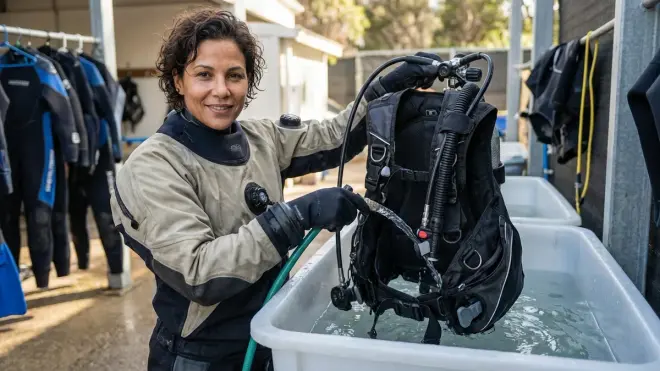
I'll admit, I was pretty lazy about BCD maintenance after my first few dives. I'd rinse it quickly and hang it up to dry, and that was about it. Then my inflator started sticking, and I had to take it in for service way earlier than necessary. Now I'm way more careful, and my BCD has been working perfectly for over a year.
After every dive day, I thoroughly rinse my BCD inside and out with fresh water. The "inside" part is important—salt crystals and debris can build up inside the bladder and cause problems. I fill the bladder partially with fresh water through the inflator hose (by sticking it in a bucket and pressing the inflate button), then swish it around, and drain it through the dump valves. I'll usually do this two or three times until the water runs clear. It seems fussy, but it only takes a few extra minutes and prevents so many problems.
I always hang my BCD on a wide plastic hanger to dry, never draped over a railing or folded up. The weight of the BCD can stretch and damage the bladder material if it's not supported properly. I make sure it's completely dry before storing it, because trapped moisture leads to mildew and that horrible musty smell that some rental BCDs have.
Lubrication of the inflator mechanism is something I do every 20-30 dives or so, following the manufacturer's instructions. This keeps the buttons pressing smoothly and prevents them from sticking. I use the specific silicone grease recommended for scuba gear—never regular lubricants, which can damage the materials.
Storage matters too. I keep my BCD in a cool, dry place away from direct sunlight. UV exposure breaks down the materials over time, and heat can damage the bladder. I store mine with the bladder partially inflated so the walls don't stick together, which is a tip I learned from a dive instructor who said he's seen collapsed bladders from long-term deflated storage.
Professional servicing is recommended annually or every 100 dives, whichever comes first. This is when a technician checks all the valves, inspects the bladder for leaks, and tests the overall function. It usually costs around $50–$75, which feels like a lot but is worth it for safety and extending the life of your BCD. The BCD maintenance checklist has a complete schedule if you want to get more detailed about this stuff.
Common BCD Problems I've Encountered
Stuck inflator buttons are probably the most common issue I've dealt with. Usually this happens because of salt buildup or sand getting into the mechanism. If your inflator button doesn't release after you press it, air keeps flowing into your bladder—not ideal when you're trying to descend or stay at depth. I've had this happen once during a dive, and the fix is to disconnect the low-pressure hose from the inflator (there's usually a quick-disconnect fitting) to stop the air flow, then use your dump valves to control buoyancy for the rest of the dive. It's one of those problems that's preventable with proper rinsing and occasional lubrication.
Slow leaks in the bladder are harder to detect but equally annoying. If you notice you're having to add air more frequently than usual during dives, or your BCD slowly deflates when you're not touching it, you might have a small leak. I had a tiny puncture in my bladder from accidentally setting my BCD down on a sharp surface on a dock—totally my fault. Most dive shops can patch small holes, similar to fixing a bike tire, but larger tears might require bladder replacement.
Dump valves that leak or don't seal properly can cause similar symptoms. I've had a shoulder dump valve that wasn't closing completely, which meant I was slowly losing air throughout the dive. This is usually fixable with cleaning or replacing the valve seal, but it requires taking the BCD in for service.
Broken buckles are more of an annoyance than a safety issue, but they make your BCD really uncomfortable to wear. I cracked a chest strap buckle by over-tightening it with cold hands—I couldn't feel how hard I was yanking on it with thick gloves on. Replacement buckles are cheap and easy to install, but it's better to just be gentler with the straps in the first place.
Frequently Asked Questions
What is the difference between a BCD and a buoyancy compensator?
There is no practical difference—BCD stands for Buoyancy Control Device, and buoyancy compensator means the same thing. You'll also hear it called a BC, a wing (specifically for backplate and wing systems), or sometimes a stabilizer jacket (mostly in British diving terminology). They're all referring to the same piece of equipment that controls your buoyancy underwater.
How much should I inflate my BCD at the surface?
At the surface before and after a dive, you should inflate your BCD enough to float comfortably without effort, which usually means adding air until you feel the BCD snug against your body and your head is well above water. This gives you positive buoyancy for safety and relaxation. How much air this requires varies based on your body weight, wetsuit thickness, and how much weight you're carrying, but generally you'll use maybe half to three-quarters of your BCD's total capacity.
Can you dive without a BCD?
Technically yes, but it's not recommended and violates most diving certifications and standards. Freedivers dive without BCDs because they're breath-holding and returning to the surface after each dive, but scuba diving involves extended time at depth where you need to control your buoyancy as your tank air is consumed and your wetsuit compression changes. Your BCD is also your primary flotation device for surface safety, which is critical.
How often should a scuba buoyancy compensator be serviced?
Most manufacturers and training agencies recommend professional BCD servicing annually or every 100 dives, whichever comes first. This includes inspection of the inflator mechanism, dump valves, bladder integrity, and all buckles and straps. However, you should perform your own basic maintenance after every dive day, including thorough rinsing inside and outside with fresh water and checking all functions.
Should I get a jacket style or back inflate BCD?
For beginners, a jacket-style BCD is usually easier to learn with because it provides intuitive upright flotation at the surface and a very stable feeling in the water. Back-inflate BCDs offer better streamlining and a more horizontal swimming position, which many divers prefer once they're comfortable with buoyancy control, and they're particularly popular for underwater photography. Try both styles if possible before committing, because personal preference and diving style matter more than one being universally "better."
What size BCD do I need?
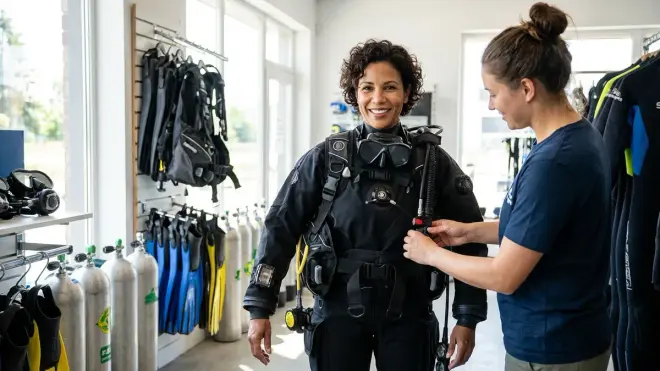
BCD sizing is based on your chest circumference, weight, and height, but sizing varies significantly between manufacturers, so trying on multiple options is essential. Most BCDs come in sizes like small, medium, large, and extra-large, with adjustable straps to fine-tune the fit. The BCD should fit snugly when wearing your exposure suit without gaps or excessive tightness that restricts breathing. Many brands offer women-specific cuts that fit narrower shoulders and different torso shapes more comfortably.
How much weight capacity do I need in my BCD?
For recreational warm-water diving with a thin wetsuit or no suit, 25-30 pounds of lift capacity is typically sufficient. If you're diving in cold water with thick exposure protection (7mm wetsuit or drysuit), or carrying heavy equipment like camera rigs, you'll want 35-40 pounds or more. The general rule is your BCD should be able to make your entire rig (including you, weights, tank, and gear) positively buoyant at the surface even if your exposure suit provides no buoyancy.
Final Thoughts
Your scuba buoyancy compensator is way more than just a tank holder—it's the piece of equipment that determines whether you're comfortable, safe, and in control during every dive. I know the options can feel overwhelming when you're starting out, and I definitely made some mistakes figuring out what worked for me. But once you find a BCD that fits your body, matches your diving style, and feels comfortable after an hour underwater, diving becomes so much more enjoyable.
Take the time to try different styles, get properly fitted, and don't be shy about asking experienced divers what they like and dislike about their gear. I've learned more from honest conversations with other divers than from any product description. And remember that buoyancy control is a skill that takes practice—even the best BCD won't magically make you a perfect diver, but the right one will make learning that skill much easier.
Whether you're just getting certified or building your first complete gear setup, understanding how your buoyancy compensator works and what features matter for your specific diving will make every dive better. I'm still learning new tricks after three years, and honestly, that's part of what I love about this sport.