
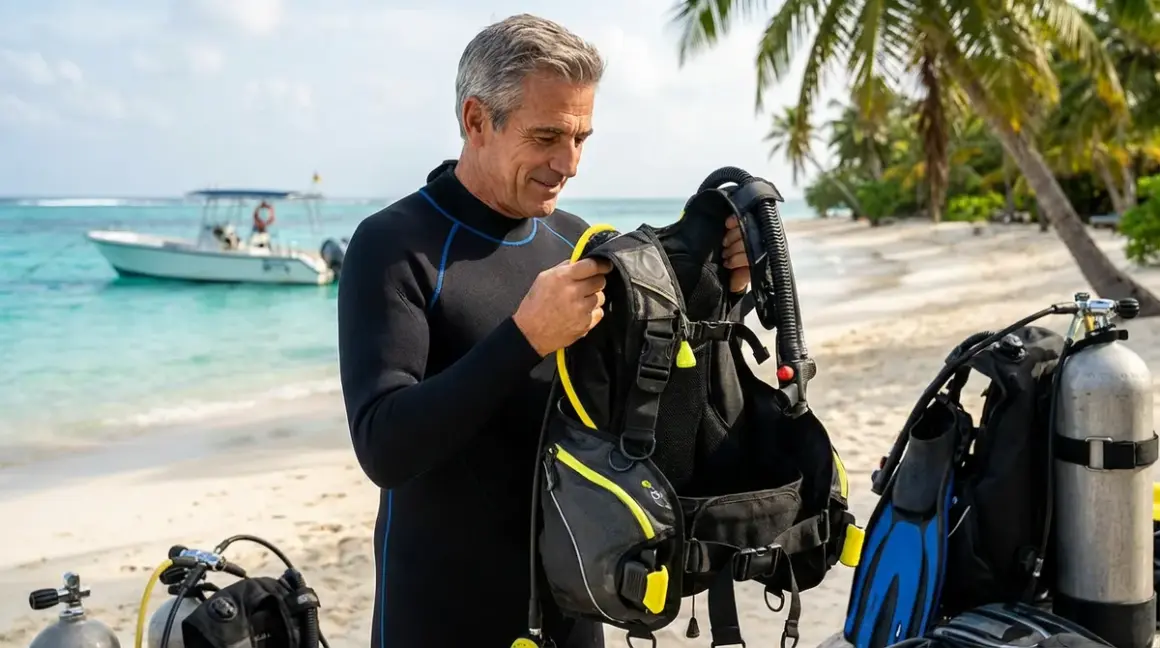

I've watched too many divers show up at the dock lugging 70-pound roller bags and paying overweight fees that could've funded another day of diving. Here's the thing: if you're traveling more than twice a year, a best travel bcd lightweight option isn't a luxury—it's a necessity. After four decades of watching gear evolve and personally testing dozens of ultralight BCDs in everything from Florida springs to Caribbean drift dives, I can tell you that the modern crop of sub-5-pound travel BCDs actually work. They're not the flimsy compromises they were a decade ago.
Quick verdict: The best travel BCDs balance packability with durability, and you shouldn't sacrifice essential features just to shave ounces. I've seen plenty of 3-pound BCDs fail after two trips because manufacturers cut corners on bladder material or stitching. The sweet spot is 4-4.5 pounds of well-engineered nylon and marine-grade hardware that'll last 300+ dives.
What to Look For in a Lightweight Travel BCD
Actual Weight vs Marketing Weight
Let me be blunt: manufacturers lie. Or at least they're creative with their numbers. When a company claims "3.8 pounds," they're usually weighing the bladder and harness without the integrated weight system, D-rings, or sometimes even the inflator assembly. I always weigh complete BCDs on my own scale, and I've found discrepancies of up to 12 ounces between advertised and actual weights.
Look for dry weight specifications that explicitly state "complete assembly." Also consider that weight in water matters more than land weight once you're diving. A BCD that's 4.2 pounds on land but uses high-quality 420-denier nylon will perform neutrally underwater, while a 3.5-pound model with cheap 210-denier fabric might require you to add weight to compensate for excess buoyancy.
The other number that matters: packed dimensions. I've tested BCDs that weighed 4 pounds but packed down to the size of a volleyball, and others at 4.5 pounds that barely fit in a carry-on because of bulky padding and non-compressible materials. For genuine travel utility, you want something that rolls tight—ideally into a 12"x10"x6" footprint or smaller.
Lift Capacity and Size Range
Here's where inexperienced divers get themselves in trouble. They buy a minimalist 18-pound lift capacity BCD because it weighs 3 pounds, then discover they can't surface a steel tank and 6mm wetsuit combo in cold water. Your travel BCD still needs enough lift for worst-case scenarios, not just tropical diving in a 3mm suit.
For recreational diving, I generally recommend minimum 25-pound lift capacity. Technical divers or anyone using steel tanks and thick exposure protection should look at 30+ pounds. Remember that understanding BCD lift capacity isn't just about surface flotation—it's about maintaining control during ascents with heavy gear configurations.
Pay attention to size-specific weight ratings too. A "small" BCD might hit 4 pounds because it has less bladder material and shorter straps, but that same manufacturer's "large" could be 5.2 pounds. If you're on the boundary between sizes, the weight difference matters.
Durability of Materials and Hardware
I've repaired more travel BCDs than I care to count, and the failure points are predictable: bladder seams where lightweight fabric was stitched with inadequate thread, cheap plastic buckles that crack in checked luggage, and corroded aluminum D-rings that looked fine until they snapped at 60 feet.
The bladder material is your first concern. Quality travel BCDs use 420-denier Cordura or similar weight-rated nylon with double or triple stitching at stress points. Cheaper models drop to 210-denier nylon, which packs smaller but tears more easily and degrades faster in sunlight and chlorine. I've seen 210-denier bladders develop pinholes after 30 dives—not acceptable for gear you're depending on hundreds of miles from home.
Hardware matters almost as much. Marine-grade 316 stainless steel D-rings and buckles will outlast aluminum or plastic by years. Yes, stainless adds 2-3 ounces versus aluminum, but I'd rather carry that weight than deal with a corroded buckle jamming mid-dive. The inflator mechanism should be brass or stainless internals, not plastic—plastic stems and valves stick or crack, usually at the worst possible moment.
Check the harness webbing too. Quality BCDs use at least 1.5-inch-wide nylon webbing rated to 1,000+ pounds tensile strength. Thinner webbing cuts into your shoulders under load and frays faster at adjustment points.
Integrated Weight Systems and Pockets
Some travel BCDs skip integrated weight systems to save grams, and I think that's shortsighted. An integrated weight system adds maybe 4-6 ounces but eliminates the need for a weight belt, which is bulkier to pack and less comfortable to dive. The key is finding a system that's both lightweight and secure—no one wants a weight pocket sliding out during a descent.
I prefer zippered or Velcro-secured weight pouches over the quick-release plastic slides common on heavier jacket-style BCDs. The plastic mechanisms add weight and represent another failure point. A simple zippered pocket with a webbing pull-handle works fine and won't accidentally dump your weights.
Cargo pocket placement matters for travel. You want at least two accessory pockets large enough for a surface marker buoy, reef hook, or small camera. Mesh drainage is essential—sealed pockets trap water and add weight after the dive. I've seen poorly designed pockets hold a full pound of trapped water.
Packability and Travel Features
This is where design philosophy really shows. A truly travel-oriented BCD should fold or roll into carry-on dimensions without requiring you to remove components or compress it so tightly that you're stressing seams. Look for BCDs with minimal padding, strategically placed rigidity (like a stiff backplate area that maintains shape), and collapsible structures.
Some manufacturers include travel-specific features like integrated hanger systems, reinforced areas where the BCD contacts luggage, or stuff sacks with compression straps. These aren't gimmicks—they're genuinely useful if you're diving from liveaboards or remote locations where gear handling is rough. I especially appreciate BCDs with reinforced carry handles that don't rip out after a season.
One feature I've come to value: neutral or slightly negative buoyancy in the water when deflated. Some ultralight BCDs use so much foam padding or buoyant materials that they're positively buoyant even empty, which affects your weight requirements. A well-designed travel BCD should be neutrally buoyant or slightly negative, so it's not fighting your trim underwater.
Finally, consider maintenance accessibility. Travel BCDs get rinsed less thoroughly, dried in humid hotel rooms, and generally abused compared to gear you keep at home. Following a proper BCD maintenance checklist is harder when you're traveling, so look for models with oversized rinse-and-drain ports and bladders that dry quickly.
Our Top Picks
Scubapro Hydros Pro
The Scubapro Hydros Pro BCD🛒 Amazon weighs around 4.6 pounds (medium size, complete with integrated weights) and remains my top recommendation for divers who want bombproof construction without excessive bulk. Scubapro built this around a modular gel-pack harness system with a monprene backplate that's simultaneously rigid enough to hold shape and flexible enough to pack flat.
Pros:
- 30-pound lift capacity across all sizes handles cold water configurations
- Marine-grade 316 stainless steel D-rings and buckles throughout
- Modular design allows removal of pockets and accessories for minimal packing
- Mesh back panel drains and dries faster than fabric-backed designs
- Five-year bladder warranty reflects genuine durability confidence
Cons:
- The gel harness system feels weird the first few dives until you adjust to it
- Slightly heavier than pure minimalist designs at around 4.6 pounds
- More expensive than most travel BCDs, typically around $600-$700
Zeagle Zena
At around 4.2 pounds (size small/medium), the Zeagle Zena BCD🛒 Amazon is the best women's-specific travel BCD I've tested—and I've recommended it to plenty of male divers with slimmer torsos who appreciate the fit. Zeagle engineered this with a wrap-around bladder design that distributes lift evenly rather than creating the "float upright" effect common in unisex BCDs worn by people with shorter torsos.
Pros:
- 24-pound lift capacity is adequate for most recreational tropical and temperate diving
- Wraparound bladder design improves horizontal trim underwater
- Packs down to about 13"x11"x7" with minimal compression
- Quality 420-denier nylon bladder with double-stitched seams
- Two large zippered cargo pockets with proper drainage
- Brass inflator internals standard (many competitors use plastic)
Cons:
- Limited size range makes fitting tall or broad-shouldered divers difficult
- The chest strap buckle requires two hands to adjust and can be fiddly with gloves
- Weight pockets use a Velcro system that accumulates sand and lint over time
Apeks Exotec
Apeks brought serious engineering to the travel BCD category with the Apeks Exotec BCD🛒 Amazon, which hits around 4.4 pounds (size medium) while incorporating features usually found only on technical rigs. The CoreVent inflation system uses a rigid internal structure that maintains bladder position and prevents air trapping—a common problem in soft-shell travel BCDs that can leave you fighting buoyancy shifts.
Pros:
- 30-pound lift capacity in a genuinely travel-friendly package
- Rigid internal frame eliminates the "floppy" feel of frameless designs
- Four stainless steel D-rings positioned for technical diving or camera mounting
- WrapAir bladder system distributes air evenly for stable horizontal trim
- Removable weight pouches use metal retention posts (more secure than Velcro)
- Rolls into about 12"x10"x6" despite the internal frame
Cons:
- The rigid frame makes initial packing less intuitive until you learn the technique
- More expensive than comparable travel BCDs, usually around $550-$650
- The lumbar bladder area can ride high on very short torsos
Mares XR Heavy Light
Don't let the "Heavy Light" name confuse you—the Mares XR Heavy Light BCD🛒 Amazon is a legitimately lightweight BCD at around 4.3 pounds (medium) that Mares designed for both travel and technical diving crossover. I've used this on weeklong liveaboards and for local wreck diving with doubles, and it handles both scenarios better than you'd expect.
Pros:
- 28-pound lift capacity provides headroom for varying configurations
- Modular design allows attachment of additional D-rings or accessories
- Trim weight pockets in the rear let you fine-tune horizontal positioning
- 420-denier Cordura construction with reinforced wear points
- The shoulder and waist straps use wide padding that doesn't cut under load
Cons:
- The hip dumpers are positioned slightly far back for people with short arms
- Lacks dedicated cargo pockets (uses bungee attachment points instead)
- The cummerbund width is generous, which creates excess bulk when packed
Hollis LTS Ultra-Light Travel BCD
At around 3.8 pounds complete (medium), the Hollis LTS Ultra-Light Travel BCD🛒 Amazon pushes the limits of how light a functional BCD can get. I'm generally skeptical of anything under 4 pounds, but Hollis achieved this through genuine engineering rather than just using cheaper materials. The tradeoff is a more minimalist feature set.
Pros:
- Genuinely the lightest complete BCD I've tested at around 3.8 pounds
- Back-inflate design with 25-pound lift capacity
- Simple web harness system has fewer failure points than complex designs
- Packs extremely small—fits in a standard carry-on with room for other gear
- Two integrated weight pockets handle up to 20 pounds total
- Budget-friendly at typically around $350-$400
Cons:
- Only three D-rings limits accessory mounting for photographers
- The minimalist padding provides almost no back protection in boat seating
- Bladder uses thinner material than heavier BCDs—I'd expect shorter lifespan
- No chest strap option (back-inflate designs really benefit from one)
Oceanic Biolite
The Oceanic Biolite BCD🛒 Amazon at around 4.1 pounds (medium) represents Oceanic's take on the travel BCD category, and they've made some interesting choices. Rather than going fully minimalist, they kept creature comforts like padded shoulders and a lumbar support panel, then compensated by using lighter hardware and a thin but durable bladder material.
Pros:
- 26-pound lift capacity adequate for recreational diving in various conditions
- Retains shoulder and back padding without excessive weight penalty
- The integrated weight system uses metal clips that are more secure than Velcro
- Wrapture harness system adjusts easily and stays put underwater
- Two large cargo pockets plus smaller knife/accessory pockets
- Center-positioned dump valve is easy to reach and operate
Cons:
- The quick-release buckles on the weight pockets occasionally pop open accidentally
- Shoulder padding compresses over time and doesn't recover fully
- Some users find the back inflate design causes face-down float on the surface (common issue, but worth noting)
Frequently Asked Questions
What's the actual weight difference between a travel BCD and a standard BCD?
A typical jacket-style BCD weighs 6-8 pounds complete, while quality travel BCDs weigh 4-5 pounds—a savings of 2-4 pounds. That might not sound dramatic, but when you're managing 50-pound airline weight limits and packing regulators, computers, wetsuits, and accessories, every pound counts. I've done the math on dozens of trips: a travel BCD plus a lightweight mesh dive bag can save you 3-5 pounds total, which is often the difference between checking a bag and staying carry-on only. The real savings comes from packing volume—travel BCDs typically compress to half the space of standard BCDs, giving you room for other gear.
Can a lightweight travel BCD handle cold water diving?
Yes, but you need to pay attention to lift capacity and your total gear weight. The BCD itself isn't less functional in cold water—what changes is your equipment load. Cold water diving typically means a 7mm wetsuit or drysuit, steel tanks, more accessories, and potentially a drysuit-inflated backup buoyancy system. That's significantly more weight than tropical diving in a 3mm suit and aluminum tank. I recommend minimum 28-30 pounds of lift capacity for cold water use, and you should verify that your travel BCD can handle the weight load. Most quality travel BCDs in the 4-5 pound range offer 25-30 pounds of lift, which is adequate. Where you'll feel the difference is in harness comfort—minimalist travel BCD harnesses with thin webbing cut into shoulders more under heavy load than padded jacket BCDs. Consider checking our guide on how to choose a buoyancy compensator for specific guidance on matching BCD features to diving conditions.
How do I know if a travel BCD will fit in my carry-on luggage?
Look for packed dimensions in the manufacturer specs, though as I mentioned earlier, those numbers can be optimistic. In my experience, a quality travel BCD should pack down to roughly 12"x10"x6" or smaller, which fits in a standard carry-on with room for other gear. The best test: roll the BCD tightly, secure it with straps or bungees, and measure it yourself before a trip. I pack my travel BCD at the bottom of my carry-on as a foundation layer, then stack regulators, computers, masks, and other hard items on top. The BCD's soft material protects fragile gear while using minimal space. Some BCDs pack flatter (better for wheeled bags) while others roll into a cylinder (better for duffel-style bags). If you're genuinely tight on space, look at models like the Hollis LTS that compress extremely small, or consider checking out our article on scuba travel bags vs dive gear bags for packing strategy.
What maintenance does a lightweight travel BCD require?
Travel BCDs need more frequent maintenance than home-based gear because they're exposed to harsher conditions—less thorough rinsing, drying in humid hotel bathrooms, compressed storage while traveling, and generally rougher handling. After every dive day, rinse the bladder interior by partially inflating it, adding fresh water through the inflator, shaking vigorously, and draining through the dump valves. I know divers who skip this step because it's inconvenient, and I've seen the results: sticky inflator valves, salt crystal buildup, and premature bladder failures. Every 50-75 dives, perform a more thorough inspection following a complete BCD maintenance checklist—check bladder seams for separation, test all valves for proper sealing, inspect webbing for fraying, and lubricate buckles if needed. The lighter materials used in travel BCDs are more susceptible to UV damage and abrasion, so I recommend storing your BCD in a dark, dry place between trips rather than leaving it in a car trunk or garage.
Is a back-inflate or jacket-style better for a travel BCD?
Back-inflate designs tend to be lighter and pack smaller because they use less material and simpler construction—no wraparound bladder, less padding, minimal front structure. Most travel BCDs are back-inflate for exactly this reason. The tradeoff is that back-inflate BCDs can push you face-forward on the surface (less stable for surface floating), and they require better buoyancy control skills to maintain horizontal trim while diving. I typically recommend back-inflate travel BCDs for divers with at least 50 logged dives who are comfortable with horizontal trim. Beginners might prefer a hybrid design like the Scubapro Hydros Pro that offers some front buoyancy for surface stability while remaining travel-friendly. If you're unsure about the differences, our comparison of jacket BCD vs back-inflate explains the practical implications of each design. For travel specifically, I'd accept a back-inflate design's quirks in exchange for the weight and packing benefits—you adapt to the surface positioning after a few dives.
The Verdict
The best travel bcd lightweight option for most divers is the Scubapro Hydros Pro if budget allows, or the Zeagle Zena (for women and smaller-framed divers) or Apeks Exotec (for those who want technical diving crossover capability) as close alternatives. All three balance genuinely travel-friendly weight and packing size with the durability and lift capacity you need for varied diving conditions.
Here's what I tell people at the shop: if you're diving more than two trips per year, a quality travel BCD pays for itself in saved baggage fees and hassle reduction within 18 months. But don't buy the lightest BCD you can find—buy the lightest BCD that still meets your lift capacity needs, uses quality materials, and fits your body properly. Proper BCD fit matters as much as weight, because an uncomfortable BCD will ruin your diving regardless of how easy it was to pack.
I've watched travel BCDs evolve from flimsy compromises to genuinely capable pieces of gear. The models listed here represent the current state of the art—lightweight without being fragile, packable without sacrificing essential features, and durable enough to handle hundreds of dives if you maintain them properly. Pick based on your specific dive profile, not just the spec sheet weight, and you'll have a travel BCD that serves you well for years.