
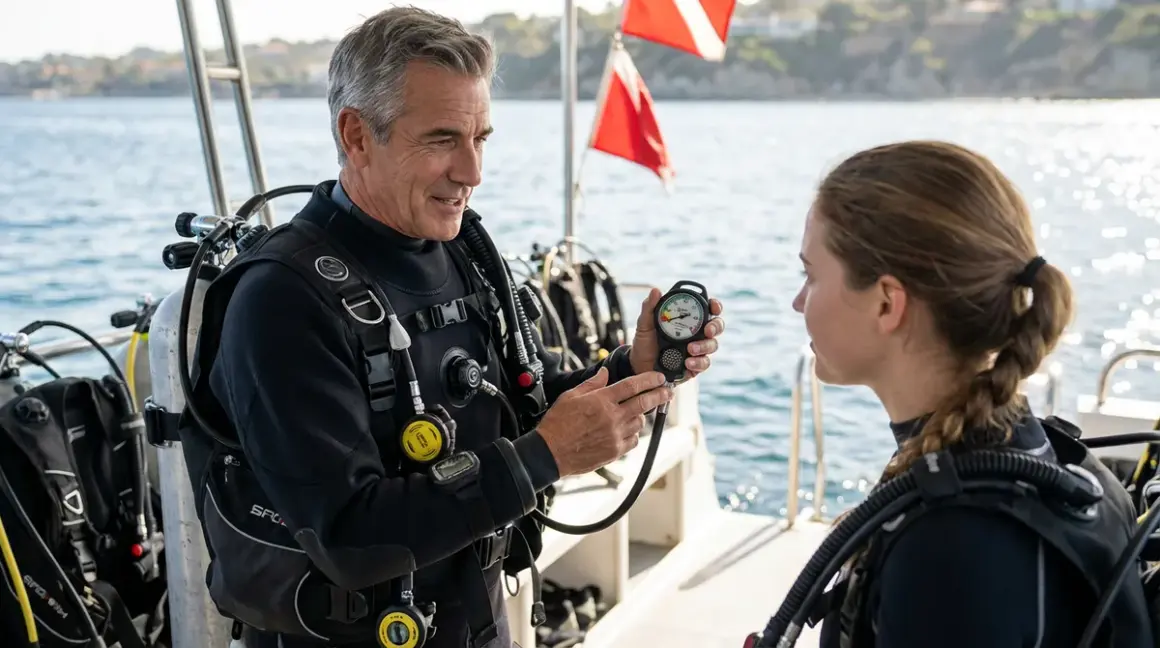

I've watched countless divers grab BCDs off the rack without a clue about lift capacity, and I've seen the consequences underwater—divers struggling to stay on the surface in full gear, unable to lift an unconscious buddy, or fighting their equipment because they bought a travel BCD with around 20 pounds of lift while diving a steel tank and around 30 pounds of lead. Getting bcd lift capacity explained properly isn't just about comfort; it's about safety, control, and making sure your buoyancy compensator can actually handle the job you're asking it to do. After four decades of diving and watching gear perform—or fail—in real conditions, I can tell you that understanding lift ratings might be the most overlooked critical factor in choosing the right BCD.
What Is BCD Lift Capacity?
BCD lift capacity is the maximum amount of positive buoyancy a bladder can generate when fully inflated, measured in pounds or kilograms of lift. Here's the thing: when manufacturers say a BCD has "40 pounds of lift," they mean that bladder, when completely filled with air, can float 40 pounds of lead weight at the surface. That's it. Simple physics.

But the way this number gets marketed versus how it performs underwater? That's where things get murky. I've tested dozens of BCDs over the years, and I can tell you that a 30-pound lift BCD from one manufacturer doesn't always perform identically to another's 30-pound model. Bladder shape, material stiffness, and internal baffling all affect how that lift actually translates to real-world buoyancy control.
In my experience, most recreational divers need between 25–40 pounds of lift for tropical diving, and 35–55 pounds for cold water with drysuits and heavy exposure protection. Those ultralight travel BCDs with 18–22 pounds of lift? They're borderline dangerous for anyone diving more than a 3mm wetsuit and aluminum 80. I've seen divers bobbing like corks at 15 feet because they can't dump air fast enough from an oversized bladder, and I've watched others white-knuckling their inflator buttons trying to stay positive in rough surface conditions because their BCD simply doesn't have enough lift.
The PADI Encyclopedia of Recreational Diving defines adequate buoyancy control as the ability to establish positive buoyancy at the surface while carrying full equipment, including a potentially non-functioning drysuit. That's the real-world standard you should be thinking about when bcd lift capacity explained becomes more than just marketing copy.
How BCD Lift Capacity Works
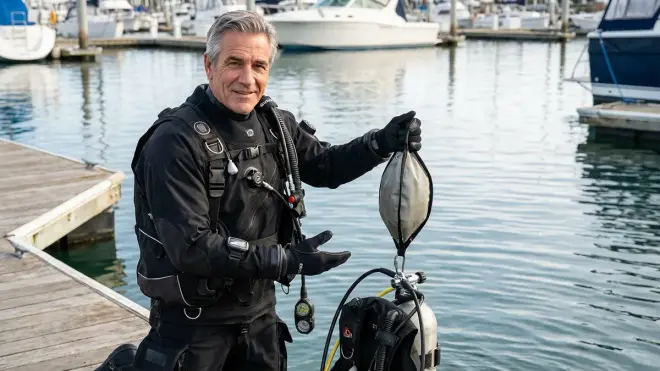
The physics behind lift capacity is straightforward: Archimedes' principle—an inflated bladder displaces water, and that displacement creates an upward force equal to the weight of the water displaced. When you're at the surface in full gear and your BCD bladder is inflated, it's generating positive buoyancy by pushing water out of the way.
Let me break this down with a real scenario I use when training new dive shop staff. Say you're wearing a steel HP100 tank (about 8 pounds negative when full), around 6 pounds of lead, a 7mm wetsuit (slightly positive at the surface), a regulator, dive computer, and all your other gear. At the surface, you might be 12–15 pounds negative without any air in your BCD. You need enough lift capacity to overcome that negative buoyancy AND provide reserve capacity to keep your head comfortably above water in rough conditions.
Now here's where it gets interesting—and where I've seen plenty of divers get it wrong. Lift capacity isn't constant throughout the dive. At depth, your wetsuit compresses, losing buoyancy. That 7mm wetsuit that was slightly positive at the surface? At 80 feet, it's lost about 50% of its loft and contributes almost nothing. Your BCD needs to compensate for that compression by adding air to the bladder, but here's the catch: you're not using all your lift capacity to stay neutral at depth. You're using maybe 30–40% of it, staying slightly positive, and maintaining control with your breathing.
The real test of lift capacity comes during three critical scenarios: emergency ascents, surface rescues, and rough surface conditions with fatigued divers. I tell people to think about the worst-case scenario—you're tired, it's choppy, and you need to keep yourself or a buddy afloat while signaling for pickup. That's when you want every available pound of lift, and that's when those ultralight travel BCDs with minimal capacity become a genuine safety liability.
Bladder design matters more than most people realize. Back-inflate BCDs concentrate all the lift behind you, which keeps your profile streamlined underwater but can push your face forward at the surface if you're not careful. Jacket-style BCDs distribute lift around your torso, providing more natural surface positioning but potentially more drag underwater. Wing-style BCDs, popular in technical diving, offer massive lift capacity (60+ pounds) but require proper weighting and trim to avoid going vertical like a beach ball.
I've logged probably 200 dives with an old Scubapro Classic jacket BCD rated at 28 pounds of lift, diving steel tanks in Florida wrecks, and never once felt underlifted—because I was properly weighted and understood my gear's limitations. Then I've watched vacation divers with 40-pound lift BCDs struggle at the surface because they're carrying 20 pounds of unnecessary lead and don't understand that proper BCD fit and adjustment matters as much as raw capacity numbers.
Why BCD Lift Capacity Matters
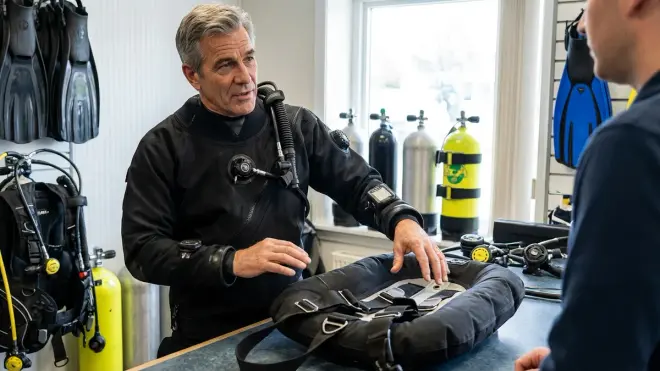
Getting lift capacity right affects three fundamental aspects of your diving: safety, efficiency, and comfort. I've been on enough rescue scenarios to tell you that inadequate lift capacity isn't just inconvenient—it can be life-threatening.
Safety first: your BCD is emergency flotation. Period. When things go wrong—regulator freeflow, entanglement, buddy emergency, medical issue—you need to establish positive buoyancy immediately and keep your airway clear. I've performed maybe a dozen actual rescues over my career, and every single time, the BCD's ability to float both divers at the surface was critical. If you're diving with insufficient lift capacity for your total rig weight, you're compromising your primary safety device.
Second, efficiency and gas consumption. Divers fighting inadequate lift burn through air faster, plain and simple. I've watched newbies with undersized BCDs pedaling their fins at the surface, working twice as hard as they should, sucking down their tank reserves before they even descend. Conversely, I've seen divers with massively oversized lift fighting constant over-inflation issues, dumping air every thirty seconds, never achieving stable trim. The right lift capacity lets you establish neutral buoyancy easily, maintain it with minimal adjustments, and conserve energy throughout the dive.
Third, comfort and stress reduction. Diving should be relaxing. When your BCD matches your configuration—tank type, exposure protection, weighting needs—you spend less mental bandwidth managing buoyancy and more time enjoying the dive. I can spot an overlifted or underlifted diver from fifty feet away just by watching their body position and breathing pattern.
Here's something most people don't consider: lift capacity requirements change with your diving progression. That 25-pound lift travel BCD that worked great for your tropical certification dives in a 3mm shorty? Completely inadequate when you advance to cold water diving in a 7mm wetsuit and steel tanks. I've had to have this conversation with students dozens of times—your gear needs to grow with your diving.
Types and Variations in BCD Lift Ratings
BCD lift capacity varies dramatically across style categories and intended use profiles. Let me walk you through what I've seen actually perform in the field.
Ultralight travel BCDs typically offer 18–25 pounds of lift and weigh under 5 pounds on land. Models like the lightest options in our best travel BCDs under 5 pounds guide are purpose-built for warm water, aluminum tanks, and minimal exposure protection. I've used these extensively in the Caribbean and Indo-Pacific, and they work brilliantly—in that specific context. Try diving one with a steel tank and 7mm wetsuit, and you'll understand why I'm so specific about use-case matching.
Recreational jacket-style BCDs generally provide 28–40 pounds of lift and remain the most popular configuration for resort and charter diving. They're forgiving, comfortable at the surface, and offer enough capacity for most recreational configurations. The differences between jacket and back-inflate designs matter, but lift capacity within this range handles everything from tropical diving to Great Lakes wrecks with appropriate weighting adjustments.
Back-inflate and wing BCDs range from 30 pounds for streamlined recreational models up to 65+ pounds for technical diving wings. I dive a back-inflate wing rated at 45 pounds for my typical steel-tank Florida wreck dives, and it's perfect—enough capacity for redundant gas bottles and heavy exposure protection, without the excessive bulk of a full technical wing. These designs excel at trim and streamlining but demand better buoyancy skills, especially at the surface where they push you face-forward if you're not careful.
Technical and overhead environment BCDs (wings) often exceed 50–60 pounds of lift to accommodate multiple cylinders, stage bottles, and heavy gear configurations. Unless you're actually doing decompression or cave diving, this much lift is overkill and creates more problems than it solves for recreational diving.
The material and construction quality matter as much as raw capacity. I've seen cheap bladders fail in rental fleets after six months, developing slow leaks or catastrophic tears along the seams. Quality BCDs use reinforced nylon or Cordura outer shells with polyurethane bladders that maintain integrity through hundreds of inflation cycles and thousands of PSI pressure variations.
Frequently Asked Questions
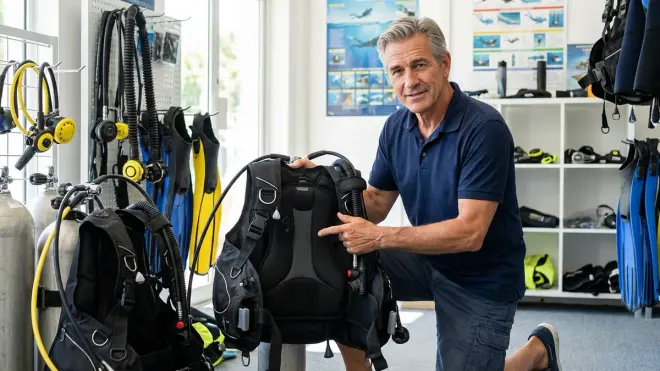
How much BCD lift capacity do I actually need?
You need enough lift capacity to float your entire rig—including full tank, exposure protection, weights, and accessories—at the surface with a comfortable margin of reserve buoyancy. In practical terms, that's typically 10–15 pounds more than your total negative weight at the surface. For tropical diving with aluminum tanks and minimal exposure protection, 25–30 pounds works well. For cold water diving with steel tanks, drysuits, and heavy gear, you need 40–55 pounds minimum. I tell people to add up their tank's negative buoyancy (steel HP100 = about 8 pounds negative when full), their lead weight, and their wetsuit compression at depth, then add 10 pounds as safety margin.
Can I use a BCD with too much lift capacity?
Yes, and it creates real problems with buoyancy control, especially for newer divers. Oversized BCDs require constant air dumping to avoid runaway ascents, make fine-tuning neutral buoyancy harder, and can push you into awkward positions at the surface. I've watched vacation divers struggle with massive wing BCDs designed for technical diving, fighting the bladder's tendency to roll them sideways or face-down when partially inflated. That said, having 5–10 pounds extra capacity beyond your typical needs provides useful safety margin—it's the 20–30 pound overcapacity situations that cause problems. Match your BCD to your actual diving configuration, not some theoretical future use case.
Does BCD lift capacity change at depth?
The pounds-of-lift rating stays constant, but the volume of air required to generate that lift increases significantly with depth. This is basic physics—air compresses under pressure, so you need proportionally more air molecules in the bladder to displace the same amount of water at depth. At 99 feet (4 ATA), you need four times the air volume to generate the same lift as at the surface. This is why BCDs have low-pressure inflators connected to your first stage—you need continuous air supply to maintain buoyancy as you descend and your exposure protection compresses. The practical implication: don't worry about maximum capacity at depth; focus on having enough capacity for surface emergencies where you need full inflation.
How do I calculate the lift capacity I need for my diving configuration?
Start by weighing your full rig at the surface: tank weight when full, exposure protection net buoyancy, weights, and accessories, then add 10–15 pounds for safety margin and comfort. Here's my real-world calculation method: a steel HP100 tank runs about 8 pounds negative when full (2 pounds positive when empty). A 7mm wetsuit is roughly neutral at the surface but loses 6–8 pounds of buoyancy at depth due to compression. If you're carrying 10 pounds of lead to achieve neutral buoyancy at depth, your surface configuration is roughly 18–20 pounds negative before BCD inflation. Add 12 pounds margin, and you need 30–32 pounds of lift minimum. This matches my own experience diving similar configurations with 35–40 pound lift BCDs—comfortable at the surface with reserve capacity for emergencies.
What happens if my BCD doesn't have enough lift capacity?

You'll struggle to maintain positive buoyancy at the surface, especially in rough conditions or when fatigued, and you won't be able to adequately assist a distressed buddy. I've seen underlifted divers bobbing barely above waterline in calm seas, then going under completely when waves hit. Worse, I've watched rescue scenarios where the rescuer's BCD couldn't support both divers, forcing them to ditch weight or rely on other flotation. This isn't theoretical—inadequate lift capacity has contributed to real drowning incidents where divers couldn't keep airways clear. If you're constantly struggling at the surface, finning hard to stay up, or can't comfortably rest face-up while fully inflated, your BCD lacks sufficient capacity. Check our BCD maintenance checklist to ensure your bladder is fully functional, then consider whether your gear actually matches your diving profile.
Summary
Getting bcd lift capacity explained properly comes down to understanding that those manufacturer ratings aren't just marketing numbers—they represent your primary safety margin at the surface and your ability to maintain control throughout the dive. After logging thousands of dives across every configuration imaginable, I can tell you that matching lift capacity to your actual gear setup makes the difference between comfortable, confident diving and constant buoyancy battles that drain your energy and compromise safety.
Calculate your total negative weight honestly, add meaningful safety margin, and choose a BCD that handles your typical diving with 10–15 pounds of reserve capacity. Don't buy an ultralight travel BCD if you're diving steel tanks, and don't strap on a 60-pound technical wing if you're doing recreational reef dives. Match the tool to the job, maintain your equipment properly with regular BCD inspections and service, and you'll have one less thing to worry about when you're actually underwater enjoying the dive.