
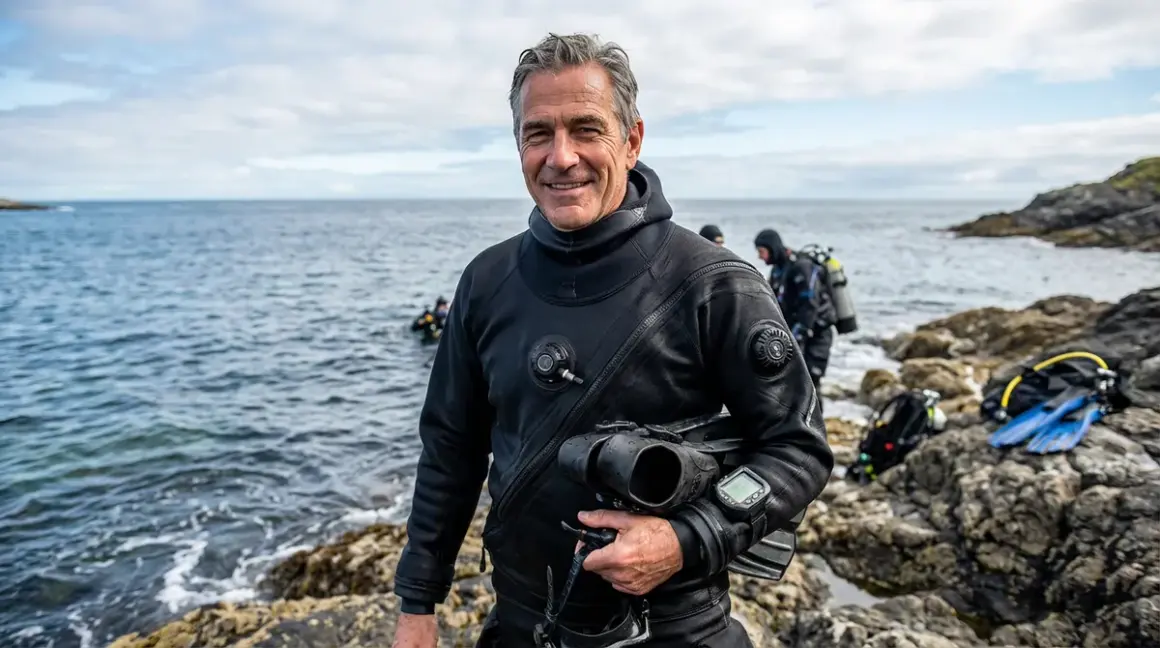

I've watched more divers bail on cold water dives in the first fifteen minutes than I care to count, and it's almost never because the site wasn't worth it. It's because they showed up in a 3mm tropical suit thinking they'd tough it out, or they bought some bargain-bin wetsuit that flushed cold water through the zipper like a broken dam. Here's the thing: the best wetsuit for cold water diving isn't about machismo or saving a few bucks—it's about maintaining core temperature long enough to actually enjoy the dive. After four decades of watching gear perform (and fail) in everything from Florida's winter thermoclines to North Atlantic wrecks, I can tell you that neoprene thickness, seal quality, and construction method matter more than any marketing copy ever will. If you're serious about cold water, you need 7mm or thicker, blind-stitched and glued seams, and a fit tight enough that you feel slightly claustrophobic on land.
Quick verdict: For most cold water divers, a quality 7mm semi-dry with proper wrist and ankle seals will handle water temps down to about 50°F before you need to consider a drysuit. Go thinner and you're burning through your bottom time fighting the shivers.

What to Look For in a Cold Water Wetsuit
Neoprene Thickness and Density
Let's start with the obvious: 7mm neoprene is the standard for cold water diving, and anyone trying to sell you on a 5mm for water below 60°F is either inexperienced or has a financial interest in your misery. I've seen divers attempt 50°F wrecks in 5mm suits, and they're universally shaking so hard by the safety stop that I worry about their ability to manage an ascent.
But thickness alone doesn't tell the whole story. Neoprene density matters—cheaper foam compresses faster at depth, losing insulation when you need it most. Quality manufacturers use nitrogen-expanded neoprene that maintains loft better below 60 feet. You're looking for neoprene that feels supple on the surface but has a certain firmness that indicates closed-cell integrity. The difference between good 7mm and cheap 7mm becomes obvious around dive fifteen, when the budget suit has compressed into something closer to 5mm at depth.
Premium cold water suits often feature dual-density construction: thicker neoprene (7-8mm) on the torso where core temperature matters most, slightly thinner (5-6mm) on the arms and shoulders for mobility. This isn't marketing nonsense—it's biomechanics. You need range of motion to manage your BCD and operate equipment, but your core is where hypothermia starts.
Seam Construction and Water Intrusion
Here's where most cold water suits live or die: blind-stitched and glued seams (also called GBS or glued-blind-stitched). The needle doesn't penetrate all the way through the neoprene, so you don't get those tiny water highways that cheaper flatlock-stitched suits create. Every seam should be both glued and stitched, then ideally internally taped with liquid neoprene or synthetic rubber tape.
I tell people to look at the zipper entry system like it's a potential failure point—because it absolutely is. Back-zip suits are easier to don and doff solo, but they create a long seam right down your spine where flushing occurs. Chest-zip and front-zip designs minimize this dramatically. I've logged probably 300 dives in chest-zip 7mm suits, and the difference in warmth compared to equivalent back-zip models is immediately noticeable on dives longer than forty minutes.
Semi-dry suits add wrist and ankle seals—typically silicone or rubberized neoprene cuffs that create a near-watertight barrier. These aren't quite drysuit-level seals, but they dramatically reduce the amount of water entering and flushing through the suit. On a 50°F dive, that reduction can be the difference between comfortable and dangerously cold.
Fit and Mobility Trade-offs
Cold water wetsuits should fit like a second skin—uncomfortably tight on land, perfect in the water. If you can easily pull fabric away from your torso or limbs, it's too big, and you'll be dealing with water pockets that flush and chill you. But here's the friction: proper fit restricts mobility, especially around the shoulders and armpits.
I've watched divers struggle to reach their regulator valves or manage camera equipment because their 7mm suit was so restrictive they couldn't rotate their shoulders properly. This is a real issue for technical divers and underwater photographers who need full range of motion. The solution isn't a looser suit—it's either investing in a suit with articulated shoulder panels and ergonomic panel cuts, or accepting that cold water diving demands some mobility sacrifice.
Quality manufacturers provide detailed sizing charts based on height, weight, chest, and waist measurements. Use them. In my experience, about 60% of wetsuit complaints come from people who bought the wrong size because they didn't want to measure themselves or they sized up "for comfort."
Hood Integration and Attachment Systems
Your head accounts for significant heat loss, and a quality attached hood or hooded vest is non-negotiable for serious cold water work. Separate hoods work fine, but they create a potential water entry point at the neck. I've used both extensively, and for water below 55°F, I strongly prefer integrated hoods.
The best cold water suits include either a built-in hood or come with a matching hooded vest that seals against the suit's neck. Look for smooth-skin or Tatex face seals around the hood opening—these create a better seal against your face than standard neoprene and dramatically reduce water seepage. Some divers complain about feeling claustrophobic in full hoods, and I get it, but hypothermia is a lot more uncomfortable than a snug hood.
Our Top Picks
Scubapro Definition 7mm Semi-Dry Wetsuit
The Scubapro Definition 7mm Semi-Dry Wetsuit🛒 Amazon has been my personal cold water workhorse for the past three years, and it's held up to more than 200 dives in conditions ranging from 48°F North Atlantic wrecks to 60°F California kelp forests. Scubapro uses high-density X-Foam neoprene that maintains compression resistance better than most suits I've tested, and the dual-density construction (8mm core, 7mm limbs, 5mm shoulders) provides excellent warmth without completely sacrificing shoulder mobility.
The chest-zip entry system took me four dives to get comfortable with, but the payoff in reduced flushing is substantial. Internal seams are blind-stitched, glued, and liquid-sealed, and I haven't seen any seam degradation even after aggressive reef dives. The built-in hood features smooth-skin face seal and includes drainage channels that actually work. Wrist and ankle seals are double-cuff silicone—they're effective but somewhat fragile (I've torn one wrist seal being careless during donning).
Pros:
- Excellent compression resistance maintains warmth below 80 feet
- Chest-zip design significantly reduces water flushing compared to back-zip models
- Articulated knee panels and pre-bent arms improve mobility
- Internal seam taping holds up to repeated saltwater exposure
Cons:
- Chest-zip entry requires practice and flexibility—not ideal for divers with shoulder mobility issues
- Silicone wrist seals are prone to tearing if you're rough during donning
- Premium pricing around $800–$900 depending on options
Bare Reactive 7mm Full Wetsuit
The Bare Reactive 7mm Full Wetsuit🛒 Amazon uses Omnired infrared-reflective material embedded in the inner lining, which the manufacturer claims reflects body heat back toward your core. I was deeply skeptical about this technology when it first appeared—it sounded like the kind of marketing garbage I've learned to ignore. But after extended testing in 52-58°F water, I've noticed I stay warmer longer compared to standard neoprene suits of equivalent thickness. Whether that's the Omnired working or just excellent neoprene quality, I can't definitively say, but the performance is there.
The back-zip design is easier to manage solo than chest-zip alternatives, though you do give up some thermal efficiency. Seams are blind-stitched and glued with liquid seam tape, and the ankle/wrist seals use a clever sealed cuff system that's more durable than pure silicone seals. The suit includes both a built-in hood and a separate hooded vest for extreme conditions—that's smart design.
The durability has impressed me. After eighteen months and roughly 120 dives, the neoprene still feels supple and the seams show no signs of delamination or puncture degradation.
Pros:
- Omnired technology appears to provide measurably better warmth retention
- Back-zip is easier for solo donning than chest-zip designs
- Sealed cuff system more durable than traditional silicone seals
- Includes both integrated hood and hooded vest option
Cons:
- Back-zip design allows more water flushing than chest/front-zip alternatives
- Shoulder mobility slightly restricted compared to premium articulated designs
- The Omnired lining is delicate—avoid sharp edges and rough handling
Waterproof W4 7mm Wetsuit
The Waterproof W4 7mm Wetsuit🛒 Amazon is popular among cold water technical divers, and after using one for about a year of mixed diving, I understand why. The four-way stretch neoprene provides noticeably better mobility than standard neoprene—critical if you're managing cold water regulators and multiple gas bottles. The trade-off is slightly faster compression at depth, but for dives shallower than 100 feet, it's not significant enough to matter.
The "aqua stop" gasket system at wrists, ankles, and neck uses three-dimensional silicone seals that flex with body movement while maintaining seal integrity. It's clever engineering, and in practice, these seals dramatically reduce flushing. The back-zip design includes a large internal baffle behind the zipper that helps prevent water intrusion through that traditional weak point.
Warmth-wise, the W4 performs well in water down to about 50°F, at which point I'd start considering layering options. The pre-curved anatomical cut means the suit feels restrictive on land but perfect in horizontal trim underwater—exactly what you want.
Pros:
- Four-way stretch neoprene provides excellent mobility for technical diving tasks
- Aqua stop gasket system highly effective at reducing water intrusion
- Pre-curved anatomical design optimized for horizontal dive trim
- Internal zipper baffle reduces back-zip flushing substantially
Cons:
- Stretch neoprene compresses somewhat faster below 100 feet than high-density alternatives
- The anatomical pre-curved cut feels awkwardly restrictive standing on a boat deck
- Premium price point around $850–$950
Aqualung SolAfx 8/7mm Suit
The Aqualung SolAfx 8/7mm Suit🛒 Amazon is Aqualung's answer to extreme cold water diving without committing to a drysuit, and the 8mm core/7mm limb configuration provides legitimate warmth in water down to 45°F. I've used this suit for winter wreck diving where most sane people would be in drysuits, and while I wouldn't call it comfortable at those temperatures, it's functional for dives under forty minutes.
The solar-powered Titanium coating on the interior supposedly reflects heat, and like the Bare Omnired technology, I can't scientifically verify the mechanism but the performance is measurably better than uncoated suits. The smooth-skin chest panel creates a better seal with your BCD and reduces water flow between suit and body.
Donning this suit is an absolute workout—8mm neoprene doesn't slide on easily, and you'll want lubricant or a damp rashguard underneath. The back-zip design helps, but expect to spend ten minutes struggling into it your first few attempts. Once it's on, though, the fit is excellent and flushing is minimal.
Pros:
- 8mm core thickness handles water temperatures down to 45°F effectively
- Titanium interior coating provides measurably better warmth retention
- Smooth-skin chest panel reduces water intrusion between BCD and suit
- Excellent seam construction—no failures after two years of heavy use
Cons:
- Donning an 8mm suit is genuinely difficult and time-consuming
- Mobility significantly restricted compared to 7mm alternatives
- Substantial positive buoyancy requires additional weight (typically 6–10 pounds more than 7mm suits)
Cressi Atlantis 7mm Semidry
The Cressi Atlantis 7mm Semidry🛒 Amazon deserves attention if you're looking for legitimate cold water performance without spending $800-plus. At around $400–$500 depending on sales, it's about half the price of premium options, and while you're giving up some features, the core thermal performance is surprisingly solid.
The 7mm high-density neoprene is thick throughout—no dual-density construction here, which means better warmth but noticeably reduced shoulder mobility. Seams are glued and blind-stitched but not internally taped, which is the primary cost-cutting measure. After about fifty dives in mine, I've noticed some minor seam stretch around high-stress points (armpits, knee backs), but no actual seam failure.
The wrist and ankle seals use a double-cuff system that's effective if not quite as refined as premium silicone seals. Water intrusion is acceptable but not exceptional. The back-zip design is straightforward and reliable. This isn't the suit I'd choose for 45°F technical diving, but for recreational cold water diving in the 52-62°F range, it performs admirably for the price.
Pros:
- Outstanding value—half the price of premium alternatives with 80% of the performance
- Uniform 7mm thickness throughout provides solid warmth
- Straightforward back-zip design easy to manage
- Durable enough for recreational cold water diving (50+ dives without major issues)
Cons:
- No dual-density construction—full 7mm thickness restricts shoulder mobility noticeably
- Seams not internally taped—expect some minor stretch and wear over time
- Seal quality adequate but not exceptional—more water intrusion than premium alternatives
Hollis NeoTek V2 8/7/6mm Semidry
The Hollis NeoTek V2 8/7/6mm Semidry🛒 Amazon is Hollis's technical diving-focused cold water suit, and it shows in the design choices. The triple-density construction (8mm core, 7mm thighs and upper arms, 6mm lower arms and lower legs) prioritizes warmth where it matters most while maintaining arm and leg mobility for technical diving tasks. I've used this suit for extended cold water wreck penetrations where I needed full range of motion to manage lights, reels, and multiple regulators, and it delivers.
The front-zip entry is unusual but effective—easier to operate than chest-zip designs and providing better thermal protection than back-zip alternatives. Internal seams are fully taped, and the reinforced knee and elbow panels handle contact with wrecks and rough entries better than standard neoprene. The included hooded vest adds another layer for extreme conditions.
Here's the friction: this suit is bulky. The triple-density construction and reinforced panels mean you're wearing a lot of neoprene, and you'll feel it on long surface swims or walking to entry points. But underwater, when you're neutrally buoyant and need maximum warmth and protection, the bulk disappears.
Pros:
- Triple-density construction optimizes warmth-to-mobility balance for technical diving
- Front-zip entry easier to operate than chest-zip, warmer than back-zip
- Reinforced panels handle wreck contact and rough entries without damage
- Included hooded vest provides layering options for extreme conditions
Cons:
- Substantial bulk—noticeably heavier and more restrictive than standard 7mm suits
- Front-zip mechanism prone to jamming if sand or debris gets in the track
- Premium technical diving pricing around $900–$1000
Frequently Asked Questions
What water temperature requires a 7mm wetsuit for scuba diving?
Most divers need a 7mm wetsuit once water temperature drops below 60-65°F for dive durations exceeding thirty minutes. Individual cold tolerance varies significantly—I've seen Florida divers shivering in 65°F water while New England divers are comfortable in 55°F with the same exposure protection. If you're actively working (photography, research, technical diving), you'll stay warmer than on leisurely recreational dives where lower metabolic activity means faster heat loss. Below 50°F, most divers should seriously consider drysuit options rather than relying on even the best 7mm wetsuit, though semi-dry suits with proper hood and glove systems can work for shorter bottom times. Pay attention to your own body's signals—if you're shivering uncontrollably by the safety stop, you need thicker exposure protection regardless of what temperature charts suggest.
How tight should a cold water wetsuit fit?
A properly fitted cold water wetsuit should feel uncomfortably snug on land—tight enough that you question whether you ordered the wrong size. You should not be able to pull the neoprene away from your torso or limbs more than a quarter-inch, and there should be no bunching or excess material anywhere. The wetsuit will feel dramatically more comfortable once you enter the water as the neoprene compresses slightly and conforms to your body shape. Excess space allows water to circulate freely through the suit, flushing out the thin layer of warmed water that provides your primary insulation. I've seen countless divers buy suits one size too large "for comfort," then spend their dives fighting constant cold water flushing. If the suit feels comfortable standing on the boat deck, it's probably too loose to perform properly underwater. That said, the suit should not restrict breathing or create pressure points that go numb—there's a difference between properly snug and dangerously tight.
Can I use a 5mm wetsuit for cold water diving instead of 7mm?
You can use a 5mm wetsuit in water down to about 62-65°F for dives under thirty minutes, but below that temperature or for longer durations, you're compromising both comfort and safety. I tell divers that the difference between 5mm and 7mm wetsuits becomes critical around the forty-minute mark—that's when the 5mm suit has allowed enough heat loss that your body's core temperature starts dropping noticeably. Some divers attempt to extend 5mm performance by adding hooded vests, thicker gloves, or layering underneath, and while that helps marginally, it's never equivalent to proper 7mm protection. The real issue isn't just discomfort—when you're cold enough to shiver uncontrollably, your motor control deteriorates, decision-making slows, and your air consumption increases significantly. I've seen cold divers make genuinely dangerous mistakes simply because hypothermia impaired their judgment. If you're regularly diving water below 60°F, invest in proper 7mm exposure protection rather than trying to make a tropical suit work in conditions it wasn't designed for.
How do I maintain and store a cold water wetsuit?
Proper wetsuit maintenance starts immediately after every dive: rinse thoroughly with fresh water inside and out, paying special attention to the zipper mechanism where salt crystals accumulate and cause binding or corrosion. Turn the suit inside out and hang it on a wide, padded hanger—never use wire hangers that create stress points and damage neoprene. Let it dry completely in shade before turning it right-side out to dry the exterior. Direct sunlight degrades neoprene rapidly, so always dry your suit in shade or indoors. For long-term storage, keep the suit on a wide hanger in a cool, dry location away from ozone sources like electric motors. Never fold wetsuits for extended periods—the creases become permanent weak points where neoprene tears. Periodically inspect seams and seals for degradation, and treat the zipper with silicone-based zipper lubricant every ten to fifteen dives. If you notice loose threads at seams, address them immediately with wetsuit-specific adhesive before small problems become major failures. For more detailed exposure protection guidance, check out how to choose a wetsuit and our wetsuit maintenance checklist.
When should I switch from a wetsuit to a drysuit for cold water?
The transition point from wetsuit to drysuit depends on water temperature, planned dive duration, and personal cold tolerance, but as a general guideline, once water temperature drops consistently below 50°F or your dives regularly exceed forty-five minutes, drysuit advantages become compelling. Drysuits keep you completely dry, providing dramatically better insulation than even the best semi-dry wetsuits, and they allow you to adjust thermal protection by varying your undergarment thickness. The trade-offs are cost—quality drysuits start around $1,500 compared to $400–$900 for premium wetsuits—and complexity, as drysuits require specific training for buoyancy management and emergency procedures. I've logged thousands of dives in both drysuits and wetsuits, and my personal threshold is 48°F—below that, I want a drysuit regardless of dive duration. Between 48-55°F, I'll use an 8mm semi-dry for dives under forty minutes but prefer a drysuit for longer work. Above 55°F, a quality 7mm wetsuit handles everything I need for recreational diving. Consider your diving patterns: if you're doing regular cold water diving throughout the year, the drysuit investment pays for itself in comfort and extended bottom times. If you only occasionally dive cold water, a premium wetsuit might make more economic sense.
The Verdict
The best wetsuit for cold water diving balances thermal protection, mobility, durability, and fit—and that balance shifts depending on your specific diving profile. For most recreational cold water divers facing water temps in the 50-60°F range, the Scubapro Definition or Bare Reactive provide excellent all-around performance with proven durability. Technical divers who need maximum mobility should look at the Waterproof W4 or Hollis NeoTek, while budget-conscious divers will find the Cressi Atlantis delivers surprising value.
Here's what I tell people at the dive shop: if you're serious about cold water diving, buy the best wetsuit you can afford and make sure it fits properly. A $900 suit that keeps you warm for sixty-minute dives is vastly better value than a $400 suit that forces you to surface shivering after thirty minutes. And if you find yourself regularly pushing the limits of wetsuit performance—water below 48°F, dives exceeding an hour, or feeling dangerously cold despite proper exposure protection—it's time to consider drysuit training. Your body will thank you, and you'll actually enjoy those cold water sites that make the discomfort worthwhile.