
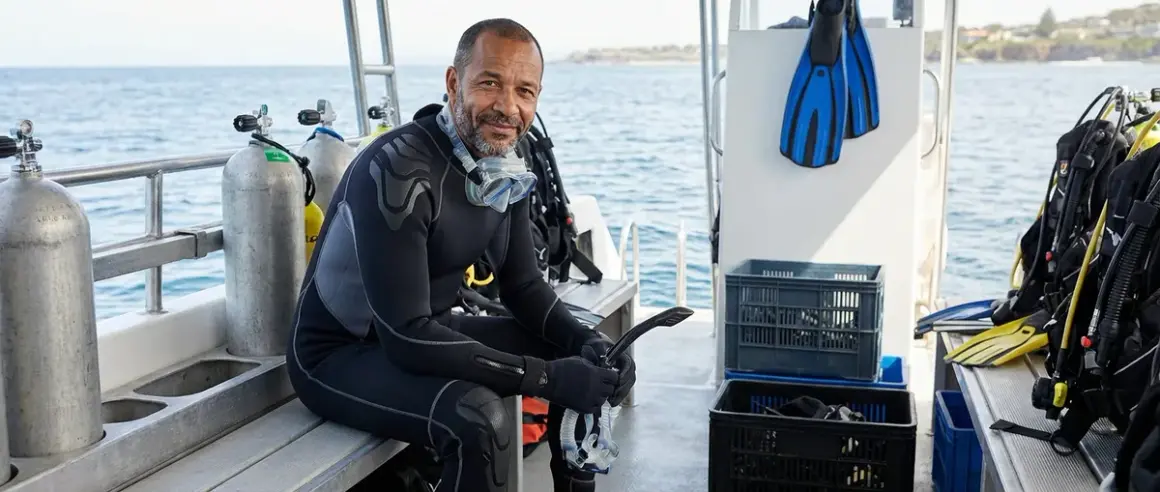

I've been diving long enough to remember my first wetsuit—a borrowed 5mm full suit that was two sizes too big, leaked like a sieve, and made me look like I was wearing my dad's pajamas underwater. I was cold, uncomfortable, and spent more energy managing that suit than actually enjoying the dive. That experience taught me something important: learning how to choose a wetsuit properly is one of the most critical skills for diving comfort and safety.
Your wetsuit is your primary defense against hypothermia, a source of buoyancy, and when it fits right, almost invisible to your diving experience. Get it wrong, and every dive becomes a test of endurance. In this guide, I'll walk you through the entire selection process—from understanding thickness requirements to finding the right fit for your body and diving style. Whether you're buying your first suit or upgrading from that pool rental special, you'll learn exactly what to look for and why it matters.
Skill level: Beginner-friendly
Time to read: 8 minutes
Time to shop and fit: 2-3 hours
What You'll Need
Before you start shopping for a wetsuit, gather:
- Your diving environment data: typical water temperatures where you'll dive most often
- Your body measurements: height, weight, chest, waist, hips, and inseam (most manufacturers provide sizing charts)
- Your dive profile information: depth ranges, dive durations, and whether you run cold or warm
- Budget range: realistic price expectations (around $150-$800 for quality suits)
- Try-on space: physical store access or a home try-on plan with easy returns
- A buddy or mirror: someone to check seal points and fit from angles you can't see
- Patience: plan to try multiple brands and sizes—this isn't a one-and-done process
Step 1: Determine Your Required Wetsuit Thickness
Water temperature drives everything else in wetsuit selection. I've logged dives in 48-degree Puget Sound water and 86-degree Caribbean reefs, and the difference between a 7mm suit and a 3mm shorty isn't just comfort—it's safety.
Start with this baseline guide:
- 80°F and above: 3mm full suit or shorty
- 75-79°F: 3mm full suit
- 70-74°F: 5mm full suit
- 65-69°F: 5mm with hood and gloves
- 60-64°F: 7mm full suit with hood, gloves, and boots
- Below 60°F: 7mm or consider a drysuit for extended cold water work
These are starting points, not commandments. Your personal cold tolerance matters significantly. I run cold—I'll wear a 5mm in water where my students are comfortable in 3mm. If you've ever been the person shivering on the boat while everyone else seems fine, add one thickness level to whatever the chart suggests.
Here's what the manufacturers don't always tell you: neoprene compresses with depth, losing insulation effectiveness. That 7mm suit at the surface becomes more like 5mm of insulation at 100 feet. If you're planning deep dives in cold water, factor in that compression loss. I've felt this personally on wreck penetrations at 120 feet in the North Atlantic—what felt adequately warm at 30 feet became borderline uncomfortable an hour into the dive at depth.
One more consideration: dive duration. A thickness that works for a 30-minute reef tour might leave you hypothermic on a 90-minute underwater photography session. Longer bottom times require thicker neoprene or additional thermal layers.
Step 2: Choose Between Full Suit, Shorty, and Specialty Designs
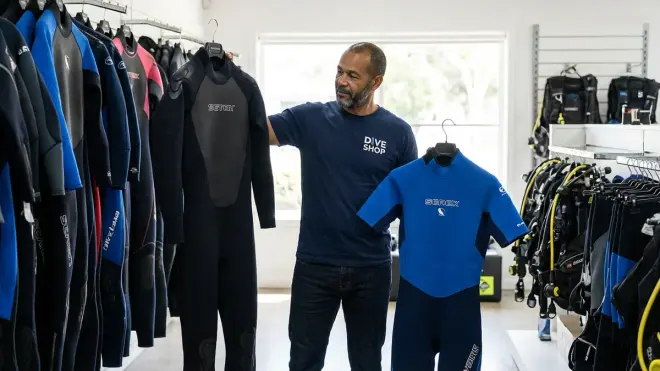
Once you know your thickness requirements, the coverage style determines how much of your body gets insulated. This decision affects not just warmth, but also mobility, weight, and how you'll manage buoyancy.
Full wetsuits (long arms, long legs) are the standard for most recreational diving. They provide complete coverage from ankles to wrists to neck, offering maximum thermal protection and a consistent thermal envelope. The downside? More neoprene means more drag in the water and more weight needed to compensate for buoyancy. I wear full suits for probably 85% of my dives—they're the versatile workhorse option.
Shorty wetsuits (short arms, short legs or sleeveless) work brilliantly in tropical water where you need abrasion protection and a bit of warmth but full coverage would be overkill. I keep a 3mm shorty specifically for Caribbean trips and pool training sessions. They're lighter to travel with and easier to don and doff, but they leave your limbs exposed. If you're comparing wetsuit styles and frequently dive in warm water, a shorty versus full suit comparison can help narrow your options.
Two-piece suits (farmer john/jane bottom with separate jacket top) offer exceptional cold water protection because you get double coverage over your core. I've used these configurations for kelp forest diving in California, where that double-layer torso insulation makes a real difference. The trade-off is bulk and more time gearing up.
Hooded suits integrate the hood directly into the suit, eliminating the neck seal gap where cold water loves to flush through. These are fantastic for cold water diving but can feel restrictive, and if the hood doesn't fit your head shape perfectly, you'll fight it all dive. I prefer separate hoods for versatility—I can swap hood thicknesses without changing my entire suit.
Semi-dry suits use better seals at wrists, ankles, and neck to minimize water exchange. They're warmer than standard wetsuits but more restrictive and significantly more expensive. If you're diving regularly in 55-65°F water but don't want to commit to a drysuit, semi-drys occupy a useful middle ground.
Step 3: Understand Neoprene Quality and Construction Methods
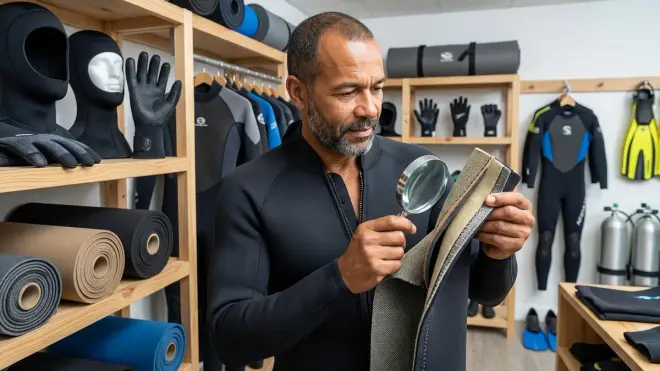
Not all neoprene is created equal, and construction quality separates a wetsuit that lasts 200 dives from one that falls apart after 20. I've had cheap suits delaminate after a single season and premium suits still performing after five years of regular use.
Neoprene cell structure affects both insulation and durability. Higher-quality neoprene uses smaller, more uniform gas bubbles, which compress less at depth and return to original thickness better. You can't see this difference on a rack, but you'll feel it underwater—better neoprene stays warmer at depth and maintains fit longer.
Seam construction is where most suits fail. The three main types you'll encounter:
Flatlock stitching (zigzag stitch visible on both sides) is durable and flexible but not water-tight—it's meant for warm water suits where a little water flow is acceptable. These suits are designed to let water in and trap it against your skin where your body heat warms it. That's fine in 80°F water, less fine in 65°F water.
Blind-stitching (stitched from outside only, not punching through the neoprene) creates a nearly water-tight seam. Quality cold water suits use blind-stitching throughout, and you'll pay for it—but it's worth it. I can feel the difference immediately on descent when comparing a blindstitched suit to a flatlocked one in the same water temperature.
Glued and blind-stitched (GBS) seams combine neoprene cement with blind stitching for maximum water resistance. This is the gold standard for cold water suits. The glue provides the seal, the stitching provides the strength.
Panel construction also matters. More panels mean better anatomical fit but more seams (potential leak points). Fewer panels mean simpler construction but less precise fit. I look for suits that use strategic paneling—extra shaping around shoulders and knees where you need flexibility, simpler construction on the torso where you need durability.
Knee padding and reinforcement extends suit life significantly. If you do any underwater photography, wreck diving, or kelp forest work, reinforced knees are non-negotiable. I've worn through non-reinforced knees in six months of regular diving; reinforced panels last for years.
Step 4: Nail the Fit—Shoulders, Torso, and Limbs
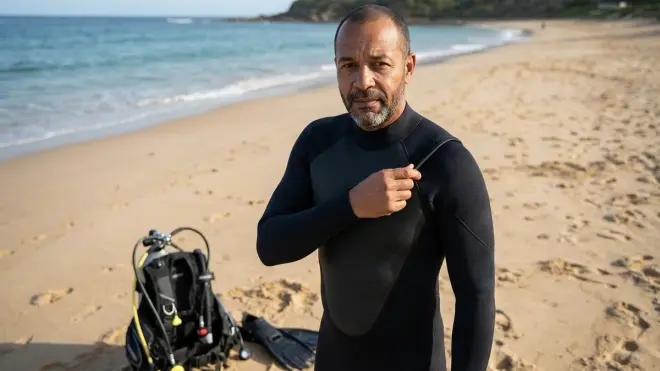
This is where how to choose a wetsuit becomes hands-on critical. You can have the perfect thickness and construction, but if the fit is wrong, the suit fails. I've seen more divers struggle with poor-fitting suits than any other single gear issue.
The suit should feel uncomfortably tight when dry on land. If it feels comfortable in the shop, it's too big. Neoprene needs to compress against your skin with minimal water space between you and the material. When water gets between you and the neoprene, it creates pockets that flush out with cold water on every movement. That's when you get cold.
Here's my fitting process, the same one I walk students through:
Start at the neck seal. It should be snug but not choking. You should be able to fit two fingers between the seal and your neck—any looser and you'll get flushing down your back on descent. Any tighter and you'll be uncomfortable for the entire dive. Pull the suit fully up your torso before evaluating neck fit.
Check the shoulder panels. Raise your arms overhead like you're reaching for your tank valve. The suit should move with you without excessive pulling or binding. If you feel serious restriction or if the torso rides up your back exposing your lower back, the shoulders are wrong. This is a common fit failure point—some bodies need broader shoulder cuts than standard patterns provide.
Evaluate torso length. The crotch strap (if present) should sit naturally without pulling or sagging. Too long and the suit bags around your middle, creating water pockets. Too short and you'll feel constant uncomfortable pulling, especially when bending or reaching.
Test arm and leg length. Wrist and ankle seals should sit at the joint crease—right where your hand meets your wrist, right where your foot meets your ankle. Too short and you'll feel pulling on every movement. Too long and the extra material creates drag and potential leak points. When I'm fitting students, I have them do a full range-of-motion test—reach for imaginary tank valves, simulate checking your dive computer and gauges. The suit should move with you seamlessly.
Examine the back zip versus chest zip decision. Back-zip suits are traditional, easier to get into alone, and generally less expensive. Chest-zip (and more recently, shoulder-entry) suits seal better, offer more flexibility through the back and shoulders, but require help or practice to don and doff. I switched to chest-zip suits five years ago for cold water work and won't go back—the flexibility improvement and reduction in water flushing down my back made an immediate difference. For travel and warm water, though, I still use back-zip suits because they're simpler.
Women's-specific cuts aren't just marketing. Proper women's suits account for different shoulder-to-hip ratios, different torso lengths, and bust accommodation. Generic unisex suits typically won't fit women's bodies correctly. If you're a woman shopping for a wetsuit, start with women's-specific models.
Try multiple brands. This is critical. Every manufacturer uses different body patterns. Scubapro fits differently than Bare fits differently than Henderson. I've seen students try four suits of identical thickness, all marked the same size, and only one fit properly. Brand loyalty is great, but body fit trumps everything else.
If you're comparing suit types and construction for different environments, understanding 5mm versus 7mm wetsuit characteristics helps clarify thickness trade-offs.
Step 5: Consider Your Diving Style and Travel Requirements
Your diving patterns and logistics should influence wetsuit choice as much as water temperature does. I own three wetsuits—a 7mm for local cold water work, a 5mm for versatility, and a 3mm shorty for tropical travel. Each serves a specific purpose driven by where and how I dive.
Local versus travel diving changes priorities dramatically. If you're diving primarily at your local quarry or coastline, durability and maximum thermal protection matter most. Weight and pack size are secondary. Choose the warmest, most robust suit that fits your temperature needs, and don't worry about an extra two pounds of neoprene.
But if you're traveling to dive destinations regularly, pack weight and volume become real constraints. Airlines haven't gotten more generous with baggage allowances, and a 7mm full suit with hood, gloves, and boots eats up half your luggage capacity and weight budget. I've written extensively about this—selecting travel wetsuits requires balancing thermal protection with packability.
For travel, look for suits that:
- Compress well when rolled (thinner neoprene helps)
- Dry quickly between dives (important for multi-day liveaboards)
- Cover the maximum temperature range (a 5mm full suit covers more scenarios than a 3mm)
- Weigh less than 5 pounds when dry
Technical versus recreational diving also affects requirements. If you're doing recreational reef tours, a standard recreational cut with easy donning and doffing works fine. If you're doing wreck penetration, cave diving, or other technical diving, you need suits that work with buoyancy compensator configurations specific to tech diving—often back-inflate or wing-style BCDs that interact differently with wetsuit compression at depth.
Underwater photography divers need extra knee reinforcement and often prefer slightly thicker suits because they're stationary longer (hovering for shots) rather than actively swimming to generate body heat. I run a full thickness warmer when shooting underwater than when guiding recreational dives, even in the same water. Those long composition sessions at 60 feet will chill you down faster than you'd expect.
Step 6: Set Realistic Budget Expectations
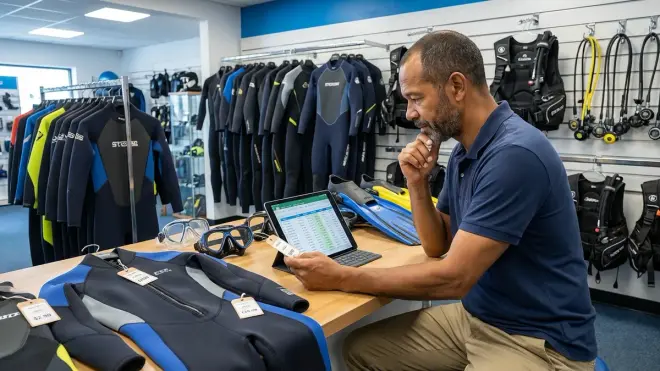
Quality wetsuits cost real money, and trying to save $100 on a suit you'll dive 50 times is false economy. That said, you don't need to drop $800 on your first suit either. Here's what pricing actually gets you.
Budget range (around $150-$300): Entry-level suits with acceptable neoprene and basic construction. Flatlock or basic blind-stitching, limited reinforcement, generic sizing. These work fine for warm water recreational diving or if you're genuinely unsure whether diving will become a regular activity. I recommend these for students who've just certified and are diving a few times per year while building experience.
Mid-range (around $300-$500): This is the sweet spot for most regular recreational divers. Better neoprene quality, glued and blind-stitched seams, reinforced high-wear areas, more sophisticated panel cuts for better fit. Suits in this range from established manufacturers (Scubapro, Bare, Henderson, Waterproof) will give you 3-5 years of regular use with proper care. This is where I spent money on my first personally-owned suit, and where I still shop for warm water suits.
Premium range (around $500-$800+): Top-tier neoprene, sophisticated seam sealing, extensive reinforcement, highly articulated panel design, sometimes integrated thermal linings or ceramic compounds for extra warmth. These suits excel in cold water, offer maximum durability, and provide the best possible fit and comfort. If you're diving weekly in challenging conditions, this investment pays off. My primary cold water suit sits in this range, and after four years and 400+ dives, it's still performing like new.
Custom-made (around $800-$1500+): If you have a body type that standard sizing doesn't accommodate, or if you're diving professionally and need absolute optimal performance, custom-made suits are worth considering. I had one made for technical diving work in the Pacific Northwest, and the fit difference is genuinely remarkable—but it's expensive and takes weeks to produce.
Don't forget the total system cost. A wetsuit requires:
- Hood (around $40-$100)
- Gloves (around $30-$80)
- Boots (around $50-$120)
Factor these accessories into your total budget from the start, because you'll need them for anything but tropical diving.
Step 7: Test the Suit in Water Before Committing
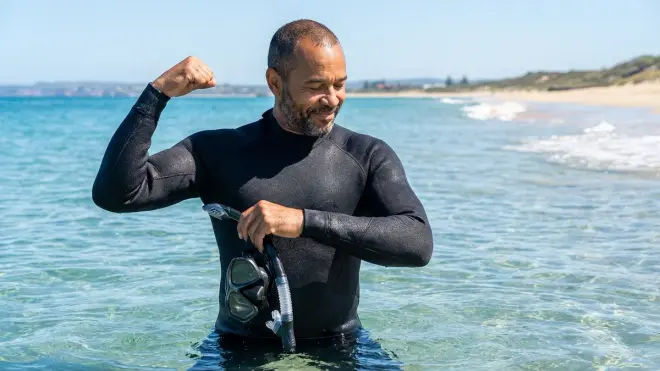
The pool test reveals what the fitting room can't. If possible, either shop from retailers who allow water testing before final purchase, or maintain your return option and test in a pool within your return window. Some shops offer pool demo days—take advantage of these.
Here's what to evaluate in water:
Does water flush through the suit? Some water entry is normal and expected in standard wetsuits—that's how they work. But excessive flushing means poor fit. On descent, you should feel initial cold water entry, then your body should warm that water within 5-10 minutes. If you continue feeling cold water pumping in and out with every movement, the suit is too loose.
Can you move freely? Swim normally, practice valve drills, simulate checking your dive computer and gauges. The suit should flex with you. If you feel like you're wrestling the neoprene, it's either too small or poor quality material.
Check seal points at depth. Neck, wrist, and ankle seals should stay in position through normal diving movements. If they're riding up or sliding out of position, the fit is wrong.
Evaluate warmth after 20-30 minutes. This is your real-world test. If you're comfortable after half an hour in water comparable to where you'll dive, the suit works. If you're already chilled, you need thicker neoprene or better fit.
I've had students discover fit issues in pool tests that weren't obvious on land—shoulders that seemed fine standing still but pulled uncomfortably during swimming, or torso lengths that rode up during actual diving posture. Catch these issues before you're 60 feet down on a boat dive.
After understanding wetsuit selection, proper maintenance becomes crucial—following a wetsuit care and maintenance routine significantly extends suit life.
Pro Tips & Common Mistakes
Lubrication makes donning easier and extends suit life. Baby shampoo diluted in a spray bottle (about one part shampoo to ten parts water) lubricates the neoprene enough to slide on without the tearing and stretching that damages seams. I spray my arms and legs before every wetsuit dive. Some divers use commercial wetsuit conditioner—it works, but it's more expensive and functionally similar.
Don't use your wetsuit as a weight-loss indicator. Your body composition changes, and a suit that fit perfectly six months ago might not fit now. If your suit becomes uncomfortably tight, don't suffer through dives—re-evaluate your sizing. Similarly, if you've lost significant weight and your suit is loose, you need a different size. A poorly fitting suit is unsafe, regardless of why it doesn't fit.
The most common mistake: buying based on price alone. A $200 suit that doesn't fit properly is more expensive than a $400 suit that fits perfectly, because you'll either suffer through uncomfortable dives or replace it quickly. I've watched new divers buy cheap suits, dive miserably for a season, then sell at a loss and buy what they should have bought initially.
Second mistake: assuming thicker is always better. Unnecessarily thick suits make you over-buoyant, requiring extra weight that fatigues you faster and disrupts your trim. Match thickness to your actual diving environment, not worst-case scenarios. I see too many Caribbean vacation divers wearing 7mm suits in 82-degree water because "warmer is safer." They're exhausted and over-weighted, fighting eight pounds of extra lead all dive.
Rental suits teach you what you don't want. Before buying, rent or borrow different styles and thicknesses. The experience of diving a shorty versus a full suit versus a semi-dry teaches you more than any buying guide can. Use rental experiences as cheap education.
Plan for weight changes with your new suit. A new personal wetsuit will affect your buoyancy compared to rental gear. Plan to re-do your weight check the first few dives in a new suit. More buoyant neoprene means more lead, different neoprene compression characteristics mean different weight distribution. Getting your buoyancy control dialed in with new exposure protection takes a few dives.
Frequently Asked Questions
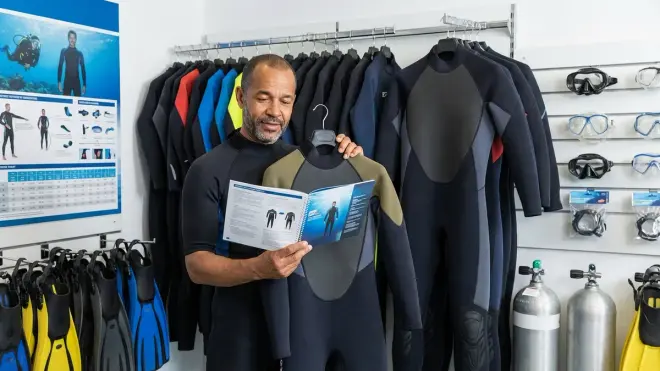
Should I buy a wetsuit or rent when I'm just starting out?
Rent for your first 10-20 dives while you're building experience and determining your diving patterns, then buy once you know your typical water temperatures and dive frequency. Renting lets you test different thicknesses and styles without financial commitment, helps you understand what features matter to you, and avoids wasting money on a suit you'll outgrow as your diving evolves. Once you're diving consistently in a specific environment and know your cold tolerance and preferences, buying your own suit makes financial sense—it pays for itself within 15-20 dives compared to rental fees, and a properly fitted personal suit is dramatically more comfortable than generic rental suits.
How do I know if my wetsuit is too tight or too loose?
A properly fitted wetsuit feels restrictive when dry on land—you should have to work to get it on, and it should feel uncomfortably snug around your torso, arms, and legs with no loose material bunching anywhere. However, it should not restrict breathing, cause pain at pressure points, or prevent normal range of motion when you raise your arms, squat, or bend at the waist. Once submerged, the suit should feel comfortable and allow free movement without any sensation of the neoprene pulling or binding. If you feel cold water continuously pumping in and out at the neck, wrists, or ankles during diving, or if you see loose material bagging anywhere on your body underwater, the suit is too loose.
Can I dive in cold water with a thinner wetsuit if I just tough it out?
No—hypothermia is a genuine safety risk, not a comfort preference issue. When your core body temperature drops, your physical performance degrades, your decision-making ability declines, and your risk of decompression sickness increases. I've personally seen divers become dangerously cold and make poor decisions underwater, including one who couldn't manipulate their BCD inflator properly because they were shivering uncontrollably. If you're diving regularly in water that leaves you cold with your current suit, you need thicker neoprene, better fit to reduce flushing, or different exposure protection entirely—your safety depends on maintaining core temperature throughout your dive.
How long should a quality wetsuit last with regular use?
A quality wetsuit with proper care typically lasts 3-5 years of regular recreational diving (50-100 dives per year) before neoprene compression, seal wear, and seam degradation necessitate replacement. UV exposure, improper storage (folded rather than hung), and harsh handling accelerate deterioration, while careful rinsing after every dive, proper drying in shade, and appropriate hanging storage extend suit life. I've had premium suits last 400+ dives over five years when treated well, and I've seen cheap suits delaminate after 20 dives when abused. The investment in quality construction and proper maintenance directly translates to longevity—a $500 suit lasting five years costs less per dive than a $200 suit lasting 18 months.
Summary
Choosing a wetsuit comes down to matching thickness to your water temperature, finding a fit that seals properly without restricting movement, and selecting construction quality appropriate to your diving frequency and conditions. Start with water temperature to determine thickness, try multiple brands to find the cut that fits your specific body, and invest in quality construction if you're diving regularly.
The right wetsuit becomes almost invisible during your dives—you're warm without being over-buoyant, mobile without fighting restriction, and focused on the dive experience rather than gear management. Get the fit wrong or skimp on thickness, and you'll spend every dive uncomfortable and potentially unsafe.
Take your time, try multiple options, and test in water if possible. This isn't a purchase to rush, because you'll wear this suit for years. Your comfort and safety underwater depend on getting this decision right.