


Your scuba regulator is the piece of equipment that literally puts breathable air in your mouth at depth. I've watched countless new divers obsess over mask color and wetsuit brands while treating regulator selection as an afterthought—then wonder why they're working harder to breathe at 80 feet than their buddy who invested in quality life-support equipment. Understanding how your scuba regulator works, what separates a good reg from a mediocre one, and how to match a regulator to your diving style isn't just gear-nerd territory. It's fundamental knowledge that directly impacts your safety, air consumption, and overall enjoyment underwater.
What Is a Scuba Regulator?
A scuba regulator is a mechanical life-support device that reduces high-pressure air from your tank (typically 3,000-3,500 PSI) down to ambient pressure so you can breathe it comfortably at any depth. It's essentially a sophisticated pressure-reducing valve system that delivers air on demand—meaning it only supplies air when you inhale, rather than providing a constant flow.

The term "regulator" actually refers to a complete system, not a single component. When divers say "regulator," they're typically referring to the entire assembly: the first stage (which attaches to your tank valve), the second stage (the part in your mouth), the alternate air source (octopus), low-pressure inflator hose for your BCD, and your instrument console or pressure gauge. Some manufacturers call this the "regulator set" or "breathing system."
Here's what matters: your regulator is the only thing standing between you and drowning. I don't say that to scare you—I say it because I've seen divers treat their regs like rental car tires, never thinking about them until something goes wrong. Unlike your mask or fins, which can fail inconveniently, regulator performance directly correlates with your ability to stay calm, conserve air, and handle emergencies at depth.
How a Scuba Regulator Works
The magic of a scuba regulator happens in two stages—which is why you'll hear people reference "first stage" and "second stage" constantly in diving circles. This two-stage pressure reduction is what makes comfortable breathing possible at depth.
First Stage: The Heavy Lifter
The first stage attaches directly to your tank valve and performs the first pressure reduction. It takes that 3,000+ PSI air from your tank and reduces it to an intermediate pressure (IP) of approximately 135-145 PSI above ambient pressure. This is crucial: the IP adjusts automatically as you descend or ascend, always maintaining that 135-145 PSI cushion above the surrounding water pressure.
First stages come in two main mechanical designs: piston and diaphragm. Piston regulators use a piston mechanism that moves back and forth to control airflow—they're generally simpler, have fewer moving parts, and offer excellent breathing performance. Diaphragm regulators use a flexible membrane to separate the mechanical components from the water, making them more environmentally sealed and better for cold water or contaminated environments.
I've used both types extensively, and here's what actually matters underwater: piston regs typically breathe slightly easier (lower cracking pressure) but are more susceptible to freezing in water below 50°F unless they're specifically designed for cold water with environmental sealing. Diaphragm regulators are inherently more protected from the environment, which is why you'll see them on most dedicated cold water scuba regulators.
The first stage also features multiple ports: high-pressure (HP) ports for pressure gauges and computers, and low-pressure (LP) ports for hoses going to your second stage, octopus, BCD inflator, and drysuit inflator. Port configuration matters more than you'd think when you're trying to route hoses cleanly—I've dealt with plenty of first stages that had ports in all the wrong places, creating a spaghetti mess of hoses.
Second Stage: Where the Breathing Happens
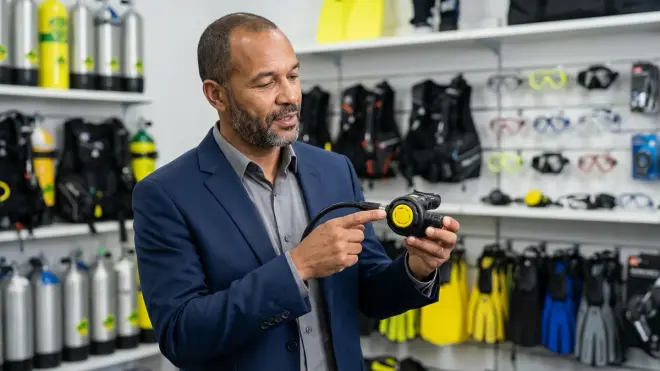
The second stage is the mouthpiece assembly you breathe from, and it performs the final pressure reduction from intermediate pressure down to ambient pressure. When you inhale, you create a slight vacuum in the mouthpiece chamber. This vacuum pulls on a diaphragm, which opens a valve (controlled by a lever mechanism), allowing air to flow. When you stop inhaling, the diaphragm returns to its neutral position and the valve closes. Exhaled air exits through a one-way valve on the side or bottom of the second stage.
The critical performance metrics here are cracking pressure (how hard you need to suck to open the valve—typically 0.8-1.5 inches of water column) and breathing resistance (how much work you do to pull air through the system at various depths and ventilation rates). A well-designed second stage should crack easily but not freeflow, and should deliver air effortlessly even when you're working hard at depth.
I've had regulators freeflow on me at 90 feet in 48-degree water, so I know exactly how a poorly-tuned or cold-sensitive second stage behaves under stress. That uncontrolled air release is caused by intermediate pressure being too high, a sticky valve mechanism, or ice formation in cold water—and it's why proper adjustment and regular service matter enormously.
The Complete System
The first and second stages work together as a balanced system. Your intermediate pressure needs to be set correctly for your second stage to perform optimally. This is part of what happens during regulator service—technicians don't just replace o-rings and clean components; they tune the IP to manufacturer specifications (typically listed in the service manual with acceptable ranges like 135-145 PSI) and adjust the second stage cracking effort and lever height.
Understanding intermediate pressure in scuba regulators helps you recognize when something's wrong—if your reg suddenly breathes harder or starts freeflowing without provocation, IP drift is often the culprit.
Why It Matters: Regulator Performance Impacts Everything Underwater
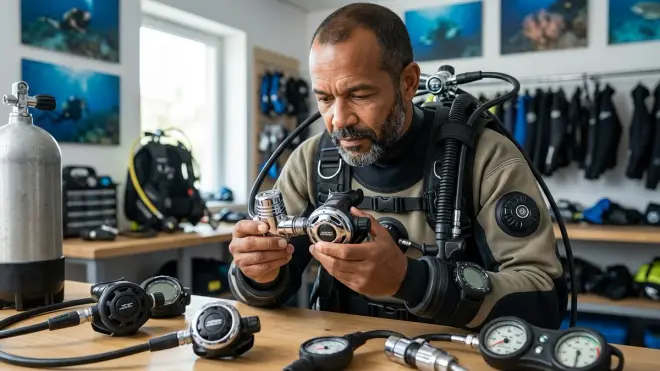
Your regulator affects virtually every aspect of your dive experience, often in ways you won't notice until you've used truly excellent equipment. Here's what changes when you upgrade from a basic rental regulator to a well-matched, properly-maintained breathing system:
Air consumption drops noticeably. Breathing resistance—particularly at depth—forces you to work harder with every breath. That work requires more oxygen, which means you consume tank air faster. I've logged dives with various regulators side-by-side in similar conditions, and a high-performance reg can reduce air consumption by 10-15% compared to a poorly-tuned or inherently resistant model. Over a week-long dive trip, that translates to longer bottom times and more relaxed diving.
Mental comfort improves. There's an enormous psychological difference between breathing effortlessly and feeling like you're pulling air through a straw. When your regulator breathes easily, you stay calmer, which further reduces air consumption and improves decision-making. This matters exponentially in overhead environments, strong currents, or any situation where task loading increases.
Cold water and deep diving become safer. Regulators aren't all created equal when temperature drops or depth increases. A regulator that works fine in 80°F Caribbean shallows might ice up catastrophically in Puget Sound or perform poorly below 100 feet. Proper environmental sealing, heat-dissipating materials, and robust IP stability under varying conditions separate recreational regs from technical-grade equipment.
Maintenance requirements and reliability vary wildly. Some regulators need annual service regardless of use; others can go 2 years or 100 dives between rebuilds. Service costs range from around $75 to around $200+ per stage depending on parts and labor. Budget regulators often use cheaper materials and looser tolerances, leading to faster wear and more frequent adjustments. I've serviced regulators that looked pristine internally after 150 dives, and others that showed significant corrosion and wear after 30—materials and build quality make the difference.
Understanding regulator function helps you recognize problems early. When you know how these systems work, you'll notice if your cracking pressure suddenly changes, if breathing resistance increases at depth, or if that slight hiss between breaths indicates an IP leak that needs attention before it becomes a dive-ending failure.
Types and Variations: Matching Regulators to Dive Conditions
Not all diving happens in the same conditions, and not all regulators are designed for universal use. Here's how different designs and features map to specific diving scenarios:
Balanced vs Unbalanced Designs
Balanced regulators maintain consistent breathing effort regardless of tank pressure or depth. As your tank drains from 3,000 PSI to 500 PSI, a balanced reg breathes the same. Unbalanced designs breathe progressively harder as tank pressure drops—you'll notice increased effort when your tank reaches about 700 PSI.
For recreational diving, balanced designs offer better performance and consistency. For technical diving or any situation where you might breathe a tank very low, balanced regulators are essential. Most regulators designed for new divers include balancing mechanisms because they help less-experienced divers manage air more effectively.
Environmentally Sealed vs Open Designs
Environmental sealing prevents water from entering the first stage mechanism, protecting against freezing, silt, contamination, and corrosion. Sealed first stages typically use either a diaphragm design or a piston with a sealing cap filled with silicone grease or Christolube.
If you're diving exclusively in warm, clear tropical water, environmental sealing is nice but not critical. For cold water (below 50°F), contaminated water, or varying conditions, sealed first stages dramatically improve reliability and reduce freeze-related freeflows. I won't dive unsealed regulators in Monterey anymore—I've experienced too many freeze-ups with open piston designs in 47°F water.
DIN vs Yoke Connection
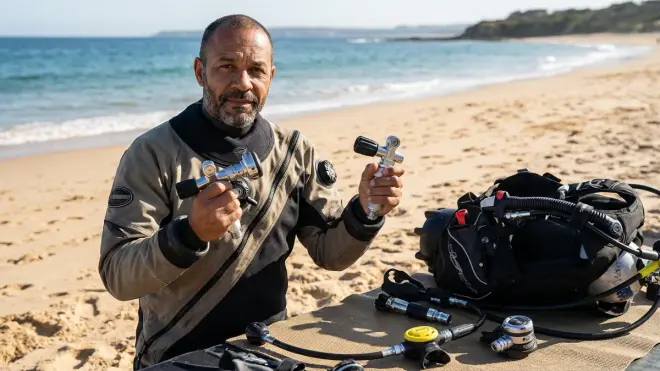
Your first stage connects to the tank valve using either a yoke (A-clamp) or DIN (screw-in) connection. Yoke connections are standard in North American recreational diving and work perfectly fine up to their rated pressure (typically 3,000-3,500 PSI). DIN connections create a more robust seal with the tank valve o-ring recessed and protected, rated to 3,300 PSI for DIN 200 and 5,000 PSI for DIN 300.
For recreational diving in rental-tank scenarios, yoke offers better compatibility—most dive shops globally have yoke valves. For technical diving, deep diving, or higher-pressure fills, DIN provides better reliability and is the international standard. Many regulators come with convertible valves, letting you switch between connections. Learn more about this decision in our complete guide to DIN vs yoke regulator connections.
Material Considerations
First stage bodies are typically made from marine-grade brass (chrome-plated), titanium, or specialty alloys. Brass is standard, affordable, and perfectly adequate for most diving—it's what you'll find in 90% of regulators. Titanium offers significant weight savings (a titanium first stage typically weighs 40-50% less than brass) and superior corrosion resistance, but at 2-3x the cost.
For travel divers obsessed with luggage weight, titanium makes sense. For everyone else, properly-maintained brass performs identically underwater. I've used both extensively, and the only time I truly appreciate titanium is when I'm hauling gear through airports—never during the actual dive.
Frequently Asked Questions
How often should a scuba regulator be serviced?
A scuba regulator should be serviced annually or every 100 dives (whichever comes first) according to most manufacturer recommendations, though some newer models extend this to 2 years or 200 dives. Regular service includes disassembly, ultrasonic cleaning, o-ring replacement, inspection of all components, and performance tuning to ensure proper intermediate pressure and breathing characteristics. Saltwater diving, cold water use, and heavy dive frequency may require more frequent service intervals to maintain optimal performance and safety.
Can you use any regulator for cold water diving?
No, not all regulators are suitable for cold water diving—standard regulators can freeze and freeflow dangerously in water temperatures below 50°F. Cold water regulators require specific design features including environmental sealing of the first stage, heat-exchanging materials like brass or specially-treated metals, anti-freeze components, and designs that prevent ice formation in the second stage. Using a non-cold-water-rated regulator in temperatures below 50°F significantly increases the risk of catastrophic freeflow, which can drain your tank in minutes and create a life-threatening emergency.
What is the difference between a balanced and unbalanced regulator?
A balanced regulator maintains consistent breathing effort regardless of tank pressure or depth by using internal mechanisms that compensate for changing pressures, while an unbalanced regulator becomes progressively harder to breathe from as tank pressure decreases or depth increases. Balanced designs use additional springs, chambers, or valve configurations that offset pressure changes, ensuring your last 500 PSI breathes as easily as your first 3,000 PSI, which is particularly important for new divers, deep diving, and situations where you might need to breathe a tank very low during an emergency.
Do I need different regulators for different types of diving?

While one high-quality regulator can handle various diving conditions, different diving specialties benefit from specific regulator features—cold water diving requires environmental sealing and anti-freeze design, technical diving needs extremely robust performance and multiple ports, travel diving favors lightweight materials like titanium, and deep diving demands consistent performance at high ambient pressure. Many experienced divers own multiple regulators optimized for different conditions rather than compromising with a jack-of-all-trades approach, though a well-chosen cold-water-capable balanced regulator can serve most recreational diving needs across various environments.
How do I know if my regulator is breathing properly?
A properly functioning regulator should crack open with minimal inhalation effort (typically feeling effortless), deliver air smoothly without resistance even during hard breathing, require no excessive exhalation effort, show no air leakage between breaths (no hissing or bubbling), and maintain consistent performance regardless of body position or depth. Warning signs of problems include increased breathing resistance, harder cracking effort, air leaking from exhaust valves between breaths, unusual hissing sounds, or performance that degrades noticeably as you use your tank—any of these symptoms indicates your regulator needs service or adjustment before your next dive.
Summary and Next Steps
Your scuba regulator is fundamentally different from most other dive gear—it's genuine life-support equipment whose performance directly impacts your safety and comfort. Understanding how the two-stage pressure reduction system works, what balanced and environmentally sealed designs actually do, and how materials and maintenance schedules affect long-term reliability helps you make informed decisions about purchasing, maintaining, and trusting your breathing system.
If you're just starting your diving journey, focus on understanding these fundamentals before getting lost in specification sheets and marketing claims. A properly-maintained mid-range regulator from a reputable manufacturer will serve you well for years of recreational diving. Check out our recommendations for the best scuba regulators for beginners to see specific models that balance performance with value.
As you gain experience and dive in varying conditions, you'll develop preferences for how you want your regulator to breathe and what features matter for your specific diving style. Regular maintenance matters more than brand names—learn the basics in our guide on how to service a scuba regulator and establish a relationship with a qualified technician you trust. Your regulator should be serviced by someone who understands the equipment and follows manufacturer specifications, not whoever offers the cheapest annual service special.
The underwater world is remarkable, and your regulator is what makes experiencing it possible. Treat it as the critical life-support equipment it is, understand how it functions, maintain it properly, and it will reliably deliver every breath you need for thousands of dives to come.