
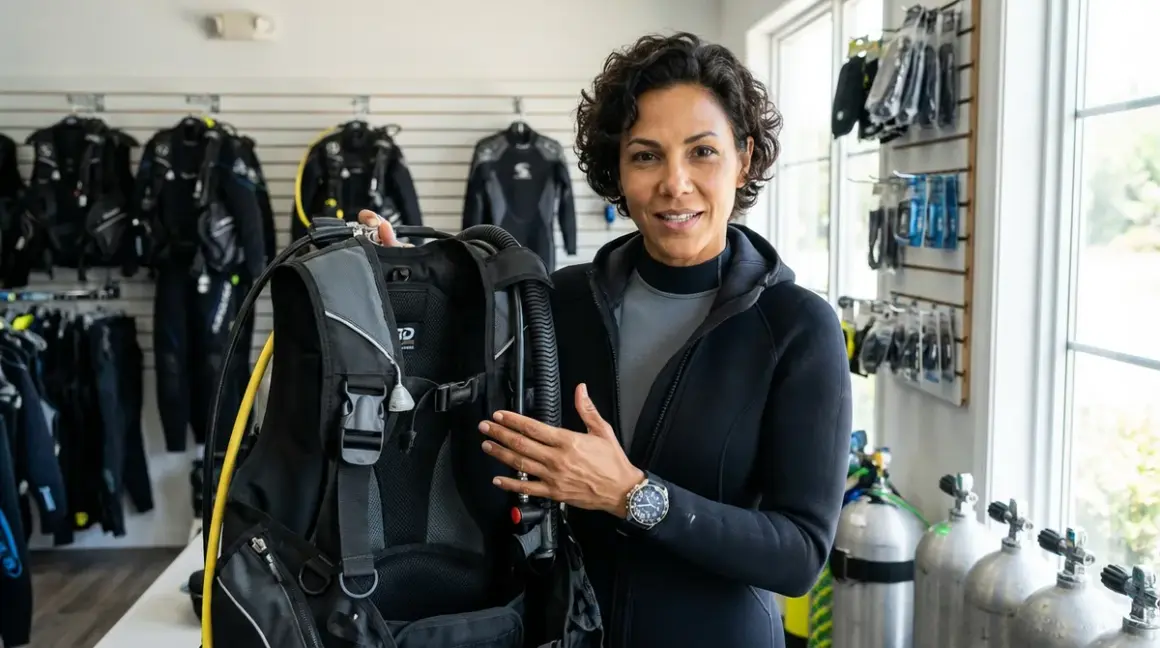

When I first started diving in Belize, I thought a buoyancy compensator device was just a fancy vest that held my tank. I didn't really understand what is a buoyancy compensator device or why it mattered beyond keeping me from sinking. Then on dive number seven, I accidentally overinflated at 60 feet while trying to get a photo of a spotted eagle ray, and suddenly I was rocketing toward the surface fighting to dump air. That terrifying moment taught me that understanding this piece of equipment isn't optional—it's absolutely essential for safe, controlled diving and enjoying what you see underwater.
What Is a Buoyancy Compensator Device?
A buoyancy compensator device (often called a BCD or BC) is an inflatable vest or jacket that lets you control your position in the water column by adding or releasing air. Think of it as your underwater elevator—it allows you to hover motionless at any depth, float comfortably on the surface, or descend with control.

The BCD serves three main purposes during your dive. First, it provides positive buoyancy at the surface so you can rest without effort before and after your dive. Second, it helps you achieve neutral buoyancy at depth, which means you're neither sinking nor floating—you're just hanging there in perfect balance. Third, it holds your tank securely on your back and provides attachment points for all your other gear.
What confused me at first was understanding that what is a buoyancy compensator device really asking about is a piece of life-support equipment, not just a gear holder. Your dive computer tells you when to ascend and tracks your depth, but your BCD is what physically controls whether you go up, down, or stay put. According to PADI training standards, mastering buoyancy control is one of the most critical skills for diver safety and environmental protection.
I remember my instructor explaining that your BCD works with your weight system and your breathing to create the perfect balance. You add just enough air to offset the weight you're wearing, then use small breaths to make tiny adjustments. Too much air? You float up. Too little? You sink. It sounds simple, but getting it right takes practice—I'm still working on it honestly.
How a Buoyancy Compensator Device Works
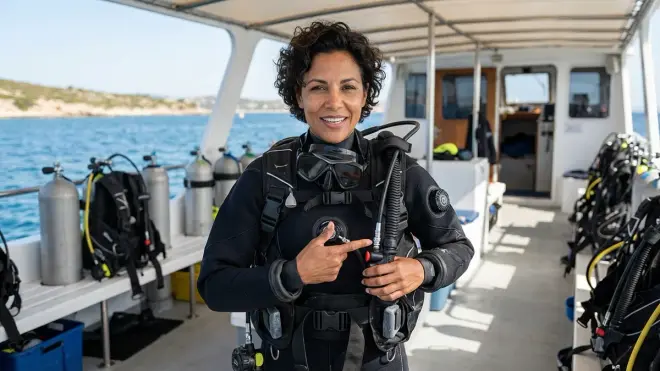
The core principle behind how a BCD functions is surprisingly straightforward: air has volume, and volume creates lift. When you add air to the bladder inside your BCD, it displaces water and creates positive buoyancy that counteracts the weight of your tank, weights, and gear. Remove that air, and you become heavier again.
Your BCD connects to your tank through a low-pressure inflator hose that attaches to your scuba regulator's first stage. When you press the inflate button on your inflator mechanism (usually on the left side at chest level), air flows from your tank into the BCD's internal bladder. This happens at a regulated pressure that won't over-pressurize the bladder—typically around 150 psi, which is way lower than the around 3,000 psi inside your tank.
The inflator mechanism has two buttons or controls. The inflate button adds air when you press it, and the deflate button opens a valve to let air escape. Most BCDs also have one or more dump valves—spring-loaded vents positioned at different points (usually the shoulder and lower back) that you can pull to release air quickly. I learned to use the shoulder dump valve when ascending because air naturally rises to the highest point in the bladder, which is usually near your left shoulder.
Here's something that took me way too long to figure out: your BCD bladder expands as you ascend because the air inside it expands with decreasing pressure. At 60 feet, the air in your BCD occupies half the volume it will at the surface. That means if you're perfectly neutral at depth and you start ascending without releasing air, you'll become increasingly buoyant and accelerate upward—exactly what happened during my eagle ray encounter. You have to continuously dump air as you ascend to maintain control.
The bladder itself is made from durable materials like nylon with urethane coating or similar rubberized fabric that's flexible but holds air reliably. Most BCDs hold between around 30 and 50 pounds of lift capacity, though some technical or cold-water models offer more. The bladder sits inside the outer fabric shell of the BCD, with the shell providing structure, padding, and attachment points for pockets, D-rings, and your tank strap or cam band.
Your tank attachment system uses either a cam band (a adjustable strap with a buckle) or integrated tank straps built into the BCD structure. This holds your cylinder securely while you dive. Getting the tank positioned correctly—high enough that the valve is accessible but not hitting your head—makes a huge difference in comfort and trim in the water.
Why Understanding Your BCD Matters
When I'm lining up a photo of a seahorse or trying to hover over fragile coral, buoyancy control is everything. You can't get close to marine life if you're bouncing up and down or accidentally crashing into the reef. Understanding what is a buoyancy compensator device and how to use it precisely transforms your entire diving experience from clumsy survival mode to graceful exploration.
From a safety perspective, your BCD is literally what brings you back to the surface. If something goes wrong at depth—you're out of air, your buddy needs help, or you're feeling unwell—inflating your BCD creates the positive buoyancy you need for a controlled emergency ascent. That sounds dramatic, but it's why every BCD pre-dive safety check includes testing both the inflator and dump valves before you enter the water.
But beyond emergencies, your BCD affects your air consumption, your energy expenditure, and your ability to protect the underwater environment. When I finally got my buoyancy dialed in around dive 40, I noticed my tank lasting 10-15 minutes longer because I wasn't constantly finning to stay in position. I was using less energy, staying calmer, and breathing more slowly—all because I understood how to use tiny adjustments instead of big corrections.
For underwater photographers like me, mastering buoyancy control is non-negotiable. You need to hold perfectly still while composing a shot, sometimes hovering inches above the sand without stirring up sediment. Your BCD makes that possible, but only if you know exactly how much air to add or remove for micro-adjustments.
Types of Buoyancy Compensator Devices
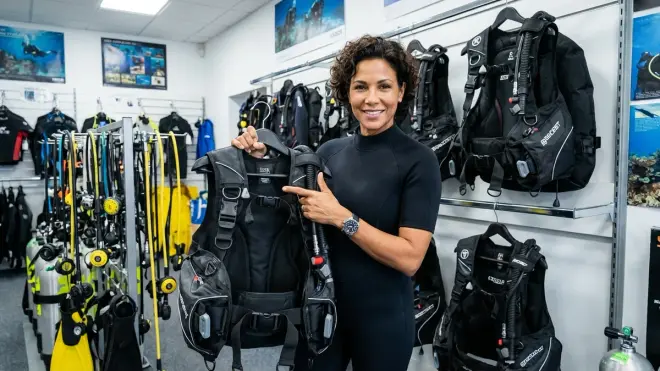
There are three main BCD designs, and understanding the differences helps you figure out which style matches your diving. I started with a jacket-style BCD because that's what my dive shop rented, and honestly I didn't know other options existed.
Jacket-Style BCDs
Jacket BCDs (also called vest-style) wrap around your torso with air bladders on the sides and sometimes the back. They're the most common rental BCDs and what most beginners learn on. When inflated at the surface, they hold you upright in a comfortable swimming position with your head well above water.
I still dive a jacket BCD because I like feeling secure and stable at the surface between dives, especially when I'm dealing with my camera gear. The downside is they can feel a bit bulky and push you slightly forward when fully inflated underwater, making horizontal trim a little harder to achieve. But for recreational reef diving in calm conditions, they work great.
Back-Inflate BCDs
Back-inflate BCDs have the bladder entirely behind you, against the tank. This design keeps the front of your body clear and pushes you into a more horizontal swimming position underwater, which many divers find more streamlined and comfortable once they adjust.
The thing I've heard from friends who switched is that back-inflate BCDs can feel tippy at the surface—you tend to fall forward face-first if you're not careful. That can be annoying when you're trying to rest or have a conversation before descending. The jacket BCD vs back inflate BCD debate really comes down to your priorities and dive style.
Wing and Backplate Systems
Wing BCDs (sometimes called BP/W for backplate and wing) are modular systems popular with technical divers. The bladder is a separate wing-shaped bag attached to a metal or plastic backplate, and you customize everything else—harness, D-rings, weight integration.
These systems look intimidating to me honestly, but divers I know who use them love the streamlined feel and the ability to configure everything exactly how they want it. They're definitely overkill for someone at my experience level doing recreational photography dives, but I'm curious to try one eventually.
Frequently Asked Questions
What is a buoyancy compensator device used for in scuba diving?
A buoyancy compensator device is used to control your vertical position in the water by adding or releasing air, allowing you to achieve neutral buoyancy at depth, float at the surface, and make controlled ascents and descents while holding your tank and gear securely.
How do you inflate and deflate a BCD underwater?
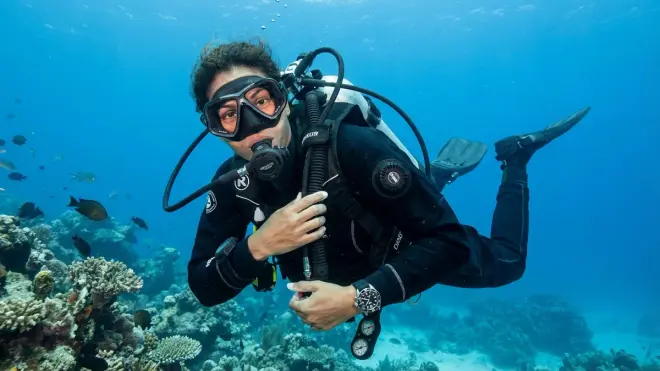
You inflate a BCD underwater by pressing the inflate button on the low-pressure inflator connected to your tank, which adds air to the bladder, and you deflate it by pressing the deflate button or pulling a dump valve while holding the inflator above your head to let air escape from the highest point.
Can you dive without a buoyancy compensator device?
You technically can dive without a buoyancy compensator device in very shallow water with minimal gear, but it's not recommended or safe for regular scuba diving because you lose the ability to control your buoyancy, rest at the surface, or make emergency ascents safely.
How much lift capacity does a BCD need?
A BCD needs enough lift capacity to float you and all your gear at the surface with a full tank, which typically means around 25-35 pounds for warm-water diving with minimal exposure protection and around 40-50 pounds for cold-water diving with thick wetsuits or drysuits—check the BCD lift capacity guidelines for your specific configuration.
How often should you service a buoyancy compensator device?
You should rinse your buoyancy compensator device with fresh water after every dive, perform a thorough inspection every 50 dives or annually, and have it professionally serviced if you notice leaks, sticky inflator buttons, or damaged dump valves—following a regular BCD maintenance schedule prevents most problems.
Summary
Understanding what is a buoyancy compensator device completely changed how I approach diving. It's not just a vest that holds your tank—it's the tool that gives you three-dimensional freedom underwater and the safety margin you need at the surface. Whether you're shooting photos, exploring wrecks, or just enjoying the reef, learning to use your BCD with precision makes everything better.
The basics are simple: add air to go up, release air to go down, and make tiny adjustments to hover in place. But actually developing that skill takes time and practice. I'm 80 dives in and still working on it, and that's completely normal. If you're just starting out, spend time understanding how to properly fit and adjust your BCD and practice those inflate and deflate controls until they become automatic. Your future self trying to photograph a tiny nudibranch will thank you for it.