


I've watched a lot of new divers stare at their regulator during the gear briefing with this mix of trust and bewilderment—trusting that it'll keep them alive, bewildered by how it actually does that. Understanding how scuba regulators work isn't just academic curiosity. It's the difference between blind reliance and informed confidence at depth, and it's the foundation for recognizing when something's going wrong before it becomes a problem.
What Is a Scuba Regulator?
A scuba regulator is a mechanical pressure-reducing system that converts the high-pressure air in your tank—typically between 2,700 and 3,500 psi when full—into breathable ambient pressure air that matches the surrounding water pressure at whatever depth you're diving. Without this pressure reduction happening in two carefully controlled stages, you'd either get nothing or get a violent, uncontrollable blast of air that could rupture your lungs.

The regulator consists of two main components: the first stage, which attaches directly to your tank valve and performs the initial pressure reduction, and the second stage, which is the mouthpiece you breathe from and completes the final pressure adjustment. Together, they form what's called a two-stage demand regulator system—"demand" meaning it only delivers air when you actively inhale, rather than flowing continuously.
I've used regulators in 35°F water under ice in the Great Lakes and in 86°F tropical water in Thailand, and while the external conditions change dramatically, the core mechanics remain the same. The regulator doesn't know or care what the temperature is; it's just responding to pressure differentials with springs, diaphragms, and precisely machined orifices.
Modern regulators are impressively reliable when properly maintained, but they're also unforgiving of contamination, corrosion, or improper adjustment. That's why understanding the mechanics matters—you need to know what you're looking at during a pre-dive safety check and what symptoms indicate which type of failure.
How a Scuba Regulator Works: The Two-Stage Pressure Reduction Process
The magic of how scuba regulators work happens through a two-stage pressure reduction sequence that sounds simple in theory but requires precise engineering to execute reliably at depth.
First Stage Mechanics
When you open your tank valve, high-pressure air—let's say 3,000 psi for a full aluminum 80—immediately floods into the first stage. Inside, you'll find either a piston or diaphragm mechanism (we'll get to the differences shortly) that's held in place by a heavy-duty spring. This spring is calibrated to maintain what's called intermediate pressure (IP), typically around 125-145 psi above ambient pressure.
Here's where it gets interesting: the first stage doesn't reduce pressure to a fixed number. It reduces it to a set amount above whatever the surrounding water pressure happens to be. At the surface, your IP might be 135 psi. At 99 feet (4 atmospheres absolute), that same regulator maintains 135 psi above the 58.8 psi ambient pressure at that depth—so the actual IP is around 194 psi. This is called a balanced system, and it's why your regulator breathes roughly the same at 15 feet as it does at 100 feet.
The first stage spring constantly pushes a valve closed. When you inhale and drop the pressure in the intermediate-pressure chamber (the hose connecting first and second stages), the spring force overcomes the air pressure holding the valve shut, and high-pressure air flows in until the pressure equalizes again and closes the valve. This happens dozens of times per breath, though you never notice it.
The outlet port configuration on the first stage determines hose routing—typically two high-pressure ports for gauges or transmitters, and four to seven low-pressure ports for the second stage, BCD inflator, and drysuit hose if you're using one. Port placement matters more than most divers realize; poor routing creates jaw fatigue and hose strain that can accelerate o-ring failure.
Second Stage Mechanics

The air leaving your first stage at intermediate pressure travels through the low-pressure hose to your second stage. Here's where the final reduction happens—from that 135 psi (plus ambient) down to exactly ambient pressure, making it effortless to inhale.
Inside the second stage, you'll find a diaphragm (the flexible disc behind the purge button), a lever, and a poppet valve. When you inhale, you create negative pressure inside the second stage case. This slight vacuum pulls the diaphragm inward, which pushes the lever, which unseats the poppet valve, which allows intermediate-pressure air to flow past the valve seat and into your mouth.
The instant the pressure inside the case equalizes with your inhalation demand, the diaphragm relaxes, the lever releases, and a spring snaps the poppet valve shut again. This cycle happens continuously throughout your inhalation, modulating airflow to match your breathing rate. It's a brilliantly simple mechanical feedback loop that requires no electronics, no batteries, and no external power source.
The cracking effort—the amount of negative pressure required to open the valve—is adjustable on many regulators via a knob on the second stage body. Lower cracking effort means easier breathing but higher risk of freeflow (uncontrolled air delivery) in strong currents or when the regulator is face-down in the water. I generally dive with cracking effort set fairly loose in calm tropical conditions and tighter in cold water where freeflow is a real concern.
Second stage performance depends heavily on the venturi effect—the air rushing past the poppet valve creates a low-pressure zone that actually helps pull more air through, making inhalation easier mid-breath. Many second stages have a venturi adjustment switch (often labeled "dive" and "pre-dive" or "+" and "-") that controls this effect. The "pre-dive" setting reduces venturi assist to prevent freeflow at the surface.
Pressure Compensation and Depth Performance
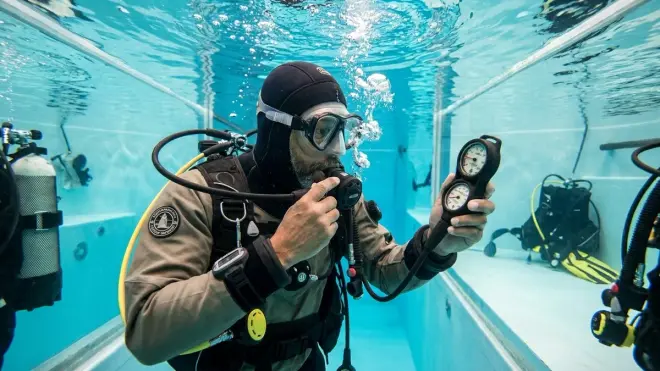
The reason your regulator continues working at depth—when the water pressure at 130 feet is almost six times what it is at the surface—is that both stages are ambient pressure compensated. The first stage sensing mechanism (either the piston head or the external diaphragm) is exposed to water pressure, so as ambient pressure increases, it helps compress the IP spring proportionally, maintaining that consistent pressure differential.
Similarly, the second stage case is filled with water (yes, there's water sloshing around inside your second stage when you dive—that's normal), which presses against the diaphragm with the same force as the surrounding water pressing against your chest. This means the pressure you need to create with your lungs to trigger inhalation stays roughly constant regardless of depth.
I say "roughly" because there's always some performance degradation at depth. Breathing resistance increases slightly due to gas density—air at 100 feet is four times as dense as surface air, which means it flows more sluggishly through the same-sized orifices. You won't usually notice this until you're working hard at depth or pushing past recreational limits, but it's measurable and it's why technical divers often prefer regulators with larger diaphragms and lower intermediate pressures.
Why Understanding Regulator Mechanics Matters
Knowing how scuba regulators work isn't just satisfying curiosity—it directly impacts your safety, equipment decisions, and ability to recognize and respond to problems underwater.
First, it demystifies warning signs that otherwise seem random. When you understand that intermediate pressure drives second stage performance, you immediately recognize why a slightly high IP setting (maybe from an overdue service) can cause a second stage to freeflow. Or why breathing gets harder on a low tank—at 300 psi, the first stage spring is partially compressed even at rest, reducing the pressure differential available to drive airflow.
Second, it informs your equipment choices. Understanding the mechanical differences between piston and diaphragm first stages helps you evaluate whether the marketing claims about "easier breathing" or "better cold-water performance" are based on actual engineering advantages or just copy. I've tested regulators where the manufacturer claimed revolutionary breathing performance, and the actual difference at recreational depths was imperceptible—but the price premium was 40%.
Third, it builds the mechanical intuition you need during pre-dive checks. When you test your regulator before a dive, you're not just going through motions. You're verifying spring tension, checking for air leaks past o-rings, confirming that the poppet valve seats properly, and listening for the subtle hiss that indicates a failing seat or contaminated sealing surface. I've caught developing problems during pre-dive inspection dozens of times—minor IP creep, slight freeflow tendency, harder-than-normal cracking effort—that would have become real issues at depth if I hadn't understood what I was feeling and hearing.
Fourth, it helps you maintain realistic expectations about gear performance. A lot of new divers get sold regulators with features they don't need because they don't understand what actually affects breathing performance and what's just cosmetic. The truth is that any modern regulator from a reputable manufacturer will breathe effortlessly at recreational depths in temperate water. The differences that matter show up in cold water, at significant depth, or during heavy workload—and those differences are rooted in specific mechanical characteristics like IP setting, diaphragm surface area, and exhaust valve design, not vague marketing about "smooth" or "natural" breathing.
Types of Regulator Designs and Mechanical Variations

While the two-stage pressure reduction principle is universal, the mechanical implementation varies significantly, and those variations have real-world performance implications.
Piston vs. Diaphragm First Stages
Piston first stages use a sliding piston that moves back and forth to open and close the high-pressure valve. They're mechanically simpler—fewer parts, easier to service, typically higher flow rates due to larger valve orifices. The trade-off is that in most piston designs, the piston itself is exposed to water (called an "unbalanced" or "unsealed" piston), which means they're more vulnerable to contamination in silty water and more prone to freezing in cold water.
Sealed piston designs address this by enclosing the piston in an oil-filled or grease-filled chamber, isolating it from the environment. These give you the high flow rate of a piston with the environmental protection of a diaphragm. I've used sealed piston regulators extensively in cold water, and they perform well, though they do require more frequent service if you're diving in particularly harsh conditions.
Diaphragm first stages use a flexible membrane to sense ambient pressure and actuate the valve mechanism indirectly. The entire mechanism is sealed from the environment, making them inherently better for cold water, contaminated water, or infrequent use (they don't corrode internally when sitting idle). The trade-off used to be slightly lower flow rate and more complex servicing, though modern high-performance diaphragm designs have largely closed that gap.
For most recreational diving in temperate to tropical conditions, the difference is minor. But if you're diving in water below 50°F regularly, I'd strongly recommend a diaphragm or sealed piston design. I've had an unsealed piston regulator freeflow on me at 90 feet in 48-degree water in Monterey—the moisture in my exhaled breath froze around the piston stem, preventing it from closing fully. It's a controllable situation if you're trained for it, but it's also entirely avoidable with the right first stage design.
Balanced vs. Unbalanced Designs
A balanced regulator is designed so that changes in tank pressure don't significantly affect breathing performance. As your tank drops from 3,000 psi to 500 psi, a balanced reg maintains consistent intermediate pressure and breathing resistance.
An unbalanced regulator gets progressively harder to breathe from as tank pressure drops, because the high-pressure air is helping hold the valve closed, and less tank pressure means less force available to overcome the spring. These are increasingly rare in modern regulators and generally only appear in budget entry-level models.
Unless you're buying a regulator specifically for an emergency pony bottle where cost and simplicity matter more than comfort, get a balanced design. The performance difference on a low tank is significant enough that it's worth the modest price increase.
Second Stage Variations
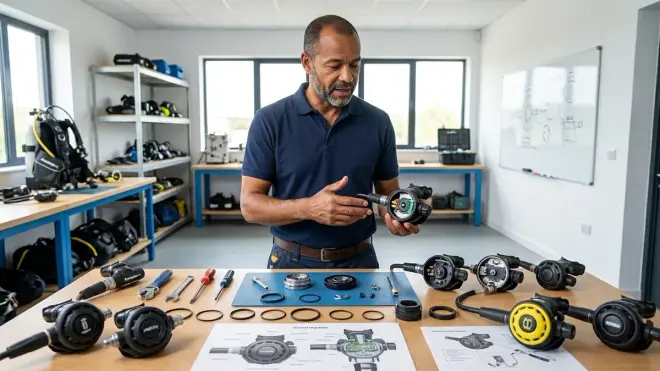
Second stage designs are more about ergonomics and fine-tuning than fundamental mechanical differences. Key variables include:
Diaphragm size: Larger diaphragms are more sensitive to inhalation effort, reducing cracking pressure.
Exhaust valve design: Affects how easily you can exhale and whether water enters the case during aggressive swimming or upside-down positioning.
Case geometry: Influences venturi effect strength and susceptibility to jaw fatigue during long dives.
Adjustability: Knobs for cracking effort and venturi assist let you tune performance for conditions, though I find most divers set them once and forget about them.
I've used second stages ranging from minimalist travel regulators weighing under 6 ounces to oversized performance models designed for deep technical diving, and honestly, the biggest performance variable is proper adjustment and maintenance, not the specific model. A well-tuned budget second stage will outperform a neglected high-end one every single time.
Frequently Asked Questions
What is the intermediate pressure in a scuba regulator and why does it matter?
Intermediate pressure is the reduced pressure maintained by the first stage—typically 125-145 psi above ambient water pressure—that feeds into the second stage through the low-pressure hose. It matters because IP that's too high causes freeflow and harder exhalation, while IP that's too low makes breathing more difficult, especially at depth or when your tank pressure drops below about 1,000 psi. Proper IP adjustment during service is critical for optimal regulator performance and is one of the primary things checked during annual maintenance.
Why does my regulator sometimes freeflow and how is that related to how it works?
A freeflow occurs when the second stage poppet valve fails to seat properly, allowing intermediate-pressure air to flow continuously instead of only during inhalation. This happens when something disrupts the mechanical balance—water current pushing the purge button, ice formation around the valve seat in cold water, excessive intermediate pressure from the first stage, or debris preventing the valve from closing completely. Understanding that the second stage relies on a precise balance between spring tension, diaphragm position, and valve seating helps you diagnose whether the freeflow is environmental (positioning, current, temperature) or mechanical (IP setting, worn parts, contamination).
How does water depth affect how a scuba regulator works?
Water depth increases ambient pressure, which affects both regulator stages through ambient pressure compensation. The first stage maintains the same pressure differential above ambient (so actual IP increases with depth), and the second stage diaphragm experiences the same pressure on its external surface as the surrounding water pressing on your lungs. This keeps breathing effort roughly constant regardless of depth. However, gas density increases with depth, creating slightly higher flow resistance through the same-sized orifices, which is why breathing feels slightly more labored when working hard at depth even though the mechanical pressure differential remains constant.
What's the difference between a piston and diaphragm regulator in terms of how they work?
Both accomplish the same pressure reduction, but through different mechanisms. A piston regulator uses a sliding piston that directly opens and closes the high-pressure valve in response to IP changes—mechanically simpler with fewer parts and typically higher flow capacity. A diaphragm regulator uses a flexible membrane to sense ambient pressure changes and actuate the valve indirectly—more complex but completely sealed from the environment, making it more reliable in cold or contaminated water. The end result in terms of delivered air is nearly identical in recreational diving conditions, but the mechanical differences affect maintenance requirements, cold-water performance, and long-term durability in harsh environments.
Can I understand how my regulator works well enough to service it myself?
You can absolutely understand the mechanical principles and perform basic maintenance like rinsing, inspecting hoses and mouthpieces, and checking for obvious damage during pre-dive safety checks. However, internal service—disassembly, replacement of seats and o-rings, IP adjustment, and flow testing—should be performed by trained technicians with proper tools and parts. The tolerances involved are tight enough that improper adjustment can create dangerous failure modes, and most manufacturers void warranties on regulators serviced by uncertified individuals. Understanding how it works makes you a better-informed owner and helps you communicate issues clearly with your service technician, but doesn't replace professional annual service.
Summary
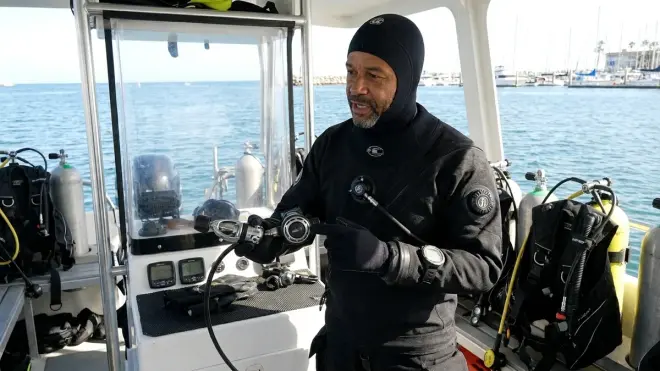
The elegance of how scuba regulators work lies in their mechanical simplicity—two stages of pressure reduction, both ambient-compensated, both operating on straightforward principles of spring tension and pressure differentials. The first stage drops tank pressure from 3,000+ psi down to intermediate pressure around 135 psi above ambient. The second stage completes the reduction to exactly ambient pressure through a demand-valve system triggered by your inhalation.
Understanding these mechanics transforms your relationship with your life-support equipment. You move from blind trust to informed confidence, from rote pre-dive checks to meaningful inspection, from reactive problem-solving to proactive recognition of developing issues.
I still remember the first time I actually understood what I was feeling during a regulator breath check, about six months into my diving. It wasn't just "does air come out?" anymore—it was "does the valve crack at the right effort, does the airflow ramp up smoothly, is there any turbulence suggesting debris or misalignment?" That shift in awareness has probably saved me from half a dozen problem dives over the years, and it's directly accessible to anyone willing to spend an hour understanding the mechanics.
Your regulator is the most critical piece of equipment you own. It deserves more than passive reliance.