


I've watched divers shiver their way through tropical reef dives in suits they bought off some generic sizing chart, and I've seen others sweat through a surface interval wearing rubber thick enough for polar diving. The best wetsuit isn't the one with the fanciest logo or the suit your buddy swears by—it's the one that matches your thermal needs, dive environment, and body shape. After forty-plus years of fitting divers in Florida waters and watching what actually works versus what just looks good on a rack, I can tell you that wetsuit selection is one of the most personal decisions you'll make in diving. Get it wrong, and you'll be uncomfortable, task-loaded, and potentially unsafe. Get it right, and you'll forget you're wearing it.
What Is a Wetsuit?
A scuba wetsuit is a neoprene garment designed to trap a thin layer of water between your skin and the suit material. Your body heats this water layer, creating an insulating barrier that reduces heat loss in the water. Unlike drysuits—which keep you completely dry—wetsuits work by controlling the rate at which your body's thermal energy dissipates into the surrounding environment.

The neoprene itself is closed-cell foam rubber, meaning it's riddled with tiny gas bubbles that provide insulation. Most modern wetsuits use petroleum-based neoprene or increasingly, limestone-based neoprene, which manufacturers claim has superior stretch and durability characteristics. I've used both extensively, and the limestone stuff does seem to hold up better over time, though it comes at a price premium.
Wetsuits come in various thicknesses measured in millimeters, typically ranging from 1mm shorties for warm water to 7mm full suits for cold water diving. The thickness directly correlates with thermal protection—more neoprene means more insulation but also more buoyancy to compensate for and less flexibility. That trade-off is something you'll feel on every dive, which is why choosing the right thickness for your typical dive conditions matters more than most beginners realize.
The fit is everything with wetsuits. A loose suit allows too much water circulation, flushing out your heated layer and leaving you cold. A too-tight suit restricts breathing, limits range of motion, and can cause serious discomfort or even circulatory issues during longer dives. I've seen divers cut dives short because they couldn't take another minute in a poorly fitted suit.
How It Works
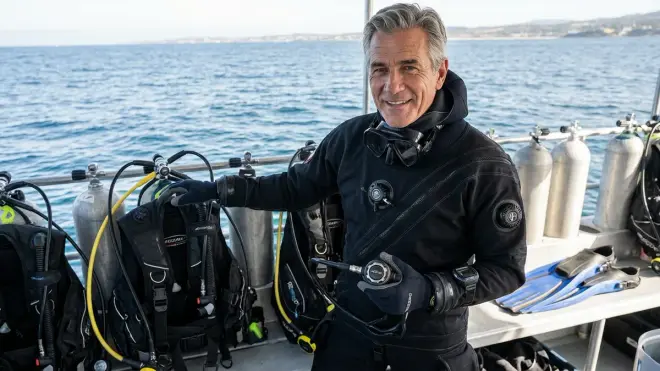
Here's the thing about wetsuit thermal protection: it's not the neoprene that keeps you warm, it's the water you heat. When you first enter the water, cold water floods into the suit through the neck, wrists, and ankles. That initial shock is unavoidable—every wetsuit has it unless you're in a custom-sealed suit with wrist and ankle zippers. Your body immediately begins heating this trapped water layer, and within a few minutes, assuming the suit fits properly, you've established your thermal envelope.
The neoprene's job is twofold. First, the closed-cell foam structure acts as an insulator, slowing the rate at which your heated water layer loses energy to the surrounding ocean. Second, it minimizes water exchange—the better the fit, the less your warm water flushes out and gets replaced with cold water. This is why seams, zippers, and entry systems matter so much. A back-zip suit with a long vertical zipper is easy to get into but creates a thermal weak point the entire length of your spine. Chest-zip and zipper-less entry suits seal better but require more contortion to don.
Seam construction dramatically affects both durability and thermal performance. Flatlock stitching—where two neoprene edges are overlapped and stitched flat—is comfortable and flexible but creates tiny perforations that allow water flow. It's fine for warm water but useless in cold. Blind-stitched seams are stitched without penetrating completely through the neoprene, then often glued and taped over, creating a nearly waterproof seal. I've tested dozens of suits over the years, and the blind-stitched, glued, and sealed seams genuinely do make a noticeable difference once water temperatures drop below 75°F.
Neoprene also compresses as you descend. Those gas bubbles that provide insulation get squeezed at depth, reducing the suit's thickness and its insulating properties. A 7mm suit at 100 feet functions more like a 5mm suit at the surface. This compression also means you lose buoyancy as you descend—anywhere from 5-8 pounds of positive buoyancy for a full 7mm suit—which you need to account for in your buoyancy control and weighting strategy. That's why divers in thick wetsuits often need 10-15 pounds more lead than they would in a thinner suit or drysuit.
The material lining inside a wetsuit affects both comfort and donning ease. Bare neoprene sticks to skin, making the suit nearly impossible to pull on when dry. Most suits feature nylon jersey lining on the inside, which slides more easily but can cause chafing if the fit isn't right. Some manufacturers use plush or thermal linings that claim to improve warmth—they add a marginal comfort factor but don't substantially change the physics of thermal protection. What does help is a smooth-skin exterior (usually on the chest and back), which reduces water drag and wind chill on the surface, though it's more fragile and prone to tearing.
Why It Matters
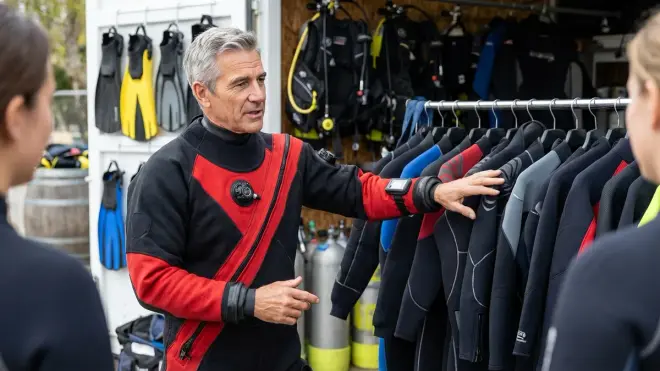
Hypothermia is insidious. You don't suddenly realize you're dangerously cold—you gradually lose motor control, decision-making ability, and eventually consciousness. I've brought up divers from recreational depths who were shivering so hard they couldn't work their inflator buttons or read their dive computer displays. They thought they were "a little chilly." They were hypothermic and didn't recognize it.
Water conducts heat roughly 25 times faster than air, meaning your body loses thermal energy far more rapidly when immersed. Even in tropical waters at 82°F, your core body temperature will slowly drop over the course of a 60-minute dive without thermal protection. Most divers don't notice it on a single dive, but multiple dives over several days compound the heat loss, leading to cumulative fatigue and increased risk of decompression illness. Your body's ability to off-gas nitrogen efficiently is temperature-dependent—cold divers don't process nitrogen as effectively, which is why the dive computer algorithms don't account for this variable irritates me. You have to be your own safety officer here.
The right wetsuit keeps your core temperature stable, which means you stay alert, coordinated, and capable of handling problems underwater. When you're warm, you consume less gas because your body isn't burning calories to generate heat. You're more relaxed, which improves your buoyancy control and reduces task loading. I tell newer divers that thermal comfort is a safety issue, not a luxury preference.
Beyond safety, there's the simple reality that cold divers don't enjoy diving. If you're shivering through your safety stop counting the seconds until you can get out, you're not experiencing the underwater environment—you're enduring it. I've seen people quit diving entirely because they associated it with being miserably cold. A proper wetsuit transforms the experience from something you tolerate to something you actually want to do repeatedly.
Types & Variations
Full wetsuits cover your torso and limbs with long sleeves and pants. They range from 3mm suits for warm tropical diving up to 7mm suits for temperate and cold water. A 5mm suit is the sweet spot for most recreational diving in 70-80°F water—thick enough to matter, but not so bulky you feel like you're wrestling rubber. For colder water, the best wetsuits for cold water diving include integrated hoods, reinforced knee pads, and high-quality seam sealing that doesn't exist on cheaper models.
Shorty wetsuits feature short sleeves and legs, typically in 2-3mm thickness. They're ideal for very warm water diving (82°F+), surface water sports, or as a layering piece under a thicker suit in colder conditions. The full wetsuit vs shorty debate comes down to your typical water temperature and personal cold tolerance—some divers are fine in a shorty where others need a full 5mm.
Two-piece suits consist of separate tops and bottoms, often in different thicknesses. A common configuration is a 5mm or 7mm step-in farmer-john style bottom (with high chest coverage) paired with a 5mm jacket. This creates 10-14mm of protection over your core, which is where heat loss matters most, while maintaining better flexibility in your arms. They're bulkier and more awkward than one-piece suits, but genuinely warmer. I used two-piece systems for years doing deeper wreck work in the Gulf.
Hooded vests and step-ins add thermal protection specifically to your core and head. Since you lose enormous amounts of heat through your head and torso, a 5mm hooded vest worn under a 5mm full suit effectively gives you 10mm of core insulation while keeping limb flexibility. It's a modular approach that works well if you dive varying conditions and don't want to own six different wetsuits.
Semi-drysuits blur the line between wetsuits and drysuits. They feature wrist seals, ankle seals, and often neck seals similar to a drysuit, dramatically reducing water exchange. The result is a wetsuit that stays genuinely dry or nearly dry, offering significantly better thermal protection than conventional wetsuits in the same thickness. They're more expensive, harder to don, and require maintenance of the seals, but for cold water divers who aren't ready for drysuit diving, they're worth considering.
Wetsuit Thickness and Water Temperature
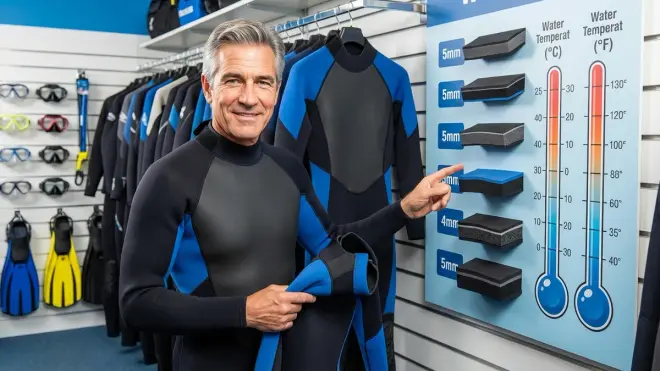
Let me give you the temperature ranges I've learned actually work over four decades, not the marketing-department fantasies printed on hang tags.
1-2mm suits are for bath-warm water above 85°F. I'm talking Caribbean shallows in August, or short dives in tropical lagoons. Even then, I've seen divers get chilled on second or third dives if they're leaner or older. Don't let anyone convince you that you "don't need thermal protection" in warm water. You do.
3mm suits work comfortably in 78-85°F water for most divers on typical recreational dive profiles. This is the standard tropical diving wetsuit thickness. It provides just enough insulation without excessive buoyancy or bulk. If you're diving multiple days in a row, you might find yourself wanting more thickness even in warm water because cumulative heat loss adds up across dive trips. A travel wetsuit in 3mm thickness strikes a nice balance between thermal protection and packability.
5mm suits are your workhorse for 70-80°F water. This thickness handles the Florida springs, Southern California summer diving, and most Caribbean diving during winter months. The 5mm vs 7mm wetsuit decision really comes down to whether your typical diving is consistently warmer or colder than 70°F. If you're borderline, I'd go with the 5mm and add a hooded vest for colder days.
7mm suits are for cold water in the 60-70°F range. This is your Great Lakes diving, Pacific Northwest, winter Gulf diving, and deeper tropical dives where thermoclines drop you into colder layers. At this thickness, you're adding substantial buoyancy—expect to need 12-16 pounds of lead depending on your body composition—and you'll feel less flexible. But you'll be warm, which matters more than anything else at these temperatures. For serious cold water work, look at the best cold water regulators to match your exposure suit—your thermal protection needs to be a complete system.
Beyond 7mm, you're better off looking at semi-drysuits or actual drysuits. Neoprene past 7mm becomes restrictive, excessively buoyant, and doesn't provide proportionally better thermal protection because of compression at depth.
Here's what the charts don't tell you: your personal cold tolerance varies. I've dived with people who were perfectly comfortable in conditions where I was chilled, and vice versa. Body composition, age, fitness, metabolism, what you ate, how hydrated you are, fatigue—it all affects your thermal status. The thickness recommendations above are starting points, not gospel. Pay attention to your own body's signals.
Wetsuit Fit and Sizing
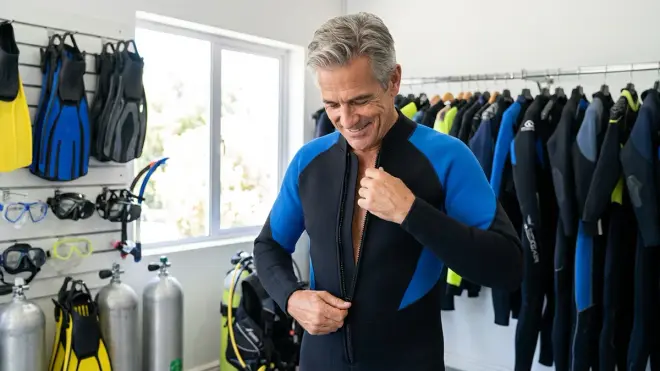
I've fitted thousands of divers over the years, and I can usually tell within thirty seconds whether someone's wetsuit fits properly. A well-fitted wetsuit should feel uncomfortably snug when you first put it on dry—like you ordered the wrong size. Then in the water, it should feel exactly right. If it's comfortable on land, it's too loose in the water.
Try before you buy if at all possible. Sizing charts are rough approximations, and every manufacturer cuts differently. What fits in one brand might be completely wrong in another, even at the same stated size. European brands typically run smaller than American brands. Asian manufacturers often use completely different proportions. Don't trust the chart—trust how the suit actually fits your body.
Check these critical fit points:
The neck seal should be snug but not choking. You should be able to get two fingers between the neoprene and your skin, but not easily. A loose neck seal dumps your warm water out with every head movement, destroying your thermal protection. Too tight, and you'll be uncomfortable and distracted the entire dive. If you can't get the neck fit right off the rack, some manufacturers offer custom-fit options, and any competent dive shop can modify the neck opening.
Shoulders and armpits shouldn't bind or restrict arm movement. Raise your arms overhead, reach behind your back, simulate reaching for your valve knobs—if the suit pulls, bunches, or restricts these movements, it's not right. You'll fatigue faster and have reduced range of motion for critical skills. At the same time, excess material in the armpits creates uncomfortable bunching and causes chafing.
The torso should fit without major wrinkles or gaps. Wrinkles across the chest, back, or belly indicate excess material, which means poor thermal protection and uncomfortable bunching underwater. If you can pinch a handful of neoprene away from your body anywhere on the torso, the suit is too large. Women generally need suits cut with more room in the hips and chest—unisex suits rarely fit women properly, no matter what the marketing claims.
Arms and legs should extend to your wrists and ankles without pulling or being too short. If the sleeves ride up, water circulation will chill your forearms. If they're too long, the excess material bunches at your wrists and interferes with your dive computer watch and seals. Same with legs—too short leaves a gap at your ankle where cold water flows freely; too long bunches at your boots.
Crotch fit is where many suits fail, especially off-the-rack sizing. Too long in the rise, and you'll have saggy excess material. Too short, and you'll be uncomfortable and the suit will pull on your shoulders and neck. This is particularly tricky for women—proper women's-cut wetsuits account for different body proportions.
When you're trying on a wetsuit, move around. Squat, bend over, reach behind you, move your legs through a full range of motion. If anything digs, pinches, or restricts movement, that spot will be worse in the water. Don't convince yourself you'll "break it in." Neoprene doesn't break in significantly—it compresses and loosens slightly, but a problem area on land is a problem area underwater.
Wetsuit Features and Construction
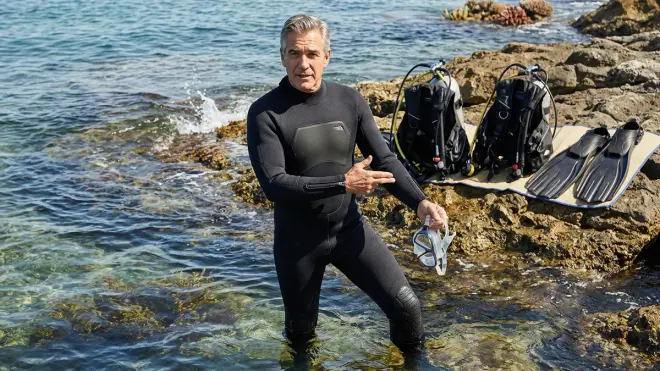
Zipper configuration affects both ease of donning and thermal protection. Back-zip suits have a long vertical zipper up the spine, making them easy to get into and out of by yourself. The downside is that zipper creates a thermal weak spot and a potential leak path. Most manufacturers use a baffled zipper cover to minimize this, but physics is physics—you're losing heat there. Chest-zip suits place a shorter zipper across the upper chest, usually entered by pulling the suit on over your legs and torso, then reaching around to zip yourself. They seal better and provide better warmth but require more flexibility to don. Zipper-less suits eliminate the zipper entirely, using stretchy neoprene that you pull on over your head. They offer the best thermal protection and are most streamlined, but good luck getting into one without help or significant effort.
Seam sealing ranges from basic flatlock stitching (fine for warm water, poor for cold) to blind-stitched and glued seams (standard for quality wetsuits) to liquid-taped seams (best for cold water). The difference between these seam types is immediately obvious once you're in 65°F water for forty minutes. Cheap wetsuits use flatlock seams everywhere because they're faster to manufacture—you'll pay for that shortcut in thermal performance.
Knee pads are reinforced panels on the kneecaps made from tougher neoprene or rubber material. If you do any reef diving, wreck diving, or shore entries over rocks, knee pads extend the suit's life significantly. I've seen the knees blow out on unprotected suits in a single season of regular use. Some suits also offer reinforced seat panels—useful if you're doing boat diving with rough surfaces.
Seals and zippers at wrists and ankles reduce water exchange and improve warmth. Wrist zippers make it easier to get your hands through tight neoprene sleeves, and ankle zippers solve the same problem for your feet, especially if you're wearing booties. The trade-off is more complexity, more potential leak points, and more maintenance. Zippers corrode if you don't rinse and maintain them properly, and they eventually fail—usually at the worst possible time.
Smooth-skin neoprene on the exterior (usually chest and back panels) reduces water drag and wind chill on the surface. It's more fragile than nylon-covered neoprene, but the performance benefits are real. I've used both extensively, and the smooth-skin suits do feel faster in the water and warmer on the surface. You just have to baby them a bit more—fingernails, sharp objects, and rough handling will tear smooth-skin easily.
Internal linings vary from basic nylon jersey (slippery, durable, neutral warmth) to plush thermal linings (comfortable, slightly warmer, more expensive) to rash-guard materials (very comfortable, prevents chafing, quick-drying). The lining primarily affects how the suit feels against your skin and how easy it is to put on. Marketing claims about "infrared-reflecting thermal linings" are mostly nonsense—the real thermal protection comes from neoprene thickness and fit, not magic fabric.
Buoyancy Considerations
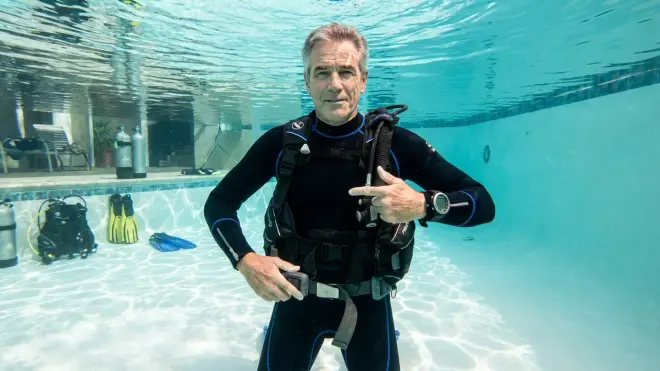
Neoprene adds buoyancy—that's an unavoidable physical reality of wearing gas-filled foam underwater. The thicker your suit, the more buoyancy it adds and the more weight you'll need to compensate. A 3mm full wetsuit adds roughly 6-8 pounds of positive buoyancy for an average-sized diver. A 5mm suit adds about 10-12 pounds. A 7mm suit pushes 14-18 pounds depending on your size and the suit's exact coverage.
Here's where it gets complicated: neoprene compresses with depth, so that buoyancy diminishes as you descend. Your wetsuit might give you 15 pounds of positive buoyancy at the surface, but by 100 feet, compression has reduced that to maybe 8 pounds. This means you become progressively less buoyant as you descend, which affects your weighting strategy. You need enough weight to get down at the start of the dive, but not so much that you're swimming against excessive negative buoyancy at depth.
This buoyancy shift is why mastering buoyancy control is harder in a wetsuit than in a drysuit, where you can add gas to maintain constant volume. In a wetsuit, you're constantly adjusting your BCD inflation as depth changes. It becomes second nature with experience, but newer divers often struggle with it. If you're planning to do serious underwater photography or video work, the buoyancy control required for underwater photography is significantly more demanding in a wetsuit than other configurations.
When you're doing your initial weighting check, remember you need to be neutrally buoyant at your safety stop depth (15-20 feet) with 500 psi remaining in your tank. That's the proper weighting standard—not "able to sink at the surface with a full tank," which is what most beginners aim for and usually results in being overweighted. Overweighting forces you to add more air to your BCD throughout the dive to maintain neutral buoyancy, which creates a larger gas bubble that's more difficult to control and increases your drag.
Don't forget that your BCD lift capacity needs to account for your wetsuit's buoyancy at the surface. If you're diving a 7mm suit and need 16 pounds of lead, your BCD needs sufficient lift to bring you and all that lead to positive buoyancy if necessary. A travel BCD with only 25 pounds of lift might struggle in that scenario, while a standard recreational BCD with 35-40 pounds of lift handles it easily.
Care and Maintenance
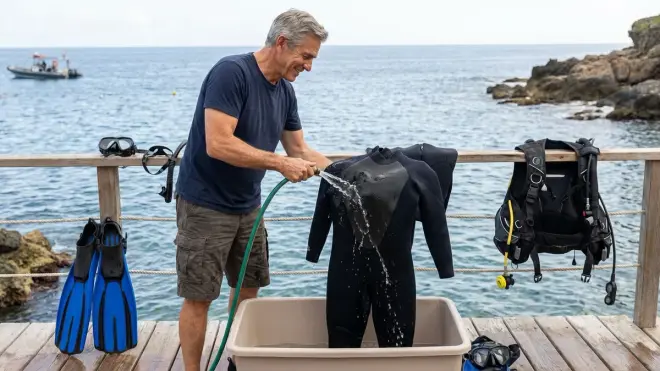
Wetsuits are durable if you treat them right and remarkably fragile if you abuse them. I've owned suits that lasted over a decade, and I've seen people destroy expensive suits in a single season through neglect.
Rinse thoroughly after every dive. Saltwater, chlorine, sunscreen, body oils, and environmental contaminants all degrade neoprene over time. Don't just spray the outside—turn the suit inside out and rinse the interior just as thoroughly. Use fresh water, not a strong stream that can force water behind glued seams, but enough flow to actually remove contaminants.
Dry the suit completely before storage, but not in direct sunlight or heat. UV radiation breaks down neoprene, causing it to stiffen, crack, and lose stretch. High heat does the same thing. Hang the suit on a wide-shouldered hanger (not a wire hanger that creates stress points) in a shaded, ventilated area. First hang it inside-out to dry the interior, then flip it right-side-out to dry the exterior. A wet or damp wetsuit stored folded in a dive bag will develop permanent creases, mildew, and eventually delamination where the neoprene separates from its lining.
Don't fold your wetsuit for storage. Creases weaken the neoprene and eventually become permanent damage points. Hang it on a proper wetsuit hanger or roll it loosely if you must transport it. If you're traveling, roll the suit carefully with the neoprene facing outward to minimize stress on the material, and unpack it as soon as possible. For long-term storage between dive seasons, hang the suit in a cool, dry, dark closet—not a garage or attic where temperature extremes and sunlight exposure will age it prematurely.
Lubricate zippers occasionally with beeswax or zipper-specific lubricant. Corroded zippers are one of the most common wetsuit failures, and they're entirely preventable. After rinsing, work the zipper back and forth a few times to flush salt from the teeth, then let it dry completely before applying lubricant. Do this every few dives, not once a season.
Repair tears and punctures immediately. Neoprene cement or Aquaseal works well for small repairs. A tiny puncture becomes a major tear if you keep diving with it, especially along stress points like the crotch, underarms, or behind the knees. I keep a wetsuit repair kit in my gear bag and fix minor damage the same day I notice it.
Don't use harsh chemicals or detergents unless you're following the manufacturer's specific instructions. Many wetsuit-specific shampoos and conditioners exist specifically because regular detergents can break down neoprene and compromise its flexibility and integrity. If your suit develops an odor (and eventually, they all do), use a wetsuit-specific cleaner designed for the purpose.
Here's one thing I see constantly: divers leaving wetsuits crumpled in a mesh dive bag at the bottom of a closet for months between trips. Then they pull it out, discover it's stiff, cracked, or delaminated, and blame the manufacturer. That's operator error, not equipment failure. A quality wetsuit with proper care outlasts one that's neglected by years. Your wetsuit maintenance routine should be as automatic as checking your BCD before diving.
Frequently Asked Questions
What wetsuit thickness do I need for 75-degree water?
For most divers, a 3mm full wetsuit provides adequate thermal protection in 75°F water for typical recreational dive profiles of 45-60 minutes. If you run cold, have low body fat, plan multiple repetitive dives, or will be diving deeper where thermoclines might drop you into colder water layers, consider a 5mm suit instead. Your personal cold tolerance matters more than any generic chart—pay attention to how your body responds and adjust accordingly.
How tight should a wetsuit fit?
A properly fitted wetsuit should feel uncomfortably snug when you first put it on dry, with no gaps, wrinkles, or loose areas anywhere on your torso or limbs. In the water, this snug fit will feel exactly right as the neoprene relaxes slightly and the trapped water layer forms. If the suit feels comfortable on land, it's probably too loose and will allow excessive water circulation underwater, compromising thermal protection and leaving you cold.
Can I use a surfing wetsuit for scuba diving?
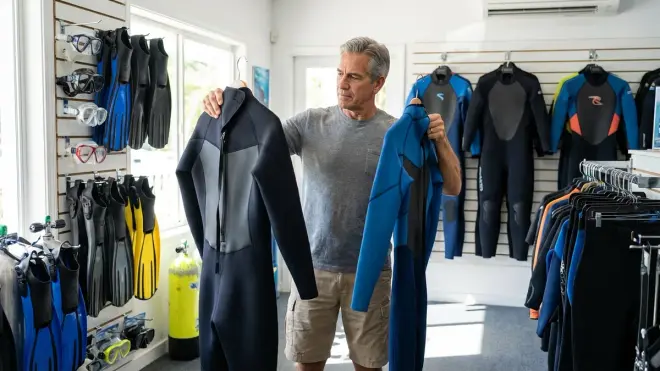
Surfing wetsuits can work for very warm, shallow diving, but they're not ideal for scuba because they're designed for different priorities. Surf suits emphasize shoulder and arm flexibility for paddling, often at the expense of torso coverage and seam sealing. They typically use flatlock seams that leak more than blind-stitched seams, and they're not designed to withstand the compression and thermal demands of deeper diving. For anything beyond casual warm-water snorkeling, invest in a suit specifically designed for scuba diving.
How do I stop water from entering my wetsuit?
You can't completely stop water entry—that's not how wetsuits work. The suit is designed to allow a small amount of water in, which your body then heats to create insulation. What you want to minimize is water exchange—the flushing of warm water out and cold water in. Achieve this through proper fit (no gaps at neck, wrists, ankles), quality seam construction (blind-stitched and sealed), appropriate zipper configuration (chest-zip or zipperless are best), and potentially adding wrist and ankle seals on cold-water suits.
How long does a wetsuit last?
A quality wetsuit with proper care and maintenance typically lasts 5-8 years of regular recreational diving, though this varies significantly based on usage frequency, dive conditions, and care practices. Heavy use, tropical diving with high sun exposure, chlorine exposure, poor rinsing habits, and improper storage all accelerate deterioration. I've seen well-maintained suits from quality manufacturers last over a decade, and I've seen cheap suits fall apart in two seasons. Invest in a good suit, take care of it properly following the manufacturer's recommendations, and it'll outlast multiple cheaper replacements.
Summary
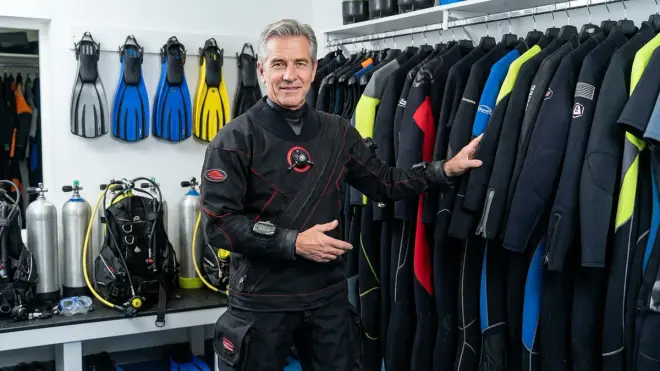
The best wetsuit for scuba diving is the one that fits your body properly, matches your typical dive conditions, and receives proper maintenance between dives. Whether that's a 3mm tropical suit for Caribbean vacations, a 5mm all-rounder for variable conditions, or a 7mm cold-water suit with an integrated hood depends entirely on where and how you dive. Don't let marketing convince you that more expensive automatically means better for your needs—I've seen around $200 suits outperform around $600 suits when the cheaper one fit the diver better and matched their actual dive profile.
Pay attention to thickness, seam construction, zipper configuration, and especially fit. A wetsuit that's uncomfortable on land might be perfect in the water, and one that feels fine in the shop might leave you shivering on dive three of your trip. If possible, try before you buy, and don't hesitate to go with a custom-fit option if your body proportions don't match off-the-rack sizing. Your thermal protection directly affects your safety, comfort, and enjoyment underwater—it's worth getting right.
For more guidance on selecting the right wetsuit for your specific diving, check out how to choose a wetsuit for scuba diving, and don't forget that your thermal protection works as part of a complete system including your BCD, weighting, and exposure suit maintenance. Stay warm out there.