
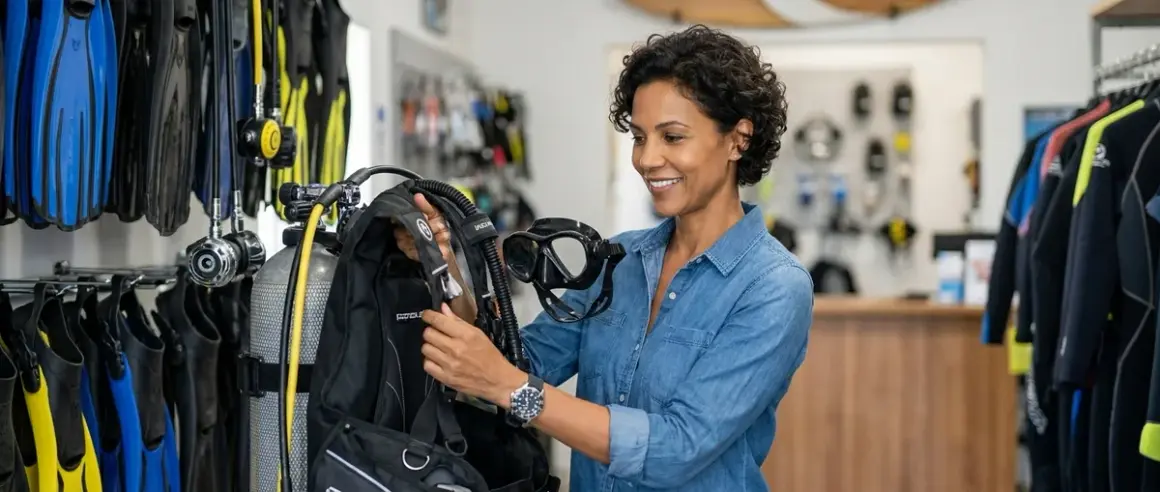

I still remember the overwhelming feeling of walking into a dive shop after getting certified, staring at racks of equipment, and having absolutely no idea where to start. I ended up making almost every mistake possible—buying the wrong gear in the wrong order, overspending on things I didn't need yet, and missing critical details that would've saved me so much frustration. The mistakes new divers make when buying first gear are incredibly common, and honestly, most of us stumble through the same pitfalls. I'm writing this because I wish someone had pulled me aside three years ago and explained what actually matters when you're building your first gear setup.
What Are the Most Common First Gear Mistakes?
When I say mistakes new divers make buying first gear, I'm talking about the specific purchasing decisions that lead to wasted money, compatibility issues, or gear that doesn't match how you actually dive. These aren't just minor inconveniences—they're the kinds of errors that can leave you with equipment you never use, force you to re-buy expensive items within months, or even affect your safety and comfort underwater.
The mistakes usually fall into a few categories: buying the wrong gear first, choosing equipment based on appearance or brand hype instead of fit and function, ignoring where and how you'll actually be diving, and not understanding that scuba gear is a system where everything needs to work together. I made the classic beginner error of buying a full set of gear immediately after certification because I was so excited to have "my own stuff." But I didn't think about whether those pieces were right for the diving I was actually doing in Belize—warm Caribbean waters, shallow reef dives, and lots of boat diving from small pangas.
Another huge mistake is not factoring in the hidden costs. When I bought my first regulator, I didn't realize it would need professional servicing every year or two, which can run a couple hundred dollars each time. I also didn't think about travel—my first BCD was bulky and heavy, making airline baggage fees a nightmare when I started doing dive trips outside Belize.
The good news? Once you understand the most common traps, you can avoid them completely. You don't need to be a technical expert or spend years learning—you just need to know what questions to ask yourself before you spend your money. That's exactly what this guide is about: helping you skip the expensive lessons I learned the hard way.
How First Gear Purchasing Mistakes Actually Happen
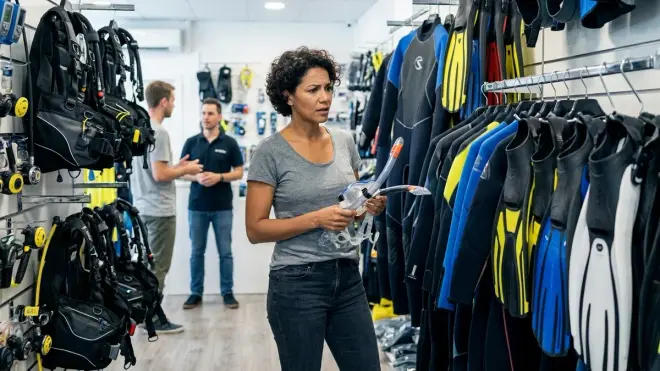
The mistakes new divers make buying first gear don't usually happen because people are careless. They happen because the entire experience of buying scuba equipment as a beginner is genuinely confusing, and the diving industry doesn't always make it easier.
Here's how it typically goes down: You finish your Open Water certification feeling excited and confident. You want to keep diving, and you're tired of renting gear that doesn't fit quite right. Maybe your instructor or a dive shop staff member suggests you start "building your kit," and suddenly you're surrounded by gear options with technical specs you don't fully understand. Terms like "balanced regulator," "DIN vs yoke," and "lift capacity" get thrown around, and you nod along even though you're not 100% sure what they mean.
The first mistake often happens right here: buying based on what looks cool or what someone else uses instead of what makes sense for your specific situation. I fell for this completely. I saw a more experienced diver I admired using a certain BCD brand, and I bought the same model without considering that she was doing very different diving than me—deeper technical dives in cold water while I was doing recreational reef dives in 80°F water.
Then there's the order problem. Most new divers don't realize there's actually a smart sequence for buying gear. I started with a regulator because it seemed like the most "important" piece of equipment, but I should've started with my mask and fins first—the items that affect comfort most and are hardest to rent in the right fit. By the time I got around to buying those, I'd already blown a big chunk of my budget on a regulator I was still learning to maintain properly.
The compatibility trap is another massive issue. Scuba gear isn't like buying random clothes where everything works with everything else. Your regulator needs to match your tank valve type (DIN or yoke), your BCD needs appropriate lift capacity for your body size and the gear you carry, and your wetsuit thickness needs to match the water temperature where you actually dive. I bought a beautiful 5mm wetsuit because it was on sale, not realizing I'd be way too hot in Belizean waters where 3mm is usually plenty. That wetsuit sat in my closet for a year before I traded it to a friend heading to California.
The "buy everything at once" impulse is huge too. Dive shops sometimes push package deals, and while those can be okay, they often include items you don't need yet or lock you into mid-range versions of everything when you'd be better off investing more in specific pieces and waiting on others. I bought a full package that included a dive computer I barely understood how to use for six months. I would've been fine renting computers while I learned, then buying a better model that actually had the features I ended up wanting, like Nitrox capability and a backlit display for dawn dives.
Then there's not thinking about your actual diving reality. If you're primarily doing vacation diving a couple times a year, your gear needs are completely different from someone who dives locally every weekend. If you travel frequently for diving, weight and packability matter enormously—something I learned the hard way lugging my heavy BCD through three airports. If you're doing cold water diving, your regulator choice becomes critical because not all models handle cold water well and some are prone to freezing issues that could be dangerous.
Finally, there's the maintenance blindspot. Nobody told me that regulators need professional servicing annually or every 100 dives (whichever comes first), that BCDs need thorough rinsing and occasional internal bladder cleaning, or that dive computers have battery replacement requirements that sometimes require factory service. These ongoing costs add up, and some gear is much more maintenance-intensive than others.
Understanding how these mistakes happen makes it way easier to avoid them. It's not about being smarter or more experienced—it's about asking the right questions before you buy and being honest about what kind of diver you actually are right now, not the diver you imagine you might become someday.
Why These Mistakes Matter for Your Diving Experience
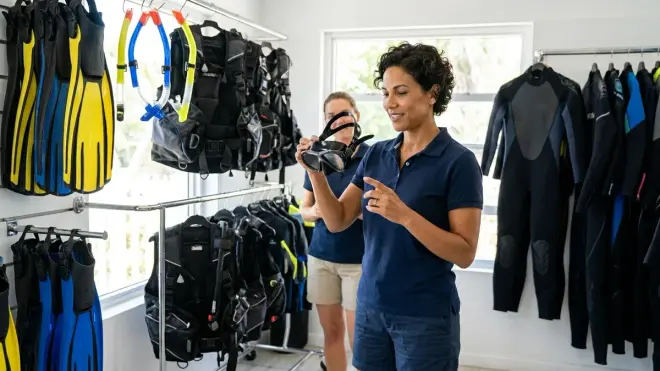
It's tempting to think that gear mistakes are just about wasted money, but honestly, the impact goes way beyond your wallet. The mistakes new divers make buying first gear can actually affect your safety, your comfort, and whether you continue diving at all.
Safety implications are real. If you buy a regulator that isn't appropriate for the conditions you dive in—say, a budget model that isn't cold-water rated when you're diving in 55°F water—you could face a free-flow situation where the regulator starts delivering air uncontrollably. That happened to a friend during a quarry dive, and it was genuinely scary even though she handled it well. If your BCD doesn't have enough lift capacity for your body weight plus your gear, you might struggle to achieve positive buoyancy at the surface in an emergency, which is exhausting and potentially dangerous.
Comfort issues might sound minor, but they genuinely affect everything. An ill-fitting mask that leaks constantly means you're clearing it every two minutes instead of looking at the reef. Fins that are too tight or too loose will give you blisters or cramps, cutting your dive short. A BCD that doesn't adjust properly to your torso will shift around underwater, throwing off your trim and making buoyancy control way harder than it needs to be. I dove with a poorly fitted BCD for almost six months before finally trying a different style, and the difference was night-and-day. Suddenly I could hold stable horizontal trim without fighting my gear.
Your progression as a diver gets affected too. If you buy gear that's limiting—like fins that don't provide enough power for current or a computer without Nitrox capability—you'll hit walls in your diving that have nothing to do with your skill level. I bought paddle fins that were frankly too stiff for my leg strength as a newer diver, and I'd be exhausted after 30 minutes while more experienced divers were cruising comfortably. When I finally switched to more appropriate fins, my air consumption improved because I wasn't working so hard.
Then there's the financial cascade. When you buy the wrong gear, you often end up buying it twice. I've re-purchased my BCD, my wetsuit, and my fins because my first versions weren't right. That's easily over $1,000 in re-spending that I could've avoided with better initial choices. Some gear can be resold, but used scuba equipment doesn't hold value well, especially if it's lower-end stuff or not well maintained.
The frustration factor is probably the most underrated issue. When your gear fights you on every dive, diving stops being fun. I've seen new divers get so frustrated with leaking masks or uncomfortable BCDs that they just stop diving entirely. They think they're "bad at diving" when really their gear was the problem all along. Once they tried properly fitted equipment, they realized they were actually pretty decent divers—their gear had just been sabotaging them.
There's also the travel and logistics impact. If you buy heavy, bulky gear thinking you'll only dive locally, but then you get invited on an amazing liveaboard trip, suddenly you're facing massive baggage fees or having to rent gear at your destination anyway. I learned this when a friend invited me on a trip to Roatán and my gear bag weighed almost 60 pounds. The airline charged me an extra $150 in baggage fees, and I spent the whole trip wishing I'd bought more compact equipment.
Lastly, there's confidence. When you trust your gear and know it's appropriate for what you're doing, you dive more confidently. You're not worried about whether your regulator will perform at depth or whether your BCD will inflate properly. That mental peace makes you a calmer, safer diver who can actually focus on skills, navigation, and enjoying the underwater environment instead of managing equipment anxiety.
These mistakes matter because they create barriers between you and the diving you want to do. The right gear doesn't have to be expensive or high-end—it just has to be appropriate for you, fitted correctly, and matched to the diving you're actually doing. When you get those things right, diving becomes so much more enjoyable.
The Most Common First Gear Mistakes (And How to Avoid Them)
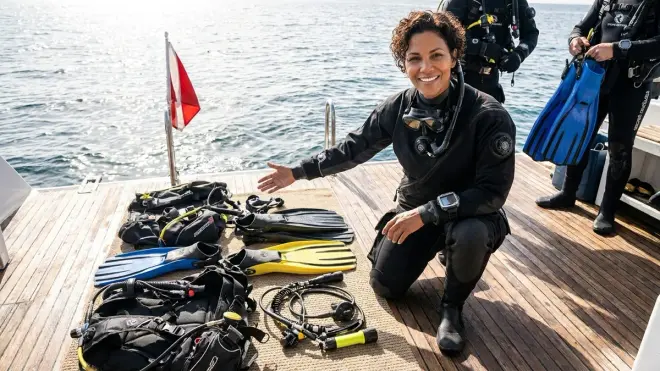
Let me walk through the specific mistakes I see constantly, starting with the ones I made myself and the ones I watch other new divers make at my local dive sites.
Mistake 1: Buying Everything at Once in the Wrong Order
This is probably the biggest mistake, and I fell right into it. I bought a complete gear package within two months of certification because I was so excited to have "my own" equipment. But I bought things in a completely backward order—regulator and BCD first, mask and fins last—when it should've been exactly the opposite.
Why this is wrong: Your mask and fins have the biggest impact on comfort and are the hardest items to rent in the right size and style. They're also relatively affordable compared to life-support equipment. Your regulator and BCD are expensive, require professional maintenance, and honestly, rental versions work fine while you're learning. I wasted money on a full gear set when I should've been slowly building my kit based on what I actually needed.
The better approach: Follow the right order to buy scuba gear. Start with mask, snorkel, and fins—items that directly affect comfort and are personal fit items. Next, add exposure protection (wetsuit or rash guard) because this also varies greatly by body shape. Then move to a dive computer, which improves your safety and lets you track your dive profiles for your logbook. Only after you've done 20+ dives with this basic setup should you consider buying a regulator and BCD. By that point, you'll actually understand what features matter to you and what kind of diving you're doing most often.
Mistake 2: Prioritizing Brand and Appearance Over Fit
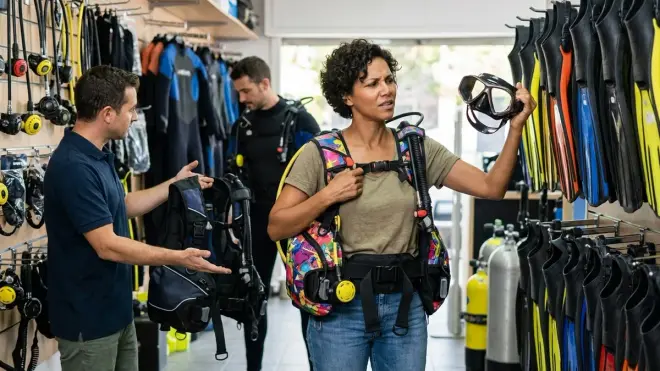
I'm guilty of this one too. I bought a BCD partly because I loved the color and partly because it was the same brand my instructor used. I barely tried it on, and I definitely didn't test it in the water before purchasing. Turns out, that particular model's harness system didn't fit my torso length well, and the shoulder dumps were positioned awkwardly for my arm length.
Why this is wrong: Scuba gear fit is incredibly individual. A regulator that breathes beautifully for your dive buddy might feel awkward in your mouth. A BCD that's perfect for someone with a long torso might ride up on someone with a short torso. A mask that seals great on one face shape will leak constantly on another. Brand reputation and aesthetics mean nothing if the gear doesn't fit your body.
The better approach: Spend real time with fit testing. For masks, do the proper seal test—place it on your face without the strap, inhale gently through your nose, and see if it stays in place. Try multiple styles. For BCDs, put it on over a wetsuit if possible, adjust all the straps, and simulate inflation movements. Ask if you can test it in a pool before buying—many dive shops offer this for high-value purchases. For fins, wear them with your boots if you use them, walk around, and make sure there's no pressure points. Fit should be your absolute first criterion, then features, then brand and appearance.
Mistake 3: Not Considering Your Actual Diving Environment
This mistake hits hard because it's so easy to make. You get certified in a pool and maybe do checkout dives in one location, but then you buy gear without thinking about where you'll actually be diving. I bought that 5mm wetsuit I mentioned earlier because it seemed like a "standard" thickness, not realizing that in Caribbean waters I'd be overheating within minutes.
Why this is wrong: Gear that's appropriate for cold water Pacific diving is completely different from gear for warm water tropical diving. If you're primarily diving in cold water, you need a regulator specifically designed for cold conditions with sealed first stages to prevent freezing. If you're doing drift diving in current, you need fins with enough power to make progress. If you're traveling to dive destinations, you need lightweight, packable gear. One-size-fits-all doesn't exist in scuba.
The better approach: Be honest about where you'll dive 80% of the time, and buy gear for that environment. If you live near cold water quarries and that's where you'll do most of your diving, invest in appropriate thermal protection and cold-water-rated regulators. If you're a vacation diver who mainly goes to tropical destinations, buy travel-friendly gear that packs small and works well in warm water. Don't buy gear for the diving you imagine doing someday—buy it for the diving you're actually booking right now. You can always add specialized gear later if your diving evolves.
Mistake 4: Ignoring Compatibility Between Components
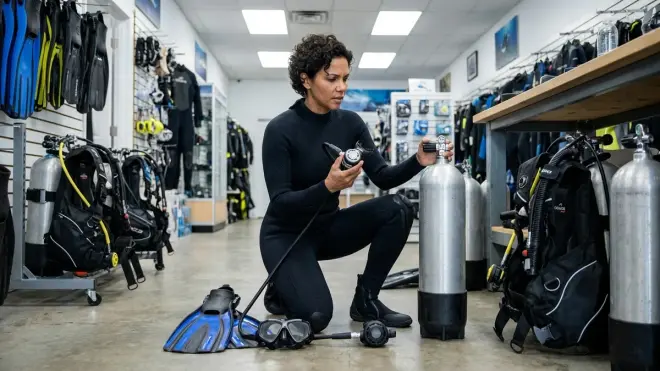
I didn't even know this was a thing until I bought my first regulator and showed up at a dive site only to discover it had a DIN connection and all the rental tanks had yoke valves. Cue the embarrassing scramble to borrow an adapter. Compatibility between your gear components matters more than most new divers realize.
Why this is wrong: Your regulator valve type (DIN vs yoke) needs to match available tanks. Your BCD's integrated weight pockets need to accommodate the amount of weight you actually need. Your wetsuit thickness affects how much weight you need, which affects what BCD lift capacity you need. If you buy pieces independently without thinking about how they work together, you can end up with a system that doesn't function properly or requires awkward workarounds.
The better approach: Understand the basic compatibility requirements before you buy anything beyond your mask and fins. Check what valve type is standard at your local dive sites or your usual travel destinations—DIN is more common in Europe and for technical diving, yoke is standard in many tropical destinations. Calculate your actual weight needs in different exposure protection, then choose a BCD with appropriate lift capacity (usually your body weight plus 10-15 pounds for recreational diving). If you're building a complete kit over time, keep a compatibility checklist and verify each new piece works with what you already own.
Mistake 5: Buying Based on Advanced Features You Don't Understand Yet
Dive computers are where this mistake shows up most. I see new divers buying computers with technical diving features, air integration, multiple gas capability, and advanced algorithms when they're doing basic recreational diving to 60 feet. I almost did this myself, tempted by a feature-rich computer that I genuinely wouldn't know how to use properly for years.
Why this is wrong: Complex gear costs more and requires more knowledge to use correctly. If you buy a computer with Trimix capability when you don't even know what Trimix is, you're paying for features you'll never use. More importantly, complicated gear can actually make your diving harder as a beginner because you're trying to manage settings and displays you don't understand instead of focusing on basic skills like buoyancy and air consumption.
The better approach: Buy gear that matches your current certification level and diving style, not the level you aspire to someday. A simple recreational computer with Nitrox capability, a clear display, and basic logging functions is perfect for most new divers. You can always upgrade later if you pursue advanced certifications. The same principle applies to other gear—you don't need the regulator technical divers use for 200-foot dives if you're doing 50-foot reef dives. Start with appropriate, simple gear that does its job well, then upgrade if your diving actually evolves to need more advanced features.
Mistake 6: Overlooking Maintenance Requirements and Long-Term Costs
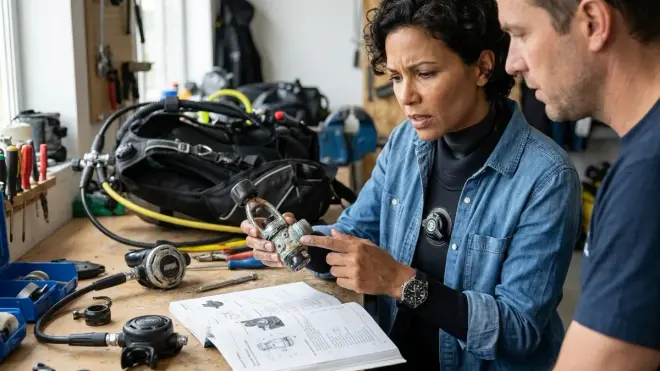
This was my most expensive mistake. I bought a regulator without asking about service intervals or costs, and I was shocked when I learned it needed professional maintenance every year at around $150-200 per service. That turned my "good deal" on a budget regulator into a much more expensive proposition over time.
Why this is wrong: Scuba gear isn't a one-time purchase—it's a long-term investment with ongoing costs. Regulators need annual servicing, which can cost anywhere from $100-300 depending on the model and what parts need replacing. Dive computers need battery replacements, and some require factory service for this. BCDs need occasional replacement of dump valves or inflator mechanisms. Wetsuits degrade over time and need replacing every few years depending on use. If you buy gear without factoring these costs in, you might find yourself unable to afford proper maintenance, which creates safety issues.
The better approach: Before buying anything beyond mask and fins, ask about maintenance requirements and costs. Some regulator manufacturers offer free parts for life if you service annually through authorized dealers—this can save hundreds of dollars over the regulator's lifetime. Some dive computers have user-replaceable batteries while others require factory service. Research the total cost of ownership, not just the purchase price. Sometimes spending more upfront on gear with lower maintenance costs or better warranty support actually saves money long-term. Keep a maintenance schedule for all your gear and factor those costs into your annual diving budget.
Mistake 7: Skipping the Used Gear Option Completely (Or Buying Used Without Inspection)
The used gear conversation is tricky because it goes both ways. Some new divers buy brand-new everything when they could've saved money with quality used gear. Others buy sketchy used gear off random internet sellers without having it inspected, which can be genuinely dangerous.
Why both extremes are wrong: Brand-new gear is expensive, and it depreciates fast—you lose 30-40% of the value the moment you use it. For things like BCDs, wetsuits, and fins, gently-used gear from a reputable source can save you significant money with minimal compromise. But life-support equipment like regulators requires thorough inspection and servicing history. Buying a regulator off a random Facebook marketplace seller with no service records is asking for trouble.
The better approach: Learn what gear is safe to buy used and what isn't. Masks, fins, wetsuits, and BCDs are generally fine used as long as you can inspect them thoroughly for wear, damage, or deterioration. BCDs should still inflate properly, have functional dumps, and show no signs of fabric degradation or sticky residue. Wetsuits should have no tears and the neoprene should still have flexibility (old neoprene gets stiff and brittle). For regulators, only buy from someone who can provide complete service records, and plan to have it professionally serviced and inspected before using it. Many dive shops sell used gear with warranties or inspection guarantees—this is way safer than buying from strangers online. Check out our guide on buying new vs used scuba gear for more detailed advice.
Mistake 8: Falling for Package Deals Without Evaluating Individual Pieces
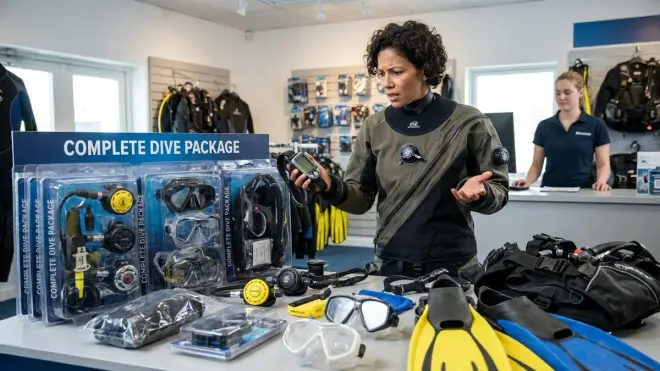
Dive shops love to offer beginner packages, and sometimes these are decent deals. But I see new divers buy packages without really looking at what's included or whether each piece is appropriate for them. They get locked into mid-range versions of everything, when they might be better off with entry-level versions of some items and better-quality versions of others.
Why this is wrong: Package deals are built for convenience, not customization. You might get a great BCD but a mediocre regulator, or vice versa. The package might include items you don't need yet (like a dive knife or gear bag) while skimping on quality for items that matter more (like the computer or exposure suit). You also lose the ability to prioritize fit, which matters way more than matching brand sets.
The better approach: If you're considering a package deal, break it down and evaluate each piece individually. Does the mask fit your face? Is the BCD style appropriate for your diving? Does the regulator meet your needs? Would you choose each of these items independently if you were building a kit piece by piece? Sometimes packages make sense if everything in them happens to be right for you, but often you're better off buying individual pieces that are actually appropriate rather than accepting whatever's bundled together. Use a first gear purchase checklist to make sure you're evaluating each component properly.
Mistake 9: Not Testing Before Committing
This is the mistake I wish I could go back and fix more than any other. I bought almost all my first gear based on trying it on in a shop, dry, while wearing street clothes. I never tested anything in actual diving conditions before purchasing, and that meant I didn't discover problems until I was already on a dive trip with no option to exchange or return.
Why this is wrong: Gear performs completely differently in water than it does on land. A regulator that feels fine breathing in a shop might have noticeable resistance at depth. A BCD that seems comfortable dry might shift uncomfortably once it's weighted and you're horizontal in the water. Fins that feel okay walking around a shop might cause cramping after 20 minutes of actual swimming. Masks that seem to seal might leak under the pressure changes of descent.
The better approach: Whenever possible, test before you buy. Many dive shops offer pool testing for major purchases like BCDs and regulators. Some will let you demo gear on actual dives if you're a regular customer. At minimum, try everything on while wearing the exposure protection you'll actually dive in—put the BCD over your wetsuit, not over a t-shirt. Try different sizes and styles. For masks, do multiple seal tests in different positions (looking up, down, left, right) because a mask that seals in one position might leak when you turn your head. If a shop doesn't offer testing and won't let you return or exchange gear after trying it once, consider shopping elsewhere.
Mistake 10: Buying Gear That Doesn't Match Your Physical Reality
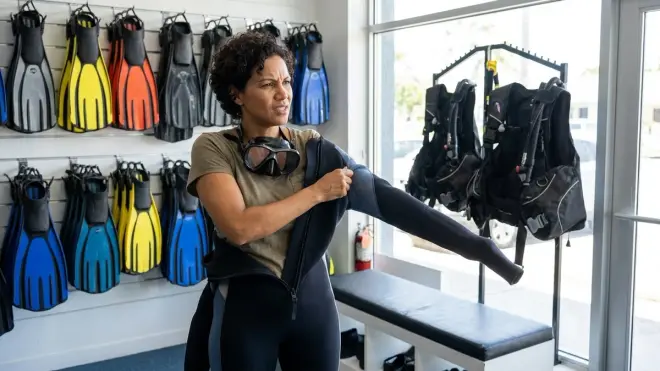
This one's uncomfortable to talk about, but it's so important. I watched a fellow newer diver buy a back-inflate BCD because that's what technical divers use, but she didn't have the core strength yet to easily maintain horizontal trim in that style, and she spent every dive struggling with positioning. I also see people buy fins that are too powerful for their fitness level, or BCDs with lift capacity that's way more than they need, adding unnecessary bulk.
Why this is wrong: Gear that doesn't match your current physical fitness, strength, or flexibility will fight you on every dive. That doesn't mean you can't improve these things over time, but your gear should work with where you are now, not where you hope to be eventually. If you're not comfortable swimming a quarter mile in a pool, those stiff technical fins will exhaust you. If you're not used to the feel of a back-inflate BCD, you'll spend all your mental energy managing it instead of enjoying the dive.
The better approach: Be honest with yourself about your current physical capabilities and buy gear that works with them. Choose fins based on your actual leg strength—newer or less athletic divers often do better with split fins or softer paddle fins that require less power. Pick a BCD style that feels intuitive and natural for your body type and diving style—there's no shame in jacket-style BCDs even though some people act like back-inflate is the only "real" option. Make sure your gear setup isn't heavier than you can comfortably manage, especially if you'll be putting it on and taking it off without help. You can always upgrade to more demanding gear as your skills and fitness improve.
Frequently Asked Questions
What is the absolute first piece of scuba gear a new diver should buy?
The absolute first piece of scuba gear you should buy is a properly fitted mask, because it has the biggest impact on comfort and enjoyment while being relatively inexpensive and impossible to rent in exactly the right fit for your face shape, and I still use the mask I carefully chose three years ago while I've replaced almost everything else.
How much should a new diver budget for their first complete gear setup?
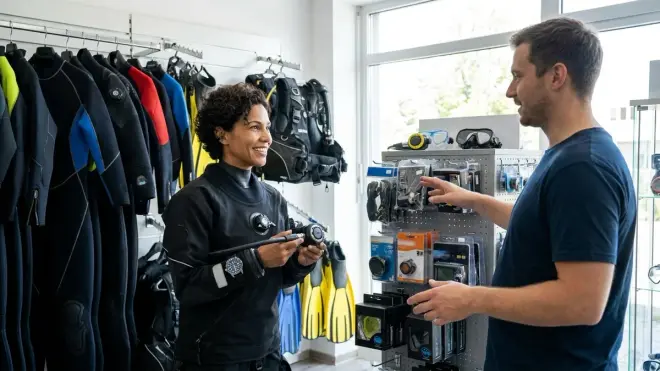
A new diver should budget around $2,000-3,000 for a complete quality gear setup purchased over time if buying everything new, though you can significantly reduce this by starting with just mask, fins, and computer (around $600-800) and renting the rest while you figure out what features actually matter for your diving style.
Is it better to buy a complete gear package or build a kit piece by piece?
It's almost always better to build your kit piece by piece starting with personal fit items like your mask and fins, because this lets you prioritize quality where it matters most, ensure proper fit for each component, and spread the cost over time as you actually understand what features you need based on how you dive.
Should new divers buy gear immediately after certification or wait until they have more dives?
New divers should buy their mask, snorkel, and fins right after certification since these are personal fit items, but should wait until they have at least 20-30 dives before buying big-ticket items like regulators and BCDs so they understand their diving style and what features they actually need.
How can I avoid buying scuba gear I'll just have to replace later?
You can avoid buying gear you'll need to replace by honestly assessing where and how you'll actually dive 80% of the time, prioritizing fit over features or appearance, buying gear appropriate for your current certification level rather than aspirational diving, and investing more in quality for items that are hardest to get right like regulators and BCDs while accepting entry-level options for accessories.
Summary
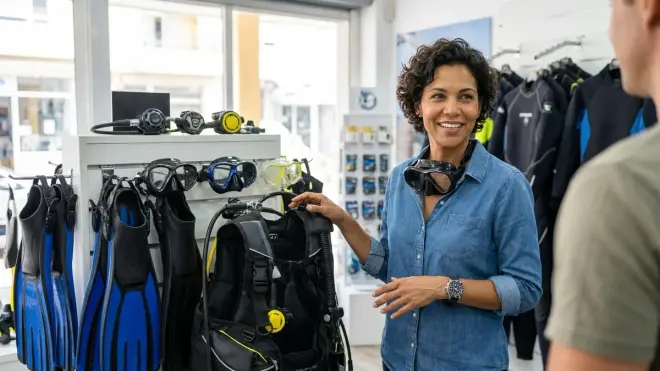
The mistakes new divers make buying first gear are predictable and avoidable once you know what to watch out for. The biggest traps are buying everything at once in the wrong order, choosing gear based on looks or brand hype instead of fit and function, ignoring your actual diving environment and how you'll travel with gear, and not understanding that scuba equipment is a connected system where everything needs to work together.
Start with your mask and fins since these affect comfort most and are impossible to rent in perfect sizes. Test everything possible before buying, and prioritize fit above all else. Be realistic about where you'll actually dive, what your physical capabilities are right now, and what maintenance you can afford long-term.
Don't rush to own everything immediately. I spent around $4,000 on gear in my first year of diving, and I've since replaced about half of it because I bought the wrong things for the wrong reasons. If I'd been patient and thoughtful, I could've saved at least $1,500 and ended up with better gear that actually matched my diving style.
Buy for the diver you are today, not the diver you imagine becoming someday. You can always upgrade later, but starting with appropriate, well-fitted gear that matches your current reality will make your diving so much more enjoyable and safe. Take your time, ask questions, test things in real conditions when possible, and don't be afraid to admit you don't know something—I promise the dive shop staff would rather explain things than watch you buy the wrong gear.