
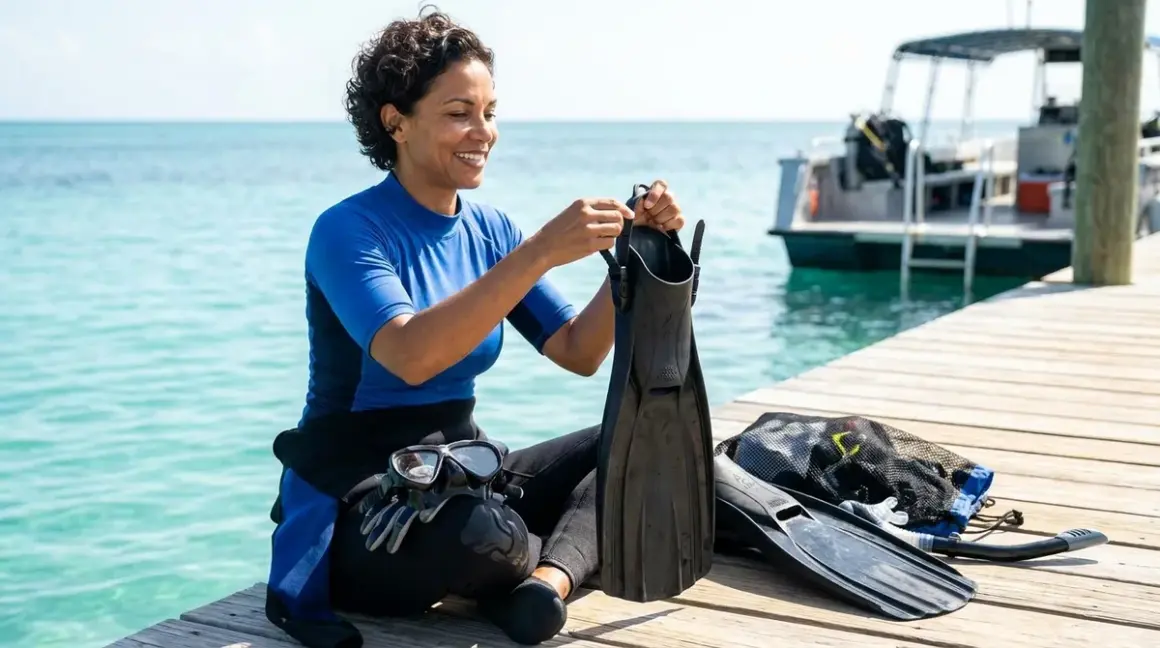

When I first started shopping for scuba fins for beginners, I felt completely overwhelmed. Standing in the dive shop staring at walls of fins, I had no idea what to look for or what questions to ask. Three years and about 80 dives later, I've learned that getting your fin setup right from the start makes everything underwater so much easier—from controlling your buoyancy to saving your energy on longer dives.
This checklist walks you through everything you need to consider when choosing and setting up your first pair of fins. I'm breaking it down the way I wish someone had explained it to me: no technical jargon overload, just the practical stuff that actually matters when you're getting started.
Getting the Right Fit and Style
The foundation of good scuba fins for beginners starts with choosing the right type and making sure they actually fit your feet properly. I learned this the hard way after my first dive trip ended with blisters that took weeks to heal.
Choose between open-heel and full-foot designs based on where you'll dive. Open-heel fins require booties and adjust with straps, making them perfect if you're diving in different water temperatures or doing shore entries over rocky surfaces. Full-foot fins slip on like slippers and work great for warm-water boat diving, but you're barefoot and they don't adjust much.
Measure your foot with the booties you'll actually wear. I made the mistake of trying on fins with thin socks in the shop, then showed up to my first cold-water dive with thick 5mm booties—the fins barely fit and my toes were cramped the entire dive. If you're going with open-heel fins, bring your actual booties to the fitting.
Check that your toes don't touch the front of the foot pocket. There should be about a half-inch of space. Your toes cramming against the end is a recipe for numbness and cramping, especially on multi-dive days. I still remember doing three dives in Cozumel with fins that were slightly too small—by the second dive, my feet were screaming.
Make sure the heel strap (if you have one) holds your foot snugly without cutting in. When you flex your foot, the heel shouldn't slip out. But if the strap is leaving deep marks on your skin after just trying them on in the shop, they're too tight. You want that Goldilocks fit—snug but comfortable.
Consider adjustable straps or spring straps for easier on-and-off. Traditional rubber straps work fine, but spring straps make getting your fins on while bobbing in the water SO much easier. They're a bit pricier, but after struggling with regular straps on a rocking boat, I upgraded and never looked back.
Test the flexibility of the blade by wiggling it. Stiffer blades give you more power per kick but require stronger leg muscles. As a beginner, I found medium-stiffness blades easier to use for longer periods without getting exhausted. Your legs will get stronger as you dive more—you don't need to start with the stiffest fins just because they look "professional."
For more details on finding that perfect fit, check out our guide on scuba fin sizing.
Understanding Fin Materials and Construction
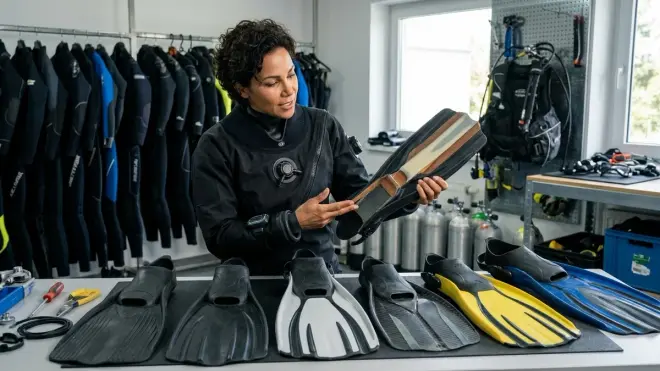
The materials your fins are made from affect how they perform underwater, how long they last, and how easy they are to travel with. This was honestly the part that confused me most when I started researching scuba fins for beginners.
Know that rubber fins are durable and affordable but heavier. Traditional rubber fins can take a beating—I've seen rental fins that are probably a decade old still working fine. The downside? They're heavy in your luggage. If you're mostly diving locally and not traveling much, the weight doesn't matter as much as durability and cost.
Composite materials blend lighter weight with good performance. Most modern fins use combinations of materials—maybe a softer rubber for the foot pocket and a stiffer composite for the blade. These tend to offer a nice middle ground: lighter than pure rubber, more affordable than high-end options. My current fins use a composite blade and I love them for Caribbean travel.
Carbon fiber and fiberglass are for advanced divers with specific needs. Yes, they're incredibly light and efficient, but they're also expensive and sometimes more fragile. Unless you're doing technical diving or have a specific performance need, I'd skip these for your first pair. Get comfortable with standard fins first.
Check the thickness and shape of the blade. Wider, shorter blades are generally more forgiving and easier to use with different kicking techniques—perfect when you're still learning. Long, narrow blades are more efficient but require better technique. I started with shorter, wider blades and found them much easier to manage while I was still figuring out my buoyancy and trim.
Our article on scuba fin blade materials goes way deeper into the technical details if you're curious about the science behind different materials.
Choosing Between Split Fins and Paddle Fins
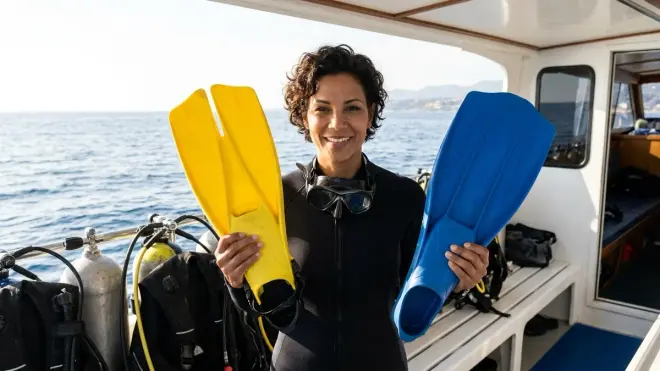
This is probably the most common question I hear from new divers: split or paddle? I've used both styles extensively, and honestly, each has its place. For scuba fins for beginners, understanding the real differences helps you match the fin to your diving style.
Split fins require less effort per kick but need more kicks overall. The split design channels water through the blade, which means each kick feels easier on your legs. This is amazing if you're worried about cramping or don't have super strong legs yet. The trade-off is that you'll need to kick more frequently to move the same distance as paddle fins.
Paddle fins give you more power and control with each kick. Traditional paddle-style blades push more water per stroke, which means fewer kicks to cover the same distance. I prefer these when I'm carrying camera gear and need precise control, or when I'm diving in currents where I need that extra push. They do tire your legs faster when you're starting out, though.
Split fins work great for relaxed recreational diving in calm conditions. On easy reef dives where I'm just cruising around looking at fish, split fins feel effortless. The reduced leg strain means I can focus more on buoyancy and enjoying the dive rather than thinking about my legs.
Paddle fins excel when you need power or precision. In currents, during ascents and descents, or when I need to back-kick (a technique for underwater photography that lets you move backward), paddle fins give me way more control. If you plan to advance beyond basic recreational diving, paddles are probably the better long-term choice.
Your kicking style matters more than the fin style. This took me forever to figure out. Some divers flutter kick constantly, others use a frog kick or modified flutter. Split fins reward a steady flutter kick rhythm, while paddles work with more kicking styles. Pay attention to how you naturally kick underwater before committing to a fin type.
We have a full breakdown comparing split fins vs paddle fins that dives deeper into the performance differences.
Breaking In and Protecting Your Investment
Getting new fins is exciting, but there's some prep work that makes a huge difference in comfort and longevity. I wish someone had told me about these steps before my first dive with brand-new fins.
Plan to break them in gradually, not on a five-dive day. New fins, especially with new booties, can cause hot spots and blisters until they mold to your feet a bit. Do a single dive or a pool session first. I ignored this advice and ended up with massive blisters after a full day of diving—not fun when you have four more dive days ahead of you.
Apply anti-chafe products to known problem areas before diving. Bodyglide or similar products on your heels and the top of your feet can prevent blisters during that break-in period. I now apply this religiously on the first few dives with any new fins or booties. It's such a simple step that saves so much pain.
Rinse your fins thoroughly in fresh water after every dive day. Salt, sand, and other debris can degrade the materials and straps over time. I keep a mesh bag in my dive bag specifically for rinsing gear, and my fins get dunked and agitated in fresh water before they go into storage. This habit has kept my fins looking and working like new.
Check straps and buckles regularly for wear. Straps are usually the first thing to fail on fins. Before every dive trip, I inspect the straps for cracks, the buckles for looseness, and make sure everything still adjusts smoothly. Replacing a $10 strap at home is way better than dealing with a broken fin strap on a dive boat.
Store fins flat or hanging, never bent or crushed under other gear. I learned this after leaving fins crammed in my gear bag for months—they developed a permanent bend that affected how they performed in the water. Now they hang in my gear closet or lay flat in a bin. Seems obvious now, but it wasn't something I thought about initially.
Consider travel-specific fins if you fly frequently to dive. After struggling to fit my fins in my luggage alongside a BCD and regulator for every trip, I eventually got a second pair of shorter travel fins. They're not quite as powerful, but they pack so much easier. If you're planning regular dive trips, this is worth considering even as a beginner.
Our guide on how to break in new scuba fins has even more tips for preventing those painful first-dive blisters.
Matching Fins to Your Diving Environment
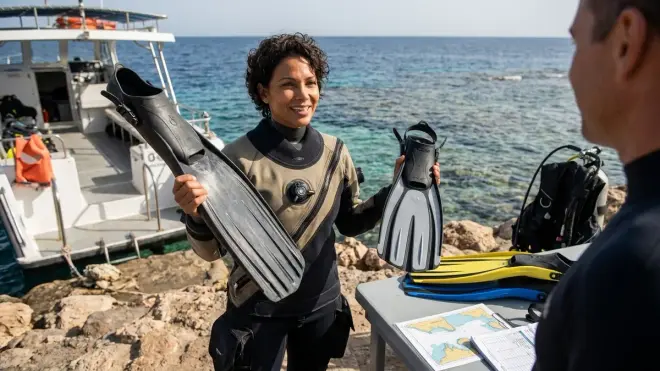
One of the biggest mistakes I made early on was thinking any fin would work anywhere. The reality is that your diving environment should influence which scuba fins for beginners you choose—or at least help you understand what to expect from your fins.
Cold water diving needs exposure protection, which affects fin sizing. When I first tried cold water diving, I showed up with fins that fit perfectly with my 3mm booties—but the dive required 7mm booties, and my feet didn't fit. If you're diving in varying water temperatures, you either need adjustable fins or multiple bootie options that all work with your fins.
Strong currents require more powerful fins. Diving in Cozumel's drift dives showed me why some people love stiff, powerful fins. Trying to stay with the group while getting swept along by current takes more leg power than cruising a calm reef in Belize. If you're diving in current-prone areas, lean toward stiffer, paddle-style fins.
Travel diving favors lighter, more compact options. Every pound counts when you're flying to dive destinations, and fins are usually the bulkiest item in your bag. I eventually switched to fins that are slightly shorter and lighter specifically for travel. They're not quite as powerful, but the trade-off is worth it when I'm trying to stay under baggage weight limits.
Shore diving over rocks or coral demands booties and open-heel fins. Full-foot fins are great for boat diving, but one shore entry over volcanic rock in Hawaii convinced me that open-heel fins with thick booties are essential for shore diving. The extra protection is worth the slightly bulkier setup.
Warm-water boat diving is where full-foot fins shine. In places like Roatán where I do most of my diving, we're always exiting from boats into warm, clear water. Full-foot fins are lighter, simpler, and honestly more comfortable for this style of diving. No booties to deal with, no straps to adjust—just slip them on and go.
If you travel frequently to dive, definitely read our recommendations for best scuba fins for travel to see what packs well and performs reliably.
Final Check Before You Go
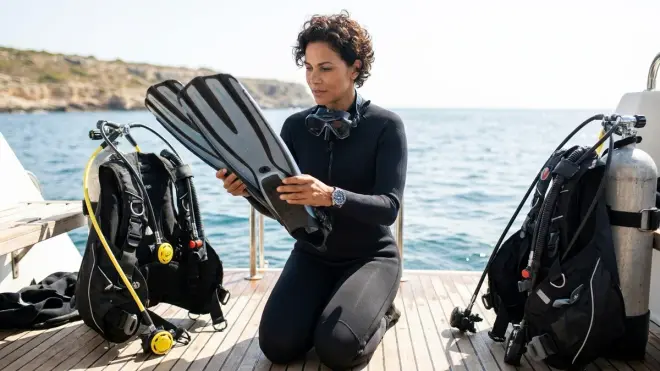
Before you head to the dive site with your new fins, run through this quick verification checklist:
- Fit test with actual dive booties (if using open-heel)
- Confirm straps adjust easily and hold securely
- Check for any sharp edges or rough spots that might cause blisters
- Verify fins are appropriate for your planned diving environment
- Practice putting fins on and taking them off (especially in water if possible)
- Have backup fin straps or know where to buy them at your destination
- Rinse and dry routine established for post-dive care
- Fins marked with your name or distinctive marking (dive boats get chaotic)
Frequently Asked Questions
What type of fins should a beginner scuba diver choose? Most beginner scuba divers should choose open-heel fins with adjustable straps and medium-stiffness paddle blades, as they offer versatility across different diving conditions, work with varying bootie thicknesses, and provide good control while learning fundamental kicking techniques and buoyancy.
How do I know if my scuba fins fit properly? Your scuba fins fit properly when your toes don't touch the front of the foot pocket with about half an inch of space, the heel strap holds your foot snugly without cutting into your skin or leaving deep marks, and your foot doesn't slip out when you flex it—all tested while wearing the actual booties you'll dive with.
Should I get split fins or paddle fins as a beginner? As a beginner, paddle fins are generally the better choice because they provide more power and control for learning different kicking techniques, work better in varied conditions including currents, and give you room to grow into more advanced diving without needing to upgrade, though split fins can be easier on your legs during the initial learning phase.
Final Thoughts
Setting up your first fin system doesn't have to be complicated, but it's worth taking the time to get it right. The difference between fins that fit properly and ones that don't can literally make or break your dive—I've experienced both sides of that equation, and properly fitted fins that match your diving style make everything underwater so much more enjoyable.
Start with the basics: get the fit right, choose a design that matches where you actually dive, and don't overthink the materials and features. You can always upgrade later as your diving evolves and you figure out what specific features matter to you. I'm still figuring out my ideal setup after three years, and that's part of the fun of diving—your gear grows with your skills and experiences.
The most important thing is to get in the water and start diving. Perfect fins sitting in your closet don't teach you anything, but decent fins that fit well will help you build skills and confidence with every dive. Take care of them, pay attention to what works and what doesn't, and adjust from there. Happy diving!
For more comprehensive guidance on fin selection, our main scuba fins guide and article on how to choose scuba fins cover everything in much more detail.