
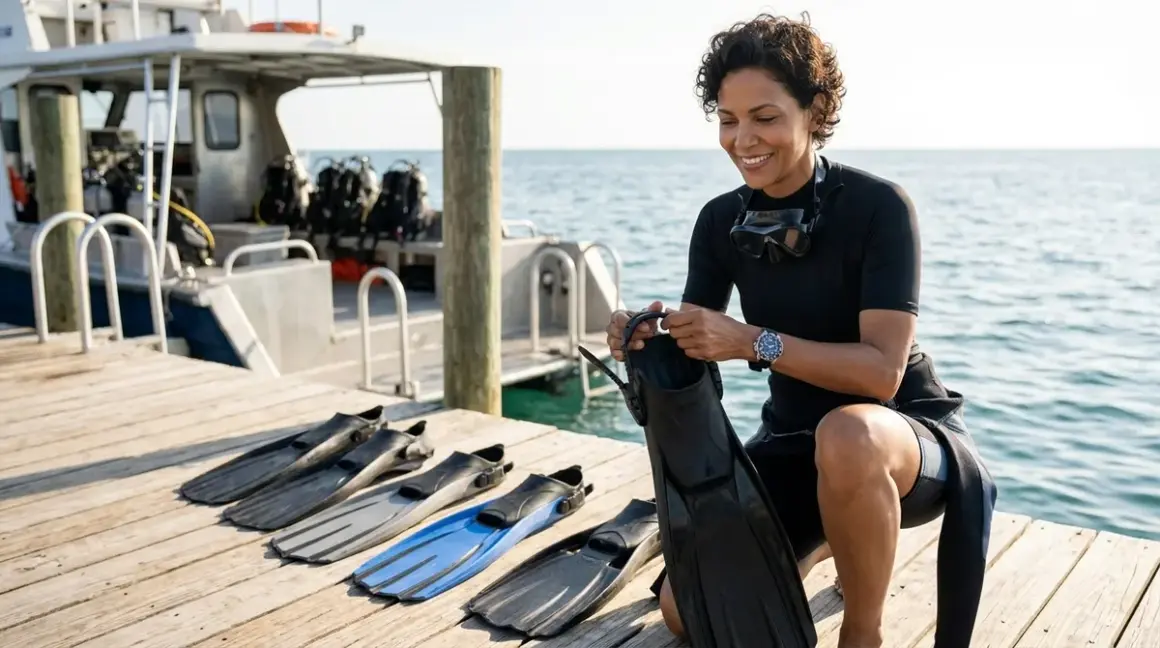

I still remember my first pair of fins—they looked amazing in the shop, but after twenty minutes underwater, my feet were screaming. Getting scuba fin sizing right isn't just about comfort (though that's huge); it's about being able to actually enjoy your dive without constantly thinking about your throbbing toes or fins that keep slipping off mid-kick.
This checklist walks you through everything I wish someone had told me before I bought those beautiful-but-painful first fins. Whether you're shopping online or standing in a dive shop, these steps will help you find fins that actually fit your feet, your diving style, and your comfort zone—without the trial-and-error frustration I went through.
Pre-Shopping Preparation: Know Your Feet
Before you even start looking at fins, you need to know exactly what you're working with. I learned this the hard way after ordering fins online based on "I'm usually a size 8"—spoiler alert, fin sizing doesn't work like shoe sizing at all.
Measure your foot length in millimeters: Use a ruler on bare feet and write it down—fin manufacturers use actual measurements, not regular shoe sizes, and this number matters way more than you'd think.
Measure your foot width at the ball: Some of us have narrow feet, some have wide ones, and regular fin foot pockets aren't one-size-fits-all (I have pretty wide feet and didn't realize how much this mattered until my first pair gave me blisters on the sides).
Check your actual boot size if you dive in cold water: Don't guess—put on the boots you'll actually dive in and measure again, because a 5mm neoprene boot adds serious bulk that changes everything about scuba fin sizing.
Know your ankle flexibility: Sounds weird, but if you have stiff ankles like I do, you'll need fins that don't require extreme ankle bend to get on and off.
Consider any foot issues upfront: Bunions, high arches, wide toe boxes—whatever makes regular shoes challenging will matter even more with fins, so make a mental note before you shop.
Take photos of your feet in boots from multiple angles: This sounds over-the-top, but when you're ordering online or asking for recommendations in dive forums, pictures help so much more than descriptions.
Open Heel vs Full Foot: The First Big Decision

This choice affects literally everything else about scuba fin sizing, so you need to nail it down first. I started with full foot fins for warm water and switched to open heel when I started diving in Belize year-round—both have their place, but the fit requirements are totally different.
Open heel fins require boots: You'll always wear them with dive boots (usually 3mm-7mm neoprene), which means you're sizing for your foot PLUS the boot thickness—never try to size open heel fins to bare feet.
Full foot fins go on bare skin or thin socks: These should fit snugly without boots, though some people wear thin neoprene socks for warmth or blister prevention (I do this in cooler water and it works great).
Open heel gives you flexibility to change boot thickness: One pair of fins can work with 3mm booties in summer and 5mm in slightly cooler conditions—this was a game-changer for me as someone building a gear collection on a budget.
Full foot fins are lighter and better for travel: If you're mainly diving tropical destinations and packing light, full foot fins are so much easier to travel with and don't require packing separate boots.
Open heel straps add adjustment but also failure points: The strap system gives you wiggle room for fit, but I've also had a strap break mid-dive, which is not fun (now I always check them during my pre-dive gear check).
For most recreational warm-water diving like what I do, I ended up choosing open heel fins with adjustable straps. The versatility won me over, even though I sometimes miss how lightweight my old full foot fins were. If you're still deciding which type fits your diving style overall, How to Choose Scuba Fins for Your Diving Style walks through the pros and cons in more detail.
In-Person Fitting Checklist: What to Test in the Shop
If you can possibly try fins on in person, do it. I know online shopping is easier and sometimes cheaper, but scuba fin sizing is so individual that even fifteen minutes in a shop can save you weeks of returns and frustration.
With Full Foot Fins
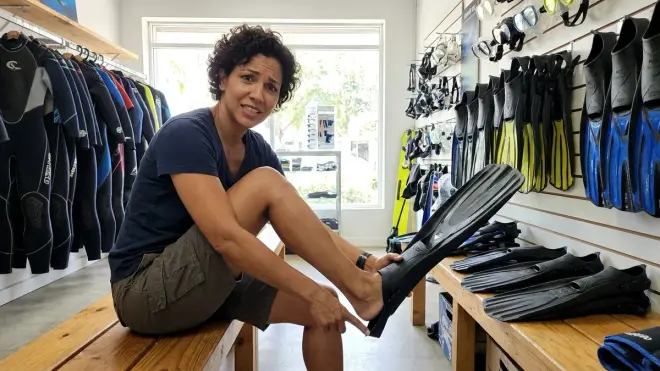
Slide your foot in without forcing it: If you have to really jam your foot in, the pocket is too small—it should slide in with gentle pressure and maybe some wiggling, but not a fight.
Check for heel gaps when standing: Stand up and look at the back—there shouldn't be more than a few millimeters between your heel and the back of the pocket, or the fin will slip during kicks.
Wiggle your toes: You should be able to move them slightly, but they shouldn't slide around inside the pocket—think snug but not cramped.
Walk around for 5-10 minutes: I know you look ridiculous, but this is when pressure points show up—if anything hurts after five minutes in the shop, it'll be unbearable after twenty minutes underwater.
Simulate kicking motions: Point your toes and flex your foot repeatedly—the fin shouldn't slip at the heel when you point, and shouldn't pinch anywhere when you flex.
Check the top of your foot: Some fin pockets put pressure on the top of the foot right where it bends—if you feel pressure there standing still, it'll hurt during finning.
With Open Heel Fins
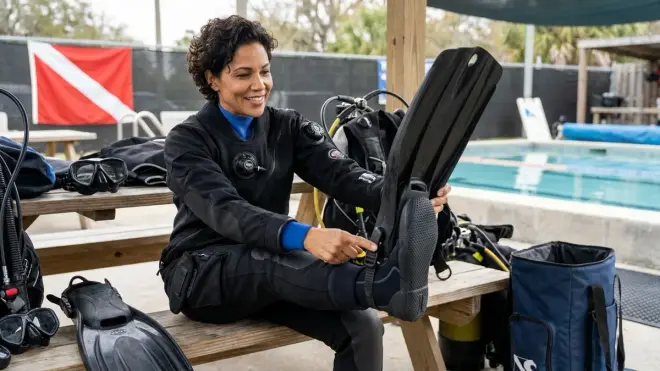
Always try them with the boots you'll dive in: Seriously, don't try them on with the random 5mm rental boot in the shop if you'll dive in 3mm boots—the difference matters.
Check strap adjustment range: Put the fin on with the straps at the middle of their adjustment range, not maxed out in either direction—you want room to tighten or loosen as needed.
Make sure the heel strap sits on your heel, not your Achilles: The strap should rest on the lower part of your heel bone—if it rides up onto your Achilles tendon, it'll rub and potentially cause pain (learned this one the hard way).
Test the buckle mechanism: Adjust the straps tighter and looser several times—some buckles are weirdly stiff or tricky with cold hands, and you don't want to discover this on a dive boat.
Stand on your toes: This simulates the position your foot is in during a frog kick—the fin shouldn't slip off your heel, and the boot shouldn't slide forward in the pocket.
Check for pinch points at the sides: The side rails of the foot pocket can sometimes pinch wide feet right at the ball—press on these areas and make sure nothing feels tight.
Walk backward: This sounds silly, but it mimics the backward pressure of finning—if the fin slips even slightly, it's too big.
Online Shopping Sizing: How to Get It Right Remotely
Most of my gear purchases happen online because I don't have a huge dive shop selection where I am in Belize. I've gotten pretty good at remote scuba fin sizing, but it took some expensive mistakes to figure out the system.
Find the manufacturer's actual sizing chart: Don't trust generic "small/medium/large" descriptions—look for the specific millimeter measurements or boot size ranges for that exact model.
Read reviews specifically about sizing: Skip the general "these are great" reviews and search for phrases like "runs small," "wide foot pocket," or "sized up"—that's where the real info is.
Check return policies before ordering: Make sure you can return fins if the fit isn't right, and understand whether you pay return shipping—this has saved me multiple times.
Order from retailers that list exact specs: Some sites will tell you the foot pocket length and width in millimeters—cross-reference this with your actual foot measurements.
Look for comparison reviews: If you've tried other fins before, search for reviews that compare the new model to ones you know—like "these fit similar to Scubapro Jet Fins but slightly wider."
Join brand-specific groups or forums: Seriously, I've learned so much about scuba fin sizing from random Facebook groups where people post their boot size and which fins worked—it's weirdly helpful.
Start with one pair, not multiple colors: I know it's tempting to buy two colors while they're on sale, but wait until you confirm the fit works before committing to multiple pairs.
Screenshot the sizing chart with your order: Brands sometimes update their charts, and having proof of what was listed when you ordered can help with returns if sizing is off.
The Actual Fitting Test: Wearing Them Properly
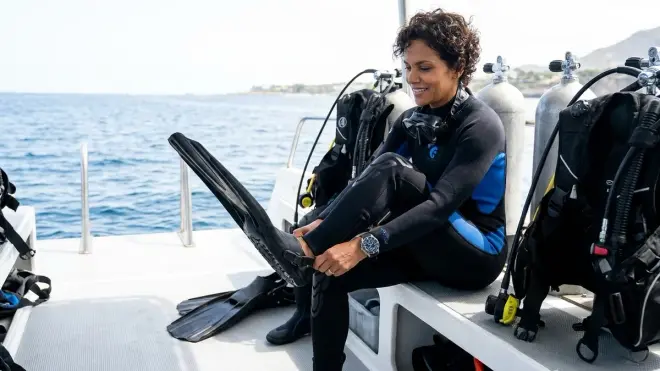
Once you have fins in hand—whether from a shop or a delivery box—you need to test them the right way. I used to just stick my foot in and call it good, but there's actually a method that reveals fit problems before you get in the water.
Put them on like you will underwater: For open heel fins, this means boots first, then fins—for full foot, wet your feet or use a little water as lubricant since that's how they'll go on during diving.
Adjust straps to proper tension: With open heel fins, the strap should hold the fin firmly without cutting off circulation—I can usually slide one finger under the strap but not two.
Stand for 10 minutes minimum: Set a timer and just stand there—pressure points that seem minor at first get really obvious after ten minutes of constant contact.
Do flutter kicks in the air: Lie on your stomach (on a couch or bed) and kick like you're swimming—if the fins slip or feel unstable, the fit isn't right.
Point and flex repeatedly: Do this at least 20 times—your foot changes shape significantly during finning, and the pocket needs to accommodate both positions.
Check for red marks after removing them: A little indentation is normal from seams, but deep red marks or white pressure spots mean the fit is too tight in that area.
Try them in a pool if possible: Some dive shops or community pools let you test fins—even ten minutes in actual water reveals fit issues that standing around can't.
The material your fins are made from also affects how they fit and feel—stiffer rubber behaves differently than softer compounds. If you're curious about how different materials impact the overall experience, What Are Scuba Fin Blade Materials: Rubber, Composite, and Carbon Explained breaks down the options.
Adjustment and Customization Options
Even with perfect scuba fin sizing, most fins need some tweaking to feel truly comfortable. I used to think fins either fit or didn't, but there's actually a middle ground where small adjustments make a huge difference.
Strap extenders for open heel fins: If the straps are almost long enough but not quite, extenders add a few centimeters—super helpful for thick boots or high-arched feet.
Neoprene fin keepers: These slide over the heel strap and add cushioning—I use them on my Scubapro Jet Fins and they completely eliminated the rubbing I was getting on my Achilles.
Silicone fin grease for tight full foot pockets: A tiny bit on your heel helps the fin slide on easier without affecting fit once it's on—especially helpful for fins that are snug but not too snug.
Thicker or thinner socks with full foot fins: If full foot fins are slightly loose, a thin neoprene sock takes up space—if they're slightly tight, going barefoot might solve it.
Spring straps instead of rubber: These apply more even pressure and adjust automatically as your foot position changes—I switched to them and honestly can't go back to regular straps now.
Aftermarket buckles: Some people swap out the standard buckles for quick-release or different-style buckles that work better with their hands or flexibility.
Moleskin or tape for specific rub spots: If there's one small area that rubs, a piece of moleskin inside the pocket can prevent blisters without affecting overall fit.
Break-in period with gradual use: Some materials soften with use—if fins feel slightly stiff but not painful, wearing them for short pool sessions can help them form to your feet.
Speaking of breaking in new fins, that process deserves its own attention. I wrote up everything I learned about making new fins more comfortable in How to Break In New Scuba Fins and Prevent Blisters, including some tricks that really helped me avoid the pain I experienced with my first pair.
Red Flags: When the Fit Is Actually Wrong
This is the section I wish I'd read before buying my first fins. I kept thinking "they'll break in" or "I'll get used to it," but sometimes a fit is just wrong and no amount of optimism will fix it.
Pain in the first 5 minutes: If anything hurts immediately, it's not going to get better—don't convince yourself otherwise like I did (I ended a dive after 15 minutes once because of toe pain).
Numbness or tingling: This means circulation is getting cut off somewhere, usually from a foot pocket that's too narrow or straps that are too tight—this is a definite no-go.
Fins slipping off your heels during walking: If they slip when you're just walking around the shop or your room, they'll definitely slip underwater when you're actually kicking.
You can't get them on without help: Fins should be snug, but if you need another person to pull them onto your feet, they're too small (or you need to size up your boots).
Toes are curled or cramped: Your toes should rest naturally—if they're forced to curl to fit, you need a bigger size or a different foot pocket shape.
Significant gaps on the sides: Space between the sides of your foot and the pocket means your foot will slide around during kicks, which causes blisters and reduces power.
The fin feels unstable or wobbly: When you move your foot, the fin should move with it as a unit—if there's a delay or wobble, the connection isn't secure enough.
You're at the extreme end of the strap adjustment: If the straps are maxed out tight or loosened all the way, you don't have room for adjustments later and should try a different size.
I ignored some of these red flags early on because I really wanted a specific fin to work, but I've learned that forcing a bad fit just leads to miserable dives and eventually buying different fins anyway.
Special Considerations: Unique Situations
Not everyone fits into the standard scuba fin sizing scenarios. I've talked to enough divers now to know there are some specific situations that need extra thought.
Very small or very large feet: If you're outside the typical adult size range (EU 36-46 or US women's 5-men's 12), your options are more limited—some brands specifically make extended sizes, so search for those.
Wide or narrow feet: Most fins are designed for average width—if you're significantly wider or narrower, look for brands known for wider pockets (like Mares) or narrower ones (like Scubapro), based on other divers' experiences.
High arches: High arches can create pressure on the top of the foot—full foot fins are usually worse for this, so open heel with adjustable straps gives you more room.
Foot or ankle injuries: Old sprains, flexibility issues, or chronic pain mean you need fins that don't require extreme ankle flexion—look for designs with easier entry and exit.
Kids and growing feet: If you're buying for a child, remember they'll outgrow fins quickly—consider borrowing or renting until their feet stop growing, or buy with significant room to grow.
Diving in different water temperatures: If you dive both tropical and cold water, you might need different boot thicknesses, which affects open heel fin sizing—some people own two pairs, others accept a compromise fit.
Drysuit diving with thick socks: Drysuit socks are way bulkier than wetsuit boots—if you're sizing for drysuit use, bring those exact socks to the fitting, not your regular 5mm boots.
When you're building your complete gear setup, fin fit is just one piece of the puzzle. I found that getting my BCD dialed in made a huge difference in my overall comfort underwater, and the same attention to detail matters for fins.
Final Check Before You Go
Okay, you've measured, tried on, adjusted, and you think you've got the right fit. Before you cut the tags or take them on your first dive trip, run through this quick summary checklist one more time:
- ✓ Foot measurements recorded with and without boots (if applicable)
- ✓ Fins tried on with the actual boots/socks you'll dive in
- ✓ Standing test: 10+ minutes without pain, numbness, or pressure points
- ✓ Movement test: flutter kicks, pointing, flexing without slipping
- ✓ Heel gap checked (minimal for full foot, secure strap placement for open heel)
- ✓ Straps at mid-range adjustment (open heel only)
- ✓ Buckles/springs tested multiple times for ease of use
- ✓ No red flags present (pain, numbness, slipping, extreme cramping)
- ✓ Return policy understood and documented
- ✓ Break-in plan in place for first uses
If you can check every single one of these boxes honestly, you're in great shape. If even one gives you pause, it's worth taking another look before committing.
For new divers especially, getting the whole fin setup right—not just the sizing, but the type and features too—can feel overwhelming. I put together New Scuba Diver Fin Setup Checklist: Everything You Need to Know to help with exactly that confusion, because I remember being totally lost when I started.
Frequently Asked Questions
Should scuba fins be tight or loose?
Scuba fins should be snug but not tight—your foot shouldn't slide around inside the pocket, but you also shouldn't feel pain, numbness, or pressure points. With full foot fins, you should be able to wiggle your toes slightly, and the heel should stay in place when you point your foot. With open heel fins, the boot should fill the pocket completely with no gaps, and the heel strap should hold firmly without cutting into your skin or Achilles tendon.
How do I know if my fins are too small?
Your fins are too small if you experience pain or numbness within the first few minutes of wearing them, if your toes are forced to curl or cramp, if you can't get them on without significant struggle or help from another person, or if you see deep red marks or white pressure spots after removing them. Too-small fins also often feel restrictive when you point or flex your foot, making finning uncomfortable or difficult.
Can you wear fins that are too big?
You technically can wear fins that are too big, but you shouldn't—oversized fins slip off during kicks, cause blisters from the friction of your foot moving inside the pocket, reduce kicking efficiency because power doesn't transfer properly, and create a safety issue if one comes off during a dive. If your fins slip at the heel when you walk or feel wobbly when you move your foot, they're too big and you need a smaller size or different strap adjustment.
Final Thoughts
Getting scuba fin sizing right makes such a bigger difference than I ever expected when I started diving. I used to think fins were just fins, but now I know that proper fit affects literally everything—how much you enjoy the dive, how efficiently you move through the water, whether you can focus on the reef or you're constantly thinking about your feet.
The time you spend getting the fit right now saves you from painful dives, wasted money on returns, and the frustration of equipment that fights you instead of helping you. Take measurements seriously, don't skip the fitting tests, and trust what your feet tell you during those first few minutes of wearing new fins.
And honestly? If you're between sizes or unsure, it's totally okay to ask for help. Message the dive shop, post in forums with your measurements, or reach out to other divers who've tried the same fins. The diving community is ridiculously helpful with this stuff, and most of us have made the same sizing mistakes you're trying to avoid. We get it, and we want your dives to be as comfortable and fun as possible—starting with fins that actually fit.