
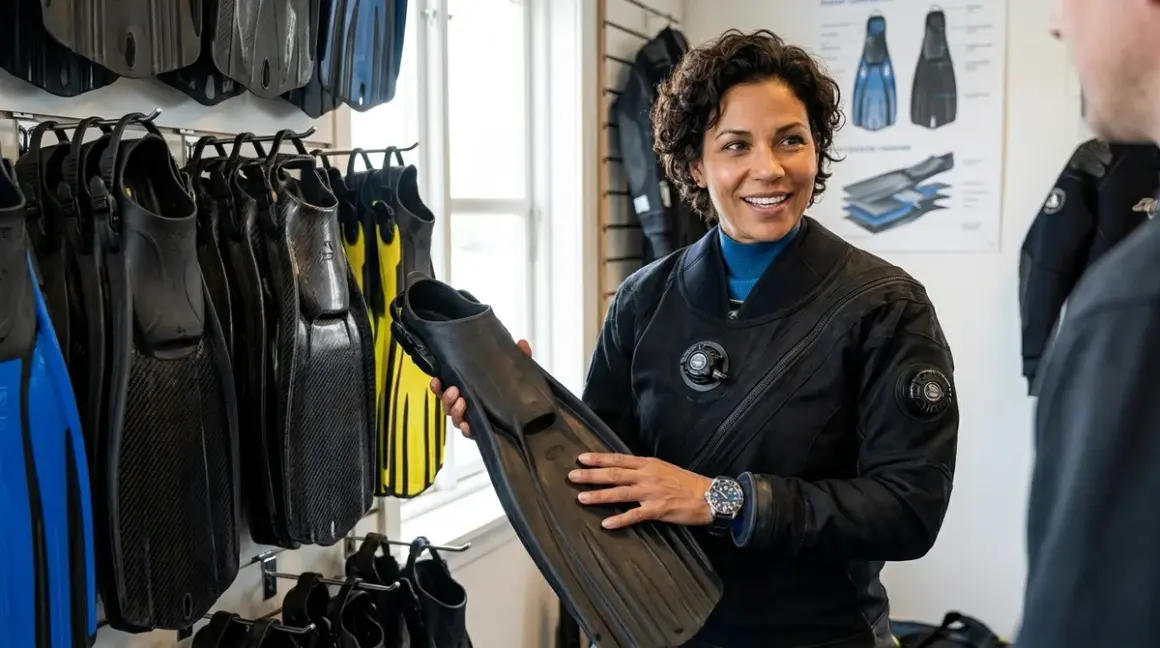

When I first started building my dive kit piece by piece, I honestly didn't think scuba fin materials mattered all that much. A fin's a fin, right? Wrong. After cramping up on a drift dive in Cozumel with borrowed rubber fins and then trying a friend's carbon fiber pair that felt like an entirely different experience, I realized the blade material completely changes how your fins perform underwater. Understanding scuba fin materials helps you pick fins that match your diving style, your leg strength, and the kind of diving you do most—whether that's lazy reef cruising or fighting currents in channels.
What Are Scuba Fin Blade Materials?
Scuba fin materials refer to the specific compounds and construction methods used to make the blade portion of your fins—the part that actually pushes water and propels you forward. The three main categories you'll encounter are rubber (or rubber-like elastomers), composite plastics, and carbon fiber, each with completely different performance characteristics.

The blade material determines how stiff or flexible your fin is, how much power it delivers per kick, how quickly it rebounds after each stroke, and honestly, how tired your legs get after a 60-minute dive. It also affects weight both on land and in the water, which matters a lot when you're packing for a trip or trying to maintain neutral buoyancy.
When I was researching my first fin purchase, I got overwhelmed by all the technical terms—thermoplastic, polymer blends, pre-preg carbon layup. But here's what I wish someone had told me from the start: the material isn't just about performance specs. It's about matching the fin to your body and your diving. A stiffer carbon blade might be amazing for a strong swimmer doing technical dives, but it could leave a newer diver with smaller leg muscles completely exhausted. The right scuba fin materials make diving more enjoyable because you're working with your equipment, not fighting it.
How Scuba Fin Materials Work
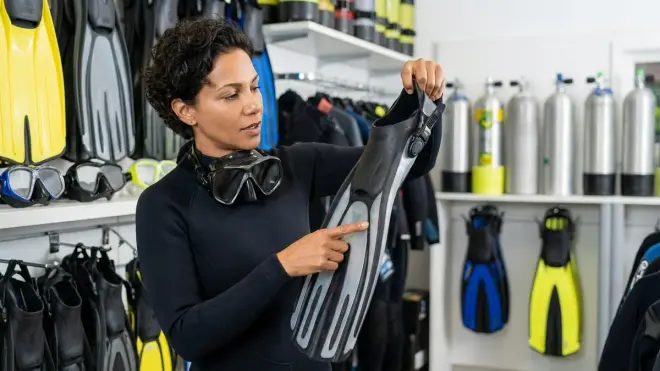
Different blade materials affect how energy transfers from your leg muscles through the fin and into the water. Rubber fins (or modern equivalents like natural gum rubber and elastomer blends) tend to be softer and more flexible. When you kick, the blade bends significantly, creating a scooping motion that pushes water gradually. This flexibility means you don't need as much leg strength to get movement, but you also don't get as much propulsion per kick. Think of it like paddling with your hands cupped versus flat—more surface area contact, but gentler force.
I borrowed traditional rubber fins for my first dozen dives, and what struck me was how forgiving they were. Even when my kick technique was terrible (which it absolutely was), the soft blade still moved me forward without punishing my ankles and calves. The downside? I felt like I was working harder to cover distance, especially when there was any current. For understanding other flexible materials in dive gear, check out Understanding Scuba Mask Skirt Materials and Seal Technology, which explains similar elastomer properties.
Composite plastic fins use thermoplastics and polymer blends—sometimes multiple materials layered together—to create blades with tuned stiffness. These materials can be engineered to flex in specific ways: softer near the foot pocket for comfort, stiffer toward the tip for power. The rebound speed (how quickly the blade snaps back to neutral after a kick) is usually faster than rubber, which means more efficient energy transfer. You kick, the blade loads up with tension, then springs back quickly to help drive the next kick cycle.
When I upgraded to composite fins (a mid-range pair with a polymer blend), I immediately noticed the difference in how responsive they felt. The blade would snap back almost like it had stored energy from my downstroke and was helping push the upstroke. This made frog kicks and flutter kicks feel more natural. However, if I got lazy with my technique and just flailed my legs, the stiffer blade didn't forgive me the way rubber had—my ankles would start to ache.
Carbon fiber fins represent the stiffest, most responsive option. Carbon fiber weave is laid up in specific orientations (the exact layup pattern varies by manufacturer) and bonded with resin to create an extremely rigid blade with very little flex. The advantage is maximum power transfer: almost all the energy from your kick goes directly into moving water, with minimal energy lost to blade deformation. The blade rebounds almost instantly. For strong swimmers who can generate consistent kick power, carbon fins deliver unmatched propulsion with less effort per distance covered.
I've only used carbon fins a handful of times (they're expensive and I'm still saving up), but the difference was wild. Each kick felt more purposeful, like the fin was amplifying my effort rather than absorbing some of it. But—and this is important—they also demanded better technique. If my kick angle was off or I wasn't engaging my core properly, the stiff blade would transmit that awkwardness right back to my legs. They're less forgiving for beginners still working on efficiency. For more guidance on matching fins to your skill level, see New Scuba Diver Fin Setup Checklist: Everything You Need to Know.
The material also affects how the fin behaves as you descend. Some composite plastics and rubbers become stiffer in cold water, which can change the feel of your kick if you're diving in varying temperatures. Carbon fiber stays pretty consistent across temperature ranges, which technical divers appreciate for predictability.
Why Scuba Fin Material Matters

Choosing the right scuba fin materials directly impacts your comfort, your air consumption, and honestly, whether you enjoy the dive or spend the whole time wishing it would end. Softer rubber or elastomer fins are easier on your legs, making them ideal for newer divers, anyone with less leg strength, or people who prefer a relaxed, photography-focused dive style where you're hovering more than swimming. I still grab softer fins when I'm doing macro photography dives around Belize's barrier reef because I'm barely moving and don't need aggressive propulsion.
Stiffer materials—composites and especially carbon—give you more power and efficiency, which matters when you're dealing with currents, swimming longer distances, or carrying heavy camera rigs that increase drag. On drift dives where I need to keep pace with the group or navigate against a tidal push, I'd much rather have a composite fin that delivers solid thrust without requiring me to kick twice as hard. The energy savings add up over a dive, which means lower air consumption and longer bottom times.
The material also determines how your fins feel on land and during surface swims. Rubber fins tend to be negatively buoyant (they sink), which can actually help with trim underwater but makes them heavier to walk in. Composite and carbon fins are often close to neutral buoyancy or even slightly positive, making them easier to manage during surface swims but requiring more attention to overall buoyancy setup. This confused me at first too—I didn't realize my fins were affecting my weight distribution until I switched materials and suddenly needed to adjust my BCD air.
Travel weight is another huge consideration for me. Rubber fins are usually heavier in your luggage, while composite and carbon fins can be significantly lighter. When I'm packing for a dive trip and trying to stay under airline weight limits, every pound counts. For tips on efficient packing, take a look at How to Pack Scuba Gear for Remote Liveaboard Trips.
Types and Variations of Fin Blade Materials
Within the three main scuba fin materials categories, there's a lot of variation worth knowing about:
Rubber and elastomer blends range from traditional natural gum rubber (which is rare now but still used in some military and professional fins) to modern synthetic elastomers that mimic rubber's flexibility with better durability. Some manufacturers add textures or channels to the blade surface to improve water flow, which can make a softer material perform a bit more efficiently. The Scubapro Jet Fin, for example, uses a classic rubber-like compound that's been popular for decades with technical divers who value their neutral-to-negative buoyancy and indestructible build.
Composite thermoplastics often use blended polymers—sometimes combining different stiffness levels in a single blade. You might see fins with a softer material along the blade rails (the edges) and a stiffer spine down the center, which channels energy more effectively. Some brands use proprietary names for their plastic blends, but they're all variations on engineered thermoplastics designed to balance flex, rebound, and durability. These are the most common scuba fin materials you'll encounter in the mid-range price bracket.
Carbon fiber can vary based on the layup technique and resin used. Pre-preg carbon (where the fiber is pre-impregnated with resin before molding) tends to be higher quality and more consistent than wet-layup methods. Some fins use carbon fiber only in specific areas—like reinforcement strips along the blade spine—while others are full carbon construction. Full carbon is lighter and stiffer, but it's also more expensive and sometimes less forgiving if you accidentally step on sharp rocks. If you're interested in how material choices affect other gear, check out Best Travel BCDs Under 5 Pounds for 2026, which explores lightweight construction methods across dive equipment.
Hybrid materials are becoming more common, where manufacturers combine layers—like a carbon fiber core with a thermoplastic outer layer, or a composite blade with rubber inserts in high-flex zones. These are attempts to get the best of multiple materials: the power of carbon with the forgiveness of plastic, or the durability of rubber with the efficiency of composites.
Frequently Asked Questions

What is the most durable scuba fin material?
Rubber and rubber-like elastomers are generally the most durable scuba fin materials because they resist cracking, handle impacts well, and tolerate being tossed around in gear bags or boat decks without damage. Traditional rubber fins can last decades with basic care, while carbon fiber fins, despite being high-performance, are more susceptible to stress fractures if mishandled or stepped on. Composite plastics fall somewhere in between—they're tough for everyday use but can develop stress cracks over time, especially if exposed to prolonged sunlight without UV protection.
Do scuba fin materials affect air consumption?
Yes, scuba fin materials indirectly affect air consumption by changing how much physical effort you expend during a dive. Stiffer materials like carbon fiber and engineered composites transfer energy more efficiently, meaning you use less leg effort to cover the same distance compared to softer rubber fins, which can lower your breathing rate and reduce air consumption. When I switched from borrowed soft fins to my own composite pair, I noticed I wasn't breathing as hard during swim portions of the dive, which translated to slightly longer bottom times—not a huge difference, but enough to be noticeable over a full dive trip.
Are carbon fiber fins worth the extra cost for recreational diving?
For most recreational divers, carbon fiber fins are not necessary and the performance gain doesn't justify the cost, which is typically two to three times higher than quality composite fins. Carbon fins shine in situations requiring sustained power—like technical diving, strong currents, or when carrying heavy camera gear—but for casual reef diving, photography, or relaxed vacation dives, a good composite fin delivers plenty of performance without the price tag. I'm still using composite fins for 95% of my dives because they work great for my style, and I'd rather spend that money on dive trips or camera upgrades.
How do scuba fin materials perform in cold water?
Rubber and elastomer fins tend to stiffen noticeably in cold water, which can make them feel less responsive and require more leg effort, while carbon fiber maintains consistent stiffness across temperature ranges. Composite plastics vary depending on the specific polymer blend, but most quality composites remain fairly stable in typical recreational cold water temperatures (down to around 50°F or 10°C). If you dive frequently in cold water, it's worth testing how your fin material behaves as temperatures drop, because the change in blade flex can affect your kick efficiency and comfort. For more on cold water gear considerations, see Best Wetsuits for Cold Water Diving in 2026.
Can you repair damaged scuba fin blades, and does material matter?
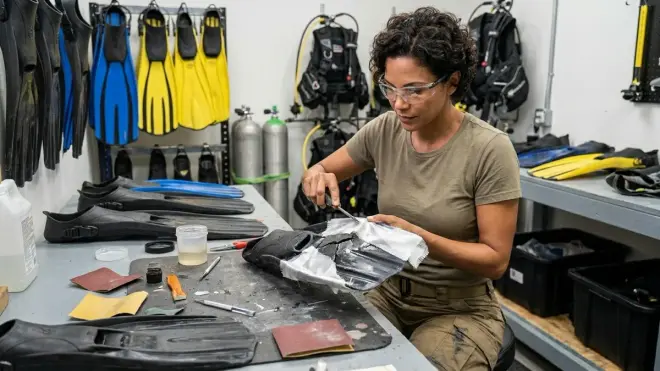
Repair options depend heavily on the scuba fin material—rubber and elastomer fins can sometimes be patched or glued if they develop small tears, composite plastic fins with cracks are difficult to repair reliably, and carbon fiber fins with structural damage are usually not repairable and must be replaced. I learned this the hard way when I cracked the blade rail on a composite fin by stepping on it while getting out of a boat; the dive shop told me that once thermoplastic cracks, the structural integrity is compromised and it's a safety risk to keep using it. Minor scratches and scuffs are cosmetic and won't affect performance, but any crack that goes through the blade thickness means it's time for new fins.
Summary
Understanding scuba fin materials—rubber, composite plastics, and carbon fiber—helps you choose fins that match your leg strength, diving style, and the environments you dive most often. Softer rubber and elastomer blades are forgiving and comfortable, making them great for beginners and relaxed diving. Composite materials offer a middle ground with better efficiency and faster rebound, ideal for most recreational divers. Carbon fiber delivers maximum power and responsiveness but demands good technique and comes with a higher price tag that's usually only worth it for technical divers or those frequently fighting currents.
I'm still learning which materials work best for different dive situations, and honestly, I think most divers benefit more from improving their kick technique than obsessing over blade materials. That said, having fins made from the right scuba fin materials for your body and dive style makes every dive more enjoyable, less tiring, and gives you better control underwater—which is exactly what gear should do. For a broader look at fin selection beyond just materials, check out How to Choose Scuba Fins for Your Diving Style.