
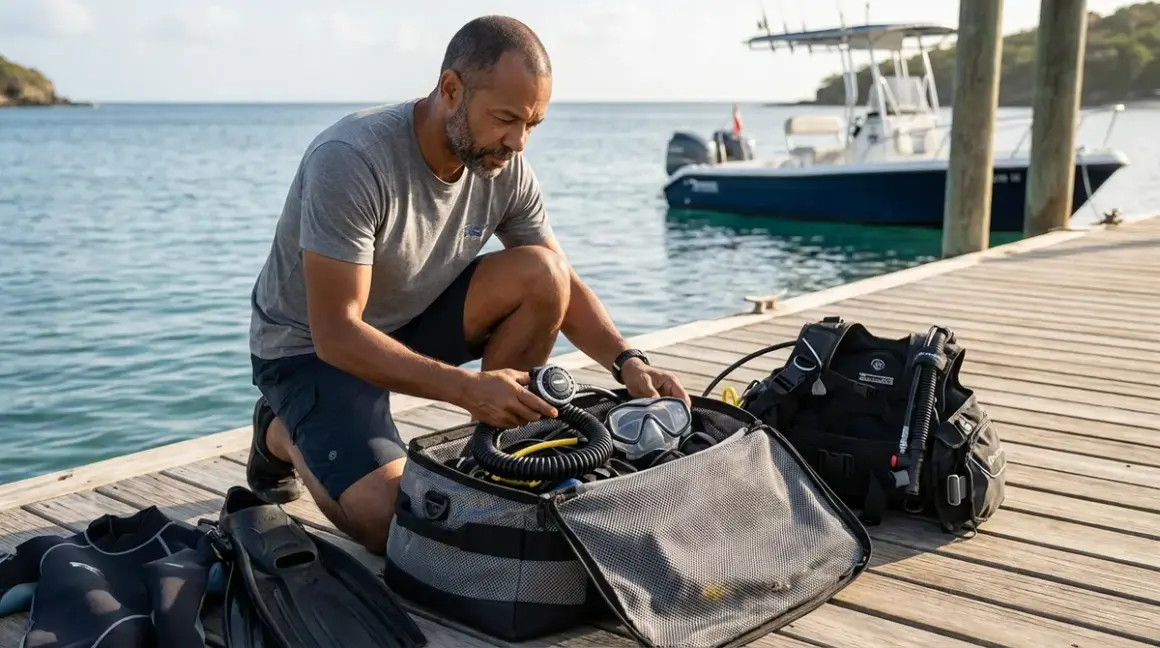

I've watched divers realize they forgot critical gear in some pretty inconvenient places—on liveaboards three hours from the nearest dive shop, at remote island resorts, and once memorably on a wreck dive boat where someone discovered their regulator was still hanging in their garage back home. After more than a decade of traveling to dive sites across six continents and introducing hundreds of students to new environments, I've refined my dive gear bag packing checklist into something that actually works under pressure. This isn't about cramming everything you own into an oversized roller bag—it's about systematic preparation that accounts for your specific dive profile, destination conditions, and the reality that checked luggage sometimes takes scenic detours without you.
This dive gear bag packing checklist covers life-support equipment, exposure protection, accessories, documentation, and the often-overlooked items that separate smooth dive trips from frustrating ones. Whether you're headed to tropical reefs or cold-water wrecks, traveling light or bringing a full camera rig, the framework stays the same: pack deliberately, verify functionality before you leave, and understand what you absolutely cannot replace at your destination.
Core Life-Support Equipment
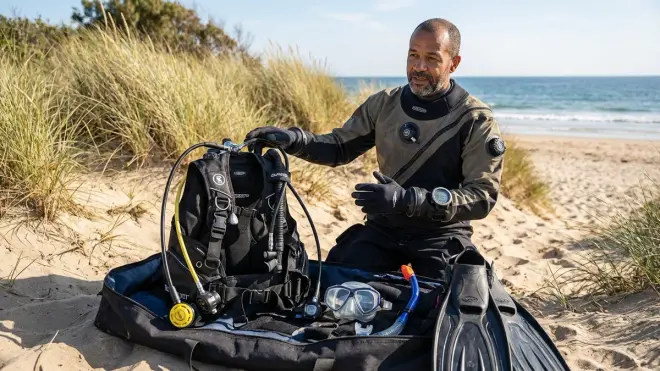
Your regulator, BCD, and dive computer form the foundation of your kit—these are the items you should almost always travel with rather than rent, assuming you own quality gear that's properly maintained.
Regulator system with verified service date: I pack my primary regulator only after confirming it's within the manufacturer's service interval (typically 12-24 months depending on usage and manufacturer specs). I've written extensively about how to service a scuba regulator, and part of that process includes documenting your last service date. If you're close to needing service, get it done before the trip—a first stage failure in Cozumel means finding a shop that may or may not have parts for your specific model. Check that your regulator connection matches the destination's standard; I keep a DIN-to-yoke adapter in my save-a-dive kit because I dive DIN primarily but encounter yoke-only operations occasionally in resort areas.
BCD with inflator mechanism tested: Beyond just throwing your buoyancy compensator in the bag, run through your pre-dive BCD check at home. I inflate fully and let it sit for twenty minutes—any pressure loss indicates an oral inflator seal or dump valve issue you want to discover in your living room, not on a dive deck. For travel, I prefer back-inflate or wing-style BCDs that compress smaller than jacket-style models; my current travel setup weighs 4.2 pounds and packs into a space smaller than a basketball. If you're evaluating options, the best travel BCDs typically prioritize packability without sacrificing lift capacity for your specific weighting requirements.
Dive computer with fresh battery and backup: I travel with my primary wrist-mounted computer and a backup console-style computer, both verified functional within 48 hours of departure. Battery life degrades unpredictably, and I've seen computers die mid-trip often enough that I now replace batteries prophylactically before any extended travel—even if the low-battery indicator hasn't triggered yet. Your dive computer maintenance routine should include verification that algorithms match your planned diving (if you're doing nitrox dives, confirm the unit properly displays and calculates enriched air mixes). I learned this the expensive way when a computer defaulted to air-only mode and I didn't notice until after a 32% nitrox dive in Bonaire.
Submersible pressure gauge or integrated air-pressure monitoring: Even if you dive a computer with wireless air integration, pack a standalone SPG as backup. The battery in wireless transmitters fails at inconvenient times, and not every dive operation stocks replacements for every brand. My SPG lives permanently attached to my regulator first stage—it's a simple analog gauge with a brass spool and no failure points beyond the hose itself.
Depth gauge and timing device (if not using computer): This applies primarily to divers using tables rather than computers, but I include it because I occasionally revert to tables and mechanical gauges when teaching or when I want redundancy on technical dives. A simple analog depth gauge and a dive watch provide absolute reliability—no batteries, no algorithms, no electronics that can flood or corrode.
Surface marker buoy with inflation mechanism: I pack a 4-foot or longer SMB in high-visibility orange, along with a 100-foot spool or reel. Current and boat traffic make surface markers essential in many environments, and deployment techniques vary enough that you want your own familiar equipment rather than borrowing someone else's setup mid-dive. I've had to deploy SMBs in three-knot currents, at dusk, and in choppy surface conditions—having gear you've practiced with repeatedly makes the difference between a smooth ascent and a panicked one.
Exposure suit appropriate to destination temperatures: This varies dramatically based on environment, but your checklist should specify exactly which suit you're packing rather than just "wetsuit." For tropical diving (water temps above 78°F), I bring a 3mm full suit that provides sun protection and thermal comfort without overheating. Cold-water environments (below 60°F) mean my 7mm suit or drysuit plus appropriate undergarments. The critical step here is verifying seals, zippers, and seams before packing—especially on drysuits, where a failed neck seal or torn wrist seal turns an expensive piece of equipment into a very uncomfortable swim.
Accessories and Backup Equipment
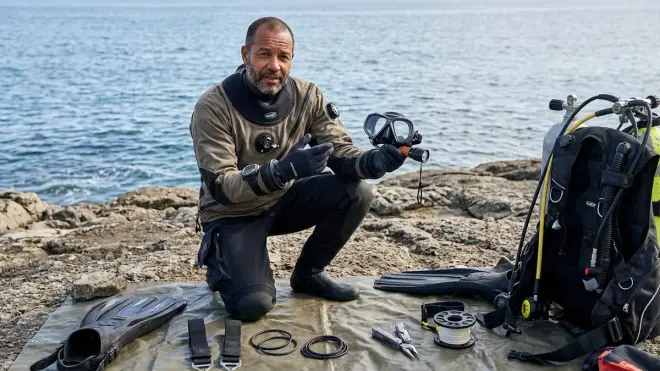
The items in this category won't prevent you from diving, but their absence will limit your enjoyment, safety margin, or ability to handle minor equipment issues that would otherwise become trip-ending problems.
Mask with anti-fog treatment and backup mask: I pack two masks always—my primary low-volume mask that I've used for years, and a backup of similar fit. Mask straps break, silicone skirts tear on sharp edges, and tempered glass can shatter if you drop the mask on a tile floor (I've done this). I apply a thin layer of anti-fog coating or use diluted baby shampoo before every dive rather than relying on saliva or abrasive toothpaste methods that degrade the skirt material over time. Both masks go in a hard case or wrapped in my wetsuit to prevent damage during transport.
Fins with verified strap integrity or backup straps: Spring straps fail less frequently than rubber straps, but I've seen both types break. I pack my primary fins plus either backup straps or, if space permits, a compact set of travel fins. For warm-water destinations where I'm not diving heavy steel tanks and thick exposure suits, compact split fins or shorter blade fins work fine and pack smaller than my cold-water paddle fins. Check the mounting points where straps attach to the blade—stress cracks in this area indicate imminent failure.
Cutting tool accessible and corrosion-free: A dive knife or shears should be sharp, rust-free, and mounted in a location you can reach with either hand. I prefer shears for line cutting (they're more effective against fishing line and nets than knives), and I pack them in checked luggage to avoid TSA confiscation. Before packing, I verify the blade moves freely and hasn't corroded—stainless steel isn't truly rustproof, and saltwater dives without proper rinsing create corrosion surprisingly fast.
Dive light with fresh batteries plus backup light: Even on tropical day dives, a light reveals colors at depth and illuminates crevices and overhangs. I pack a primary canister or handheld light with recently charged batteries, plus a compact backup light. Battery chemistry matters here—lithium-ion cells can't go in checked luggage unless installed in the device, so I keep lights assembled and verified functional. I've written before about carrying lights that use standard AA or AAA batteries when traveling internationally, since proprietary rechargeable cells are nearly impossible to replace if you have a failure mid-trip.
Dive slate or wet notes for communication: Underwater communication beyond basic hand signals requires either a slate or wet-erasable notebook. I use both depending on dive type—a small wrist-mounted slate for simple notes and compass headings, and a larger notepad for navigation exercises or when I need to explain something complex to a student. These weigh almost nothing and take up minimal space, but you'll want them when you need to communicate something specific to your buddy at depth.
Compass with verified accuracy: I verify my compass against a known heading before travel—compasses can develop bubbles or lose calibration if exposed to strong magnetic fields or temperature extremes. Most modern dive computers include electronic compasses, but I still pack a standalone liquid-filled compass as backup. Electronic compasses require calibration in each new location and drain battery life; mechanical compasses just work.
Reef hook or drift hook (if appropriate to destination): Some environments—Palau channels, Galapagos upwellings, drift dives in strong current—benefit from a reef hook that lets you secure yourself to rock or dead coral while observing pelagics without fighting current. Not every destination allows these (many Caribbean reef systems prohibit them to prevent coral damage), so verify regulations before packing. Mine is a simple stainless steel hook with 6 feet of webbing and a clip.
Save-a-Dive Kit and Maintenance Items
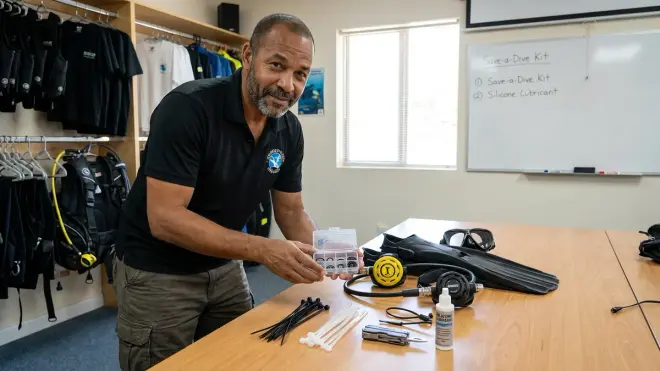
This is where systematic packing prevents minor issues from becoming dive-day problems. I assemble my save-a-dive kit at home and verify contents before each trip rather than trying to remember individual items while packing under deadline pressure.
O-rings in multiple sizes: I carry a variety pack that includes the most common sizes: port plug o-rings, HP and LP port o-rings, and o-rings for my specific regulator's second-stage exhaust valve and first-stage environmental seal. These are sized in millimeters (typically ranging from 008 to 018 in AS568 sizing), and having the wrong size is nearly as useless as having none. I learned this after trying to use an 010 o-ring on a port that required an 009—it sealed initially but extruded under pressure during the dive. I keep these organized in a small plastic case with labeled compartments.
Silicone grease in small tube: A tiny amount of oxygen-compatible silicone grease (not petroleum-based) goes a long way for lubricating o-rings during installation. The tube I pack is smaller than a lipstick container and has lasted me three years of regular travel. This is also useful for lubricating BCD inflator buttons that start to stick from salt exposure.
Mask strap and fin strap replacements: Pre-sized to your specific mask and fins. Generic straps exist, but they don't always fit properly, and fighting with ill-fitting equipment on a dive deck while everyone else enters the water is frustrating. I keep these in a separate waterproof pouch along with the small amount of hardware needed to install them.
Cable ties in various lengths: These solve an impressive variety of problems—securing hoses that have come loose from retainers, replacing failed clips, temporarily repairing broken buckles, or jury-rigging camera mounts. I pack ten to fifteen in various sizes, from small 4-inch ties to heavy-duty 12-inch versions.
Spare low-pressure inflator hose: LP inflator hoses fail more often than other hoses because of the constant connection/disconnection cycle and the mechanical stress on the coupling. A replacement hose runs around $30-40 and weighs maybe four ounces—cheap insurance compared to missing dives because your BCD won't hold air. Make sure it's the correct length and has the proper coupling for your inflator mechanism.
Adjustable wrench or specific tools for your regulator: My regulator's first stage requires a 9/16" wrench to swap HP and LP ports if I need to reconfigure hose routing. I pack a small adjustable wrench that handles this plus fin strap screws and tank valve handles that occasionally come loose. Some divers prefer multi-tools designed for diving; I find them bulky and prefer purpose-specific tools that work better.
Regulator mouthpiece replacement: Mouthpieces tear or develop cracks, especially after years of use or if you have a habit of gripping the mouthpiece too hard at depth (guilty). A replacement takes seconds to install with hot water to soften the silicone and costs around a few dollars. I've needed this exactly three times in my diving career, which is three times more than I would have wanted to skip dives because of a $5 part.
Waterproof repair tape: This is different from duct tape—waterproof repair tape maintains adhesion when wet and can temporarily patch torn wetsuit neoprene, repair leaking hose connections, or secure equipment that's come loose. The roll I carry is about the size of a roll of dental floss and has fixed everything from suit tears to leaking camera housing latches (the latter bought me enough time to finish a dive day before sending the housing for proper repair).
Documentation, Certification, and Medical Items
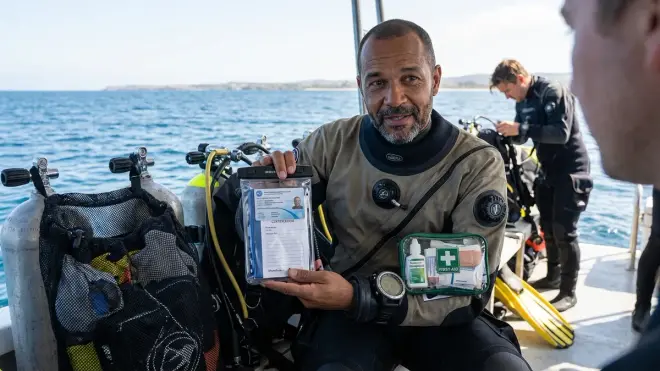
Every destination has different requirements, but these items form the universal baseline for documentation and basic medical preparation.
Certification card (physical and digital backup): I carry my physical C-card and keep a photo of it on my phone as backup. Some dive operators now accept digital certifications through apps like PADI's digital certification system, but not universally—especially at smaller operations in remote locations. If you're certified for specialties relevant to your planned diving (nitrox, deep, wreck), bring those cards too. I've seen divers turned away from advanced dives because they couldn't produce proof of training.
Dive log with recent entries: Many operators require a minimum number of logged dives within the past 12 months, especially for challenging sites. I maintain a digital log as primary record and carry a small physical logbook with my last year of dives as backup. For technical dives or when claiming specific experience levels, detailed logs matter—vague "I think I've done about 50 dives" doesn't inspire confidence from a dive master evaluating whether you should be on a deep wreck penetration dive.
Medical clearance if required: Some operators require medical clearance for divers over certain ages or with specific health conditions. If you have any medical considerations that affect diving (ear problems, respiratory issues, cardiovascular concerns), carry documentation from a dive-medicine-qualified physician. This is distinct from your general doctor—dive medicine involves understanding pressure-related physiology that most primary care physicians don't regularly encounter.
Travel insurance and DAN membership information: I carry my Divers Alert Network membership card and have their emergency hotline number saved in my phone. DAN provides dive accident insurance and medical evacuation coverage that standard travel insurance typically excludes. The membership card includes your policy number and emergency contacts—information you definitely don't want to be searching for if you're dealing with decompression illness symptoms.
First aid kit with dive-specific items: Beyond standard first aid supplies (adhesive bandages, antiseptic, pain relievers), I pack items specifically useful for diving injuries: antibiotic ointment for coral scrapes, antihistamine for marine stings, seasickness medication, decongestant for ear clearing issues, and anti-diarrheal medication (because food safety varies dramatically across destinations, and you don't want to be dealing with intestinal issues while trying to equalize at depth). I also pack a few doses of pseudoephedrine, which helps with congestion-related ear clearing problems—though I use this cautiously since it can mask symptoms that should actually keep you out of the water.
Prescription medications with documentation: Carry prescription medications in original bottles with your name clearly visible, along with a letter from your physician explaining what they are and why you take them. Some countries have strict regulations about importing certain medications, and customs officials have broad authority to confiscate anything that looks questionable. I learned this watching a diver lose a week's worth of allergy medication at a customs checkpoint because the pills were in an unlabeled pill organizer.
Vaccination records if required: Certain destinations require proof of specific vaccinations (yellow fever, hepatitis, typhoid). Requirements change, so verify current regulations well before your departure—some vaccines require multiple doses over several weeks, so last-minute planning doesn't work.
Camera and Photography Equipment (If Applicable)
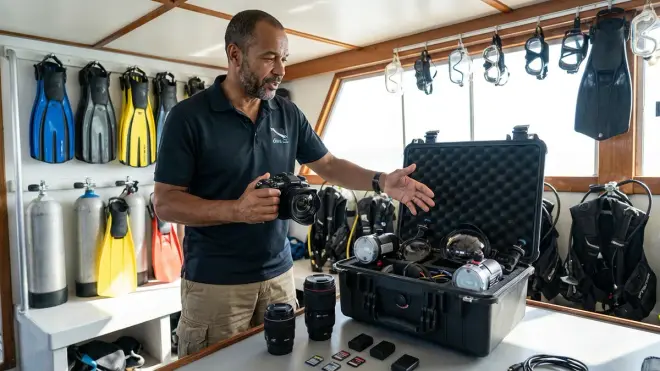
If you shoot underwater, your photography gear often weighs and occupies more space than your life-support equipment. I've written a detailed underwater photography gear checklist, but these are the critical items that belong on every dive trip packing list for photographers.
Camera body with fresh battery and formatted memory card: I verify battery charge and format memory cards 24 hours before departure, then shoot a few test frames to confirm everything's functioning. Camera electronics are sensitive to humidity and temperature extremes, and I've seen cameras that worked fine at home fail in tropical heat or after exposure to condensation. Bring at least one spare battery—preferably two—and more memory card capacity than you think you'll need. Cards fail, fill up faster than expected, or get lost.
Housing with verified o-ring and vacuum test completed: Never pack your camera housing without inspecting the main o-ring seal under good lighting and performing a vacuum test if your housing supports it. I examine the o-ring for any sand, hair, or damage, apply a thin layer of o-ring grease, and seat it carefully. Then I close the housing empty and submerge it in my bathtub for thirty minutes, watching for bubbles. Any bubble formation indicates a seal failure that would flood your camera at depth. I've written about underwater camera maintenance extensively because housing floods are both common and entirely preventable.
Strobes or video lights with sync cords and mounting hardware: Lighting equipment is bulky but essential for quality images below about 30 feet, where natural light loses red wavelengths and everything trends blue-green. I pack my strobes with diffusers, spare sync cords (these fail regularly), and all mounting hardware including clamps and arms. The difference between strobes and continuous video lights comes down to your shooting style and subjects, but whichever you're bringing, verify sync connections before packing. A strobe that won't fire because of a corroded sync connector is dead weight.
Port appropriate to planned lens use: Dome ports for wide-angle, flat ports for macro—and these are not interchangeable. I once traveled with a macro port when I'd planned wide-angle shooting, which made for a very expensive lesson in double-checking port selection before departure. Ports are fragile, so I pack them wrapped in neoprene or foam and positioned in the center of my gear bag where they're protected from impact.
Desiccant packets and anti-fog inserts: Condensation inside your housing ruins shots and can indicate humidity that risks flood damage. I pack several fresh desiccant packets and replace them daily while shooting. Anti-fog inserts for the inside of your housing prevent condensation on the back of your viewing screen—minor issue on land, major problem when you're trying to check focus and exposure at depth.
Lens cleaning supplies and backup o-rings: Wet lens ports are inevitable, but having the right tools to clean them between dives isn't. I pack microfiber cloths (multiple, since they get saturated), lens cleaning solution, and a small blower for removing water droplets without smearing. I also carry spare o-rings specifically for my housing model—these are different sizes and materials than regulator o-rings and aren't interchangeable.
Final Check Before You Go
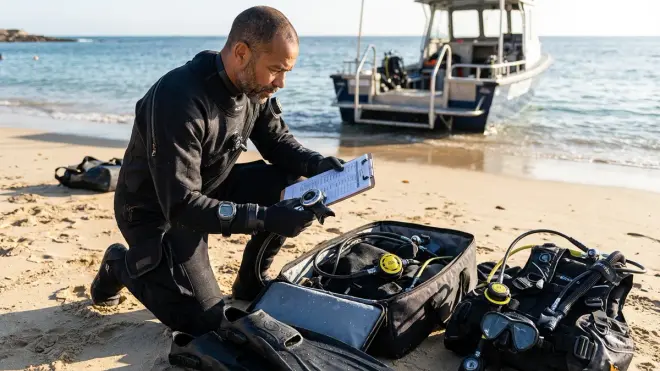
Pull out your dive gear bag and physically verify each category rather than checking items mentally. Here's my streamlined final verification process:
- Life support systems functional: Regulator breathing smoothly, BCD holding air, computer powering on with correct settings, SPG reading accurately when pressurized
- Exposure protection intact: No torn seams, functioning zippers, seals properly lubricated on drysuit
- Save-a-dive kit complete: O-rings, straps, tools, repair supplies all present and organized
- Documentation current: C-card, medical clearance, insurance cards, dive log with recent entries
- Batteries charged and spares packed: Computer, lights, camera, strobes all verified functional
- Destination-specific items added: Reef hook if allowed, specific adapter plugs for electronics charging, current-appropriate exposure suit thickness
I also weigh my checked bag at this stage—airline weight limits are firm, and discovering your gear bag is 8 pounds overweight while standing in the check-in line is stressful and expensive. I use a luggage scale at home and pack knowing I can add a few pounds of souvenirs or impulse dive shop purchases on the return trip without exceeding limits. For serious weight constraints, I've written about choosing what type of dive bag makes sense for different trip profiles.
The night before departure, I verify weather conditions at my destination and make any last-minute adjustments. If water temperatures have dropped, I add a hood or hooded vest. If conditions look choppy, I add extra seasickness medication. These small adjustments based on current rather than forecasted conditions have saved multiple trips from being less comfortable than they should have been.
Frequently Asked Questions
Should I pack my regulator in carry-on or checked luggage?
You should pack your regulator in carry-on luggage whenever possible to prevent damage and ensure you have it if your checked bag is delayed or lost. Regulators contain precision components and pressure-sensitive parts that can be damaged by rough baggage handling, and losing a regulator at your destination means either renting unfamiliar equipment or missing dives entirely while waiting for your bag to arrive. I've had checked bags delayed for three days while on a week-long dive trip, and having my regulator, computer, and mask in my carry-on meant I could dive using rental BCDs and fins while waiting for the rest of my gear.
How far in advance should I service my regulator before a dive trip?
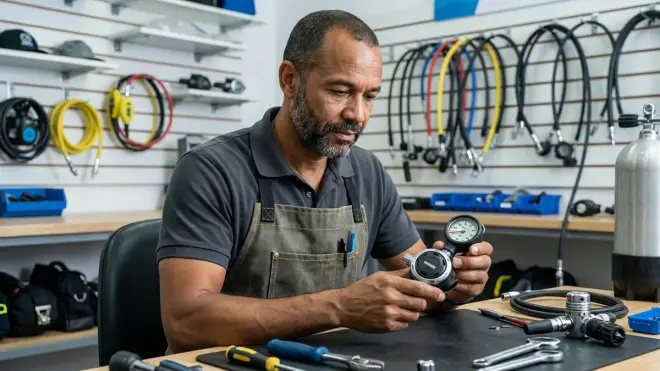
You should service your regulator at least two weeks before a major dive trip to allow time for parts ordering, service completion, and verification of proper function through several local dives. Most regulators require service every 12-24 months or every 100 hours of use, and you want that service fresh but tested before you travel—having your regulator serviced the day before departure means you haven't verified the technician's work through actual diving. I've learned this through watching a student's "freshly serviced" regulator develop a slow leak during our first dive after service, discovered because we'd had time for checkout dives before traveling. The regulator service process includes break-in time where new seals seat properly and any assembly errors typically reveal themselves.
What items should I absolutely never pack in checked luggage?
Never pack dive computers, certification cards, prescription medications, or camera electronics in checked luggage, as these items are either irreplaceable at your destination or represent significant cost and trip disruption if your bag is lost or delayed. I also keep my mask, regulator, and a basic swimsuit in carry-on, which means even if every checked bag vanishes, I can still dive using rental equipment rather than sitting out entirely. Airlines lose approximately 7 bags per 1,000 passengers according to industry statistics, which sounds low until it's your bag that's touring a different continent while you're standing at a dive resort without your gear.
Final Thoughts
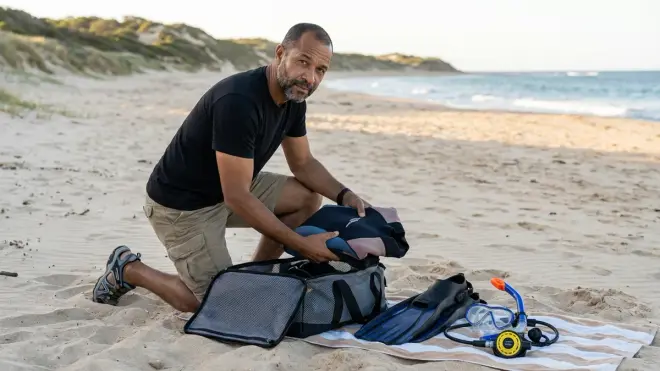
Your dive gear bag packing checklist becomes more refined with every trip—you'll discover which items you consistently need, which you never touch, and what's worth the extra weight versus what's replaceable at your destination. I still use essentially the same checklist framework I developed years ago, but the specific items have evolved as my diving has shifted from mostly warm-water recreational diving to incorporating more cold-water technical work and underwater photography.
The goal isn't to pack for every conceivable scenario. It's to pack systematically for your specific trip while building in reasonable redundancy for items that would end your diving if they failed. That means spare o-rings and mask straps but probably not a backup BCD. It means your primary regulator and computer but rental fins if necessary to stay under weight limits. And it absolutely means documenting service dates, verifying battery levels, and testing critical equipment before you leave home rather than discovering problems on a dive deck with 20 other divers waiting to get in the water.
Start your checklist based on these categories, then customize it based on your experience. After each trip, I note what I didn't need, what I wished I'd brought, and what failed or caused problems. That running record has prevented me from repeating mistakes and helped me refine my packing down to only items I actually use. Your version will look different based on whether you're diving cold water versus tropical, bringing camera gear versus staying light, or prioritizing checked bag weight versus carry-on flexibility—but the systematic approach remains the same.