
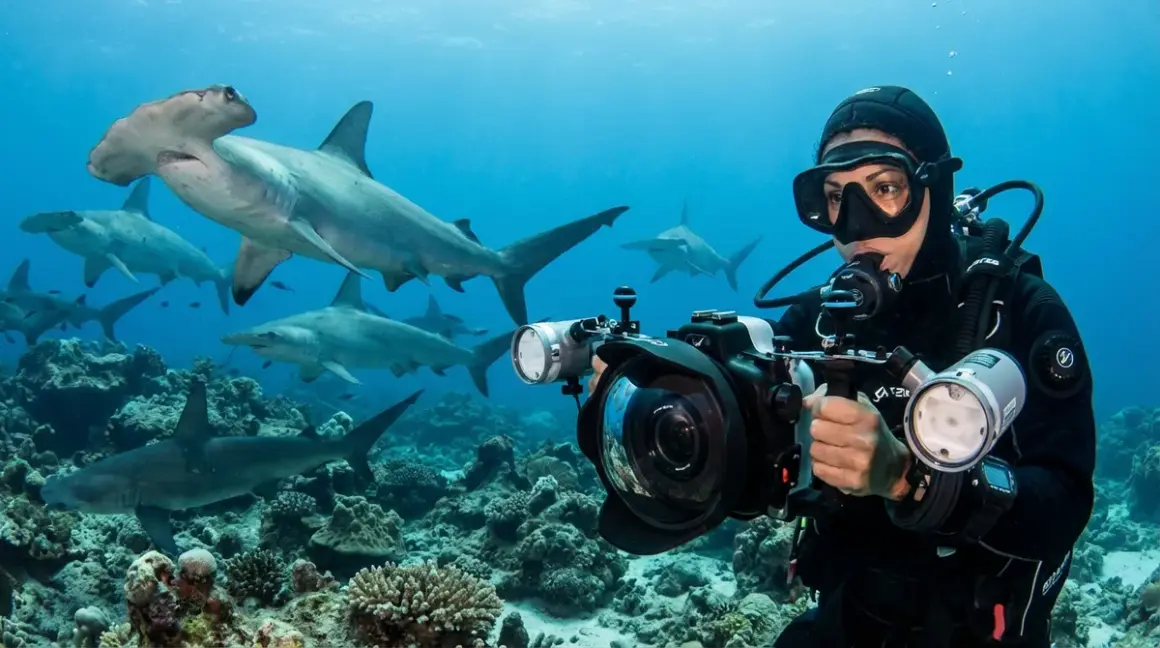

I'll never forget the first time I looked at my photos from a dive without a strobe—everything was this murky blue-green mess, and I couldn't figure out why all my friends' shots looked so vibrant and alive. Turns out, finding the best underwater photography strobes was the missing piece between disappointing snapshots and photos that actually captured what I was seeing down there. After testing different models over the past couple of years and talking to way too many dive shop staff about guide numbers and recycle times, I've learned that the right strobe makes all the difference, whether you're shooting tiny nudibranchs or sweeping reef scenes.
Quick verdict: The Sea & Sea YS-D3 Lightning🛒 Amazon offers the best balance of power and reliability for most recreational photographers, while budget-conscious divers will love the Backscatter Mini Flash🛒 Amazon, and serious macro shooters should consider the Inon Z-330🛒 Amazon.
What to Look For in Underwater Photography Strobes
When I started researching strobes, I felt completely overwhelmed by all the specifications and options. Here's what I wish someone had explained to me from the start—the stuff that actually matters when you're trying to decide which strobe to buy.
Power Output and Guide Number
Guide number (GN) is basically how powerful the strobe is, and it's measured at a specific ISO setting. I know that sounds technical, but here's what it means in real life: a higher guide number means the strobe can light up subjects that are farther away or illuminate a wider area. Most strobes fall between GN 20-32 (measured at ISO 100), and honestly, for recreational diving, you don't need the absolute highest number.
What confused me at first was realizing that I needed different power levels for different subjects. When I'm shooting macro—like a tiny cleaning shrimp or a blenny peeking out of a hole—I actually dial the power way down because the subject is so close. But for wide-angle shots of reef scenes or larger marine life, I want that full power to light up the whole frame and bring back those reds and oranges that disappear at depth. Look for strobes with multiple power settings (ideally at least 10 steps) so you can fine-tune the output instead of blasting everything at full strength.
Recycle Time
This is how long the strobe takes to recharge between flashes, and it drove me crazy until I upgraded. My first budget strobe took almost 4 seconds to recycle at full power, which meant I'd spot something amazing, take one shot, and then just float there waiting while the subject swam away. It was so frustrating.
Recycle times under 2 seconds make a huge difference when you're trying to capture moving subjects or take multiple shots of the same scene with different settings. The faster strobes use larger capacitor banks and better battery management, which is why they cost more—but honestly, after missing so many shots, I think it's worth it. For macro work where you're mostly shooting stationary subjects, a slightly slower recycle time is tolerable, but for wide-angle or anything that moves, faster is absolutely better.
Beam Angle and Coverage
The beam angle determines how wide an area the strobe illuminates, and this is where matching your strobe to your shooting style really matters. Wide-angle strobes typically have beam angles of 100-110 degrees or more, which is perfect for lighting up reef scenes or larger subjects. Macro strobes might have tighter beam angles around 90 degrees, giving you more concentrated light on small subjects.
Here's what I learned the hard way: if your strobe's beam angle doesn't match your lens, you'll either get dark edges in your photos (strobe too narrow) or waste light outside the frame (strobe too wide). Most modern strobes come with diffusers that can widen the beam angle by 10-20 degrees, which gives you flexibility. I keep diffusers on my strobes for wide-angle work and take them off for macro—it took me way too many dives to figure out that simple trick.
Battery Type and Dive Count
Some strobes use AA batteries (usually four), while others use proprietary rechargeable battery packs. I started with AA batteries because I liked having backups, but I quickly got tired of buying batteries and dealing with the weight in my dive gear bag. Plus, alkaline batteries can leak and corrode your strobe's battery compartment in humid tropical environments—I've seen it happen to other divers in Belize, and it's not pretty.
Rechargeable lithium-ion battery packs are more expensive upfront, but they typically give you around 150-300 flashes per charge depending on power settings, and they're lighter and more reliable long-term. Just make sure you have a charging solution for dive trips—some strobes use standard USB-C charging, which is super convenient.
Build Quality and Depth Rating
Most strobes are rated to around 100 meters depth, which is way deeper than recreational limits anyway (we max out at 40 meters). What matters more is the build quality of the battery compartment seal and the strobe head. I always check the o-ring before every dive—it's become part of my pre-dive camera maintenance routine, and I've caught small grains of sand or dried salt that could have caused a flood.
Look for strobes with corrosion-resistant materials like anodized aluminum or high-grade polycarbonate, especially if you're diving in saltwater regularly. Cheap plastic housings can crack or warp over time, and corroded electrical contacts are a nightmare. Also, serviceable o-rings and spare parts availability matter—if you can't get replacement parts where you dive, it doesn't matter how good the strobe is when something breaks.
Mounting and Compatibility
This seems obvious, but make sure the strobe will actually work with your camera system. Most modern strobes use fiber optic triggering (they detect your camera's built-in flash through a fiber optic cable) or electrical sync cords. Fiber optic is simpler and more reliable for most recreational setups, but electrical cords give you more consistent triggering and TTL (through-the-lens) metering if your camera supports it.
You'll also need compatible mounting arms and clamps. I started with cheap flexible arms that would droop under the strobe's weight, and it was impossible to position the light properly. Invest in rigid aluminum or carbon fiber arms with reliable ball joints—it makes positioning your strobes so much easier and keeps them exactly where you want them during the dive.
Our Top Picks
Sea & Sea YS-D3 Lightning
The Sea & Sea YS-D3 Lightning🛒 Amazon is the strobe I wish I'd bought first instead of wasting money on cheaper options. It's powerful enough for wide-angle reef scenes (GN 33 at ISO 100) but also works beautifully for macro with its precise 12-step power control and fast 1.5-second recycle time at full power.
Pros:
- Extremely fast recycle time keeps up with active subjects
- Wide 110-degree beam angle covers most wide-angle lenses
- Dual-mode design works with fiber optic or electrical sync
- Target light helps with focusing in low-light conditions
- Reliable battery life (200+ flashes on lithium batteries)
Cons:
- The push-button controls can be accidentally bumped during the dive if you're not careful
- Relatively expensive compared to entry-level options
- AA battery compartment requires careful o-ring maintenance
Backscatter Mini Flash (MF-1)
The Backscatter Mini Flash MF-1🛒 Amazon is the strobe I actually started with, and it's perfect for photographers on a budget or those just getting into underwater photography. The Mini Flash is tiny, lightweight, and surprisingly capable for macro work, though it struggles a bit with wide-angle coverage.
Pros:
- Incredibly affordable entry point for strobe photography
- Compact size makes it perfect for travel setups
- Built-in rechargeable battery with USB charging
- Simple controls are easy to adjust underwater
- Excellent for macro and close-focus wide-angle
Cons:
- Lower power output (GN 20) limits wide-angle capability
- Slower 3-second recycle time at full power
- Narrower beam angle (90 degrees without diffuser) doesn't cover ultra-wide lenses well
Inon Z-330
The Inon Z-330🛒 Amazon is what a lot of serious macro shooters I know in Belize eventually upgrade to, and after borrowing one for a few dives, I completely understand why. The circular flash tube design gives incredibly even light distribution, and the build quality is absolutely bomb-proof.
Pros:
- Even, circular light pattern eliminates hot spots in the center
- Excellent color temperature (5600K) reproduces natural colors
- Wide 110-degree beam angle expands to 120 degrees with diffuser
- Intuitive rotary power control with 12 settings
- Incredibly durable construction and reliable flooding protection
Cons:
- The proprietary battery system means you can't use backup AAs in a pinch
- Heavier than some competitors (720g on land)
- The slightly slower 2.5-second recycle time shows with fast-moving subjects
Ikelite DS161
The Ikelite DS161 Strobe🛒 Amazon is Ikelite's current flagship model. It's built like a tank and has more power than most recreational photographers will ever need, but it's also bigger and heavier than modern alternatives.
Pros:
- Massive GN 36 power output for deep or wide-angle work
- Extremely robust construction with excellent flooding resistance
- Removable diffuser system offers multiple beam patterns
- Compatible with TTL systems for automatic exposure
- Replaceable parts and excellent service network
Cons:
- Bulky size and weight (895g) makes it less ideal for travel
- The rotary dial can be stiff with cold or gloved hands
- More expensive than many competitors with similar features
Retra Flash Pro
The Retra Flash Pro🛒 Amazon is the strobe I dream about owning someday when my photography skills catch up to my equipment wishlist. The Retra Flash Pro is basically the Ferrari of underwater strobes—beautifully engineered, incredibly powerful, and priced accordingly.
Pros:
- Stunning even light distribution across the entire beam
- Advanced features like HSS (high-speed sync) for creative effects
- Extremely fast 0.9-second recycle time even at full power
- Modular design allows customization with different battery packs
- Premium build quality with titanium and anodized aluminum construction
Cons:
- The price tag is genuinely prohibitive for most recreational divers
- Advanced features like HSS require compatible camera systems
- The multi-button interface has a learning curve compared to simpler strobes
Godox V1 with Underwater Housing
Okay, this is a bit of an unconventional choice, but hear me out. Some photographers are adapting topside speedlights like the Godox V1 Flash🛒 Amazon with aftermarket underwater housings, and the results can be impressive if you're willing to deal with the bulk.
Pros:
- Significantly cheaper than dedicated underwater strobes
- Magnetic modifier system works with some underwater adaptations
- Powerful output comparable to high-end dive strobes
- Lithium battery provides excellent recycle times
Cons:
- Not originally designed for underwater use, so reliability concerns exist
- Aftermarket housings add significant bulk and weight
- Limited beam pattern options compared to purpose-built strobes
- Flooding risk is higher than with dedicated dive strobes
Frequently Asked Questions
Do I need two strobes for underwater photography?
You definitely don't need two strobes when you're starting out, but having a pair gives you much better lighting control and eliminates harsh shadows. I shot with a single strobe for my first year, and my photos were okay, but adding a second strobe made a huge difference—especially for wide-angle work where you need even coverage across the frame. For macro photography, a single strobe positioned correctly works great, though some photographers like using a second strobe as a gentle fill light. If you're on a budget, start with one good strobe and add a second when you're ready to level up your lighting.
What's the difference between a strobe and a continuous video light for photography?
Strobes fire a brief, powerful burst of light that freezes motion and brings back colors at the moment you take the photo, while continuous video lights provide constant illumination that's better for filming but generally too weak for great photos. I tried shooting photos with video lights when I first started because they were cheaper, but the results were disappointing—you need really high ISO settings, which creates grainy images, and you still don't get the vibrant color reproduction that strobes provide. Strobes also don't disturb marine life as much since they only flash for a fraction of a second, whereas continuous lights can stress animals or attract unwanted attention from curious fish that swim right into your shot.
How do I prevent backscatter in my underwater photos?
Backscatter—those annoying white specks from suspended particles reflecting your strobe light—frustrated me endlessly until I learned proper strobe positioning. The key is angling your strobes outward and slightly forward so the light beams cross in front of your lens rather than illuminating the water directly in front of it. I position my strobes at roughly 45-degree angles from my camera housing and aim them slightly outward, which lights up my subject while keeping the area right in front of the lens darker. Also, improving your buoyancy control helps a ton—when you're not kicking up sand and silt from the bottom, there's simply less stuff in the water to create backscatter in the first place.
Can I use my underwater strobe on land or in freshwater pools?
Technically yes, but it's not ideal and I've learned this from experience. I tested my strobes in a pool before a dive trip, and while they worked fine, the light output and beam pattern are designed for underwater use where water absorbs light differently than air. Your photos will look weird with incorrect color balance and harsh lighting if you use underwater strobes in air. Also, some strobes have specific depth ratings related to pressure, so using them on land might not give accurate feedback about how they'll perform underwater. If you want to practice before a dive, pools work fine for learning strobe positioning and camera controls, just don't judge your final image quality based on pool results.
How often do I need to service or maintain my underwater strobes?
Unlike scuba regulators that need annual servicing, strobes don't have strict service intervals, but they do need regular maintenance that I do after every dive trip. I rinse them thoroughly in fresh water, checking that no saltwater gets into the battery compartment, and then I inspect and lightly grease the o-rings before storage. The battery compartment o-ring is critical—I replace mine annually or whenever I notice any compression, nicks, or dried-out spots. I also check electrical contacts for corrosion and make sure all controls move smoothly. If you're diving regularly in saltwater like I am here in Belize, this maintenance routine is super important because salt can corrode electronics surprisingly quickly.
The Verdict
Choosing the best underwater photography strobes really comes down to matching your budget and diving style with the right features. If you're serious about underwater photography and want something that'll grow with your skills, the Sea & Sea YS-D3 Lightning offers fantastic performance without the premium price of the Retra. For those just starting out or on a tight budget, the Backscatter Mini Flash will get you shooting with real strobe light for a fraction of the cost—and honestly, it taught me more about lighting than any expensive gear could have.
Remember that the strobe is only part of the equation. I've seen incredible photos taken with basic strobes by photographers who've mastered camera settings and lighting technique, and I've seen expensive gear produce mediocre results in inexperienced hands. Start with a strobe that fits your budget, spend time learning how to position it properly, and upgrade when your skills demand it. The ocean will still be there waiting, and trust me, the photos you'll create with proper lighting are absolutely worth the investment.