
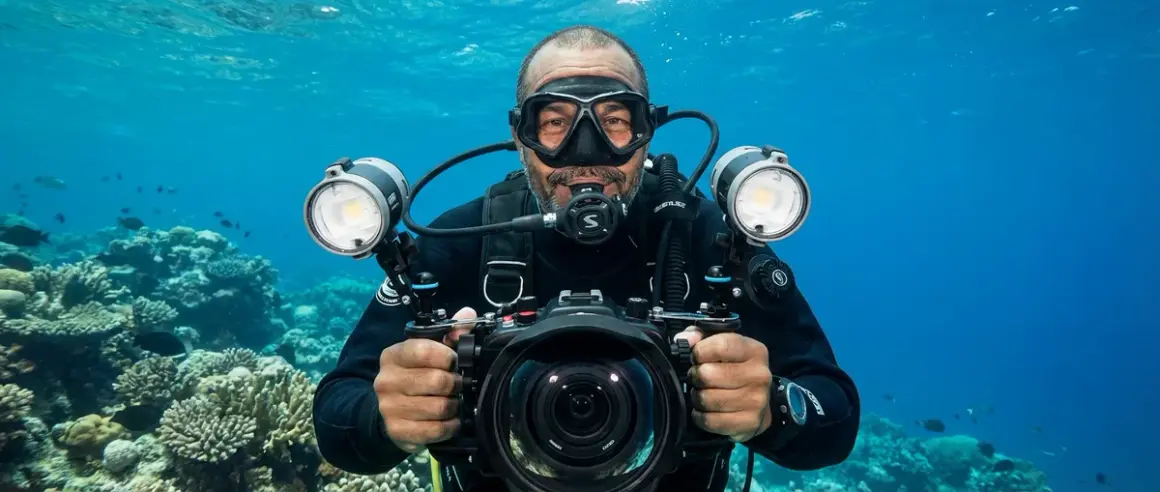

I've watched more than one dive trip implode when a camera flooded at 60 feet. You descend on what should be the perfect wreck dive, frame up that stunning wide-angle shot, and suddenly there's a trickle of bubbles escaping from a control button. By the time you surface, you're looking at a several-thousand-dollar paperweight. Choosing the best underwater camera housings isn't about finding the prettiest case—it's about understanding depth ratings, control ergonomics with thick gloves, maintenance intervals, and how different seal systems actually perform when the pressure's on.
Here's the quick verdict: Nauticam housings dominate the high-end market for good reason—their control precision and material quality are unmatched—but Ikelite polycarbonate housings offer remarkable value for recreational divers, and Isotta aluminum housings split the difference for those who need broadcast-quality features without Nauticam's price tag. Let's break down exactly what separates a reliable housing from an expensive mistake.
What to Look For in Underwater Camera Housings
Depth Rating and Pressure Certification
Most manufacturers list depth ratings in meters, but here's what the manufacturer claims... and here's what actually happens at depth. A housing rated to 100 meters isn't experiencing catastrophic failure at 101 meters, but you're pushing beyond the tested pressure threshold where seals and acrylic viewports have been validated. I've taken 100m-rated housings to 110 feet (33m) hundreds of times without issue, but I'd never take one on a technical dive to 60 meters.
Polycarbonate housings typically max out at 60-80 meters because the material flexes slightly under pressure. Aluminum housings with thicker walls and reinforced port systems can safely handle 100-150 meters, making them the only real choice for technical photography. The viewport material matters too—dome ports for wide-angle work need optical-grade acrylic or glass at least 12-15mm thick for anything beyond 40 meters, or you'll see distortion around the frame edges as the dome compresses.
One thing nobody mentions in spec sheets: port extension tubes create additional seal points. Every time you add a spacer ring to achieve proper focal length positioning, you're introducing another o-ring that needs maintenance. More seals mean more potential failure modes.
Control Layout and Ergonomics
This is where most housings either nail it or frustrate you for years. The critical question: can you access every essential control while wearing 5mm gloves, maintaining neutral buoyancy, and dealing with current?
Button placement should mirror your camera's native layout as closely as possible. I've tested housings where they relocated the exposure compensation dial to save machining costs, and it completely screwed up my muscle memory. You need direct mechanical linkages for shutter, focus, and mode controls—not flexible cables that develop slack over time. The best systems use stainless steel push rods with sealed pivot points that maintain precise actuation force across hundreds of dives.
Lever controls for zoom and focus rings need 270-360 degrees of rotation to give you fine adjustment at depth. Cheap housings use 180-degree levers that make precise focus impossible when you're shooting macro. And those levers need to be at least 40mm long so you can grab them with thick gloves.
Here's a detail most people miss until it's too late: control labeling visibility. At 30 meters with limited ambient light, can you identify which button does what without surfacing? The best housings use raised or engraved labels, not printed text that wears off.
Seal System and Maintenance Requirements
O-rings are your housing's first and last line of defense. Most manufacturers use nitrile rubber (NBR) o-rings rated to -40°C to +120°C, but high-end housings spec Viton (fluoroelastomer) seals that maintain elasticity across wider temperature ranges and resist silicone grease breakdown. The main o-ring seal typically sits in a machined groove with tolerances around ±0.05mm—any deformation, sand grain, or hardened grease residue can create a leak path.
You need to inspect and re-grease o-rings before every dive day. Not every dive, but definitely every day you're diving. I learned this the hard way in Raja Ampat when I skipped the pre-dive check on day three and ended up with saltwater inside my around $3,000 housing. The service interval for complete o-ring replacement is typically one year or 200 dives, whichever comes first. Some manufacturers sell rebuild kits with all seals for around $40–80—factor that into your ownership cost.
Vacuum check systems have become standard on professional housings, and they're worth the around $150–200 upcharge. You insert a vacuum pump into a dedicated port, pull -0.5 to -0.7 bar of vacuum, and verify the gauge doesn't move over 5-10 minutes. It's the only reliable pre-dive leak test. Without it, you're trusting visual inspection alone.
Port Compatibility and Optical Design
Your housing is only as good as the port system it supports. Flat ports work for macro and medium telephoto work (60mm, 100mm lenses), but they create refraction effects underwater that make your lens act like it's 25% longer. A 100mm macro becomes roughly a 125mm equivalent, which changes working distance and field of view.
Dome ports correct refraction for wide-angle lenses (8-24mm range) by placing a curved air-water interface in front of the lens. Port diameter matters enormously—8-inch (20cm) domes are the minimum for 14-24mm lenses to avoid corner softness, but 9 or 10-inch domes are dramatically better optically. The tradeoff is size and weight: a 10-inch dome port adds 2-3 kg of negative buoyancy, so you'll need proper buoyancy control adjustments and potentially floatation arms.
Port extension rings let you position your lens at the optimal focal point for the dome. A 16-35mm lens typically needs 40-60mm of extension to place the front element correctly. Get this wrong and you'll have soft corners or visible vignetting. Each manufacturer has lens-specific port charts—follow them exactly or prepare to troubleshoot optically disappointing images for months.
Build Material and Corrosion Resistance
Aluminum housings (typically 6061-T6 or 7075-T6 marine-grade aluminum) are hard-anodized for corrosion resistance, usually Type III anodizing that's 50-60 microns thick. They're rigid, durable, and can take minor impacts on boat decks without cracking. The downside is weight—a full-frame housing with 8-inch dome can easily hit 4-5 kg, which becomes a travel logistics problem unless you're choosing a dive bag specifically designed for camera systems.
Polycarbonate housings offer 40-50% weight savings and are naturally corrosion-proof. Ikelite's clear polycarbonate lets you see inside for leak detection, which is psychologically reassuring. The material does flex slightly under pressure, which limits depth ratings, and it scratches more easily than anodized aluminum. After 200 dives, expect visible surface scuffs—they don't affect function, but they're there.
Titanium controls and stainless steel hardware should be standard. If a manufacturer is using zinc-plated fasteners in a saltwater environment, walk away. I've seen bargain housings with corroded control shafts after 50 dives. Not acceptable.
Port and System Expandability
Unless you're diving exclusively with one camera and one lens forever, you need a housing system with multiple port options and future camera upgrade paths. Nauticam's housings often support 2-3 camera generations with the same base housing and different internal tray systems. That around $3,000 housing investment can span 6-8 years instead of becoming obsolete when you upgrade from a Canon R5 to an R5 Mark II.
Port ecosystem matters too. Can you rent or buy ports for a 15mm fisheye, a 100mm macro, and a 24-70mm mid-range? Are there aftermarket options from companies like Zen or Nauticam? Systems with broader port catalogs give you flexibility as your underwater photography skills develop.
Our Top Picks
Nauticam NA-R5 II Housing for Canon EOS R5 Mark II
The Nauticam NA-R5 II Housing for Canon EOS R5 Mark II🛒 Amazon represents the gold standard in underwater housing engineering, and their Canon R5 Mark II housing demonstrates why. This is a precision-machined aluminum housing with Type III hard anodizing, dual fiber optic strobe sync, and control placement that's intuitive even at 40 meters with 5mm gloves. The housing supports vacuum check systems, includes a built-in leak detector, and offers depth rating to 100 meters with proper port selection.
Pros:
- Every control is exactly where your muscle memory expects it—shutter, exposure compensation, AF-ON, and custom buttons all mirror the camera layout
- Dual fiber optic bulkheads let you sync two strobes without electrical sync cords (works flawlessly with dedicated underwater strobes)
- Vacuum check system with digital pressure gauge gives you peace of mind before every descent
- M24 threaded port system is industry-standard with dozens of dome and flat port options
- Sealed control shafts with double o-rings on high-risk buttons provide redundant leak protection
- Machining quality is exceptional—tolerances are tight enough you can feel the precision when closing the rear door
Cons:
- Price approaches around $3,800 for the housing alone before you add ports, strobes, or arms—this is a professional investment
- Weight hits 2.4 kg empty, and with an 8-inch dome port you're looking at 5+ kg total system weight
- The rear door locking mechanism requires significant hand strength to engage fully—I've seen smaller divers struggle with it on boat decks
- No integrated handles—you need to add accessory handles or mounting plates, adding around $150–200
Ikelite 200DL Underwater Housing for Nikon Z8
The Ikelite 200DL Underwater Housing for Nikon Z8🛒 Amazon is Ikelite's polycarbonate housing that has been the working professional's workhorse for decades, and their Z8 housing continues that tradition with modern updates. This is clear polycarbonate construction that lets you see the camera inside, depth-rated to 60 meters (200 feet), with TTL circuitry for automatic strobe exposure. The control layout uses Ikelite's signature push-button system with clear acrylic buttons that transmit natural light to the camera's rear LCD.
Pros:
- Visual leak inspection—you can see water intrusion immediately through the clear polycarbonate body
- Price sits around $1,750–1,850, making it roughly half the cost of equivalent aluminum housings
- Weight is only 1,850g without port—significantly lighter than aluminum alternatives for travel scenarios
- TTL strobe compatibility with Ikelite DS series strobes gives you automatic exposure, which is valuable when conditions change rapidly
- Modular port system with quick-change bayonet mount makes lens swaps between dives straightforward
- The controls have a distinct tactile click that you can feel through gloves, reducing the chance of accidental button presses
Cons:
- 60-meter depth limitation eliminates this for technical diving or deep wreck work
- Polycarbonate scratches relatively easily—after 100 dives expect visible surface wear (doesn't affect waterproofing, but aesthetically noticeable)
- The zoom gear positioning requires periodic adjustment as the control loosens slightly with use
- Port system uses Ikelite's proprietary bayonet mount rather than M24 threading, limiting third-party port options
Isotta Sony A7R V Housing
The Isotta Sony A7R V Housing🛒 Amazon represents Italian engineering and build quality that splits the difference between Nauticam's extreme precision and Ikelite's practical value. This is a machined aluminum housing with high-grade anodizing, rated to 100 meters, with exceptionally smooth control action. Isotta uses stainless steel control shafts throughout and includes some thoughtful design touches like angled viewfinder positioning and integrated accessory threads.
Pros:
- Control smoothness is remarkable—the shutter button travel is buttery smooth with zero sticking across temperature ranges
- Price around $2,600–2,800 makes it meaningfully less expensive than Nauticam while maintaining aluminum construction
- Angled viewfinder design is more ergonomic for looking down at the camera while maintaining horizontal buoyancy trim
- M67 port thread compatibility gives you access to both Isotta and third-party port options
- Integrated 1/4-20 and M6 mounting threads on top and bottom eliminate the need for separate mounting plates
- The rear door seal uses a double o-ring system with a secondary backup seal for redundancy
Cons:
- Port catalog is smaller than Nauticam or Ikelite—you'll have fewer specialized options for exotic lenses
- No vacuum check port in the base design—you can add one aftermarket but it's not standard
- Control labels are laser-etched rather than raised, making them harder to identify by feel in low visibility
- Weight is comparable to Nauticam at 2.3 kg, so you're not saving travel weight vs. the premium option
Sea & Sea MDX-α7R V Housing for Sony Alpha 7R V
The Sea & Sea MDX-α7R V Housing for Sony Alpha 7R V🛒 Amazon has been building underwater housings since 1976, and their MDX series for Sony mirrorless cameras shows that accumulated experience. This is a lightweight aluminum housing rated to 100 meters with Sea & Sea's optical YS strobe compatibility, fiber optic sync options, and a surprisingly intuitive control layout for Sony's sometimes-complex menu system.
Pros:
- Sony menu navigation is actually usable underwater—Sea & Sea mapped the frequently-buried Sony settings to accessible external controls
- Price around $2,300–2,450 makes it competitively positioned against Isotta
- Integrated leak detector with audible alarm alerts you before significant water intrusion occurs
- Optical sync and electrical sync options give you flexibility with various strobe systems
- Zoom/focus gear system uses detachable rings that make lens changes between dives faster
- The housing includes a cold shoe mount on top for mounting focus lights or GoPros without accessory brackets
Cons:
- Port system uses Sea & Sea's proprietary bayonet mount rather than M24 threading—you're locked into their port ecosystem
- The rear door locking lever is positioned awkwardly on the left side, making it difficult to operate with one hand
- Control button caps are relatively small (around 12mm diameter) which makes them challenging to locate with thick gloves
- The viewfinder design sits flush with the housing back, creating an awkward viewing angle if you're not directly behind the camera
Fantasea FA7100 Housing for Sony RX100 VII
The Fantasea FA7100 Housing for Sony RX100 VII🛒 Amazon for divers who want serious imaging capability without investing in full-frame camera systems, delivers remarkable functionality. This is injection-molded polycarbonate rated to 60 meters, designed specifically around the Sony RX100 VII's 24-200mm equivalent zoom range. This is travel-friendly underwater photography that fits in a standard mesh dive bag without requiring dedicated luggage.
Pros:
- Price sits around $400–450 for complete housing—dramatically lower entry cost than interchangeable lens systems
- Weight is only 530g with camera installed—this disappears into your gear without load management concerns
- The RX100 VII's 1-inch sensor delivers genuinely good image quality, especially for reef documentation and travel photography
- Dual fiber optic ports let you run two strobes for proper lighting technique
- Includes both flat and dome port options to optimize the 24-200mm zoom range for different shooting scenarios
- Control layout is simple and uncluttered—only the essential controls you actually need at depth
Cons:
- 60-meter depth rating limits deeper wreck and wall diving
- The zoom control lever requires significant force to operate through the full range—your thumb will be tired after 50+ shots
- No vacuum check option—you're relying on visual o-ring inspection alone
- Sensor size limitations mean high ISO performance degrades noticeably above ISO 800, limiting low-light shooting compared to full-frame systems
Aquatica Canon EOS R5 Underwater Housing
The Aquatica Canon EOS R5 Underwater Housing🛒 Amazon builds some of the most robust housings in the industry, favored by broadcast cinematographers and research photographers working in demanding conditions. This housing features machined aluminum construction with proprietary bulkhead sealing, depth rating to 130 meters, and control systems designed around cold-water glove operation. This is overbuilt equipment for when failure isn't acceptable.
Pros:
- 130-meter depth rating handles virtually any recreational and technical diving scenario
- Cold-water control design with oversized levers and buttons works reliably with 7mm gloves in 4°C water
- Proprietary bulkhead system uses compression fittings rather than standard sync ports, reducing leak potential
- Included vacuum system with pressure gauge is integrated into the housing design, not an aftermarket addition
- Five-year warranty on the housing body demonstrates manufacturer confidence in durability
- Port system accepts both Aquatica and M24 thread ports via adapter rings, maximizing flexibility
Cons:
- Price exceeds around $4,200 for the housing alone—this is the most expensive option in this guide
- Weight hits 2.8 kg empty, making it the heaviest housing here (though that mass translates to stability underwater)
- The rear door requires precise alignment before the locking mechanism engages—it's not intuitive for first-time users
- Control access to some Canon menu buttons requires removing a protective cap, which is secure but slows workflow on surface intervals
Frequently Asked Questions
What depth rating do I actually need for recreational diving?
For typical recreational diving that stays within standard NDL limits (no-decompression limits), a 60-meter (200-foot) depth rating provides adequate safety margin for dives to 30-40 meters. Here's my thinking: if you're certified for recreational diving, you're typically staying above 40 meters, which means a 60m-rated housing is operating at two-thirds of its tested capacity. That's a reasonable engineering safety factor. I've taken 60m polycarbonate housings on hundreds of dives to 30 meters without issues.
That said, if you're diving deep walls regularly, doing any technical diving, or planning to push toward 50 meters on extended range certifications, invest in a 100-meter or greater aluminum housing. The incremental cost is maybe 30-40% more, but you're buying peace of mind and equipment that won't limit your diving evolution. I've seen too many divers buy budget housings, then upgrade within two years when their skills progress—spending twice instead of once.
How often do I need to replace housing o-rings?
Main o-ring seals should be replaced annually or every 200 dives, whichever comes first, regardless of visible condition. Here's what actually happens: o-rings don't just fail catastrophically—they lose elasticity gradually through compression set. Each time you seal the housing, the o-ring compresses into its groove. After hundreds of cycles, it doesn't spring back to full round profile as effectively, creating potential leak paths.
Between replacements, you need to inspect and re-grease the main seal before every dive day. Remove the o-ring completely, check for any embedded material (hair, sand, hardened grease), wipe it with lint-free cloth, inspect for nicks or flat spots, and apply a thin film of manufacturer-specified silicone grease. This takes five minutes and prevents 95% of floods. Control shaft o-rings typically last 2-3 years with normal use, but inspect them during annual service. Most manufacturers sell complete rebuild kits with all seals for around $40–80—keep one in your gear kit for longer dive trips. For more detailed maintenance procedures, check out our underwater camera maintenance checklist.
Can I use my housing with different camera models?
Generally no—housings are precisely machined for specific camera body dimensions and control layouts. The tolerances are tight enough that even a 2mm difference in body thickness or button positioning makes the housing incompatible. That said, some manufacturers design housings that accommodate multiple generations within a camera series through interchangeable internal trays or mounting plates.
Nauticam, for example, often allows you to use the same housing for related models (like Canon R5 and R5 Mark II) by swapping around $200–300 internal control bridge. This extends the housing's useful life across camera upgrades. Before purchasing any housing, specifically ask the manufacturer about forward compatibility—will this housing work with the next likely camera iteration? If you're shooting Sony, be aware their rapid body dimension changes between generations mean housings often don't carry forward. Canon and Nikon tend to maintain more consistent body dimensions across model updates.
Do I need a vacuum check system or is visual inspection enough?
Here's my honest take after more than 3,000 dives: visual inspection alone is adequate for shallow recreational diving if you're meticulous, but a vacuum check system becomes essential as you increase dive frequency, go deeper, or shoot professionally where equipment failure has financial consequences.
A vacuum system works by creating negative pressure inside the sealed housing and monitoring whether that vacuum holds steady. If there's any leak path—a hair under the o-ring, a control shaft seal that's failing, a cracked port o-ring—the vacuum will gradually equalize. You get objective confirmation of seal integrity rather than trusting your visual inspection skills. I've caught marginal seals with vacuum testing that looked perfect visually.
The system adds around $150–200 to housing cost but pays for itself the first time it prevents a flood. For tropical resort diving with rental housings, visual inspection is probably sufficient. For serious photography work, week-long liveaboards, or cold water diving where you can't easily surface to check gear, install a vacuum system. It's the difference between reasonable confidence and actual certainty.
What's more important: the housing or the strobes?
This is the right question to ask, because both are critical and you need to budget for both simultaneously. Here's the reality of underwater photography: even the best housing and camera setup will produce disappointing images without proper lighting below 10 meters. Water absorbs red wavelengths first, so everything trends blue-green with increasing depth. Ambient light photography works in shallow reef situations but becomes severely limited beyond 15 meters.
That said, I'd prioritize the housing slightly because it's protecting several thousand dollars of camera equipment. A compromised housing means catastrophic equipment loss. Compromised strobes just mean disappointing photos. If I had $3,000 budget total, I'd allocate roughly $1,800–2,000 to a quality housing and port system, then $1,000–1,200 toward strobes and arms. You can start with a single strobe for macro work and add a second for wide-angle later.
Consider this progression: buy the best housing you can afford that won't limit your diving growth, start with one decent strobe, then add a second strobe, then upgrade to higher-end strobes as your technique improves. The housing is a 5-10 year investment. Strobes can be upgraded incrementally. For detailed comparisons of lighting options, see our guide on strobes vs video lights.
The Verdict
The best underwater camera housings match your current equipment investment, dive profile, and shooting style while leaving room for skill progression. If you're shooting professionally or diving beyond recreational limits, Nauticam housings deliver unmatched control precision and depth ratings that justify the premium—that NA-R5 II at around $3,800 is expensive until you consider it's protecting $6,000+ of camera gear across potentially 500+ dives. For budget-conscious divers or those building their first serious system, Ikelite's polycarbonate housings around $1,750 offer legitimate quality without compromise in recreational depth ranges.
Here's what I tell divers shopping for their first housing: buy for the diver you'll be in two years, not who you are today. That extra $800 for aluminum construction and 100-meter depth rating seems unnecessary when you're diving resort reefs at 15 meters—until you're planning a trip to deep wrecks in Truk Lagoon eighteen months later and realize your housing limits the diving you can do. Start your underwater photography journey with equipment that grows with you, maintain those o-rings religiously, and spend the money you save by not flooding your gear on more dive travel. That's the actual path to better images.