
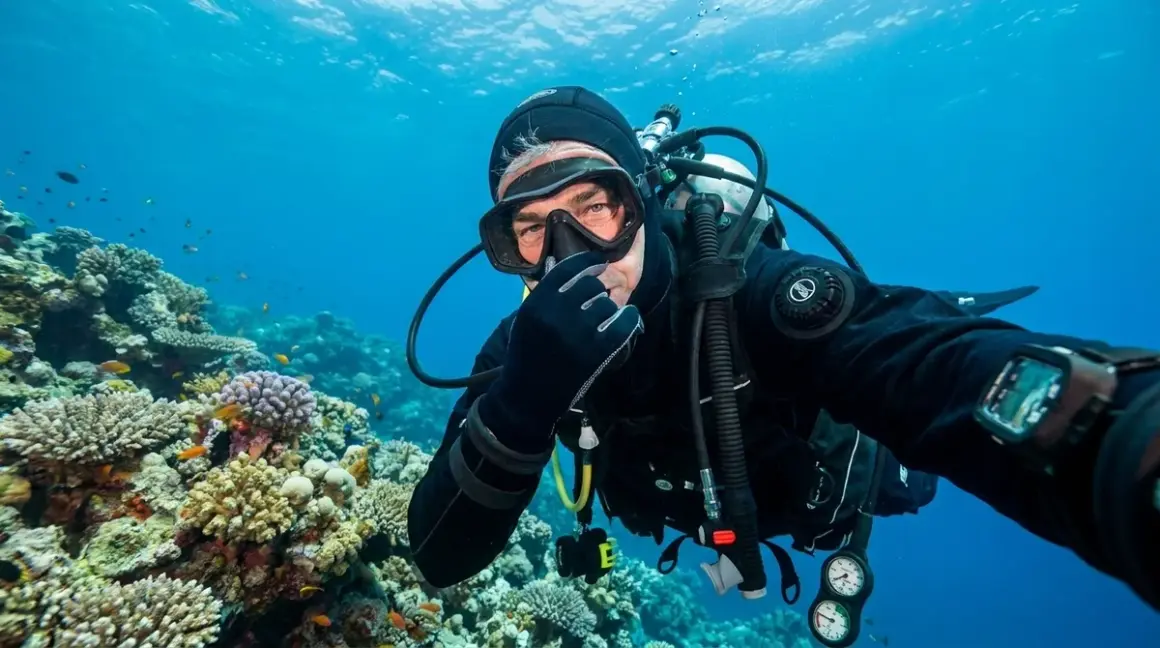

I've watched hundreds of divers surface early from otherwise perfect dives because of mask squeeze. It's one of those problems that sounds minor until you're 60 feet down with what feels like someone trying to suck your eyeballs out through your forehead. Understanding what is mask squeeze and how to prevent it isn't just comfort stuff—it's fundamental physics that every diver needs to internalize before their first descent.
What Is Mask Squeeze?
Mask squeeze is a pressure-related injury that occurs when the air pressure inside your mask becomes lower than the surrounding water pressure, creating a vacuum effect that literally tries to pull your face into the mask airspace. The technical term is "mask barotrauma," and it happens when you descend without equalizing the air volume in your mask.
Here's the thing: a lot of new divers confuse mask squeeze with mask flooding or poor fit. They're not the same. Mask squeeze is pure physics—Boyle's Law doing its thing. As you descend, increasing water pressure compresses the air inside your mask. If you don't add air to compensate, that smaller air volume creates negative pressure against your face.
I've seen mask squeeze injuries ranging from minor discomfort and bloodshot eyes to full-on subconjunctival hemorrhages that looked like someone painted the whites of the person's eyes bright red. The soft tissues around your eyes—the conjunctiva, the delicate skin of your eyelids, even the small blood vessels in your sinuses if you're wearing a full-face mask—bear the brunt of the pressure differential.
In my early days running charters out of Key Largo, I pulled a diver who'd ignored the discomfort on descent. By the time he surfaced, he had bilateral periorbital ecchymosis—basically black eyes that looked like he'd gone ten rounds with a heavyweight. That's what happens when you don't understand the mechanics.
The pressure differential doesn't have to be enormous to cause problems. Even a couple PSI of negative pressure can burst capillaries. At just 33 feet of seawater, ambient pressure doubles. If you're not actively managing that volume change, your mask becomes a suction cup attached to your face.
How Mask Equalization Works
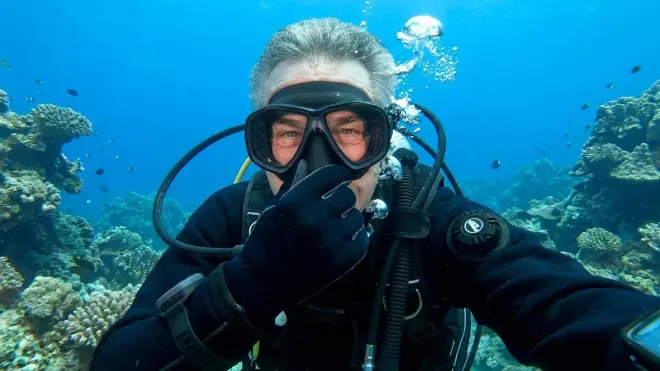
Equalizing your mask is embarrassingly simple, which is why it drives me crazy when people overthink it. You blow a small amount of air from your nose into the mask airspace as you descend. That's it. The air you exhale increases the volume and pressure inside the mask, counteracting the external water pressure trying to compress it.
The mechanics are straightforward. Your mask skirt—whether it's silicone, rubber, or one of the newer hypoallergenic compounds—creates a seal against your face. That seal encloses a volume of air that includes the space in front of your eyes and nose. When you descend, Boyle's Law states that as pressure increases, volume decreases proportionally (assuming temperature stays constant, which it roughly does on recreational dive timescales). A mask that held 150 cubic centimeters of air at the surface will compress to 75 cc at 33 feet if you don't add air.
Your body can't compress like a gas can. Your face, eyeballs, and the soft tissue around your orbital sockets are mostly incompressible fluid and solid tissue. When the air volume shrinks, something has to fill that space—and that something is your face being pulled inward.
The solution is to exhale through your nose intermittently during descent. I tell people to make it part of their descent checklist: check your depth gauge, exhale a tiny bit into your mask, clear your ears, check your buddy, repeat. It should be continuous and automatic, not something you think about after you feel discomfort.
Here's where people screw up: they either forget entirely (common with new divers hyper-focused on buoyancy or ear clearing), or they over-inflate the mask and end up with water breaking the seal. You need just enough air to maintain normal pressure—not to puff the mask off your face. I've probably blown through a dozen [TUSA M-1001 Freedom HD] masks over the years, and the feel is always the same: you want the skirt to maintain gentle, even contact with your skin throughout the descent.
Low-volume masks require less air to equalize, which is one reason technical divers and freedivers gravitate toward them. A mask with 100 cc of airspace needs less exhaled volume to maintain pressure than a mask with 200 cc. If you're doing repetitive deep dives or trying to conserve gas, that difference adds up. I've written more about the benefits in my guide to best low volume scuba masks for freedivers and technical divers.
One nuance nobody talks about: mask equalization gets trickier with poorly fitting masks. If your skirt doesn't seal evenly—common with masks that don't match your facial geometry—you'll fight constant small leaks. You end up blowing more air into the mask to compensate for the water creeping in, which wastes gas and makes it harder to distinguish between normal equalization and a compromised seal. That's why proper fit matters beyond comfort. Check my guide on how to choose a scuba mask that fits your face if you're struggling with chronic leaks.
The ascent requires the opposite action: the air in your mask expands as pressure decreases, and you need to vent it. Most of the time this happens passively through your nose or around the skirt seal, but if you're ascending quickly or wearing a particularly tight-fitting mask, you might feel the skirt lift slightly off your face as air escapes. That's normal. Don't fight it by breathing in through your nose—just let the excess pressure vent.
Why Mask Squeeze Matters
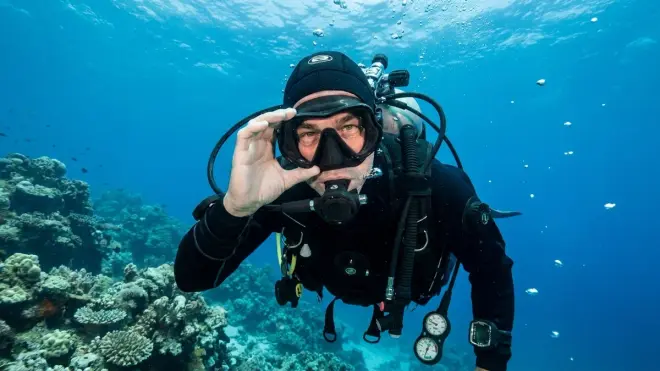
I've met divers who thought mask squeeze was just an annoyance you tolerated, like a wet wetsuit or salty hair. Wrong. Mask squeeze is a preventable injury, and even mild cases affect your dive and potentially your vision.
The immediate effects are obvious: discomfort, distraction, and the urge to surface. I've had divers abort perfectly good wreck dives because the pain around their eyes made it impossible to focus on navigation or their buddy. That's a ruined dive day and, depending on the circumstances, a potential safety issue if you're in overhead environments or strong current.
The medical consequences range from cosmetic to serious. Subconjunctival hemorrhages—those dramatic bloodshot eyes—look alarming but usually resolve in a week or two without treatment. They're basically bruises on the white of your eye. I've logged dives with them; they don't hurt and don't impair vision, but they're a visible reminder you screwed up your equalization.
More severe cases can cause periorbital hematomas (black eyes), facial petechiae (tiny red dots from burst capillaries), and in extreme situations, corneal edema or damage to the delicate structures of your eye. I saw a case in the late 1990s where a diver with pre-existing glaucoma experienced a sharp intraocular pressure spike from mask squeeze—he ended up with permanent vision changes. That's rare, but it's on the spectrum of what can happen.
Here's the thing people don't consider: mask squeeze is a symptom of inadequate training or distraction. If you're forgetting to equalize your mask, what else are you missing? Are you monitoring your depth, your gas supply, your no-decompression limits? The skills aren't isolated. A diver who surfaces with hemorrhaged eyes is a diver who wasn't present and methodical during the descent, and that mindset spills over into other safety-critical tasks.
From a practical standpoint, mask squeeze also affects your ability to use your dive computer display underwater clearly. If your eyes are swollen, watering, or your vision is impaired from burst blood vessels, reading critical data becomes harder. That compounds problems if you're navigating, tracking your ascent rate, or monitoring decompression obligations.
Types of Mask Squeeze and Related Issues
Not all mask squeeze presents the same way, and there are a few variations worth understanding.
Standard mask squeeze is what I've been describing: uniform negative pressure across the entire mask airspace, affecting both eyes and the surrounding facial tissue equally. You'll feel tightness around the skirt, pressure on your eyeballs, and possibly a sensation like your eyes are being pulled forward. This is the most common type and the easiest to prevent.
Unilateral or asymmetric squeeze happens when one side of the mask seals better than the other, or when a structural issue (like a cracked lens frame or damaged skirt) creates uneven pressure distribution. I've seen this with frameless scuba masks that got pinched during assembly, creating a weak spot. The result is more pronounced symptoms on one side—one bloodshot eye, bruising on one cheek, that sort of thing. If this happens to you, your mask is either damaged or doesn't fit properly.
Sinus squeeze is technically separate but often confused with mask squeeze. If you're wearing a mask that covers your nose but you're congested or can't equalize your sinuses, you'll feel pressure and pain in your forehead, cheeks, or behind your eyes. The fix is the same—add air—but the root cause is different: blocked sinus passages rather than mask volume. Decongestants help with sinus squeeze; they do nothing for mask squeeze.
Full-face mask squeeze deserves special mention because the airspace is larger and includes your entire face. The PADI standards for full-face mask training emphasize equalization techniques for exactly this reason—the consequences of squeeze are proportionally worse when the entire facial area is involved. I don't see full-face masks much in recreational diving, but they're common in commercial and public safety diving, and the equalization principles are identical: add gas on descent, vent on ascent.
One related issue: overly tight mask straps can mimic or worsen squeeze symptoms. If you've cranked your strap down like you're trying to keep the mask glued to your face, the skirt can't flex naturally to accommodate pressure changes. The result is bruising along the skirt contact line and a higher likelihood of leaks. Proper strap tension should be just tight enough to seal—no more. I cover this in detail in my scuba mask maintenance checklist.
Frequently Asked Questions

What is mask squeeze and how do you prevent it?
Mask squeeze is the barotrauma injury caused by negative pressure inside your mask when descending, and you prevent it by exhaling small amounts of air through your nose into the mask during descent to equalize the internal airspace pressure with the surrounding water pressure.
Can mask squeeze cause permanent damage to your eyes?
In most cases, mask squeeze causes temporary cosmetic injuries like subconjunctival hemorrhages that heal within one to two weeks, but severe or repeated squeeze can potentially cause corneal damage, persistent vision changes, or complications in divers with pre-existing eye conditions like glaucoma or retinal issues.
How do you know if you're experiencing mask squeeze during a dive?
You'll feel increasing tightness and suction around the mask skirt, pressure on your eyeballs, and sometimes sharp pain around your orbital sockets, and if you ignore these symptoms you may develop blurred vision, watering eyes, or see small red spots in your peripheral vision from burst capillaries.
Do low-volume masks reduce the risk of mask squeeze?
Low-volume masks don't reduce the risk of squeeze if you forget to equalize, but they require less exhaled air to maintain proper pressure during descent, making equalization easier and more efficient especially on deep or repetitive dives.
What should you do if you develop mask squeeze symptoms underwater?
Immediately add air to your mask by exhaling through your nose, slow or stop your descent until the discomfort subsides, and if symptoms are severe—such as vision impairment or intense pain—abort the dive and ascend slowly while continuing to equalize normally and monitor your buddy and ascent rate.
Can you dive with a mustache or beard without getting mask squeeze?
You can dive with facial hair but it often compromises the mask seal and makes continuous equalization harder because small leaks allow water to seep in, requiring you to add more air more frequently, which increases gas consumption and makes it difficult to distinguish between normal equalization and an actual leak that could lead to squeeze if you overcompensate.
Is mask squeeze more common in cold water diving?

Mask squeeze itself isn't more common in cold water, but cold-water divers wearing thick hoods and exposure suits may have altered facial geometry from hood compression that affects mask fit and seal integrity, and the distraction of managing thermal discomfort and bulkier gear can make it easier to forget mask equalization during descent.
Summary: Master the Basics and Stay Safe
What is mask squeeze? It's one of the most preventable injuries in diving, and also one of the most common among divers who skip the fundamentals. The solution is simple: exhale through your nose as you descend, keep your mask properly fitted, and make equalization as automatic as clearing your ears. I've logged over 8,000 dives, and I still consciously think about mask pressure on every descent—not because it's complicated, but because complacency is how injuries happen.
The real lesson isn't just about avoiding bloodshot eyes or black eyes. It's about building the kind of systematic, attentive mindset that keeps you safe in every phase of a dive. If you're equalizing your mask correctly, you're probably also monitoring your depth, watching your gas, and staying aware of your environment. Those habits stack. Get the small stuff right, and the big stuff takes care of itself.