
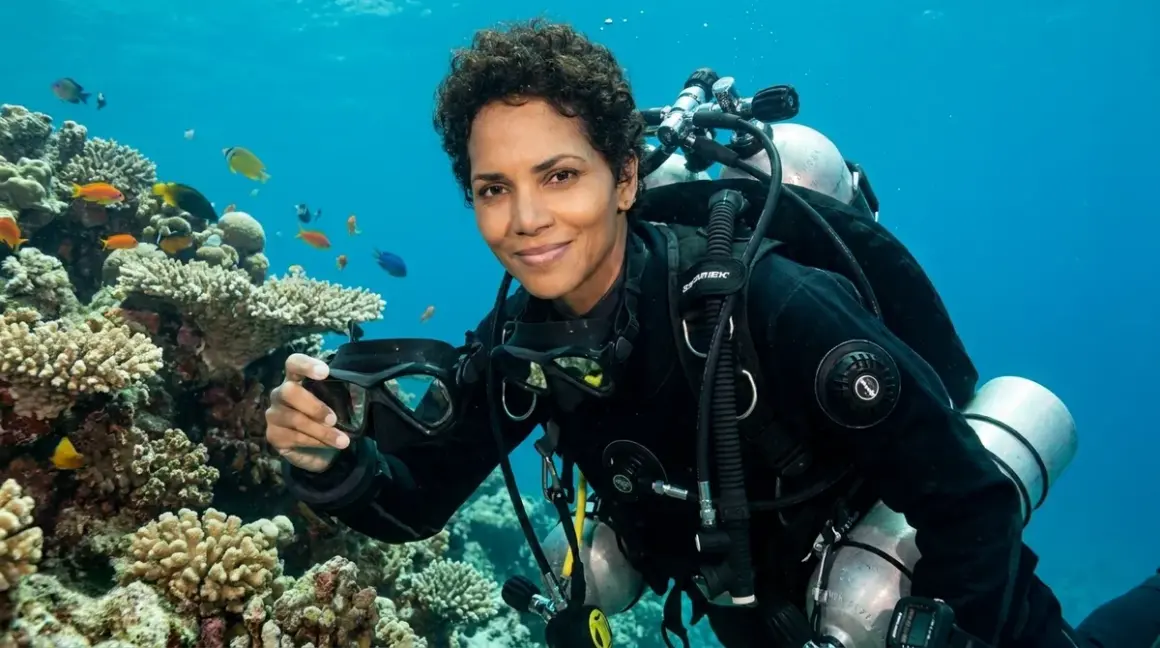

I'll be honest—I didn't understand why mask volume mattered until I tried freediving for the first time off the coast of Belize. Every meter I descended, I felt like I was fighting my mask, constantly equalizing to keep it from suctioning to my face. My regular recreational mask, which worked perfectly fine on scuba dives, suddenly felt like it was working against me. That's when I learned that the best low volume scuba masks make a massive difference when you're diving without a tank or doing technical dives where streamlining matters.
Low volume masks sit closer to your face, which means there's less air space between the lens and your eyes. For freedivers, this translates to less air needed to equalize the mask as you descend—a huge deal when you're holding your breath. For technical divers, it means better streamlining and less drag. Even as a recreational diver who occasionally freedives between boat dives, I've come to appreciate how much more comfortable these masks are.

Quick verdict: If you're doing any breath-hold diving or working on your buoyancy and trim, a low volume mask is worth every penny. The difference in comfort and performance is immediate.
What to Look For in Low Volume Scuba Masks
Internal Volume and Equalization
The whole point of a low volume mask is right there in the name—less air space inside. When I first switched to one, the difference was obvious immediately on descent. Instead of needing to blow air into my mask every few meters, I could go much deeper before feeling that uncomfortable squeeze.
Internal volume is measured in milliliters, though honestly, most manufacturers don't publish exact numbers. What you're looking for is how close the lenses sit to your eyes and how little the skirt extends from your face. The less dead space, the better. I've seen volumes range from around 75ml for super minimal freediving masks up to 150ml for masks that still qualify as "low volume" but offer better peripheral vision.
For freedivers, this matters because every bit of air you use to equalize your mask is air you're not keeping in your lungs for the dive. It adds up quickly when you're doing multiple deep dives. For scuba divers, the benefit is more about streamlining and less about air conservation, but you'll still notice easier equalization.
Skirt Design and Face Seal
The skirt is the soft silicone part that seals against your face, and it's probably the most important feature to get right. I learned this the hard way when I bought a mask online without trying it first—it leaked constantly because the nose pocket shape just didn't match my face.
Silicone quality matters a ton here. The best masks use medical-grade silicone that stays flexible even after dozens of dives in saltwater and sun exposure. Cheap silicone gets stiff and loses its seal over time. I always look for masks with a double or feathered edge on the skirt—that extra seal line makes a real difference in preventing leaks.
The skirt should conform to the contours of your face without any gaps. I have pretty high cheekbones, and some masks create little gaps right under my eyes that let water seep in. Other divers I know with flatter face profiles have the opposite problem with certain mask designs. There's no universal fit, which is why you really need to test the seal before buying if possible. Press the mask to your face without using the strap and breathe in gently through your nose—it should stay put.
For more on getting the right seal and understanding different skirt designs, check out our guide on how to choose a scuba mask that fits your face.
Lens Configuration and Field of View
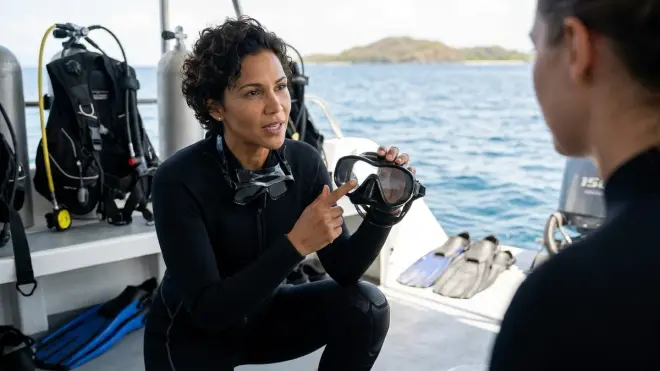
This is where you'll see the biggest variation in low volume masks. Some use a single lens for maximum visibility, while others use a two-lens design that can sit closer to your face.
Two-lens masks are generally more compact because each lens can curve around your face more tightly. The downside is that some divers (including me) find the nose bridge in the center a bit distracting at first. You get used to it after a few dives, but it's there.
Single-lens masks offer incredible peripheral vision and that wide-open feeling, but they often have slightly more internal volume to accommodate the larger lens. Still, many modern single-lens designs manage to keep volume remarkably low while maintaining great visibility.
Some masks now come with side lenses or angled dual-lens designs that split the difference—compact volume but better peripheral awareness. As an underwater photographer, I personally prefer designs that give me better awareness of what's happening around me, even if it means a tiny bit more volume.
One thing I've noticed: frameless designs (where the lens attaches directly to the silicone without a separate plastic frame) tend to have lower profiles and pack smaller. Our article on frameless vs framed scuba masks goes deeper into this if you're curious about the structural differences.
Strap Design and Adjustment System
I used to think mask straps were basically all the same until I tried a mask with a truly terrible one. The cheap split strap kept slipping during descents, which meant I was constantly reaching back to tighten it mid-dive. Not fun when you're trying to photograph a passing eagle ray.
Look for silicone straps rather than rubber or fabric. They last longer in saltwater and stay flexible. Many low volume masks come with some version of a split strap or Y-strap that distributes pressure more evenly across the back of your head. I find these more comfortable for longer dives.
The buckle system matters too. Quick-adjust buckles that let you fine-tune the fit without taking the mask off are fantastic. Some newer designs have micro-adjustment systems that click into place—once you find your perfect fit, it stays there dive after dive. I mark my ideal strap position with a permanent marker so I can quickly reset it if someone else borrows my mask.
Nose Pocket and Equalization Access
This seems like a minor detail until you're trying to equalize your ears at depth and can't quite pinch your nose properly through the mask. A well-designed nose pocket makes pinching easy and natural, while a poorly designed one forces you to mash the entire mask into your face.
The nose pocket should fit your nose shape—some are wider, some are longer and narrower. I have a fairly small nose, so masks designed for bigger noses leave too much space and make equalization awkward. The silicone should be thin and flexible enough around the nose area that you can pinch through it with normal pressure.
For technical divers doing valve drills or freediving competitions where you need to minimize drag, some low volume masks have extremely minimalist nose pockets that are barely there. These work great if you have a smaller nose but can be frustrating for divers with larger noses or specific equalization techniques.
Durability and Material Quality
I'm three years into diving and still learning about gear longevity, but even I can spot the difference between a well-made mask and a cheap one. The best low volume scuba masks use tempered glass lenses that resist scratches and won't crack under pressure changes. Some manufacturers specify marine-grade materials, though honestly, that term gets thrown around so much it's hard to know what it really means.
What I look for: thick, quality silicone that doesn't show stress marks or discoloration after a dozen saltwater dives. Buckles made from durable plastic or composite materials rather than the super cheap stuff that snaps if you look at it wrong. Lenses that still look clear after months of use, not cloudy or scratched up.
One practical tip I learned from my dive master: rinse your mask thoroughly after every dive and store it in a protective case. I lost my first decent mask because I let it bounce around loose in my gear bag, and it got a crack from something hard pressing against the lens during transport. Now I'm religious about protection and maintenance, following the routine outlined in our scuba mask maintenance checklist.
Our Top Picks
Cressi F1 Frameless Low Volume Mask
The Cressi F1 Frameless Low Volume Mask🛒 Amazon has become my go-to recommendation for divers who want to try low volume without committing to a super minimal freediving mask. It's frameless, packs down small in my gear bag, and the internal volume hits that sweet spot where it's noticeably easier to equalize without feeling claustrophobic.
I borrowed one from a friend on a cenote dive last year and immediately noticed how much less frequently I needed to blow air into it during descents. The two-lens design sits really close to your face, and the nose pocket is probably the easiest I've used for equalization—thin, flexible silicone that doesn't require much pressure to pinch your nose through.
Pros:
- Very low internal volume, around 95ml, makes equalization noticeably easier on descent
- Frameless design folds nearly flat for travel and packs into small spaces
- Tempered glass lenses with good clarity and scratch resistance after extended use
- Comfortable silicone skirt with double feathered edge seals well on most face shapes
- Wide field of view despite compact design, excellent peripheral vision for photography
- Quick-adjust buckle system stays put once you find your fit
Cons:
- The nose bridge between lenses is pretty prominent and takes a few dives to stop noticing
- Skirt tends to show discoloration faster than some premium masks after months of sun exposure
- Some divers with very wide faces report pressure points on the outer edges
Atomic Aquatics Venom Frameless Mask
The Atomic Aquatics Venom Frameless Mask🛒 Amazon is what I upgraded to after my Cressi, and it's probably the nicest mask I've ever worn. The internal volume is remarkably low—Atomic actually publishes it at 88ml—and the single-lens design gives you that wide-open feeling without the nose bridge distraction.
What really stands out is the ultra-clear glass. Atomic uses their proprietary lens treatment, and the difference in clarity is noticeable when you're trying to compose underwater shots or spot small critters on the reef. The silicone quality is also a step above—thick, supple, and it hasn't degraded at all after nearly a year of regular use in saltwater.
The trade-off is price and availability. This mask costs quite a bit more than the Cressi or other popular options, and not every dive shop stocks them. For me, the investment was worth it because I use my mask constantly and the clarity helps with photography. For casual recreational divers, the premium might not make sense.
Pros:
- Extremely low 88ml internal volume, among the lowest for single-lens designs
- Atomic's ultra-clear lens coating provides noticeably better clarity for photography and critter spotting
- Premium silicone quality stays flexible and maintains seal even after extended UV exposure
- Single lens with no center divider for unobstructed view
- Low-profile design reduces drag substantially for technical positioning
- Comes with protective hard case that actually protects during travel
Cons:
- Premium price point, usually around double comparable low volume masks
- Single-lens design has slightly more volume than two-lens competitors despite excellent overall profile
- Replacement parts and lenses harder to source outside North America
Scubapro Synergy Twin Trufit
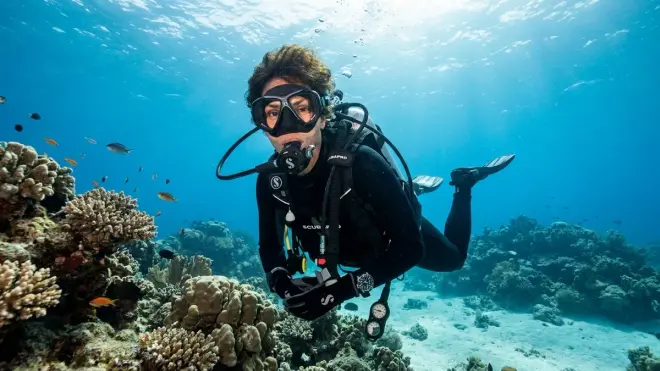
The Scubapro Synergy Twin Trufit🛒 Amazon was recommended to me by several technical divers at my local shop, and after using it for a few months, I understand why. The Trufit technology (which is basically Scubapro's term for their anatomically designed nose pocket and skirt) really does fit a wider range of face shapes than most masks I've tried.
I let probably six different dive buddies try this mask during a liveaboard trip, and everyone commented on how comfortable the seal was without over-tightening the strap. That's the Trufit at work—the skirt is designed with different thickness zones that adapt to facial contours. The internal volume is competitive at around 100ml, and the twin-lens design sits nice and close.
One thing that surprised me: the side visibility is actually better than expected for such a compact mask. The lenses are angled slightly to give you more peripheral awareness, which I appreciate when diving in current or navigating through reef structures.
Pros:
- Trufit skirt technology adapts well to different face shapes, reduced leaking across diverse facial structures
- Twin-lens design allows very close face placement while maintaining good visibility
- Angled lens position improves peripheral awareness compared to flat two-lens designs
- Quick-release buckle system is genuinely quick and intuitive to adjust
- Durable frame construction holds up well to repeated travel and boat diving abuse
- Available in multiple skirt colors including all-black for reduced reflection underwater
Cons:
- Frame design adds slight bulk compared to purely frameless options, less packable
- The buckle attachment points occasionally pinch hair if you're not careful during adjustment
- Price sits in the upper-mid range without offering dramatically better performance than cheaper alternatives
Mares X-Vision Ultra Liquid Skin
The Mares X-Vision Ultra Liquid Skin🛒 Amazon has the coolest name in this roundup and probably the most unique design approach. Mares uses their Liquid Skin silicone, which is softer and more flexible than standard silicone, and the X-shaped lens configuration gives you an unusually wide field of view for such a compact mask.
I'll be straight: this mask took me the longest to get used to. The X-lens design means you have four lens sections instead of one or two, which creates more visible seams in your field of view. After maybe a dozen dives, my brain stopped registering them, but they're definitely there initially. The payoff is excellent visibility in all directions and impressively low volume—around 90ml despite the wide viewing angle.
The nose pocket on this one is interesting. It's quite small and uses that soft Liquid Skin material, which makes pinching easy but also makes it feel a bit more delicate than firmer silicone designs. I haven't had any durability issues yet, but I'm more careful with this mask during gear setup.
Pros:
- Liquid Skin silicone offers exceptional comfort and conforms to facial contours better than standard silicone
- X-lens configuration provides outstanding peripheral vision and upward viewing angle for photography
- Internal volume around 90ml despite wide visibility, excellent balance of volume and view
- Unique styling stands out from standard mask designs if you care about aesthetics
- Nose pocket design makes equalization very easy with minimal pressure needed
- Buckle system integrates cleanly with skirt for reduced snagging on hair or hood
Cons:
- X-lens seams are visible and distracting for first several dives until you adjust
- Liquid Skin silicone feels more fragile and shows marks more easily than firmer materials
- Limited availability in some regions, harder to find for try-before-you-buy
Tusa Freedom HD
The Tusa Freedom HD🛒 Amazon is the mask my dive instructor uses, which is always a good sign. She's been diving for twenty years and is extremely picky about gear, so when she recommended it for freediving practice, I paid attention. The Freedom HD uses Tusa's low-volume design philosophy with their proprietary Crystal View Optical Glass, which is treated to reduce distortion.
What I love about this mask: it disappears on your face. The skirt is so comfortable and the seal so reliable that I genuinely forget I'm wearing it during dives. The internal volume isn't quite as minimal as some pure freediving masks—probably around 105ml—but it's still low enough to make a real difference on descents while offering better visibility than ultra-minimalist options.
The HD stands for "Hyper-Dry," which refers to the two-way drain valve system that helps clear water if you get any leakage. I don't use this feature often since the seal is so good, but it's nice to have for surface intervals or if you're teaching someone to clear their mask.
Pros:
- Crystal View optical glass provides excellent clarity with minimal distortion for precision work
- Ultra-comfortable skirt seals reliably without over-tightening, works for extended dives
- Two-way drain valve system (if you get the version with it) helps clear water efficiently
- Frame design balances low volume with structural durability, travel-friendly construction
- Round lens shape mimics natural eye shape for comfortable viewing angle
- Available in multiple lens tints including UV-blocking options for bright water conditions
Cons:
- Internal volume is slightly higher than the most minimal options, around 105ml
- Frame adds some bulk that pure frameless designs avoid, less compact when packing
- Drain valve version costs more and adds a maintenance point that can occasionally leak if not properly sealed
ScubaPro Spectra Mini
The Scubapro Spectra Mini🛒 Amazon is designed specifically for smaller faces, which makes it perfect for women, younger divers, or anyone who struggles with standard masks being too large. I fall into that category—most "universal" masks leave gaps on my temples or sit too far from my face. The Spectra Mini actually fits my face properly.
This is genuinely one of the lowest volume masks in this list, probably around 85ml internal volume, because it's scaled down proportionally. Everything is smaller: the lenses, the skirt, the nose pocket. For someone my size, that translates to exceptional fit and minimal air space. For larger-faced divers, it'll be uncomfortable or won't seal at all.
The twin-lens design is slightly curved to maximize the viewing area within the compact frame. I find the visibility perfectly adequate for recreational diving and underwater photography, though obviously not as wide as larger masks. The trade-off is worth it for the improved fit and dramatically easier equalization.
Pros:
- Specifically designed for smaller faces, finally a proper fit for petite divers like me
- Extremely low internal volume around 85ml due to scaled-down proportions
- Twin-lens curved design maximizes viewing area within compact frame
- Lightweight and packs incredibly small, ideal for travel diving
- Buckle system scaled appropriately for smaller head sizes, doesn't have excess strap length
- Premium Scubapro build quality and materials in a size that actually fits
Cons:
- Only works for smaller faces, most average or larger divers will find it too tight
- Limited availability since it's a specialized size, not stocked everywhere
- Smaller lenses mean reduced peripheral vision compared to full-size masks
Frequently Asked Questions
What is the difference between low volume and standard volume scuba masks?
Low volume masks have less air space between your face and the lens, typically under 120ml of internal volume compared to 150-200ml for standard recreational masks. This reduced air space means you need less air to equalize the mask during descents, which is especially important for freedivers who are managing limited breath holds. For scuba divers, the main benefits are easier equalization, better streamlining, and a closer field of view that some divers find more comfortable. The trade-off is that low volume masks tend to have slightly less peripheral vision since the lenses sit closer to your face, though modern designs minimize this compromise.
I didn't appreciate this difference until I tried freediving—my standard recreational mask required constant equalization and felt like it was fighting against me on every descent. Switching to a low volume design made breath-hold diving immediately more comfortable.
Can I use a low volume mask for regular recreational scuba diving?
Yes, absolutely—low volume masks work perfectly well for recreational scuba diving and many divers prefer them for all their diving regardless of discipline. The benefits of easier equalization and better streamlining apply whether you're on open circuit scuba or freediving. I actually use my low volume mask for all my dives now, including casual reef exploration and underwater photography.
The only potential downside is that if you're used to a very wide field of view from a larger mask, some low volume designs might feel slightly more confined at first. But honestly, most modern low volume masks still offer excellent visibility—I haven't felt limited by mine at all during recreational dives. The improved comfort and easier equalization make it worth any minor reduction in peripheral vision.
How do I know if a low volume mask fits my face properly?
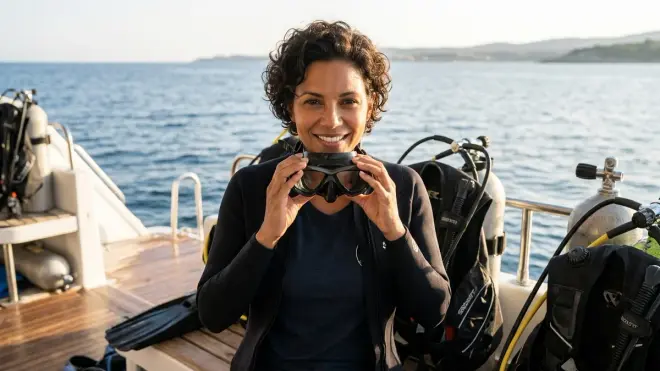
The fit test is simple: place the mask against your face without using the strap, breathe in gently through your nose, and the mask should stay in place on its own through suction. If it falls off or you feel air leaking in anywhere, the seal isn't good enough. Pay attention to where the skirt contacts your face—you shouldn't feel any gaps around your temples, under your eyes, or along your cheekbones.
I always test masks in the shop before buying because my face shape is tricky—high cheekbones and a smaller nose mean some popular masks just don't seal right for me. When you find the right mask, you'll know immediately. It should feel comfortable without any pressure points, the nose pocket should fit your nose shape naturally, and you shouldn't have to over-tighten the strap to maintain the seal. Our guide on how to choose a scuba mask that fits walks through this process in more detail if you're shopping for your first mask.
Do low volume masks fog more easily than standard masks?
No, low volume masks don't inherently fog more than standard masks—fogging is primarily caused by temperature differences and residual manufacturing oils rather than mask volume. Any new mask needs proper preparation before the first dive. I learned this the hard way when my first mask fogged terribly until I properly cleaned it with toothpaste and hot water to remove the silicone residue from manufacturing.
For ongoing fog prevention, the same techniques work regardless of mask volume: use defog spray or diluted baby shampoo before each dive, rinse with clean water, and avoid touching the inside of the lens with your fingers. Some divers swear by burning the lens with a lighter flame (carefully!) to remove residue, though I haven't tried that myself. Check out our article on how to prevent scuba mask fogging for detailed preparation and maintenance techniques.
Are low volume masks better for technical diving and photography?
Yes, low volume masks offer specific advantages for technical diving and underwater photography because they reduce drag, improve streamlining, and sit closer to your face for better precision viewing. Technical divers working on tight trim and minimizing their profile appreciate how low volume masks reduce their overall hydrodynamic drag. The closer lens placement also means less refraction and distortion when you're trying to read gauges or communicate with dive buddies.
For underwater photography specifically, I find my low volume mask helps with composition because the lenses sit closer to my eyes, making the viewfinder or screen easier to see clearly. The reduced volume also means less buoyancy change when equalizing, which helps maintain stable positioning when you're trying to frame a shot. That said, some photographers prefer masks with exceptional peripheral vision to maintain awareness of their surroundings while shooting—it's a personal trade-off between minimalism and field of view.
The Verdict
After switching to low volume masks for most of my diving, I can't imagine going back to bulkier designs. The difference in equalization ease alone makes them worthwhile, especially if you're doing any freediving or working on improving your buoyancy control during scuba dives.
For most divers, I'd recommend starting with something like the Cressi F1 or Tusa Freedom HD—both offer excellent low volume benefits without being so minimalist that they sacrifice comfort or visibility. These masks work great for everything from tropical reef diving to freediving practice.
If you have a smaller face like I do, the Scubapro Spectra Mini is genuinely life-changing. It's the first mask I've owned that actually fits properly without gaps or pressure points.
For underwater photographers or divers who want premium optics, the Atomic Venom is worth the investment. The clarity difference is real, and the ultra-low volume helps with stable positioning when composing shots.
The bottom line: low volume masks aren't just for freedivers anymore. They offer real benefits for any diver who values comfort, easier equalization, and better streamlining. Try one on properly before buying if you can—fit matters more than any other feature—and you'll immediately understand why so many divers are switching to these more compact designs.