


I've logged over 8,000 dives in Florida waters, and I can tell you that a fogged mask has ruined more good dive plans than equipment failures. Nothing kills the magic of a reef dive faster than being unable to see the eagle ray gliding past because your mask looks like someone breathed on a bathroom mirror. Learning how to prevent scuba mask fogging isn't just about comfort—it's about safety, situational awareness, and actually enjoying what you paid to see down there.
This guide walks you through every proven method to keep your mask crystal clear, from the initial prep of a brand-new mask to the pre-dive rituals I still use after four decades underwater. Whether you're a newly certified diver or someone who's been fighting fog for years, you'll learn the techniques that actually work and why most of the folk remedies you've heard are garbage.

Skill level: Beginner-friendly
Time required: 5-10 minutes per dive, plus one-time mask preparation
Difficulty: Easy once you understand the chemistry
What You'll Need
Before we dive into the step-by-step process, gather these materials:
- Your scuba mask (preferably silicone skirt—see our guide on scuba mask skirt materials for why this matters)
- Non-abrasive toothpaste (plain white paste, not gel—the kind without whitening beads)
- Soft cloth or dedicated mask cleaning pad
- Lighter or torch (for the burn method on new masks)
- Commercial anti-fog solution (I like the Stream2Sea Anti-Fog Spray for its reef-safe formula)
- Small spray bottle (optional, for diluted baby shampoo solution)
- Mild baby shampoo (like Johnson & Johnson's—fragrance-free if you can find it)
- Fresh water rinse station or water bottle
- Paper towels or microfiber towel
You won't need all of these for every dive, but having them in your kit means you're prepared for any situation.
Step 1: Prepare a New Mask by Removing Factory Residue
Here's the thing about brand-new masks: they come from the factory coated with a thin film of silicone residue from the manufacturing process. This invisible layer is hydrophobic—it repels water—which is exactly what causes fogging. I've seen dozens of divers spend an entire week fighting a foggy mask simply because they never properly prepped it.
The most effective method I've found is the toothpaste scrub. Squeeze a generous amount of plain white toothpaste (not gel, not the fancy whitening stuff with beads) onto both sides of your lens—inside and out. Use your fingers to scrub in circular motions for at least two minutes per lens. You want to feel some friction here; you're mechanically removing that factory coating. Pay special attention to the corners and edges where residue loves to hide.
Rinse thoroughly with fresh water, then check your work. Water should sheet off the lens evenly rather than beading up. If it beads, repeat the process. I typically do this three or four times on a new mask before I'm satisfied.
The burn method is more aggressive and permanent. Hold a lighter flame about an inch from the inside lens surface and move it slowly across the glass in a sweeping pattern. You'll see the silicone residue burn off—it looks like a slight discoloration that disappears. Don't hold the flame in one spot or you risk cracking the tempered glass. I've used this method on dozens of masks without issue, but it makes some divers nervous. If that's you, stick with the toothpaste method and just be patient with the repetitions.
Never use abrasive cleaners, steel wool, or anything that could scratch the lens. Once you've got scratches, you've created permanent nucleation sites for fog formation, and you're fighting an uphill battle.
Step 2: Choose Your Anti-Fog Method Based on Dive Conditions
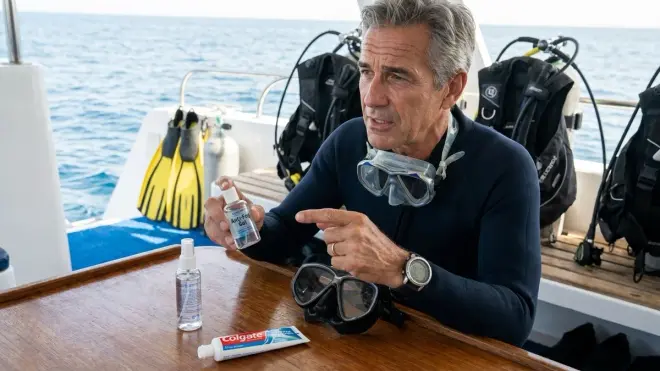
In my experience, no single anti-fog method works perfectly for everyone in all conditions. Water temperature, your metabolic rate, mask fit, and even your body chemistry all play a role. I've narrowed it down to three reliable approaches that cover most scenarios.
Commercial defog solutions are the most convenient option. Products like Sea Drops or McNett's Sea Gold work by coating the lens with surfactants that reduce surface tension, allowing water to spread into an even film rather than forming fog droplets. Apply a few drops or sprays to the dry inside lens, spread it around with your finger, and give it a quick rinse (or don't—some divers prefer to leave it on for maximum effect). These solutions are predictable and travel-friendly. The downside? They're an ongoing expense, and some formulations can irritate your eyes if you don't rinse thoroughly.
Diluted baby shampoo is my go-to method for tropical diving, and it's what I recommend to most recreational divers. Mix about one part fragrance-free baby shampoo with ten parts water in a small spray bottle. Before each dive, spray or drop a small amount on the inside lens, spread it with your finger until the lens feels slippery, then give it the lightest rinse you can manage—you want to leave a thin film. The surfactants in the shampoo do the same job as commercial defog but cost pennies. I've been using this method since the 1980s, and a single bottle of Johnson's baby shampoo lasts me an entire dive season.
Saliva is the oldest method in the book, and it works because human spit contains proteins that act as mild surfactants. Here's the proper technique: work up a good amount of saliva (not just a dry spit—you need volume), apply it generously to the inside lens, spread it thoroughly with your finger, then rinse very lightly with fresh or salt water. The key word is lightly. Most divers rinse too aggressively and wash away the protective film. I still use the spit method on shallow reef dives and as a backup when I've forgotten my defog solution. It's free, always available, and surprisingly effective if you do it right.
For cold water diving (below 60°F), I lean heavily on commercial solutions because saliva and baby shampoo don't perform as well when your mask rapidly cools down. The temperature differential between your warm face and cold water is more extreme, creating more condensation. I also check my mask fit more carefully—a poorly sealed mask that leaks even slightly will fog constantly in cold conditions.
Step 3: Apply Anti-Fog Treatment Properly Before Every Dive

Timing and technique matter more than which product you use. I've watched divers apply defog ten minutes before their dive, let it dry out, then wonder why it didn't work. Here's my pre-dive sequence, refined over thousands of dives.
Keep your mask dry until application. If your lens is wet from a previous rinse or ocean spray, dry it completely with a towel. Anti-fog solutions need to bond with a dry surface to work properly. This is where most divers go wrong—they apply defog to a damp lens and wonder why it fails five minutes into the dive.
Apply your chosen anti-fog solution generously to the inside lens surface only. Use your finger (make sure it's clean—no sunscreen residue) to spread it evenly across the entire lens, working it into the corners and edges. Don't rush this. I spend a good 15-20 seconds making sure every square millimeter is coated. If you're using saliva, this is where you really work it in—think of it like polishing the lens.
The rinse is critical. Here's what I tell every diver I work with: you're not trying to wash the defog off; you're trying to remove the excess while leaving a molecular film. Dip the mask face-down into your rinse bucket or hold it under a gentle stream of water for 2-3 seconds maximum. Some divers prefer not to rinse at all when using commercial solutions—experiment to see what works for your specific product and dive conditions.
Time your application. I treat my mask no more than five minutes before I enter the water. If you're on a boat with a long wait between gearing up and splashing, keep your mask in the shade and reapply just before entry. Heat and direct sunlight can degrade the anti-fog coating.
If you're making multiple dives in a day, rinse your mask thoroughly in fresh water between dives and reapply your anti-fog treatment from scratch. Don't try to refresh an existing application—you'll just create an uneven coating that performs worse than starting fresh.
Step 4: Ensure Proper Mask Fit to Prevent Fogging from Leakage

A mask that leaks—even just a tiny bit—will fog constantly no matter what anti-fog treatment you use. The problem isn't actually the leak itself; it's the fact that when water seeps in, you naturally tense your facial muscles to compensate, which disrupts the seal and changes the air pressure inside the mask. This creates convection currents that pull warm, moist air from around your nose onto the lens. I've seen divers blame their defog solution when the real culprit was a poor mask fit.
Test your seal before applying any anti-fog treatment. Press the mask gently against your face without using the strap and inhale through your nose. The mask should stay in place through suction alone. If it falls off or you feel air leaking in, you've got a fit problem. Check our detailed guide on how to choose a scuba mask for the full fitting process, but here are the quick fixes.
Facial hair is the most common seal killer. If you've got a mustache, you need to either trim it back from the area where the mask skirt contacts your upper lip, or use silicone grease to "glue" the hair down (not my favorite solution—messy and temporary). I've met plenty of bearded divers who claim they never have problems, but I've also seen their fogged-up masks underwater.
Check that your mask strap isn't over-tightened. Counterintuitively, cranking down the strap doesn't improve the seal—it actually distorts the skirt and creates leak points. The strap should be snug but not uncomfortable. I can usually slide two fingers under a properly adjusted strap. The skirt itself creates the seal through its shaped contact with your face, not through compression.
If you're experiencing persistent fogging on one side of the mask but not the other, you're probably dealing with an asymmetric leak. This happens when the mask skirt doesn't match your facial geometry—maybe your cheekbones are prominent on one side, or you have a scar that interrupts the seal. In these cases, you might need to try a different mask model. I've seen significant improvement when divers switch from framed to frameless masks or vice versa because the skirt geometry is fundamentally different.
Avoid mask squeeze by equalizing your mask pressure during descent. When you descend without adding air to your mask through your nose, the increasing water pressure compresses the air space, pulling the mask tight against your face and disrupting the seal. A small puff of air through your nose every 10-15 feet prevents this and keeps your seal intact.
Step 5: Manage Body Heat and Breathing Patterns Underwater

The physics of fogging are simple: warm, moist air contacts a cooler surface (your lens), and water vapor condenses into tiny droplets. You can't change the temperature differential between your face and the surrounding water, but you can manage how much warm, humid air you're pumping into your mask.
Breathing through your mouth exclusively is the foundation of fog prevention. I know this sounds obvious—we all learned it in Open Water—but I regularly see divers unconsciously exhaling through their nose when they're focused on something interesting or slightly stressed. Every nose breath sends a jet of warm, saturated air directly at your lens. If your mask starts fogging mid-dive, this is the first thing to check. Take a moment, focus on your breathing, and make sure all exhales are going through your regulator.
Body heat generation varies wildly between divers. I've got a buddy who runs hot—his metabolic furnace is always cranking—and he fights fog more than anyone else in our group despite using the same defog methods. If you're one of these people, pay extra attention to your pre-dive defog application and consider using a stronger commercial solution rather than relying on saliva or diluted shampoo.
Stress and exertion increase both your breathing rate and your body temperature, creating more moisture inside your mask. This is why fogging is worse during surge conditions, swimming against current, or any time you're working hard. The solution isn't to avoid these situations (they're part of diving), but to anticipate them and be extra thorough with your anti-fog prep before dives where you know you'll be working.
If your mask starts fogging during a dive, let a small amount of water in, swirl it around the inside lens, and purge it out. The water physically removes the fog droplets and can buy you several more minutes of clear vision. This is a temporary fix, not a solution, but it beats surfacing early or missing a great encounter because you can't see. I've used this technique hundreds of times on long drift dives where I didn't want to break the flow.
One more consideration for cold water diving: your hood can trap heat against your forehead and temples, which radiates into your mask airspace and increases fogging. I've had better success with hooded vests that don't cover the very top of my head, allowing some heat dissipation. Your mileage may vary depending on how cold-sensitive you are.
Step 6: Clean and Maintain Your Mask Between Dives
Post-dive maintenance directly affects how well your anti-fog treatment works on the next dive. Salt crystals, sunscreen, body oils, and plankton all build up on your mask and create nucleation sites for fog formation. I've seen divers get progressively worse fogging over a dive trip simply because they weren't maintaining their masks between dives.
Rinse thoroughly in fresh water immediately after every dive. I don't mean a quick dip in the communal rinse bucket—I mean actually rub your fingers over every surface, inside and out, while holding the mask under running water. Pay attention to the corners where the lens meets the skirt; that's where crud accumulates. If you're on a liveaboard or at a resort without great rinse stations, bring a gallon jug of fresh water specifically for your mask.
Avoid contamination from sunscreen and hair products. These are the silent killers of mask clarity. Even a tiny amount of sunscreen residue on the inside lens will cause persistent fogging that no amount of defog can overcome. My rule: apply sunscreen, wait for it to fully absorb (at least 10 minutes), then wash your hands thoroughly before touching your mask. Better yet, use my mask hand only for mask handling and keep my sunscreen hand for, well, sunscreen.
Every few dives, give your mask a deep clean with mild dish soap or baby shampoo. This removes the buildup that plain water rinsing misses. Fill a bucket with warm water, add a few drops of soap, submerge the mask, and gently scrub all surfaces with a soft cloth. Rinse thoroughly afterward—soap residue will fog just as badly as the dirt you're removing.
Storage matters more than most divers realize. Don't leave your mask in direct sunlight or a hot, enclosed space like a car trunk. UV exposure degrades the silicone skirt over time, making it less pliable and reducing its ability to seal. Heat can bake contaminants into the lens surface. I store my masks in a ventilated area away from direct sun, either in a protective case or hanging by the strap. Check out our scuba mask maintenance checklist for the complete storage and care protocol.
If you notice your mask fogging more than usual despite proper anti-fog application, it might be time to repeat the deep cleaning process with toothpaste as if it were a new mask. Over time, microscopic films can build up that regular cleaning doesn't remove. I do this once a season on my primary masks.
Step 7: Troubleshoot Persistent Fogging Issues

If you've followed every step and you're still fighting fog, you've got a problem that requires diagnosis. I've helped hundreds of divers through this frustration, and it almost always comes down to one of these issues.
Your mask is old and the silicone has degraded. Silicone doesn't last forever. After a few hundred dives (or a few years in harsh storage conditions), the material breaks down at a molecular level, becoming stickier and more prone to accumulating microscopic contaminants that defeat anti-fog treatments. If your mask is more than five years old and you've been using it regularly, it might simply be time for a replacement. Check our best scuba masks buyer's guide for current recommendations.
You have micro-scratches on the lens. Hold your mask up to a light and look at the inside surface at an angle. If you see a web of fine scratches, you've been cleaning with something too abrasive or storing the mask where it gets scratched by other gear. These scratches create countless fog nucleation points. Unfortunately, there's no fix—you need a new mask. Prevention: never wipe your lens with anything that hasn't been rinsed first (sand particles are the usual culprit), and always store your mask in a protective case.
Your defog solution has expired or degraded. Yes, this happens. Commercial anti-fog solutions lose effectiveness over time, especially if they've been stored in hot conditions or exposed to UV light. If you're using a bottle that's been in your gear bag for two years, toss it and buy fresh. For DIY baby shampoo solution, mix a fresh batch every few months.
You're dealing with an unusual body chemistry issue. I've encountered a handful of divers over the years who seem to produce more oils or moisture than average, and they struggle with fogging no matter what they do. If this is you, experiment with more aggressive commercial solutions, apply defog more liberally, and consider trying different mask models—some lens shapes and volumes perform better for high-moisture producers. The low volume masks we recommend for freedivers sometimes help because there's less air space to humidify.
Your mask simply doesn't fit your face well. We covered fit in step four, but it's worth repeating: a mask that's wrong for your facial structure will never perform optimally no matter what you do. If you've tried everything and fogging persists, book a session with a shop that has a wide range of masks to try. The difference between a mediocre fit and a perfect fit is dramatic.
One final troubleshooting tip: if your mask fogs consistently on the first dive of the day but clears up on subsequent dives, your face oils are the culprit. Wash your face (especially around your nose and cheeks) with soap before your first dive. I keep face wipes in my gear bag for exactly this situation.
Pro Tips & Common Mistakes
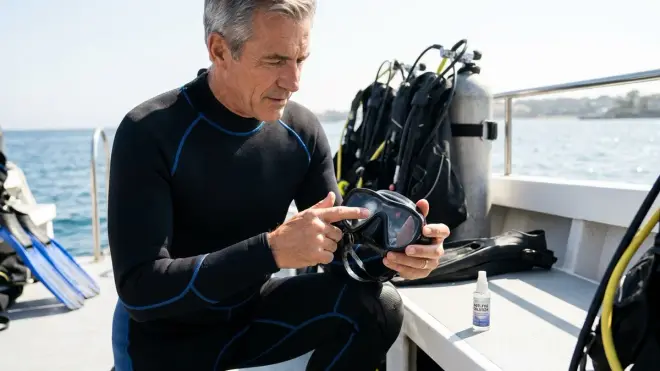
After 8,000+ dives, I've picked up a few tricks that don't fit neatly into the step-by-step instructions but make a real difference:
The pre-dive spit works better if you're well-hydrated. Dehydrated saliva is thicker and less effective as a surfactant. Drink water throughout your dive day—it helps with decompression and mask fogging.
Don't mix anti-fog methods in the same application. Some divers try to hedge their bets by applying both commercial defog and saliva. In my experience, this often creates an uneven coating that performs worse than either method alone. Pick one approach and execute it well.
The biggest mistake I see: over-rinsing. Newer divers panic about getting defog in their eyes (understandable) and rinse so thoroughly that they remove all protection. Practice with your chosen method until you find the minimum effective rinse. For baby shampoo solution, I literally just dip the mask in water for two seconds. That's it.
Second biggest mistake: touching the inside lens after application. Your fingers transfer oils back onto the surface you just treated. Once you've applied and rinsed your defog, resist the urge to touch or adjust anything. If you must adjust the strap or nose pocket, wash your hands first.
Cold water divers: warm your mask slightly before applying defog by tucking it inside your wetsuit or drysuit for a minute. This gives the anti-fog coating a better chance to bond before the thermal shock of cold water hits.
Prescription mask users: you're dealing with more complex lens geometry, which can create air pockets that fog preferentially. Pay extra attention to spreading defog into the reading or bifocal portions of your lenses. Our guide to the best prescription scuba masks covers special considerations.
Here's something I learned the hard way: don't store your mask in your BCD pocket with the lens facing in. The neoprene or fabric transfers oils and residue onto your lens. Always store lens-side out or in a separate container.
Frequently Asked Questions
Why does my mask fog up even after using anti-fog spray?
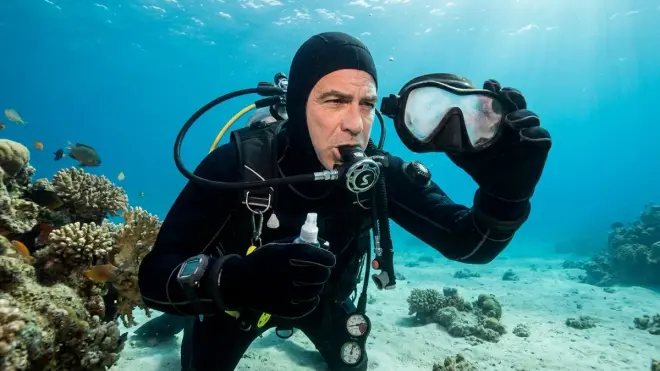
Your mask is fogging despite anti-fog treatment because you're either over-rinsing and washing away the protective coating, applying it to a wet lens surface, contaminating the lens with sunscreen or oils, or dealing with a poorly fitting mask that leaks slightly and disrupts the seal. The anti-fog coating needs to remain on the lens as a thin molecular film—if you rinse too aggressively, you'll remove it. Start by applying defog to a completely dry lens, spreading it thoroughly, and barely rinsing (just 2-3 seconds under water). Also check that your mask isn't leaking by testing the seal without the strap—press it to your face and inhale through your nose, and it should stay in place through suction alone.
Can I use toothpaste as a defog solution before every dive?
Toothpaste works as a temporary anti-fog solution in an emergency because it contains mild surfactants, but I don't recommend it for regular pre-dive use because it's more abrasive than necessary and can gradually create microscopic scratches that make fogging worse over time. Toothpaste is specifically for the initial deep cleaning of new masks to remove factory residue—you scrub it on vigorously to mechanically strip the silicone coating, then rinse thoroughly. For actual pre-dive anti-fog, use either commercial defog solution, properly diluted baby shampoo (one part shampoo to ten parts water), or saliva applied generously and barely rinsed. These methods provide better fog prevention without the risk of scratching your lens.
How often should I deep clean my mask with toothpaste?
Deep clean your mask with toothpaste once per season or whenever you notice persistent fogging that doesn't respond to normal anti-fog treatments, which usually indicates buildup of microscopic contamination that regular rinsing can't remove. For a brand-new mask, you'll need to scrub with toothpaste three to four times initially to fully remove the factory silicone residue before the mask performs properly. After that, your regular post-dive fresh water rinsing and occasional soap cleaning should keep the lens clean enough that you only need the aggressive toothpaste treatment once or twice a year. If you dive in particularly dirty or murky conditions, or if you notice water beading on your lens instead of sheeting off evenly, do an unscheduled toothpaste cleaning—the lens is telling you it needs it.
Does spitting in my mask really work as well as commercial defog?
Saliva works surprisingly well as a defog solution because human spit contains natural proteins and glycoproteins that act as surfactants, reducing surface tension just like commercial products do, but the technique requires proper execution—you need generous volume (work up real saliva, not just a dry spit), thorough spreading across the entire lens surface with your finger, and minimal rinsing to leave a protective film. In my experience over thousands of dives, saliva performs about 80-90% as well as commercial defog for recreational tropical diving, and I still use it as my backup method when I've forgotten my primary solution. The main limitations are that saliva doesn't work as well in very cold water where condensation is more aggressive, it's less effective if you're dehydrated, and some people simply don't produce enough volume or the right consistency—if you're one of these people, stick with commercial solutions or diluted baby shampoo instead.
Summary

Learning how to prevent scuba mask fogging transforms your diving experience from frustrating to enjoyable. The key steps are straightforward: properly prepare new masks by removing factory residue with toothpaste or burning, choose an anti-fog method that matches your dive conditions (commercial solution, baby shampoo, or saliva), apply it to a completely dry lens just before diving and rinse minimally, ensure your mask fits correctly and doesn't leak, breathe exclusively through your mouth underwater, and maintain your mask with thorough fresh water rinsing after every dive.
I've been diving since the late 1970s, and mask fogging is still one of the most common complaints I hear from divers at every experience level. The difference between divers who consistently have clear masks and those who fight fog all day isn't luck—it's technique and attention to detail.
Start with the basics: deep clean any new mask thoroughly before its first dive, experiment with different anti-fog methods to find what works for your body chemistry and diving environment, and be religious about your pre-dive application ritual. A perfectly clear mask doesn't just improve safety and situational awareness—it's what lets you actually see the spectacular underwater world you came down here to experience.