
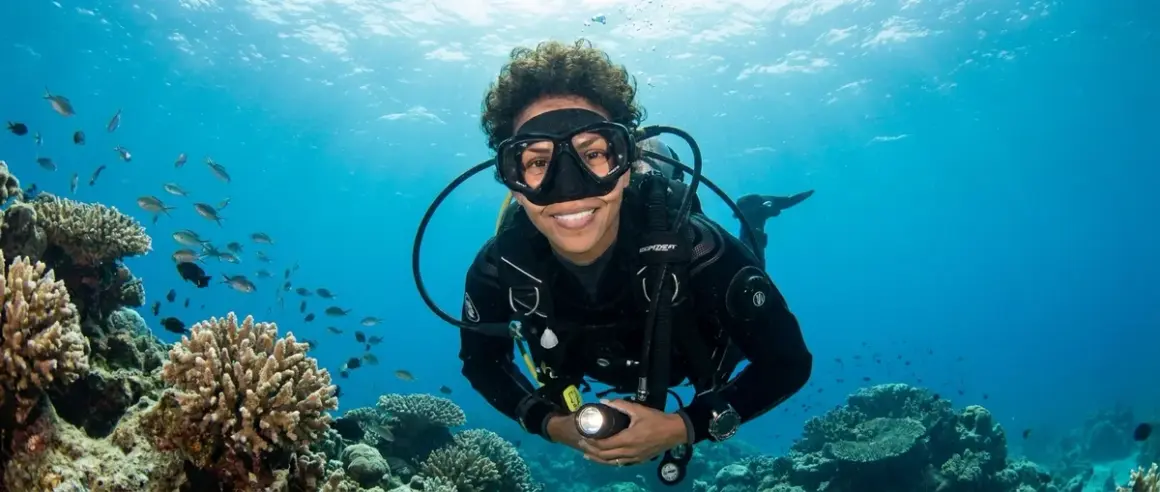

I'll never forget the moment I first descended past 40 feet and realized I couldn't read my dive computer. The numbers blurred together, my buddy's hand signals looked like vague gestures, and I completely missed the tiny seahorse everyone was pointing at. That dive taught me what every diver with less-than-perfect vision eventually learns: you need to see clearly underwater, and that means finding one of the best prescription scuba masks that actually works for your eyes. After testing several options across dozens of dives in Belize, I've learned which models deliver sharp vision without breaking the bank or compromising fit.
Quick verdict: The best prescription scuba masks balance optical quality, mask fit, and lens availability—and there's no single "best" option for everyone. Your prescription strength, face shape, and diving style all matter more than you'd think.
What to Look For in Prescription Scuba Masks
Prescription Type and Availability
Here's something that confused me at first: not all prescription masks work the same way. Pre-ground prescription lenses are pre-made in standard prescriptions (usually in 0.5 diopter increments) and just pop into compatible mask frames. They're cheaper and arrive quickly, but they only work for simpler prescriptions—typically nearsightedness between -1.0 and -8.0 diopters without astigmatism correction.
Custom prescription lenses, on the other hand, are made specifically for your exact prescription, including astigmatism and prism corrections. A lab bonds the prescription directly to the mask's tempered glass. I went this route for my left eye, which has significant astigmatism, and the clarity difference compared to my first mask with generic lenses was honestly shocking.
If you wear bifocals or progressives on land, you'll want bonded bifocal lenses for underwater. These add a reading segment to the lower lens so you can see your dive computer up close and the reef at distance. They cost more and take longer to produce, but if you're over 45 and struggle with near vision, they're worth every penny.
Lens Replacement Options and Future-Proofing
Your prescription will probably change eventually—mine shifted after just two years of diving. When shopping for the best prescription scuba masks, I always check whether replacement lenses are readily available and reasonably priced. Some masks use proprietary lens systems that lock you into one manufacturer's replacement parts. Others, like masks that accept standard flat lens blanks, give you more flexibility.
The ScubaMax M-201 Prescription Scuba Mask🛒 Amazon uses a simple lens retention system that makes swapping lenses straightforward if your prescription changes. I've replaced my lenses once already, and the whole process took maybe ten minutes. Compare that to bonded lenses, which require sending your entire mask back to a lab and waiting weeks.
Think about your prescription history too. If your vision has been stable for years, bonded custom lenses make sense. But if you're still young or your prescription changes frequently, stick with pre-ground drop-in lenses that you can replace yourself.
Mask Fit and Skirt Seal Quality
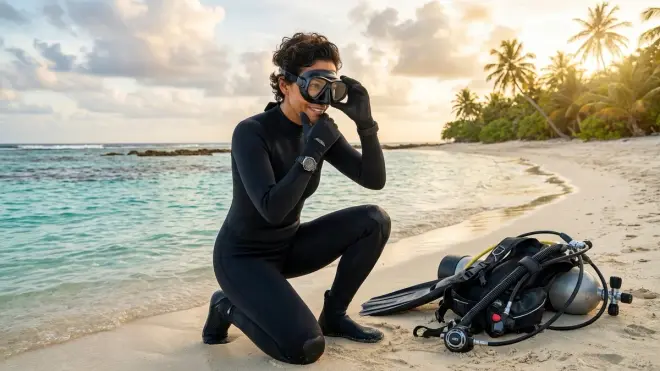
A prescription mask doesn't matter if it leaks. The skirt—that soft silicone part that seals against your face—needs to match your face shape perfectly. I learned this the hard way with my first prescription mask, which had beautiful optics but flooded constantly because my face is narrower than average.
Before buying, do the seal test if possible: place the mask against your face without the strap, inhale gently through your nose, and see if it stays put. If you're ordering online (like I usually do), check the return policy carefully. Most manufacturers describe their fit as "universal," but that's basically meaningless. Some masks work better for narrower faces, others for wider faces with high cheekbones.
The skirt material matters for comfort during longer dives. Hypoallergenic silicone feels softer and seals better than cheaper rubber. Clear silicone skirts let in more light for better peripheral vision, but black skirts reduce light scatter and can improve focus—I prefer black because I find it easier to concentrate on my camera settings without bright light bleeding in from the sides.
If you already have a non-prescription mask you love, check if it's available in a prescription version. Several manufacturers now offer prescription lens inserts or bonded options for their popular mask models. Understanding mask fit goes deeper into face shapes and seal patterns if you're still figuring out what works for your face.
Internal Volume and Clearing Ease
Low-volume masks require less air to clear when they flood and reduce buoyancy changes during equalization. For underwater photography—my main interest—low volume also means less distance between my eyes and the camera's viewfinder, which helps a lot. But prescription lenses add thickness to the front of the mask, so even "low-volume" prescription masks often have more internal space than their non-prescription counterparts.
I find that masks with teardrop-shaped lens configurations clear more easily than flat wraparound styles. When water gets in, it naturally pools at the bottom where the nose pocket is, making it easier to blow out. My current mask clears with just a gentle exhale, while my old mask with a flatter profile needed a full forceful blast to evacuate water.
Lens Material and Scratch Resistance
All dive masks use tempered glass for the lenses—it's a safety standard. But the prescription portion can vary in quality. Cheaper pre-ground lenses sometimes use optical plastic that scratches more easily than glass. I've noticed my plastic prescription inserts show wear after about 30 dives, while bonded glass prescription lenses still look perfect after twice that many dives.
Look for anti-reflective coatings if you dive in bright, shallow water. They reduce glare and improve contrast, though they do add to the cost. Some prescription lenses also come with anti-fog treatments, but honestly, I've found those wear off quickly. I just use standard defog solution before every dive, which works better anyway. Preventing mask fog is its own challenge, but prescription lenses don't make it significantly worse if you prep them correctly.
Budget and Upgrade Path
Pre-ground lenses in standard masks start around $80-120 total. Custom bonded prescriptions run $200-400 depending on lens complexity. Bifocals push toward $400-500. I started with a basic pre-ground setup and upgraded to custom lenses once I knew I'd be diving regularly. That made more sense than dropping $400 right away when I wasn't sure if my prescription would change or if I'd even stick with diving.
Consider the total cost of ownership. A $100 mask with expensive replacement lenses might cost more over five years than a $250 mask with affordable lens swaps. I track these costs in a spreadsheet now—yes, I'm that person—and it's helped me make smarter decisions.
Our Top Picks
Cressi Big Eyes Evolution Prescription Scuba Mask
The Cressi Big Eyes Evolution Prescription Scuba Mask🛒 Amazon offers exceptional field of vision with separate pre-ground prescription lenses that drop into each eye independently. That matters a lot if your eyes have different prescriptions—mine differ by 1.5 diopters, so I need different correction for each side.
The wide lenses sit close to your eyes without feeling cramped, and the internal volume is moderate enough that clearing takes minimal effort. I've used this mask on around 40 dives, including some choppy surface conditions where I really appreciated the secure seal. The soft silicone skirt works well for medium to wide face shapes.
Pros:
- Independent lens replacement for each eye (perfect for asymmetric prescriptions)
- Wide field of view comparable to non-prescription masks
- Pre-ground lenses available in 0.5 diopter increments from -1.0 to -8.0
- Replaceable lenses ship quickly and cost around $40-60 per pair
- Tempered glass lenses resist scratching better than plastic inserts
Cons:
- Internal volume is higher than true low-volume masks, requiring more air to equalize
- The frame is bulkier than frameless designs, making it less ideal for tight packing
- Doesn't accommodate astigmatism correction without custom bonding
ScubaMax M-201 Prescription Scuba Mask
The ScubaMax M-201 Prescription Scuba Mask🛒 Amazon became my budget recommendation after watching three of my dive buddies use them successfully on a week-long liveaboard. The simple design keeps costs down while still delivering functional optical correction for straightforward prescriptions.
This mask uses drop-in prescription lenses that literally snap into place behind the main tempered glass. I've swapped them myself twice now, and it's genuinely foolproof. The skirt seals well on narrower faces—better than the Cressi for me, actually—and it packs smaller than framed alternatives.
Pros:
- Most affordable entry point for prescription diving (usually under $100 complete)
- Tool-free lens replacement system anyone can manage
- Compact frameless design travels well
- Available in black or clear silicone skirt
- Surprisingly comfortable seal that works for narrow to medium faces
Cons:
- Limited prescription range (typically -1.5 to -6.0 diopters)
- Optical quality noticeably inferior to custom bonded lenses, especially at edges
- No astigmatism correction available
- Replacement lenses sometimes take 2-3 weeks to ship
Oceanic Cyanea Prescription Scuba Dive Mask
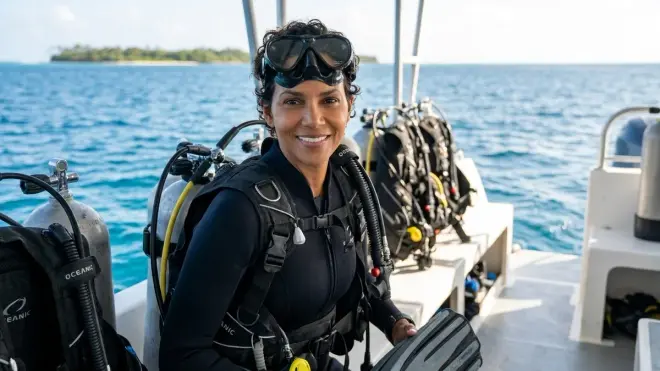
The Oceanic Cyanea Prescription Scuba Dive Mask🛒 Amazon bridges the gap between budget options and premium custom solutions. Oceanic offers both pre-ground drop-in lenses and custom bonded prescription services for this frame, so you can start affordable and upgrade later if needed.
The mask itself features a comfortable two-window design with excellent downward visibility for checking gauges. I borrowed this from a friend for three dives and really appreciated how easy it was to see my dive computer without tilting my head. The skirt seal is plush and forgiving, though that does mean slightly higher internal volume.
Pros:
- Dual upgrade path: start with pre-ground, upgrade to bonded custom lenses in same frame
- Superior downward visibility for reading gauges and computers
- Wide prescription range available through custom bonding service
- Comfortable enough for all-day diving on liveaboards
- Optional bifocal reader segments available
Cons:
- Higher internal volume requires more forceful clearing when flooded
- Frame design is chunkier and less streamlined than minimalist alternatives
- Custom bonded prescriptions take 3-4 weeks for processing
- More expensive than simpler designs even with pre-ground lenses
Atomic Aquatics Venom Frameless Prescription Mask
The Atomic Aquatics Venom Frameless Prescription Mask🛒 Amazon represents the premium end of prescription diving, with custom bonded lenses created specifically for your prescription. I tested this during a specialty lens comparison, and the optical clarity genuinely surprised me—it's noticeably sharper than drop-in solutions, especially in peripheral vision.
The frameless design reduces weight and bulk while the ultra-soft silicone skirt seals gently but securely. Atomic's bonding process embeds your prescription directly into the tempered glass, so there's no secondary lens element to create distortion or reduce light transmission. If you're serious about diving and your prescription is stable, this is where I'd invest.
Pros:
- Best-in-class optical clarity with minimal edge distortion
- Frameless design packs incredibly small for travel
- Custom bonding accommodates complex prescriptions including astigmatism
- Ultra-soft silicone skirt fits most face shapes comfortably
- Prescription never needs alignment adjustments or re-seating
Cons:
- Significantly more expensive (usually $300-400 complete)
- Custom bonding takes 4-6 weeks from prescription submission
- Lens replacement requires re-bonding entire mask (not DIY)
- Overkill if your prescription changes frequently
TUSA M-212 Liberator Plus Prescription Mask
The TUSA M-212 Liberator Plus Prescription Mask🛒 Amazon uses TUSA's proprietary lens mounting system that accepts both pre-ground and custom prescription lenses. The standout feature is the tilted lens angle, which provides better natural downward viewing—something I really value when shooting macro subjects on the reef and checking camera settings simultaneously.
TUSA's Freedom Technology uses a skirt design with minimal frame contact that reduces pressure points during long dives. After wearing this for three consecutive dive days, I didn't have the usual red marks and soreness I get from tighter-sealing masks. The internal volume sits in the medium range—not ideal for freedivers, but perfectly functional for recreational scuba.
Pros:
- Tilted lens angle improves downward visibility naturally
- Comfortable for extended wearing with minimal face pressure
- Both pre-ground and custom lens options available
- Crystal silicone skirt enhances peripheral light and awareness
- Prescription lenses mount securely without tools
Cons:
- Crystal clear skirt allows more light scatter, which can reduce focus for photographers
- Lens mounting system is specific to TUSA, limiting third-party replacement options
- Medium-high internal volume requires more equalization effort
- Pre-ground lens selection doesn't extend to stronger prescriptions beyond -6.0
Hollis M1 Frameless Prescription Mask
The Hollis M1 Frameless Mask🛒 Amazon earns its spot through versatility—it's available both with pre-ground lens inserts and as a custom bonded prescription. The low-profile frameless design reduces drag, which matters more than I expected when diving in current or using an underwater scooter.
I appreciate the simple, clean design that eliminates unnecessary bulk. The single-lens configuration gives uninterrupted vision across your entire field of view, unlike two-window masks that create a slight blind spot at your nose. Hollis offers prescription lenses through their dealer network, with both standard and bifocal options available.
Pros:
- True low-volume design for easier clearing and equalization
- Frameless construction packs extremely flat for travel
- Uninterrupted single-lens field of view
- Available with bifocal reader segments for older divers
- Reduced drag improves efficiency during longer swims
Cons:
- Narrow fit works poorly for wider faces or high cheekbones
- Single lens means you can't mix different prescriptions for each eye
- Custom bonding service only available through select dealers
- Low volume can feel cramped if you have a larger nose
Frequently Asked Questions
Can I use my regular eyeglass prescription for a scuba mask?
Yes, but you'll need to understand that underwater refraction makes everything appear about 25% closer and larger than it actually is, according to basic physics of light refraction in water. Some divers find their regular prescription works fine, while others benefit from adjusting down by about 0.5 diopters. I use my exact prescription and it works perfectly for me, but I've met divers who prefer slightly weaker correction underwater. Talk to your eye doctor or the prescription lens provider—most have experience with scuba applications and can guide you. If you have astigmatism, definitely use your full correction rather than trying to adjust it yourself.
How do I clean and maintain prescription lenses in my dive mask?
I treat my prescription mask exactly like my regular mask, with one exception: I'm extra careful not to scratch the prescription surfaces. After every dive, I rinse it thoroughly in fresh water and let it air dry completely before storing. I never use toothpaste or abrasive cleaners on prescription lenses—they can damage coatings or scratch softer lens materials. For pre-dive defogging, I use standard commercial defog solution, applying it gently with my finger and then rinsing. The prescription surfaces fog the same as regular glass, and the same treatments work. Between dive trips, I store my mask in a rigid case to protect the lenses from pressure and impacts. Regular mask maintenance applies equally to prescription models, just be gentler with lens surfaces.
What if my prescription is different in each eye?
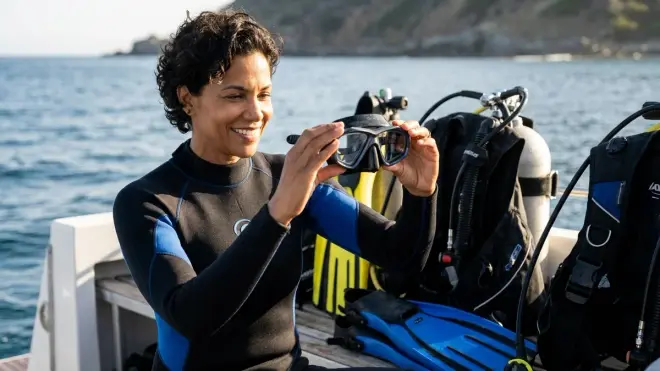
This is actually super common—my eyes differ by 1.5 diopters. Most prescription masks with two separate lens windows let you install different prescription lenses for each eye independently. Single-lens masks obviously don't offer this flexibility, so stick with dual-window designs if your eyes need different corrections. When ordering custom bonded prescriptions, just provide both eye measurements and the lab will bond the appropriate prescription to each side. Pre-ground drop-in lenses usually sell individually or in pairs, so you can mix and match strengths. I buy one lens at one strength and one at another, no problem.
Can I get prescription lenses for any dive mask?
No, unfortunately the mask needs to be designed for prescription lenses from the beginning. You can't retrofit prescriptions into just any regular mask—the lens mounting system has to be built in. Some manufacturers offer the same mask frame in both regular and prescription-ready versions, which is helpful if you already know you love that particular fit. If you currently dive with a non-prescription mask you really like, check with the manufacturer to see if they offer prescription options for that model. A few specialty shops can custom-bond prescriptions to certain popular mask models even if the manufacturer doesn't officially offer it, but that's expensive and takes time. Generally, it's easier to choose from masks specifically designed for prescription use.
Are prescription dive masks worth the extra cost compared to contact lenses underwater?
I've dived with contacts and with prescription masks, and for me, the prescription mask wins every time. Contacts can wash out if your mask floods—I lost a contact at 60 feet once and spent the rest of that dive half-blind. Contacts also dry out during long surface intervals and can be uncomfortable in saltwater. That said, some divers prefer contacts because they offer better peripheral vision than any mask lens system, and you can use any mask you want. If you do dive with contacts, soft lenses work better than rigid gas-permeable ones, and always bring backups in your dive bag. I keep disposable daily contacts as a backup system even though I primarily use my prescription mask. For regular diving, though, prescription masks eliminate the hassle and risk of losing contacts underwater, and they're more cost-effective long-term.
The Verdict
Finding the best prescription scuba masks comes down to matching your vision needs with your diving style and budget. If you're just starting out or your prescription changes frequently, the ScubaMax M-201 offers affordable entry with easy lens swaps. For better optical quality without going full custom, the Cressi Big Eyes Evolution balances field of view with practical lens replacement options.
If you're committed to diving long-term and have a stable prescription, invest in custom bonded lenses like the Atomic Venom—the clarity difference is real and worth the extra cost. I'm still building my gear collection piece by piece, so I started with pre-ground lenses and upgraded to custom for my primary mask once I knew I'd stick with diving. That approach let me learn what mattered to me without overspending early on.
The most important thing? Get the mask on your face somehow before committing, or at least buy from a retailer with a solid return policy. The best prescription scuba mask is the one that fits your face perfectly, corrects your vision accurately, and doesn't leak—and that combination is different for everyone.