
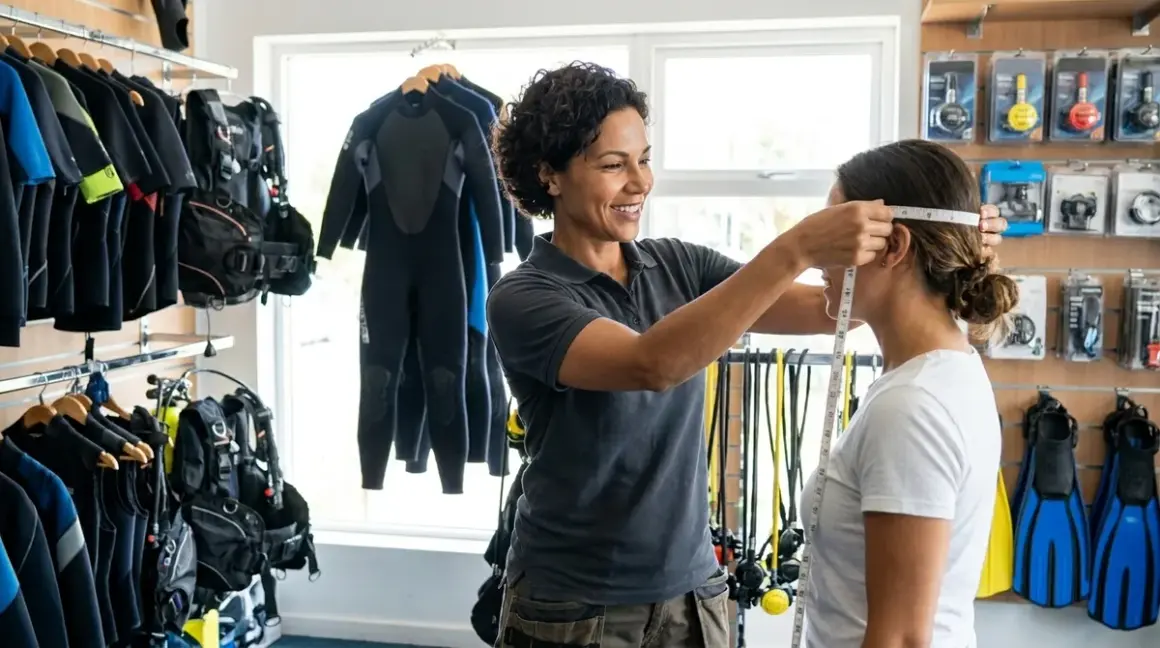

When I first started diving, I spent way too many dives fighting with gear that didn't fit right. My mask leaked constantly, my fins gave me blisters, and my BCD felt like it was trying to escape my body on every descent. Getting scuba gear sizing and fit right isn't just about comfort—it's about safety, air consumption, and actually enjoying your time underwater instead of constantly adjusting straps. I've learned the hard way that proper fit transforms the entire diving experience, and I want to save you from making the same uncomfortable mistakes I made.
What Is Scuba Gear Sizing and Fit?
Scuba gear sizing and fit refers to how well each piece of diving equipment matches your body measurements, shape, and diving needs. Unlike regular clothing where you might be okay with something a bit loose or tight, scuba gear needs to fit precisely because you're relying on it in an environment where you can't just take it off and adjust easily.
When we talk about fit, we're looking at several things at once. Your mask needs to seal against your face without creating pressure points. Your wetsuit should fit snugly enough to minimize water flow but not so tight that it restricts breathing. Your fins need to secure your feet without cutting off circulation, and your BCD has to distribute weight evenly while allowing free movement.
The tricky part? Scuba gear sizing isn't standardized across brands. A medium wetsuit from one manufacturer might fit completely differently from another brand's medium. And some gear—like masks and fins—depends more on your specific facial structure or foot shape than any size chart can really capture.
I learned this when I bought my first wetsuit online based purely on the size chart. It technically "fit" according to the measurements, but the torso was way too long for my frame, creating weird bunching that let cold water flush through constantly. The numbers matched, but the actual fit didn't work for my body.
How Scuba Gear Sizing and Fit Works
Each piece of dive gear has its own sizing considerations, and honestly, I'm still learning new fitting tricks with every piece I add to my collection.
Masks are probably the most individual item. The skirt needs to create a complete seal against your face shape—and everyone's face is genuinely different. I have higher cheekbones, which means some mask styles just won't seal no matter what size I try. The fit test is simple: hold the mask against your face without using the strap and inhale gently through your nose. If the mask stays in place with gentle suction, it fits. If it falls off or you feel air leaking in, keep trying different models. Size usually comes down to the volume inside the mask and the skirt shape, not measurements. When learning how to choose a scuba mask, I tried on probably fifteen different models before finding ones that actually sealed properly.
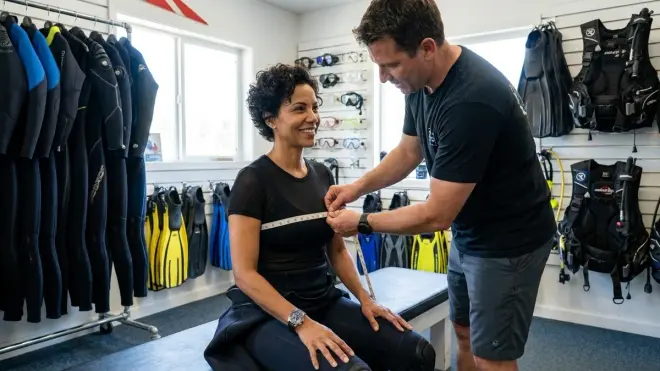
Wetsuits work on the principle that a thin layer of water gets trapped between the suit and your skin, your body warms that water, and the neoprene insulation keeps it warm. For this to work, the suit needs to fit snug—you should need a bit of effort to pull it on—but not so tight that it restricts your breathing or movement. I measure my chest, waist, hips, height, and weight, then cross-reference multiple size charts. But here's what the charts don't tell you: arm length, torso length, and shoulder width matter just as much. I'm average height but have a shorter torso, which affects how suits sit on me. If you're looking at wetsuits, how to choose a wetsuit for scuba diving breaks down all the thickness and fit considerations.
Fins come in two main fitting styles: full-foot (which you wear barefoot) and open-heel (which you wear with booties). Full-foot sizing is straightforward—they should fit snugly like a shoe without pinching your toes or rubbing your heel. Open-heel fins need to accommodate your booties, and the straps need to hold your foot securely without cutting off circulation. I made the mistake of choosing fins that were slightly too big for my booties, thinking I'd grow into them, and spent several dives kicking twice as hard because they kept sliding around. The scuba fin sizing and fit checklist has all the specific testing steps I wish I'd known about.
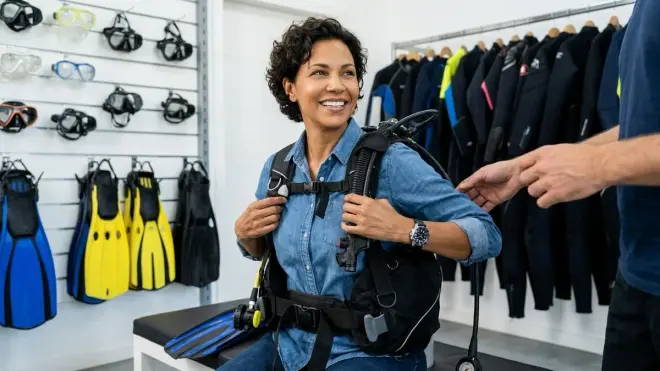
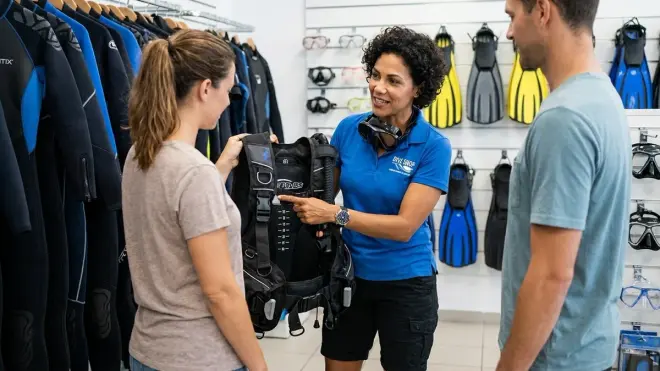
BCDs are complex because they need to fit across your torso, shoulders, and waist while accommodating a tank on your back and weight on your body. Manufacturers usually offer sizes from XS to XXL, sometimes with adjustable torso lengths. The shoulder straps shouldn't dig in or slip off. The cummerbund should sit at your natural waistline and cinch snugly. When inflated, the BCD shouldn't ride up over your head or feel like it's squishing your ribs. I dive with a back-inflate BCD now, and getting the harness adjusted properly took me several pool sessions to dial in. The guide on how to properly fit and adjust your scuba BCD walks through every adjustment point systematically.
Regulators don't really have "sizes," but mouthpiece comfort matters more than I initially realized. Some regulators come with interchangeable mouthpieces in different sizes, and switching to a smaller mouthpiece eliminated the jaw fatigue I was experiencing on longer dives.
Why Scuba Gear Sizing and Fit Matters
I used to think that being slightly uncomfortable underwater was just part of diving. I was wrong. Proper fit directly affects your safety, air consumption, and enjoyment.
Safety is the big one. A leaking mask means you're constantly clearing it, which can trigger anxiety, especially for newer divers. I watched a dive buddy panic on a drift dive because her poorly fitting mask kept flooding, and she couldn't see well enough to stay with the group. Fins that are too loose can slip off during entries or in current. A BCD that rides up can make it harder to reach your alternate air source or dump valves in an emergency.
Air consumption improves dramatically with proper fit. When I finally got a wetsuit that fit correctly, my air consumption dropped noticeably because I wasn't working as hard to stay warm and wasn't tensing my muscles against the discomfort of tight shoulders and loose legs. Fins that fit well mean you're transferring power efficiently instead of compensating for slippage or fighting against rubbing.
Comfort sounds less critical than safety, but discomfort underwater distracts you from what you're actually there to see. Instead of watching that octopus hunt, you're adjusting your mask strap for the fifth time. Instead of nailing your buoyancy near that coral wall, you're trying to figure out why your BCD keeps riding up. I spent my first dozen dives so focused on gear problems that I barely remember the marine life.
For me as an underwater photography enthusiast, proper fit became even more important. When I'm trying to nail a macro shot, I need to be neutrally buoyant and steady—I can't be kicking constantly because my fins are creating drag, or fiddling with a BCD that's poorly adjusted. Getting my gear dialed in improved my photography more than buying a better camera did.
Types and Variations in Scuba Gear Fit
Different diving environments and styles require different approaches to fit.
Cold water vs. tropical diving completely changes wetsuit fit requirements. In Belize, where I do most of my diving, I typically wear a 3mm wetsuit that fits quite snug. But when I traveled to do some diving in cooler water, I needed a 5mm suit, and because thicker neoprene is less stretchy, I had to size up to maintain comfort and range of motion. The guide comparing 5mm vs 7mm wetsuits helped me understand how thickness affects both warmth and fit.
Body proportions make a huge difference too. Standard sizing assumes average proportions, but real bodies don't work that way. If you have a longer torso, shorter arms, broader shoulders, or a different hip-to-waist ratio than average, you might find that standard sizes don't work. Some brands offer "tall" or "short" variations, and custom wetsuits are an option if nothing off-the-rack works.
Travel diving adds another layer to fit considerations. When I started planning liveaboard trips, I realized my BCD was way bulkier than necessary. Switching to a travel-specific BCD that fit just as well but packed smaller made a real difference. Best travel BCDs under 5 pounds covers compact options that don't sacrifice proper fit for packability.
Rental vs. owned gear is worth mentioning. Rental gear rarely fits well because it's designed for "average" bodies and takes a beating from heavy use. The straps are often stretched out, the sizing is approximate, and you're working with whatever happens to be available in roughly your size. This is exactly why I started buying my own gear piece by piece—even one or two properly fitted items make such a difference.
Frequently Asked Questions
How do I know if my scuba mask fits correctly?
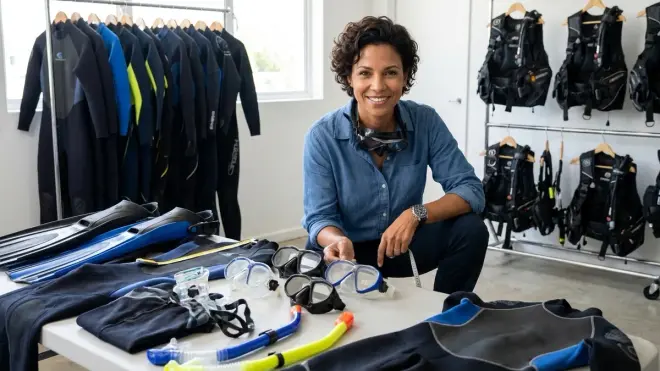
A properly fitting mask should seal against your face with gentle suction when you inhale through your nose, without using the strap. Place the mask on your face, inhale gently, and it should stay put without support. There shouldn't be any gaps where water can seep in, and no pressure points that feel uncomfortable. The skirt should contact your face all the way around—forehead, cheeks, upper lip—without pinching. Once you put the strap on, it should feel secure but not tight. I test new masks by wearing them around the house for 10-15 minutes to see if any pressure points develop before I take them in the water.
Should a wetsuit be tight or loose?
A wetsuit should fit snugly against your entire body with minimal wrinkles or air gaps, but not so tight that it restricts your breathing or movement. You should need some effort to pull it on, and when it's on, you should be able to breathe normally, raise your arms fully, and bend comfortably. There shouldn't be loose fabric bunching anywhere, especially around the neck, wrists, and ankles, because those gaps let water flush through and defeat the insulation. At the same time, if you can't take a full breath or your fingers feel numb, it's too tight. The right fit feels like firm compression everywhere—like a really snug hug—without any restriction.
How tight should scuba fins be?
Fins should fit securely without any sliding or rubbing, but not so tight that they cut off circulation or feel uncomfortable. For full-foot fins, your toes should reach the end without curling, your heel should seat fully in the pocket, and the sides should hold your foot firmly without pinching. For open-heel fins with booties, there should be minimal space between your bootie and the fin foot pocket—maybe a finger's width at most—and the strap should hold your heel firmly without digging in. I test fin fit by standing and trying to pull my heel out; if the fin comes off easily, it's too loose. If my foot feels tingly or compressed after a few minutes, it's too tight. When choosing scuba fins for your diving style, you'll find that different fin types have slightly different fit requirements.
Can I adjust my BCD to fit better after buying it?
Yes, BCDs have multiple adjustment points specifically designed for customizing the fit to your body. The shoulder straps usually adjust for length and sometimes width, the cummerbund adjusts at the waist, and many models have sternum straps or adjustable back bands. I spent a solid hour in the pool after buying my BCD, making small adjustments between practice dives until everything felt right. The key is to adjust it while wearing your full thermal protection (wetsuit or whatever you actually dive in) because that changes your body dimensions. Once you get it dialed in, mark the adjustment points with a permanent marker so you can reset it if someone else uses your gear or if straps get loosened during travel. The detailed guide on how to choose your first BCD as a new diver includes a section on all the adjustment points to look for.
Should I size up or down if I'm between sizes?
It depends entirely on the gear type. For wetsuits, I generally size down because neoprene stretches slightly over time and with use, and a too-loose wetsuit doesn't insulate properly. For BCDs, I'd rather size up because a too-tight BCD restricts breathing and movement, while a slightly loose BCD can be cinched down with straps. For fins, fit should be exact—neither up nor down—because both loose and tight fins cause problems underwater. For masks, sizing usually isn't about going up or down since fit depends on face shape rather than a size scale. When I'm genuinely between sizes, I try both if possible, or I check return policies carefully before buying. Looking at buying patterns in what is the right order to buy scuba gear can help you prioritize which items to nail the fit on first.
Summary
Getting your scuba gear sizing and fit right is one of those things that completely transforms your diving experience, but it takes time and some trial and error. I'm still learning which brands work for my body shape and which models just won't fit me no matter what size I try.
Start with the most personal items first—mask and fins—because those are hardest to compromise on and relatively affordable to get right. Test masks in person whenever possible, try on wetsuits with the same thermal protection you'll dive in, and don't assume that online size charts will account for your specific body proportions.
The gear that fits you properly might not be the gear with the best reviews or the lowest price tag, and that's completely fine. A mid-range mask that seals perfectly is infinitely better than a premium model that leaks on your face. I've built my gear collection slowly, one properly fitting piece at a time, and every correctly fitted item makes me more confident and comfortable underwater.
Take your time with fit. Borrow or rent different styles when you can. Ask experienced divers what they've learned about sizing. And remember that even "universal" sizes aren't actually universal—we're all shaped differently, and finding gear that works for your specific body is worth the extra effort.