
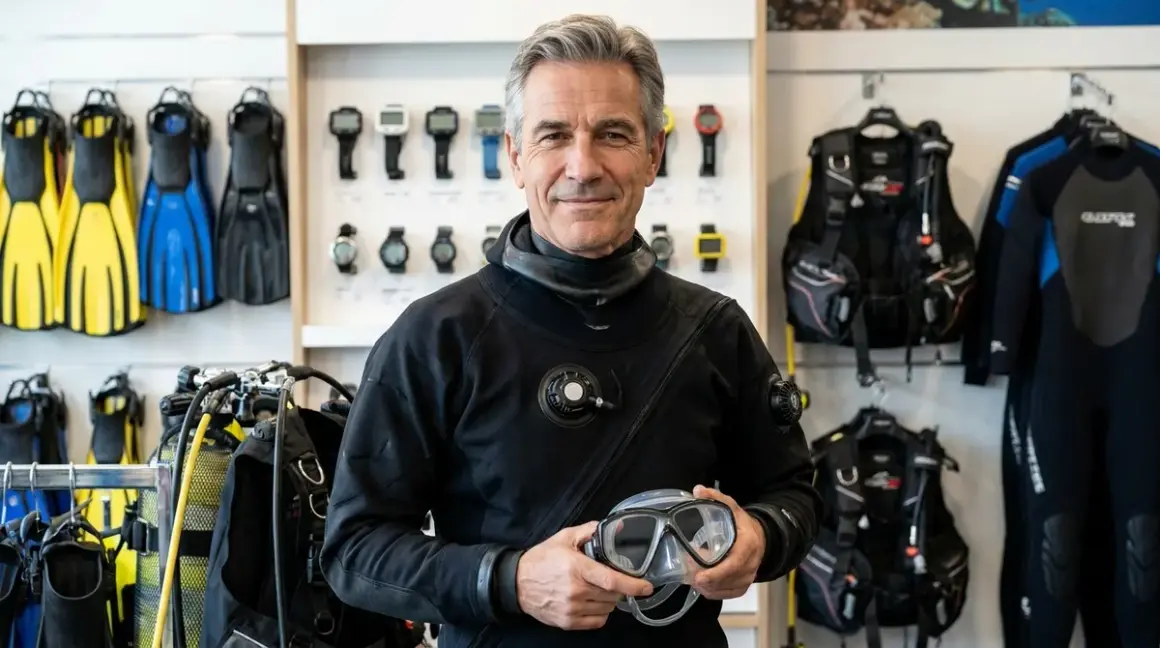

I've watched hundreds of new divers walk into shops with certification cards still warm from the laminator, ready to drop thousands on gear they don't need yet. The order to buy scuba gear matters more than most people realize—not because there's some sacred rule carved into coral, but because buying the wrong things first burns money and can actually slow down your development as a diver. After four decades of selling, servicing, and using just about every piece of equipment that's come through Florida waters, I can tell you that the sequence matters as much as the gear itself.
What Is the Right Order to Buy Scuba Gear?
The right order to buy scuba gear follows a simple principle: personal comfort and safety items first, life-support equipment second, and everything else when you know what you actually need. This isn't arbitrary. The gear that touches your body—mask, fins, boots, exposure suit—affects your comfort and performance on every single dive. Get those dialed in early and you'll dive better, learn faster, and enjoy the whole experience more.
Here's the thing most shops won't tell you: you don't need to own everything right away. I've seen divers with $8,000 worth of gear in their first year who quit the sport because they bought wrong, while others with a basic mask-fin-wetsuit setup logged a hundred dives and fell in love with it.
The classic recommended sequence looks like this: mask and snorkel first, then fins and boots, then exposure protection, then a computer, then a regulator set, then a BCD, and finally the specialty items like dive lights, cutting tools, and surface markers. But the real answer is more nuanced than that, because your diving environment and goals shift everything. A diver in California needs a 7mm wetsuit or drysuit before they worry about much else. Someone diving Cozumel three times a year might never need to own a regulator.
How the Buying Sequence Works
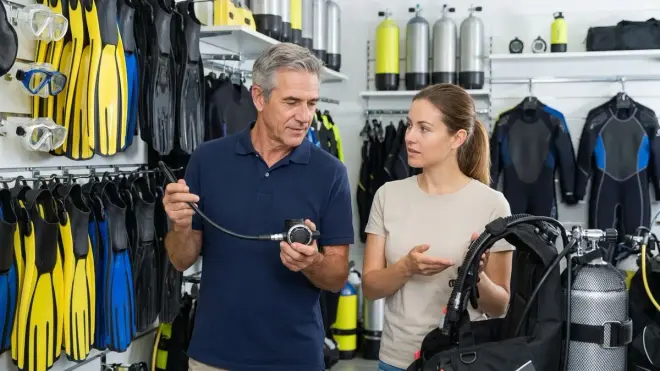
The logic behind the order to buy scuba gear comes down to three factors: how much the item affects your diving experience, how much rental gear varies in fit and quality, and how expensive it is to own versus rent.
Personal fit items come first because rental gear rarely fits right, and poor fit ranges from annoying to dangerous. I've seen more dives ruined by leaking masks and blistering fins than by any equipment failure. A mask that doesn't seal means constant clearing. Fins that don't fit cause cramps or fall off. Boots that are too big give you blisters; too small and your feet go numb in cold water. These items are relatively inexpensive, pack easily, and you'll use them on literally every dive for the rest of your life.
Your mask is the single most important piece of gear you'll ever buy. Rental masks are handled by hundreds of people, the straps are stretched out, the skirts are compressed and warped. I tell new divers to buy a mask before they even finish their certification course. You need something that seals to your face without any gaps around the nose pocket or temples, with a skirt made from high-grade silicone that doesn't degrade in UV and saltwater. Spend time doing the fit test—place it on your face without the strap, inhale gently through your nose, and it should stay put with gentle suction. If it falls off, it doesn't fit. I've used the same Atomic Aquatics Venom for nearly fifteen years; I bought a backup a few years ago because they were hard to find during the pandemic. A good mask runs around $80–150, and it's worth every penny.
Fins and boots come next. Rental fins are beat to hell, the foot pockets are stretched, and you're usually limited to whatever sizes they have that day. Boots matter because they're the interface between your foot and the fin. I prefer open-heel fins with adjustable straps and 5mm neoprene boots for most conditions. The combination gives you ankle support, thermal protection, and the ability to walk on rocky entries without shredding your feet. For warm-water travel, some people go with full-foot fins and skip boots entirely—lighter to pack, easier to swim in, but you sacrifice protection and versatility. Scuba fin sizing is more involved than shoe shopping because you're matching fin stiffness to leg strength, blade length to kick style, and pocket size to boot thickness.
Exposure protection is next, and this varies wildly by location. In Florida, I dive in a 3mm shorty most of the year, a 5mm full suit in winter. But if you're diving Monterey or Puget Sound, you need a 7mm wetsuit or a drysuit from day one. Rental exposure suits are problematic—they're flushed by hundreds of divers, the seals are worn, the zippers stick, and they rarely fit well enough to minimize water exchange. A good wetsuit is cut for your body shape, sealed at the wrists and ankles, and made from quality neoprene with sealed or glued seams. Budget around $200–400 for a decent wetsuit, or $1,500–3,000 for a drysuit if you're diving cold. Exposure protection directly affects your safety because cold divers make bad decisions, breathe faster, and end dives early.
Once you've got the personal comfort items locked down, you move to life-support equipment—the gear that keeps you alive underwater. This is where the sequence gets more debatable.
I recommend a dive computer before you buy a regulator or BCD, and I'll defend that order all day. A computer is your personal decompression tracker, your depth gauge, your timer, and your logbook. Rental computers are often outdated, locked into conservative algorithms, or missing features like nitrox compatibility. More importantly, having your own computer means you understand its interface, trust its data, and develop consistent habits around dive planning and safety. Modern computers range from basic wrist units around $250 to full-color air-integrated models around $800–1,200. I personally use a Shearwater Peregrine because the screen is readable in any condition, the algorithm is proven, and the interface doesn't require a PhD to operate. If you're choosing between brands, the comparison between Suunto vs Shearwater dive computers highlights what matters in real-world reliability and usability.
Regulators are the next big purchase, and this is where people start spending serious money. A regulator set—first stage, second stage, octopus, and gauges or console—runs anywhere from $400 for entry-level to $1,500+ for high-performance cold-water models. Here's my take: if you're diving more than a dozen times a year, own your reg. Rental regulators are serviced inconsistently, handled roughly, and you never know the maintenance history. I've seen rental regs freeflow on the surface, breathe wet at depth, and develop slow leaks that abort dives. When you own your regulator, you know its service interval (typically annual or every 100 dives), you can tune it to your preferences, and you build trust in the one piece of gear that literally puts air in your lungs. Look for balanced first stages with environmental sealing if you dive cold or silty water, and second stages with adjustable breathing resistance. DIN connections are more robust than yoke for anything beyond recreational depth limits.
BCDs come last in the life-support sequence, and honestly, this is the piece I tell people to rent the longest. A good BCD costs $500–1,200, it's bulky to travel with, and the "perfect" BCD depends on the kind of diving you end up doing. Rental BCDs are usually well-maintained because shops replace them regularly—they're high-visibility items and shops know fit matters. That said, once you know your diving style—back-inflate versus jacket style, integrated weights versus weight belt, how much lift you need—then invest in your own. I dove rental BCDs for my first two years and didnmed't miss anything. When I finally bought one, I knew exactly what I wanted because I'd tried a dozen different models.
Everything else—lights, cutting tools, surface markers, spools, compasses, gear bags, cameras—comes after you've logged enough dives to know what you actually need. I see new divers buy $600 dive lights before they've done a night dive, or $200 scuba gear bags before they know if they'll travel or dive locally. Wait. Dive more. Rent or borrow. Then buy what you'll actually use.
Why the Order to Buy Scuba Gear Matters
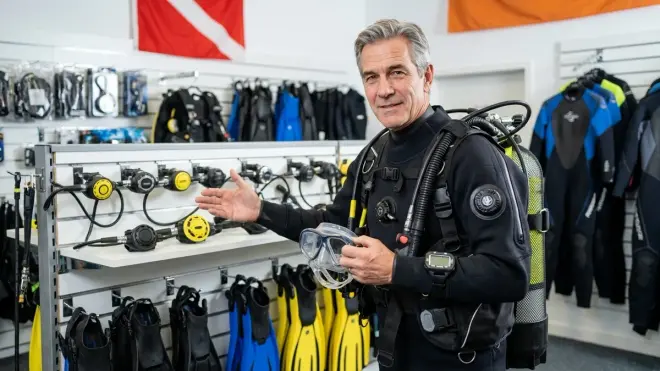
Buying gear in the wrong sequence costs you money, limits your skill development, and can even compromise safety. I've seen it play out hundreds of times.
Money: Drop $2,000 on a regulator and BCD in your first month, and you might discover six months later that you prefer sidemount diving, or that the BCD doesn't fit right after you lose twenty pounds, or that you're diving so infrequently that rental would've been smarter. The personal fit items—mask, fins, exposure suit—are investments that pay off immediately and never become obsolete. A $150 mask serves you for a decade. A $1,200 BCD might be wrong for you after a year.
Skill development: Divers who own a properly fitting mask and fins from day one simply dive better. They're more comfortable, more relaxed, and they can focus on buoyancy control, navigation, and environmental awareness instead of fighting leaky masks or blistered feet. I've watched students struggle through courses with rental gear and then transform once they had their own kit. Comfort isn't a luxury—it's the foundation for learning.
Safety: Cold divers, distracted divers, and uncomfortable divers make mistakes. If you're diving in cold water without adequate exposure protection, you're at higher risk for hypothermia, poor decision-making, and rapid air consumption. If you're diving rental regulators that breathe hard or freeflow unpredictably, you're adding stress to every dive. The right gear in the right order builds a foundation of trust and competence.
The other side of this is rental quality. Some gear rents well, some doesn't. Masks and fins are miserable as rentals. Computers are hit-or-miss depending on the shop. Regulators are often fine for tropical vacation diving but questionable for anything more demanding. BCDs are usually decent. Knowing what's safe to rent and what you should own changes the financial equation.
Types and Variations in Buying Strategies
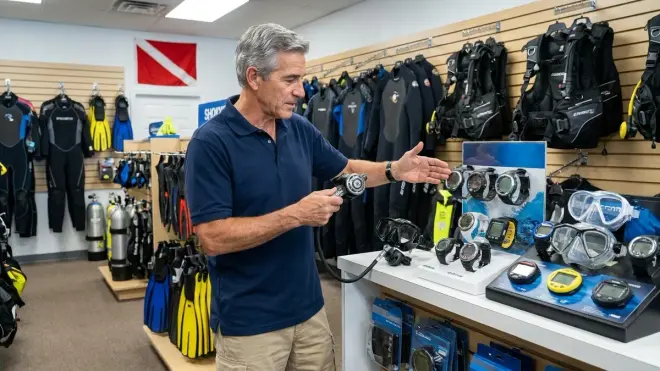
The classic buying sequence I've outlined—mask, fins, exposure, computer, regulator, BCD—works for most recreational divers planning to log 20–40 dives a year in temperate to tropical conditions. But there are legitimate variations depending on your diving profile.
The cold-water diver flips the script. If you're diving the Pacific Northwest, the Great Lakes, or New England, exposure protection jumps to the top of the list. A drysuit, undergarments, hood, and thick gloves might represent your first $2,500–3,500 in gear, and you need them before you do much of anything else. The rest of the sequence stays the same, but you can't dive consistently in 45°F water without proper thermal protection, period.
The tropical vacation diver who makes one or two trips a year to the Caribbean or Pacific can skip owning a regulator and BCD indefinitely. Rental gear at resorts is usually adequate, the cost per dive is reasonable, and the hassle of traveling with a full kit isn't worth it. But you still buy mask, fins, exposure suit (a 3mm full or shorty), and a computer. Those four items fit in a carry-on, eliminate the most annoying rental headaches, and pay for themselves in a couple trips.
The technical diver or someone with advanced training goals needs to think differently from the start. Backplate-and-wing systems, long-hose configurations, redundant regulators, stage bottles—the gear requirements shift, and buying a jacket-style BCD early might mean replacing it entirely down the road. If you know you're headed toward tech diving, talk to tech instructors before you buy anything beyond the basics. The foundational personal fit items still apply, but everything else might follow a different path.
The travel-focused diver prioritizes weight and packability. Lightweight fins, compact regulators, and gear bags designed for airline carry-on limits become decision factors. I've seen divers buy heavy cold-water regs and then never travel with them because the baggage fees and hassle weren't worth it.
Frequently Asked Questions
Should I buy a BCD or regulator first?
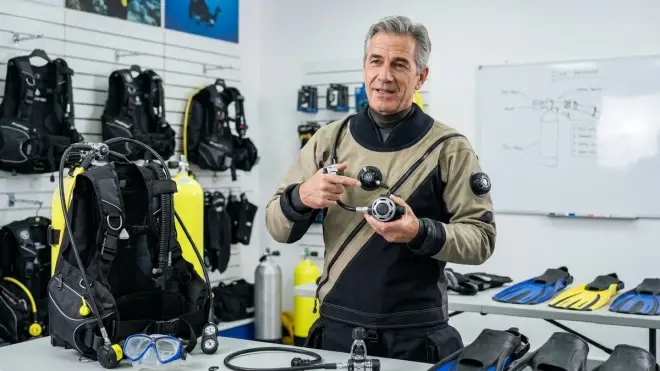
Buy a regulator before a BCD if you're diving regularly and want to reduce rental costs, but honestly, I'd recommend owning a dive computer before either of them. Regulators are life-support equipment with service intervals and maintenance histories you should control, while BCDs are often well-maintained rentals and the least critical item to own early. If you're only diving a few times a year, rent both and prioritize your personal fit items and computer first.
Can I skip buying a dive computer and just use dive tables?
You can, but you'd be choosing a slower, more conservative, and less flexible approach than every other diver in the water with you. Dive tables work, and I used them for years before computers became reliable and affordable, but modern dive computers give you real-time depth and time tracking, multilevel dive credit, safety stop timers, and digital logs. A basic computer costs around $250–300 and eliminates the guesswork and calculation errors that come with tables. Unless you're committed to a purist approach for some reason, just buy the computer.
How much should I budget for my first set of gear?
Plan on around $800–1,200 for the essentials if you're buying in the recommended order: $100–150 for a mask, $150–250 for fins and boots, $200–400 for an exposure suit, and $250–400 for a dive computer. That covers the personal fit and safety items that make the biggest difference. Add another $1,500–2,000 if you want to own a regulator set and BCD in the first year, but I'd recommend renting those until you've logged at least 20–30 dives and know what kind of diving you'll actually be doing.
Is it worth buying used scuba gear?
Masks, fins, and exposure suits are fine to buy used if they're in good condition and fit properly—just inspect them carefully for tears, worn seals, and UV damage. I'm more cautious about life-support equipment. Used regulators need a full service before you trust them, and you need to know the service history and how they've been stored. Used BCDs can have hidden issues with bladder integrity, inflator valves, and dump valves. Used dive computers can have battery issues, flooded circuits, or outdated algorithms. If you're buying used, have it inspected by a qualified technician, factor in the cost of service, and make sure you're actually saving meaningful money after those costs.
Should I buy gear from my local dive shop or online?
I'm biased, but I'll be straight with you: buy your first set of gear from a local shop if you have a good one nearby. Fit matters enormously for masks, fins, boots, and exposure suits, and you can't tell from photos and size charts whether something will actually work for you. A good shop will let you try gear in a pool, offer personalized fitting, provide service and support, and they'll remember you when something goes wrong. Online prices are sometimes cheaper, but you lose the expertise, the try-before-you-buy option, and the relationship that matters when you need service, advice, or help troubleshooting a problem. Once you know exactly what you want—specific make and model—then sure, shop around. But for your first purchases, the local shop is worth the extra cost.
Summary
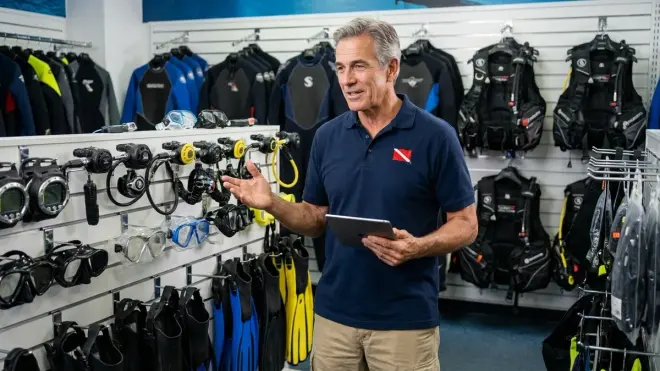
The right order to buy scuba gear isn't about following rigid rules—it's about investing in the items that improve your diving experience most, starting with personal fit and comfort, then moving to life-support equipment once you've logged enough dives to know what you need. Mask, fins, boots, and exposure protection come first because they're relatively affordable, they affect every dive, and rental versions are almost never as good as gear fitted to your body. A dive computer comes next because it's your personal safety tool and builds consistency in your dive planning. Regulators and BCDs come later, after you've established your diving habits and know what kind of diving you'll be doing long-term.
I've seen too many new divers spend thousands on gear in their first month and then struggle to use it, or worse, quit diving because they felt overwhelmed by the investment. Start small, dive more, and buy the next piece when you know why you need it. The mask I bought in 1982 served me for over twenty years. The regulator I thought was perfect in 1995 was wrong for the diving I ended up doing. Experience teaches you what matters, and gear bought with that knowledge is gear you'll actually use.