
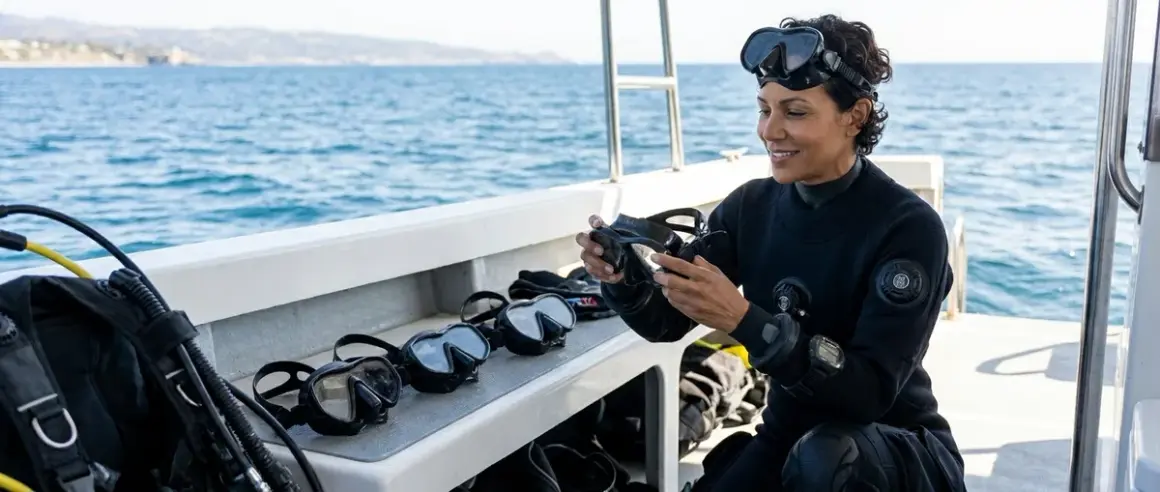

Your mask is literally the window to the underwater world, and I learned this the hard way on my fourth dive when my rental mask kept flooding every few minutes. Since then, I've spent way too much time researching the best scuba masks, testing different styles, and figuring out what actually matters when you're 60 feet down trying to spot a seahorse. Whether you're just getting certified or building your first gear kit like I am, choosing the right mask makes the difference between a magical dive and a frustrating one.
What Is a Scuba Mask?
A scuba mask is basically a sealed viewing window that creates an air pocket in front of your eyes, allowing you to see clearly underwater. Unlike swimming goggles that only cover your eyes, a proper dive mask also covers your nose—this isn't just design preference, it's essential for pressure equalization as you descend.
The mask consists of a tempered glass lens (or lenses), a silicone skirt that seals against your face, and a strap system to hold everything in place. Some masks have a rigid frame that holds the lens, while others are frameless designs where the skirt attaches directly to the glass. I was confused about this at first too, but both styles work perfectly well—it really comes down to personal preference and how they fit your face.
Modern dive masks also include a nose pocket (sometimes called a nose purge) that lets you pinch your nostrils to equalize pressure in your ears and sinuses during descent. This is why you can't just use swimming goggles for diving—you'd have no way to equalize and would end up with what's called mask squeeze, which is as uncomfortable as it sounds.
How a Scuba Mask Works
The science behind why masks work is actually pretty cool. When light travels from water into air, it bends (this is called refraction), which is why everything looks blurry when you open your eyes underwater. The mask creates an air space between your eyes and the water, so light only has to pass through the glass lens instead of hitting your eyes directly from the water. Objects appear about 25% larger and closer than they actually are underwater—something that still messes with my photography framing sometimes.
The silicone skirt is where the magic happens for comfort and functionality. Quality masks use medical-grade silicone that's flexible enough to conform to your unique face shape while maintaining a watertight seal. The skirt has a double-seal design on better masks—an inner sealing edge that sits against your face and an outer structural layer that provides rigidity. When you create slight negative pressure by inhaling through your nose while holding the mask to your face (this is how you test fit), the skirt should stick without using the strap.
Equalization is the other critical function. As you descend, water pressure increases and compresses the air space inside your mask, creating uncomfortable pressure on your face and eyes. You fix this by exhaling a tiny bit of air through your nose into the mask, which equalizes the pressure. This is also why the nose pocket design matters—you need easy access to pinch your nostrils for ear equalization using the Valsalva maneuver.
The strap and buckle system keeps everything positioned correctly. Most modern masks use quick-adjust buckles that let you tighten or loosen the strap without removing the mask. I've learned not to overtighten—the seal comes from the skirt design and slight suction, not from cranking the strap down until you get a headache. Your strap should sit on the widest part of the back of your head, not up high where it can slip off.
Why Your Mask Choice Matters
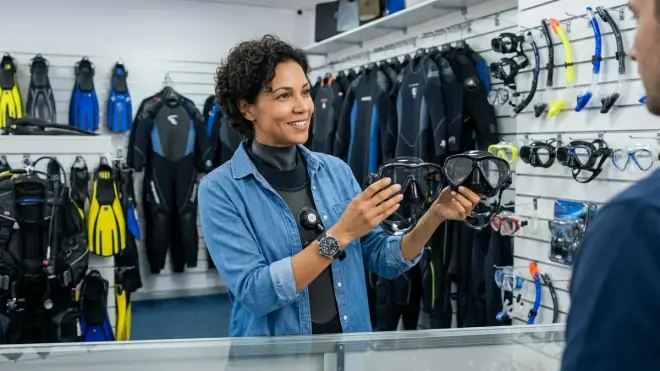
I used to think a mask was just a mask, but after 80 dives I've realized it's one of the most personal pieces of gear you'll own. A poorly fitting mask will leak, fog up, or create uncomfortable pressure points that distract you from actually enjoying the dive. I've cut dives short because a rental mask wouldn't stop flooding, and I've missed incredible photo opportunities because I was too busy clearing water to notice the octopus right in front of me.
Fit is everything. Face shapes vary wildly—I have a narrower face, so masks that work great for my dive buddy often leak on me. What seals perfectly on someone with high cheekbones might gap on someone with a flatter face profile. This is why I always recommend testing the fit before buying, even if it means trying on masks at a dive shop before ordering online. A good seal means you can focus on your buoyancy, your buddy, and the reef instead of constantly clearing your mask.
The field of view impacts your entire diving experience more than you'd expect. Wide-view masks or masks with side windows let you see more of the underwater environment without constantly turning your head. This matters especially for underwater photography—I upgraded to a wider mask last year and immediately noticed how much easier it was to frame shots and spot marine life in my peripheral vision.
Comfort during long dives becomes a real factor once you start doing multiple dives per day or planning liveaboard trips. Pressure points from a poorly designed skirt or nose pocket can turn into genuine pain after 40 minutes underwater. I've had masks that felt fine for a shallow 30-minute dive but became unbearable during deeper, longer dives.
Types of Scuba Masks and Their Uses
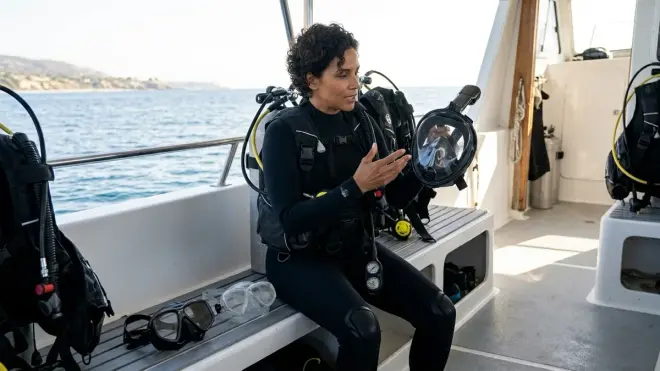
Single-lens masks have one continuous piece of glass across the front. These typically offer the widest unobstructed view and are popular with underwater photographers like me because there's no frame dividing your field of vision. The Scubapro Frameless Mask is a classic example—it's been around forever because the design just works for a lot of face shapes.
Twin-lens masks have separate lenses for each eye, which makes them easier to fit with prescription lenses if you need vision correction. I know several divers who switched to twin-lens designs specifically because getting custom prescription lenses was cheaper and easier than with single-lens masks. Twin-lens masks also tend to have lower internal volume, which means less air space to equalize and less water to clear if you do get a leak.
Low-volume masks sit closer to your face and contain less air space. Technical divers and freedivers love these because they require less air to equalize at depth and are easier to clear. I tried switching to a low-volume design for a while but found it a bit claustrophobic—this is totally personal preference though. Some divers swear by them.
Frameless masks have the skirt attached directly to the lens without a rigid plastic frame around it. These pack smaller (great for travel), generally have better fields of view, and many divers find them more comfortable. The frameless versus framed debate really comes down to face shape and personal preference—I've used both and honestly can't say one is objectively better.
Full-face masks cover your entire face and integrate with your regulator, letting you breathe through your nose. These are mainly for professional divers, surface-supplied diving, or specific technical applications. I've never used one for recreational diving and probably never will—they're overkill for reef diving and add complexity I don't need.
Choosing the Best Scuba Masks for Your Needs
Let me walk you through what I actually look for when evaluating masks, because the marketing descriptions all sound amazing until you're underwater dealing with reality.
Fit Testing: The Non-Negotiable Step
Before you worry about features or price, you need to test the fit. Here's what I do: Place the mask against your face without using the strap. Inhale gently through your nose while holding the mask in place, then let go. The mask should stick to your face from the slight suction—if it immediately falls off or you feel air leaking in, the fit isn't right for your face shape.
Check for pressure points around the skirt edges. Press gently around the entire perimeter—if any area feels like it's digging in or creating a gap, that mask won't work for you no matter how great the reviews are. I wasted money on a highly-rated mask that looked perfect but had a skirt shape that pressed painfully against my cheekbones.
Skirt Material and Design
All quality dive masks use silicone skirts—never rubber, which deteriorates quickly in saltwater. Most manufacturers use some version of medical-grade silicone, though the exact formulation varies. You'll see clear/translucent skirts and black skirts as the main options.
Black silicone blocks peripheral light, which reduces distractions and glare. Underwater photographers often prefer this because it helps with focusing on the viewfinder. Clear silicone feels less claustrophobic for some divers and allows a bit more ambient light, which can feel more open and comfortable, especially for beginners. I use a clear skirt and love the less-confined feeling, but I have friends who swear by black for the exact opposite reason.
The skirt design and seal technology matters more than the color though. Look for a double feather-edge seal—you'll see this as a thin inner lip that creates the actual watertight seal against your skin, supported by a thicker structural layer behind it.
Lens Configuration and Field of View
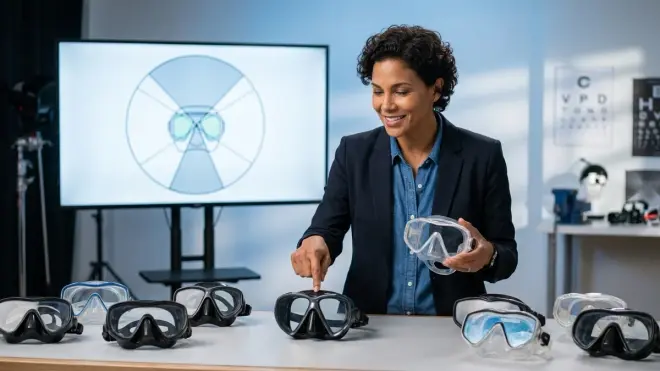
Tempered glass is standard for all legitimate dive masks—it's the same safety glass used in car windows, designed to shatter into small granules rather than sharp shards if it breaks. Never buy a mask with plastic lenses for scuba diving, regardless of how cheap it is.
Some masks advertise optical-grade glass or ultra-clear glass with special coatings. Honestly, I can't tell much difference between standard tempered glass and the premium versions for recreational diving. Where lens quality does matter is if you're getting prescription lenses—then you want to make sure the glass can be properly ground and fitted.
Side windows or secondary lenses increase your peripheral vision significantly. My first mask had solid silicone sides and I was constantly turning my head to scan the reef. My current mask has small side windows and the difference is noticeable—I spot more marine life and feel more spatially aware. The tradeoff is slightly more potential for leaking (more seams) and a bit more bulk.
Volume Considerations
Internal volume is the amount of air space inside the mask. Lower volume masks sit closer to your face, require less air to equalize during descent, and are easier to clear when water gets in. Higher volume masks sit farther from your face and some people find them more comfortable, especially if you don't like things close to your face.
As a recreational diver doing mostly shallow reef dives, I don't obsess over this. If you're planning to get into freediving or technical diving where you're making frequent depth changes, low-volume designs make more sense. For casual diving, choose based on comfort.
Strap and Buckle Systems
Most modern masks use quick-adjust buckles mounted on swivels. The swivel mechanism is actually important—it lets the strap angle naturally around your head instead of pulling in a straight line, which creates pressure points. Cheaper masks sometimes have fixed buckles that don't rotate, and you'll feel the difference after 30 minutes underwater.
Look for buckles you can operate while wearing the mask. I've fumbled with tiny sliding mechanisms while trying to adjust my mask between dives—bigger, glove-friendly buckles are worth it. Some masks have the buckles integrated into the skirt, others attach to the frame; both work fine.
Split straps that separate into two bands in the back distribute pressure better than single wide straps. This is one of those features I didn't think mattered until I tried it—my current mask has a split strap design and I get way fewer headaches after long dive days.
Special Features Worth Considering
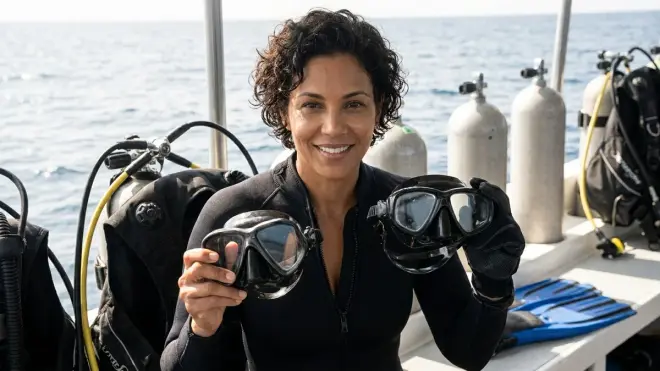
Purge valves are one-way valves built into the bottom of the mask that let you clear water by exhaling through your nose instead of breaking the seal and tipping the mask. These are controversial—some divers love them, others say they're just one more thing to fail. I've used both and honestly prefer the simplicity of a non-purge mask, but if you struggle with mask clearing, a purge valve can make your life easier.
Anti-fog coating comes factory-applied on some higher-end masks. This helps prevent fogging initially, but you'll still need to maintain it and eventually use defog solution. I cover preventing mask fogging in another article because it's a whole separate topic, but don't buy a mask purely because it advertises anti-fog treatment—that wears off.
Common Mistakes I Made (So You Don't Have To)
Buying based on looks. My first personal mask was this gorgeous teal color that matched my wetsuit. It looked amazing in photos and leaked constantly underwater because the skirt didn't fit my face shape. Now I test fit first and choose color second.
Overtightening the strap. I thought a tighter strap meant a better seal. Nope—it just gave me headaches and actually distorted the skirt enough to create gaps. The seal comes from the skirt design, not strap tension. Tighten just enough to keep the mask positioned.
Not breaking in the mask properly. New masks have a manufacturing film that causes fogging. You need to scrub the lens with toothpaste or use a commercial defog scrub before the first dive. I skipped this once and spent an entire dive barely able to see through the fog.
Ignoring prescription options. I squinted through my first 20 dives because I didn't realize prescription masks were so accessible. If you wear contacts or glasses on land, you have options underwater—don't suffer through blurry dives.
Not considering how I'd actually use it. I bought a super low-volume frameless mask because it looked professional, but I mainly do casual reef photography where comfort matters more than minimal volume. Match the mask type to your actual diving style, not the diving style you think looks cool.
Maintenance and Care That Actually Matters
Your mask will last years if you take care of it, and only months if you don't. I learned this after leaving a mask in my gear bag wet for a week—the smell was impressive in the worst way.
Rinse thoroughly after every dive in fresh water. Saltwater and chlorine both degrade silicone over time. I keep a dedicated rinse bucket for my mask and let it soak for at least 10 minutes, then rinse the strap and buckles separately.
Store properly between dives. Don't leave your mask in direct sunlight or crammed at the bottom of your gear bag with heavy equipment on top. UV degrades silicone and pressure can warp the skirt. I keep mine in a hard protective case—worth every penny to prevent my $150 mask from getting crushed.
Check the skirt regularly for tears, cracks, or degradation. The skirt is the first thing to wear out. Small tears near the nose pocket or around buckle attachment points are common after a year or two of regular use. These can often be fixed with silicone sealant, but eventually you'll need to replace the mask.
I go deeper into this in the mask maintenance checklist, but the short version is: rinse, dry, store safely, and don't leave it baking in your car trunk.
What About Mask Fit and Face Shape?
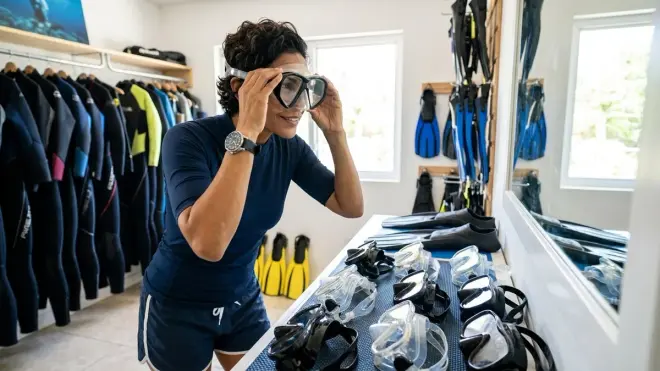
This deserves its own section because it's honestly the most important factor and the hardest to address without trying masks on.
Face width is huge. Narrow faces often struggle with masks designed for average or wide faces—the skirt just doesn't come in far enough to seal on the sides. I have this problem and it ruled out probably 40% of masks I tried.
Nose bridge shape affects nose pocket fit. Some masks have low-profile nose pockets that work great for smaller or flatter nose bridges; others have deeper pockets for larger or higher bridges. If the nose pocket is too small, you can't comfortably pinch your nostrils to equalize. Too large and it lets water in.
Cheekbone prominence changes where the upper skirt needs to seal. High cheekbones mean you need a mask that seals higher up; flatter faces need different geometry. This is why I always recommend reading reviews from people who describe their face shape—it's way more useful than generic "this mask is great" reviews.
The only real solution is trying masks on, which I know is frustrating if you prefer shopping online. What I did was visit a local dive shop, explain I was researching and wanted to test fit several masks even though I might not buy that day. Most shops were cool with this—they know divers who find the right fit often come back to buy from them. Then I noted which shapes worked and shopped around.
I also wrote a whole guide on how to choose a scuba mask that fits your face that goes way deeper into the face-shape matching process.
Frequently Asked Questions
What makes a scuba mask better than swimming goggles for diving?
Scuba masks include a nose pocket that lets you equalize pressure in the mask as you descend, which is essential for safe diving and prevents mask squeeze—swimming goggles only cover the eyes and provide no way to add air to the airspace as pressure increases, making them unsafe for depths beyond a few feet.
How tight should my scuba mask strap be?
Your mask strap should be just tight enough to hold the mask in position without creating pressure points—the actual seal comes from the skirt design and slight suction, not from strap tension, so overtightening just causes headaches and can actually distort the skirt enough to break the seal.
Do I need a different mask for cold water versus tropical diving?
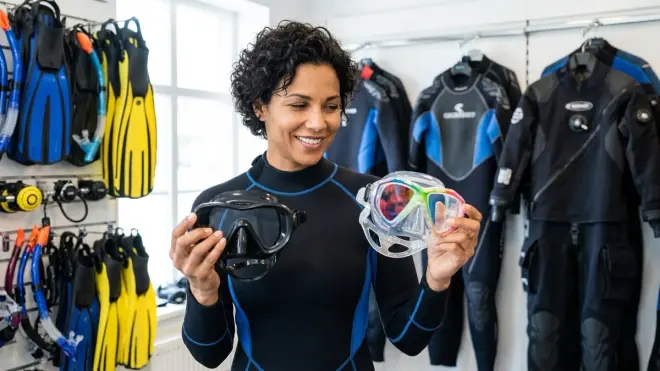
The same mask works for both cold water and tropical diving as long as it fits well and seals properly—the main difference is that you might pair it with a hood in cold water, which can affect how the skirt seals against your forehead and temples, so test the combination before diving if possible.
How often should I replace my scuba mask?
Replace your scuba mask when the silicone skirt shows significant wear like cracks, tears, or hardening, when the seal no longer holds consistently, or when the strap or buckles fail—with proper care this could be five to ten years or more for recreational diving, though heavy-use divers might replace masks every two to three years.
Can I get a prescription scuba mask if I wear glasses?
Yes, you can get prescription lenses installed in most twin-lens masks and many single-lens masks, either through custom grinding at dive shops or by purchasing pre-made prescription lens inserts that bond to the inside of the mask lens—this is actually more common than most new divers realize and works really well for moderate prescriptions.
Finding Your Perfect Window to the Underwater World
After three years of diving and way too many hours researching gear, I genuinely believe your mask is worth investing in early. A rental regulator works fine for most dives, a rental BCD is usually acceptable, but a poorly fitting rental mask ruins everything. The best scuba masks are the ones that disappear on your face—you forget you're wearing them and just enjoy being underwater.
Start with fit testing several different shapes and styles to figure out what actually seals on your face geometry. Don't get distracted by features or brand names until you've narrowed down which mask designs work with your face shape. Then consider your actual diving—are you doing casual reef tours where comfort matters most, or getting into underwater photography where field of view becomes critical, or planning cold water diving where you'll need hood compatibility?
I'm still building my gear collection piece by piece, but my mask was the second thing I bought after my dive computer, and it's been worth every penny. When you find the right mask, you'll know immediately—it'll feel comfortable during the fit test, stay sealed during your first dive, and eventually just become part of your face underwater. That's when diving transforms from managing equipment to actually experiencing the reef, and honestly, that's the whole point of why we do this.