
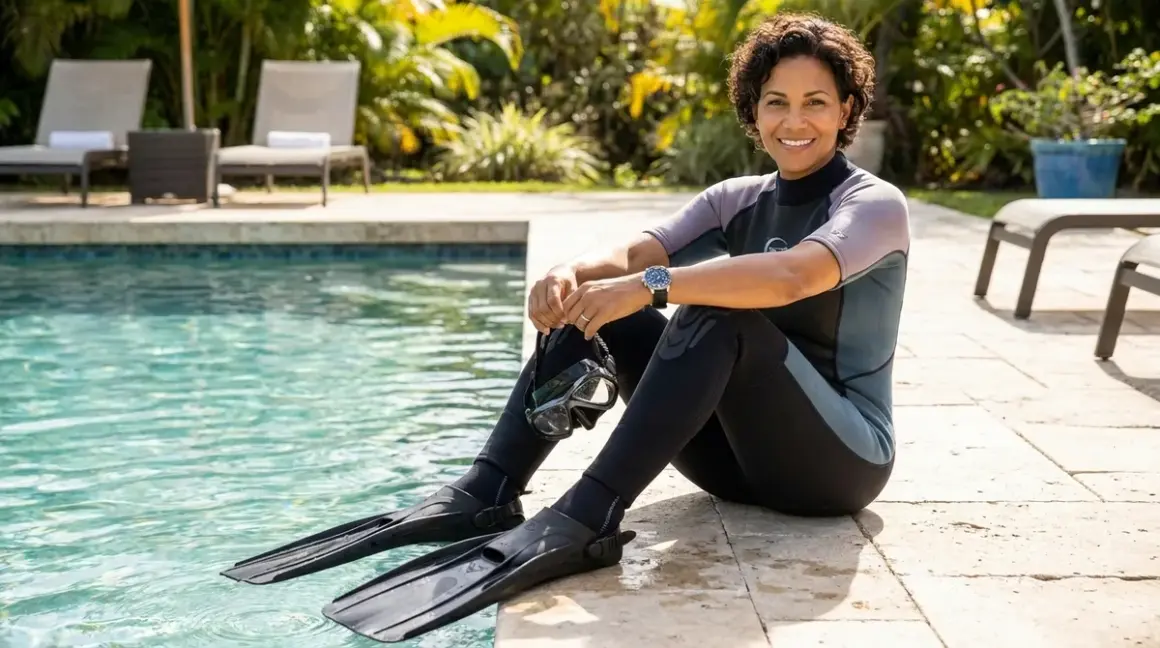

I still remember the excitement of buying my first pair of real scuba fins—and the absolute agony of getting out of the water after my first dive with raw, bleeding blisters on both heels. Nobody warned me that you need to break in scuba fins properly, just like you would new hiking boots. That painful lesson taught me something important: even perfectly sized fins need some adjustment time before they're truly dive-ready.
In this guide, I'll walk you through everything I've learned about breaking in new fins the smart way, so you can skip the bandages and actually enjoy your dives. Whether you picked up split fins or paddle fins, these techniques will help you avoid the mistakes I made. You'll learn practical strategies to soften stiff foot pockets, prevent hot spots, and gradually condition your feet—all before you hit the water for real.

Skill level: Beginner-friendly
Time needed: 1-2 weeks of gradual conditioning
What You'll Need
Before you start the break-in process, gather these items:
- Your new fins (obviously!)
- Neoprene dive socks or booties (3mm thickness works great for most conditions)
- Skin lubricant (Body Glide, petroleum jelly, or even coconut oil)
- Athletic tape or blister prevention tape (for protecting known hot spots)
- Bucket or large tub (big enough to soak your fins)
- Warm water (for soaking sessions)
- Towel
- Optional: Fin keepers or spring straps (if upgrading from standard straps)
Step 1: Inspect and Prepare Your New Fins
Before you do anything else, take a close look at your brand-new fins. I learned this the hard way when I didn't notice a small manufacturing burr inside the foot pocket that absolutely destroyed my heel on dive three.
Check the foot pocket interior carefully by running your fingers along every surface, especially around the heel cup and along the side rails where your foot makes contact. Feel for any rough edges, molding seams, or sharp bits that shouldn't be there. If you find anything suspicious, you can carefully smooth it with fine-grit sandpaper—just be gentle so you don't damage the material itself.
Next, examine the straps and buckles. Make sure everything moves smoothly and that there aren't any defects. I've seen plenty of divers at the dive shops in Belize discover broken buckles only after they're already geared up on the boat.
If your fins came with standard rubber straps and you're already dreading them (trust me, I get it), this is the perfect time to upgrade to spring straps. They're way easier to get on and off, and they distribute pressure more evenly. Just make sure you get ones compatible with your fin model—I once bought spring straps that were too short and had to return them.
Soak your fins in warm water for 15-20 minutes. This is especially important if you have rubber or thermoplastic foot pockets, which are stiff when brand new. The warm water helps soften the material slightly and makes the initial break-in period less brutal. Don't use boiling water though—you're softening, not cooking them!
Step 2: Wear Them Around the House (Seriously)

This step sounds silly, but it's honestly one of the best things I did after that first blistered disaster. Wearing your fins around the house helps identify pressure points before you're stuck on a boat with no options.
Put on the same booties or socks you'll actually dive with—this is super important because the thickness affects fit. Then slip your fins on and adjust the straps to a comfortable tension. They should feel snug but not painfully tight. I usually adjust mine so I can slide one finger between the strap and my foot.
Walk around your house for 10-15 minutes while wearing them. I know you'll feel ridiculous waddling around your living room in fins (my roommate definitely laughed at me), but you're mapping out where your feet make contact with the fins and where friction might develop.
Pay attention to these common problem areas:
- The heel cup where your Achilles tendon sits
- The top of your foot where the strap crosses
- The sides of your foot along the pocket rails
- Any point where skin rubs against a seam or edge
If you feel any hot spots developing—even mild ones—mark those areas mentally. You'll protect them in the next step. Do this dry-wearing routine 2-3 times over several days, gradually increasing the duration. By the third session, you should be able to wear them for 20-30 minutes without significant discomfort.
Step 3: Apply Lubricant and Protection to Hot Spots
Now that you know where your fins might cause problems, it's time to create a protective barrier. This step made the biggest difference for me when I learned to break in scuba fins properly.
Apply a skin lubricant to all the areas you identified in Step 2. I prefer Body Glide because it's designed for athletes and doesn't wash off immediately in water, but petroleum jelly works in a pinch. Focus especially on your heels and anywhere the strap makes contact. Be generous—you want a visible layer.
For areas that felt particularly tender during your house-wearing sessions, add athletic tape or blister prevention tape. These specialized tapes (like Leukotape or moleskin) create a smooth, slippery surface that reduces friction dramatically. I usually put a strip on each heel and sometimes on the top of my foot where the strap sits.
Here's a tip I wish someone had told me earlier: apply the tape to clean, dry skin and let it sit for 10-15 minutes before you put your booties on. This gives the adhesive time to bond properly so it won't slide around during your dive.
Some divers also use neoprene heel pads or ankle wraps, which can be especially helpful if you're diving in warm water with thin booties or diving booties with less padding. I haven't personally needed these, but several dive buddies swear by them—especially for full-foot fins which tend to have less adjustability.
If you're using adjustable-strap fins, experiment with strap positioning. Sometimes moving the strap slightly higher or lower on your foot eliminates a pressure point entirely. Just make sure the fins still feel secure.
Step 4: Do Pool or Shallow Water Sessions First
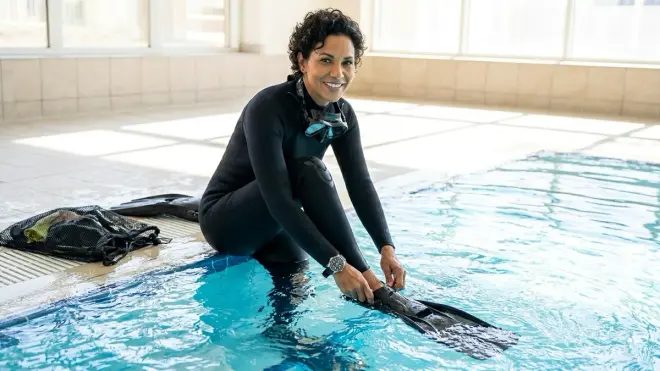
This is where the actual break-in happens. Don't take brand-new fins on a real dive—especially if it's a boat dive where you're committed for an hour. I made this mistake and spent 45 miserable minutes trying to ignore the pain while watching eagle rays glide past. Not fun.
Instead, start with pool sessions or very shallow, easy shore dives where you can exit immediately if something feels wrong. Your goal is to gradually condition both the fins and your feet without causing injury.
For your first water session with new fins:
- Dive for only 15-20 minutes maximum
- Use gentle, relaxed kicks—no power finning yet
- Check your feet halfway through for any warning signs
- Exit immediately if you feel sharp pain or rubbing
After this first session, inspect your feet carefully. You're looking for red marks, irritation, or the beginning of hot spots. A little pinkness where the fins contact your skin is normal, but anything that looks like it's developing into a blister needs attention before your next session.
Let your feet fully recover (usually 2-3 days) before your next session. For the second session, increase to 25-30 minutes if everything felt okay. By the third or fourth session, you should be able to dive for a full hour without issues.
Gradually increase both duration and kick intensity over these break-in dives. This progressive approach lets the fin materials conform to your foot shape while toughening your skin slightly in the contact areas. Think of it like building calluses—you want them to develop slowly, not suddenly.
Step 5: Adjust and Fine-Tune Your Fin Setup
After a few sessions in the water, you'll have a much better sense of how your fins actually perform and where adjustments might help. This is the stage where you optimize your fit based on real diving experience, not just how they felt in the dive shop.
Re-evaluate your strap tension. A lot of new divers (including me when I started) crank their straps way too tight because they're worried about losing a fin. But overtightening causes way more problems than it solves—including cutting off circulation and creating pressure points. Your fin should feel secure during kicks, but you shouldn't see deep strap marks on your skin after diving.
I usually adjust my straps so they're snug when my foot is fully pointed (like during a flutter kick), but not painfully tight when my foot is relaxed. This took some trial and error to get right.
If you're still getting friction in specific spots after 3-4 dives, consider different bootie options. Sometimes just switching from 3mm to 5mm booties eliminates a rubbing problem by changing how your foot sits in the pocket. Other times, a bootie with a different sole pattern or heel design makes all the difference. You can read more about how to choose scuba fins that match your diving style and foot shape.
For open-heel fins with standard straps, this is also when many divers realize they want to upgrade to spring straps or different buckles. If you're struggling with strap adjustments on the boat or the straps dig into your skin despite everything else being dialed in, spring straps might be worth the investment. They were a game-changer for me.
Pay attention to your kicking technique too. Sometimes what feels like a fin problem is actually a technique issue. If you're kicking too hard or using a bicycle-pedaling motion, you'll create extra friction and stress points. Efficient kicks should feel smooth and controlled—check out resources from professional dive training organizations like PADI if you want to refine your technique.
Step 6: Maintain Proper Fin Care During Break-In
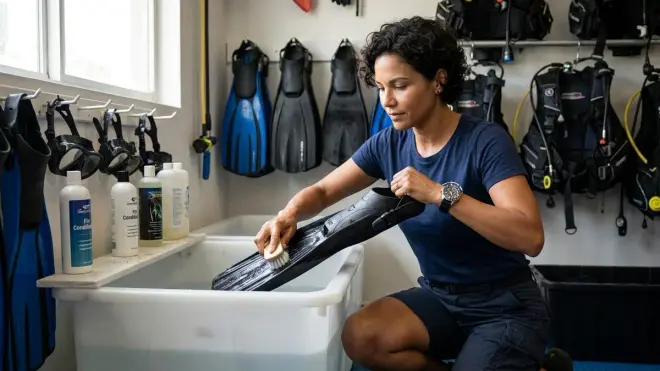
The way you care for your fins during the break-in period actually affects how well they conform to your feet. I didn't realize this at first and probably extended my break-in time by not storing them properly.
Always rinse your fins thoroughly with fresh water after every dive—salt crystals and sand particles can make any rubbing issues way worse. I learned this after getting a small grain of sand stuck inside my foot pocket that created a hot spot I couldn't figure out for three dives.
Store your fins flat or hanging by the blade, never folded or bent at the foot pocket. This is especially important during break-in because you don't want to create permanent creases or deformations. When I was traveling through Central America, I used to pack my fins by folding them—big mistake. It took forever to get the foot pockets to sit naturally again.
Don't leave fins in direct sunlight or hot cars during the break-in period. Heat can make materials softer temporarily, which might feel nice, but it can also cause warping or uneven stretching that ruins the fit you're working to develop.
If you're doing multiple dives over several days (like during a dive trip), let your fins dry completely between uses. Wet neoprene or rubber materials behave differently than dry ones, so consistent conditions help with the break-in process. I usually rinse mine after the morning dives and let them dry on deck during lunch.
Step 7: Know When Your Fins Are Fully Broken In
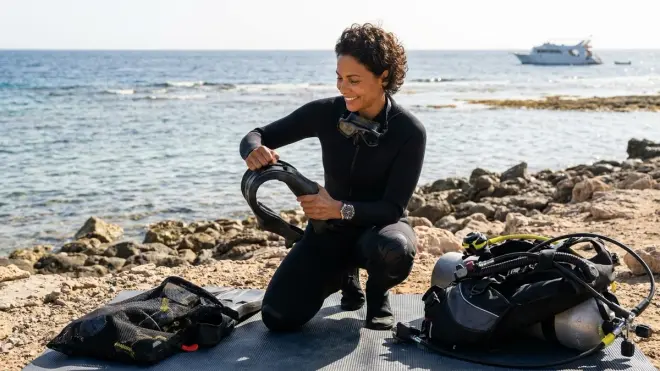
After a week or two of regular diving, you should notice that your fins feel completely different from day one. But how do you know when they're actually broken in and you can stop worrying about blisters?
Your fins are fully broken in when:
- You can complete a full 60-minute dive with normal finning intensity and have zero hot spots or discomfort afterward
- The foot pocket material feels noticeably softer and more flexible than when new
- You don't need to apply lubricant or protective tape before every dive
- The fins feel like a natural extension of your legs rather than something you're wearing
For most fins, this takes 5-8 dives of gradually increasing duration and intensity. Stiffer fins or those with thermoplastic foot pockets might take a bit longer—maybe 10-12 dives. Really soft, stretchy fins sometimes feel broken in after just 2-3 dives.
Don't rush this timeline. I've seen divers push through discomfort because they were on a week-long dive trip and didn't want to waste any dives. They ended up with legitimate blisters that forced them out of the water for the rest of the trip. Much better to take it slow and actually be able to dive the whole week.
Even after your fins are broken in, keep some lubricant and tape in your dive bag. I still occasionally get mild irritation if I'm doing an unusually long dive or trying a new type of bootie. Having protection available means a minor annoyance doesn't become a real problem.
Once your fins feel completely comfortable, you're ready for anything—long boat dives, current dives, or even trying how to use an underwater scooter where your fins are just for backup propulsion. Properly broken-in fins are one of those things you don't think about until you try diving with brand-new ones again.
Pro Tips & Common Mistakes
Don't skip the bootie step. I know some divers who try to break in fins barefoot or with thin socks because that's how they plan to dive eventually. This is usually a mistake—bare feet are more vulnerable to blisters, and the break-in process becomes way more painful than it needs to be. Even if you're diving in tropical water where you might eventually ditch the booties, wear them during break-in.
Start break-in efforts before your dive trip. I've met so many divers who bought fins a week before a liveaboard and then suffered through the entire trip. If possible, get your fins at least 2-3 weeks before any major diving plans so you have time to break them in properly. If you're planning a liveaboard trip, this is especially critical.
Different fin materials break in differently. Rubber foot pockets usually take longer but eventually conform really well to your foot shape. Thermoplastic materials break in faster but might not mold quite as much. Fins with very stiff blades often have stiffer foot pockets too—something to consider if you have sensitive feet.
Your feet will toughen up too. Part of what's happening during break-in isn't just the fins softening—your skin is also adapting to the pressure and friction. This is normal and actually helpful for diving long-term. Just make sure you're building these "calluses" gradually through the methods I described, not suddenly through injury.
The biggest mistake I see? Divers who experience pain during a dive and just keep kicking through it, thinking it'll get better. It won't. Pain is your warning system—listen to it. Exit the water, check your feet, make adjustments, and try again another day. I guarantee you that missing 20 minutes of one dive is better than missing three full days because you have blisters that won't heal.
Frequently Asked Questions
How long does it take to fully break in scuba fins? Most scuba fins take 5-8 dives to fully break in, though this varies by fin type and material. Stiffer fins with thermoplastic foot pockets may take 10-12 dives, while softer rubber fins might feel comfortable after just 3-4 dives. The key is gradually increasing your dive duration and intensity rather than rushing the process, which usually spans 1-2 weeks of regular diving.
Can I break in new fins without getting blisters? Yes, you can break in scuba fins without blisters by following a gradual conditioning process. Apply lubricant to high-friction areas, wear properly fitted dive booties, use protective athletic tape on known hot spots, and start with short pool sessions before progressing to longer dives. The trick is identifying pressure points early through dry wearing at home, then protecting those areas before they become problems.
Should I size up to prevent blisters when breaking in fins? No, sizing up usually makes blister problems worse because loose fins create more movement and friction against your skin. Your fins should fit snugly when wearing the booties you'll actually dive with—check out this scuba fin sizing guide for proper fit. It's better to use the correct size and protect your feet during break-in than to compensate with poorly fitting fins that will cause problems forever.
Do I need to break in fins with spring straps differently? Fins with spring straps typically cause fewer break-in issues because spring straps distribute pressure more evenly than standard rubber straps and eliminate the need for over-tightening. However, you still need to break in the foot pocket material itself using the same gradual approach—wearing them at home, starting with short dives, and protecting hot spots. The spring straps just remove one common source of discomfort from the equation.
Summary
Learning to properly break in scuba fins transformed my diving experience from painful endurance tests to actually comfortable, enjoyable dives. The process isn't complicated—it just requires patience and a willingness to take things gradually.
Start by inspecting your new fins and soaking them in warm water, then wear them around the house to identify pressure points before you ever get in the water. Protect vulnerable areas with lubricant and athletic tape, then begin with short pool sessions that progressively increase in duration and intensity. Throughout the process, pay attention to what your feet are telling you and make adjustments to strap tension, bootie thickness, or protective measures as needed.
Most importantly, don't rush it. Those 5-8 break-in dives might feel like a long time when you're excited about new gear, but they're absolutely worth it. Properly broken-in fins will serve you comfortably for hundreds of dives—they're an investment in your long-term diving enjoyment. Now get out there and start breaking in those fins the right way!