
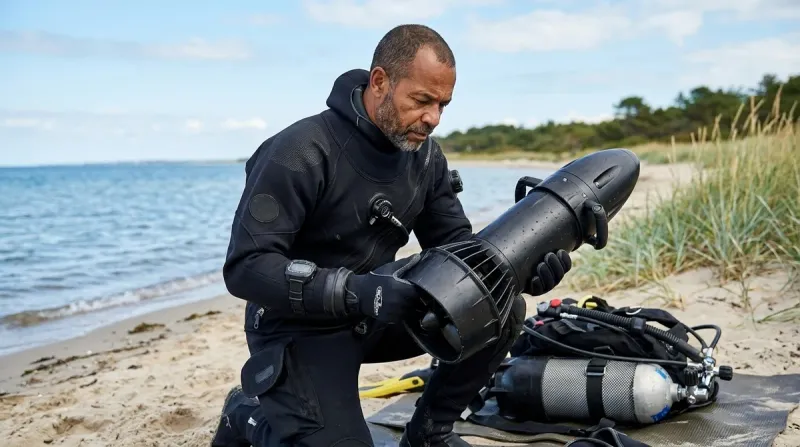

I've watched a perfectly good dive turn into a stressful surface swim more times than I'd like to admit, and nine times out of ten, it's because someone skipped a step on their dive scooter safety checklist. A DPV (diver propulsion vehicle) can transform your underwater experience, extending your range and conserving your gas supply—but only if it's working properly when you hit the water. I learned this the hard way on a drift dive in Cozumel when my scooter died at 60 feet, two miles from the boat, because I hadn't checked a flooded battery compartment. That was an exhausting swim I won't forget.
This dive scooter safety checklist covers everything you need to inspect before every dive: battery condition and capacity, buoyancy configuration, mechanical integrity, and emergency procedures. Whether you're using an entry-level recreational model or a technical cave diving unit, these checks take about ten minutes and can prevent equipment failures that range from inconvenient to genuinely dangerous.
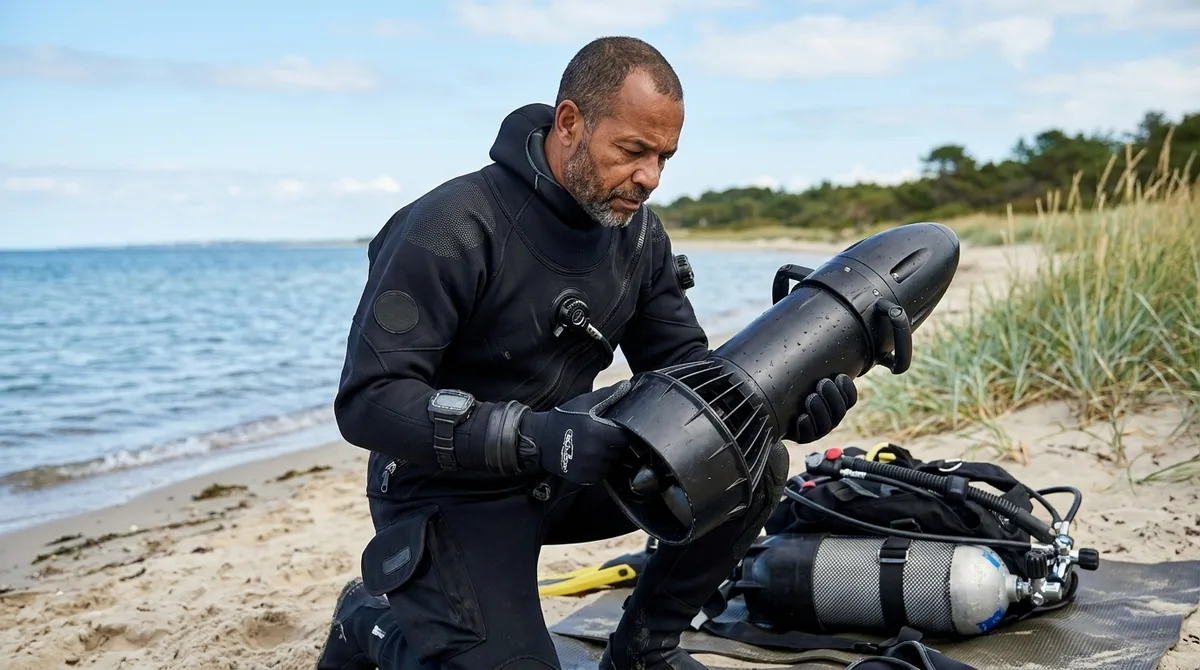
Battery and Power System Inspection
Your DPV's battery is its heart, and battery failures are the most common cause of mid-dive scooter problems. I've seen lithium-ion packs fail without warning, flooded NiMH cells corrode internal components, and BMS (battery management system) errors shut down scooters at depth. Here's what the manufacturer claims: "Our battery protection system prevents all failure modes." Here's what actually happens at depth: you need to verify these systems yourself.
Check battery charge level against planned dive profile. Your voltage readout or percentage display should show 100% if you're planning a full-range dive—and verify this against manufacturer specs for your specific battery chemistry. A 350Wh lithium-ion pack reading 98% might give you 45 minutes of runtime at moderate speed, but that same pack at 75% could leave you short on a wreck penetration. I always calculate my battery reserve the same way I calculate gas reserve: thirds rule for exploration dives.
Inspect battery compartment seals and o-rings for damage or contamination. Remove the battery cover and examine the primary o-ring for any cuts, flat spots, sand grains, or crystallized salt residue. A single grain of sand can create a leak path that floods your electronics. The o-ring should be pliable, evenly colored (no brown or white spots), and properly seated in its groove. If you're diving a scooter with multiple o-ring seals, like the Suex XJOY 7, check every single one—these systems are only as watertight as their weakest seal.
Verify battery connector pins are clean and corrosion-free. Saltwater and electrical contacts are enemies, and even minor corrosion can create intermittent connections that cause mid-dive shutdowns. Inspect both the battery-side and scooter-side connector pins for any green or white buildup, and clean with electronics contact cleaner if needed. I carry a small brush and contact cleaner in my save-a-dive kit specifically for this.
Test power-on sequence and verify all status indicators. Turn on your DPV and confirm that all LED indicators, display screens, and warning beeps function correctly. Most modern scooters run a diagnostic check during startup—watch for error codes or warning lights. If your unit has a depth sensor or pressure compensation system, verify that it displays atmospheric pressure correctly at the surface.
Check battery runtime against service log and charging cycle count. Lithium batteries degrade with charge cycles, losing about 20% of their capacity after 300-500 full cycles depending on chemistry and charging habits. If your battery pack is approaching its service life limit (typically 2-3 years for recreational use or 500 cycles, whichever comes first), plan for reduced runtime even at 100% charge. I log every charge cycle in my scooter maintenance records—it's saved me from unpleasant surprises.
Inspect battery compartment for moisture or condensation. Before installing your battery, shine a light inside the compartment and look for any water droplets, dampness, or corrosion on internal components. Even minor condensation can indicate a compromised seal that will eventually flood. If you're diving in environments with large temperature swings, be especially vigilant—I once had a scooter develop condensation simply from moving between an air-conditioned boat cabin and hot deck surface.
Verify emergency power-off function works correctly. Most DPVs have a magnetic kill switch or emergency cutoff that should instantly shut down the motor. Test this function on the surface before every dive—you need to know you can kill power immediately if the scooter gets entangled or you need to release it in an emergency.
For more details on battery chemistry and power management systems, see our article on how dive scooters work.
Buoyancy and Trim Configuration
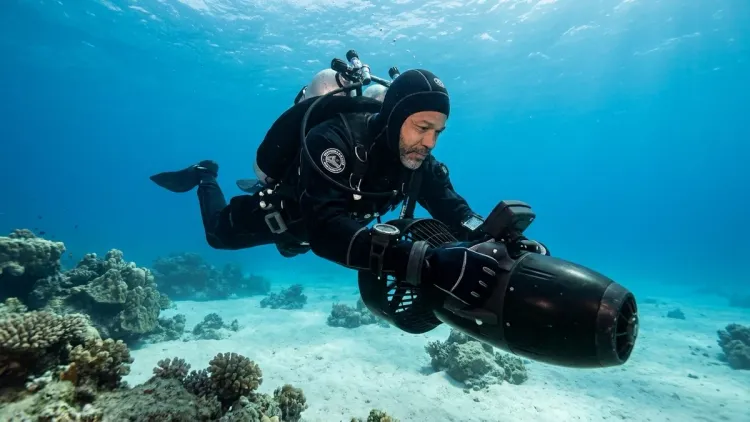
A DPV can weigh anywhere from 8 pounds to 80+ pounds depending on the model, and its buoyancy characteristics change as the battery depletes. I've seen divers lose control of their trim because they didn't properly configure their scooter's buoyancy for their diving environment. This section of your dive scooter safety checklist prevents those problems.
Test scooter buoyancy in fresh or salt water matching your dive environment. A scooter that's slightly negative in the pool might be positively buoyant in the ocean due to the density difference between fresh and salt water (seawater is about 2.5% denser). Submerge your scooter in the actual water you'll be diving and verify it's slightly negative or neutral—never positive, which can pull you toward the surface during operation.
Adjust ballast weight to achieve 1-2 pounds negative in the water column. Most recreational DPVs come with adjustable ballast pockets or attachment points for lead weights. The goal is slight negative buoyancy that keeps the scooter controllable but doesn't dramatically affect your overall weighting. I run my scooters about 1.5 pounds negative in saltwater, which keeps them from floating away during a drift dive but doesn't require constant buoyancy compensation.
Verify your BCD has sufficient lift capacity for combined diver and scooter weight. Add your DPV's weight to your standard weighting requirements and confirm your BCD's lift capacity can handle the total. A 60-pound scooter on a diver who needs 15 pounds of lead requires a BCD with at least 40-50 pounds of lift for safe ascent capability. If you're using a travel BCD, verify it can handle the additional load.
Check towing attachment points and quick-release clips. Your DPV should have a secure towing point (usually a bolt snap or carabiner attachment) and a quick-release mechanism that lets you immediately ditch the scooter in an emergency. Test the quick-release on land—it should operate with one hand while wearing thick gloves. I've had to emergency-release a scooter exactly once, when it got fouled in fishing line at 80 feet, and I was grateful I'd practiced the motion dozens of times.
Test trim position while holding the scooter in your planned configuration. In full gear on the surface, hold your DPV in your normal operating position (typically against your chest or side) and check your trim. The scooter should position you horizontally or slightly head-down—never feet-down, which creates massive drag. If your trim is off, adjust your tank position or add/remove weight from your integrated weight system.
Verify scooter buoyancy changes with battery depletion. Some battery chemistries change density as they discharge—lithium packs generally stay consistent, but older NiMH batteries can shift slightly. If you're planning an extended dive that will deplete 50%+ of your battery, anticipate a 0.5-1 pound buoyancy change and plan your weighting accordingly.
Understanding how your buoyancy compensator interacts with DPV weight is critical—review our guide on how to properly fit and adjust your BCD if you're new to scooter diving.
Mechanical and Propulsion System Checks
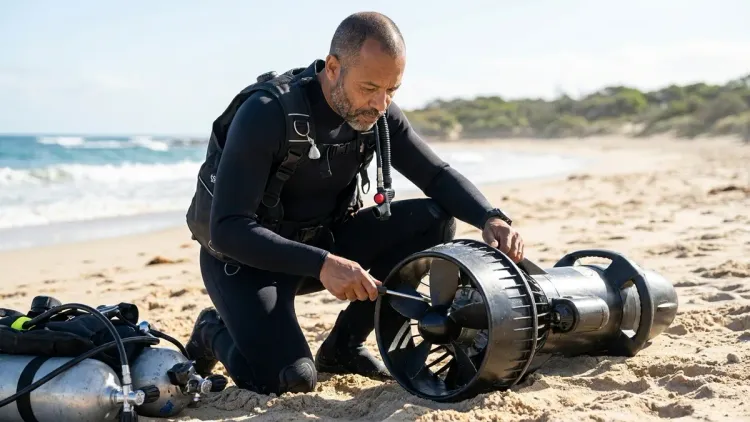
The mechanical components of your DPV—motor, propeller, shroud, and control triggers—are what actually move you through the water. Failures here range from annoying (a jammed trigger) to dangerous (a propeller that sheds a blade at depth). This part of your dive scooter safety checklist catches mechanical problems before they become underwater emergencies.
Inspect propeller blades for cracks, chips, or missing sections. Remove the propeller shroud if possible and examine each blade closely. Even minor chips can propagate into complete blade failures under load, and I've seen props shed blades that then destroyed internal seals or jammed the motor. If you're diving a folding-prop model designed for travel, verify the blade-locking mechanism is fully engaged and secure.
Check propeller shaft for play or wobble. Grip the propeller hub and try to move it laterally and axially on its shaft. There should be minimal play—excessive movement indicates worn bearings or a loose shaft assembly that will eventually fail. I encountered this on a rental scooter in Bonaire; the wobble was barely noticeable on the surface but created severe vibration under load, ultimately seizing the motor mid-dive.
Verify trigger or throttle mechanism operates smoothly through full range. Test your variable-speed trigger or throttle through its entire travel from zero to maximum. It should move smoothly without sticking, binding, or sudden jumps in resistance. If your scooter has multiple speed settings, cycle through each one and verify smooth transitions.
Inspect motor shroud and intake screen for debris or damage. The protective shroud around your propeller should be intact with no cracks or broken mounting points. Check the intake screen for any lodged seaweed, fishing line, or debris that could restrict water flow and cause motor overheating. I once had a plastic bag partially block my intake at 40 feet—the motor overheated and shut down for thermal protection before I even noticed the restriction.
Test emergency motor shutoff and restart procedure. Practice killing your motor using whatever method your scooter employs (magnetic switch, trigger release, etc.) and then restarting it. Some DPVs require a specific restart sequence after an emergency shutoff, and you don't want to be figuring that out while drifting in a current. Time your motor restart—most units should reinitialize within 2-3 seconds.
Check body seals and latches for integrity. Inspect every access panel, battery door, and hull joint for secure closure. Latches should click or lock positively, and sealing surfaces should mate flush without gaps. I use a systematic pattern, starting at the nose and working toward the tail, checking every seam and closure point.
Verify depth rating matches your planned maximum depth. This seems obvious, but I've seen recreational-rated DPVs (typically 130-feet maximum depth) taken on technical dives beyond their pressure rating. Check your manual for the rated depth and add a safety margin—just because a scooter is rated to 200 feet doesn't mean I'd take it to 190 feet. Hull compression, seal deformation, and motor performance all degrade near maximum rated depth.
For detailed maintenance procedures beyond pre-dive checks, see our underwater scooter maintenance checklist.
Emergency Procedures and Backup Systems
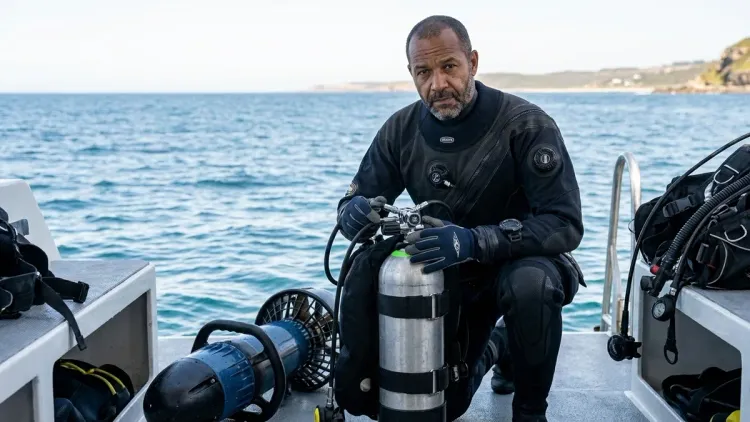
The final section of your dive scooter safety checklist addresses what happens when something goes wrong. DPV failures fall into two categories: failures that inconvenience you (dead battery, jammed prop) and failures that endanger you (runaway motor, entanglement, loss of buoyancy control). You need plans for both.
Confirm you have sufficient gas supply to complete the dive without scooter assistance. Calculate your SAC (surface air consumption) rate for swimming versus scootering—most divers use 30-50% less gas when scootering at moderate speeds. If your scooter fails, can you complete your planned penetration distance and return swim using only your baseline swimming consumption rate? I plan every scooter dive with enough gas to complete the entire dive profile swimming, treating the scooter's gas savings as a bonus rather than a requirement.
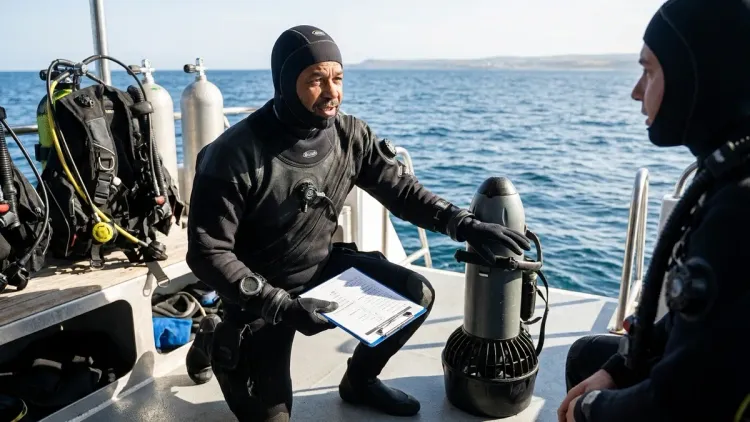
Review emergency scooter ditching procedures with your buddy. Both divers should know exactly how to release a DPV using the quick-release mechanism, and what hand signals indicate scooter problems. Practice the ditch procedure on land: quick-release activation, controlled scooter release, and transition to swimming. If you're diving in a current or overhead environment, discuss what happens if someone loses their scooter mid-dive.
Verify cutting tool is accessible while holding the scooter. A DPV can pull you into fishing line, nets, or wreck entanglements faster than you can react. Your cutting tool (knife or line cutter) must be reachable with your free hand while you're holding the scooter in normal operating position. I wear a line cutter on my BCD shoulder strap specifically for scooter diving—it's the one piece of safety gear I've actually used in anger.
Establish communication signals for scooter-specific problems. Standard hand signals cover basic issues, but you need DPV-specific signals: "my scooter is dead," "I'm ditching my scooter," "reduce speed," "stop." Review these with every buddy before the dive. The PADI DPV specialty course covers standardized signals if you want formal training.
Check redundant dive computer is functioning and visible. When you're covering distance on a scooter, you can rapidly change depths and accumulate decompression obligations faster than during normal diving. Your primary dive computer should be clearly visible while holding the scooter, and you should carry a backup computer for any dive beyond recreational limits. I've logged dives where scooter speed meant crossing a no-decompression limit I wouldn't have approached while swimming.
Practice emergency swimming ascent from maximum planned depth. Before any scooter dive to significant depth, mentally rehearse (or actually practice) a normal ascent rate swim from your deepest planned depth. If your DPV dies at 100 feet, you need to maintain 30 feet per minute or slower ascent rate while swimming—which is harder when you're weighted for scooter diving. Time yourself during pool practice to build realistic expectations.
Final Check Before You Go
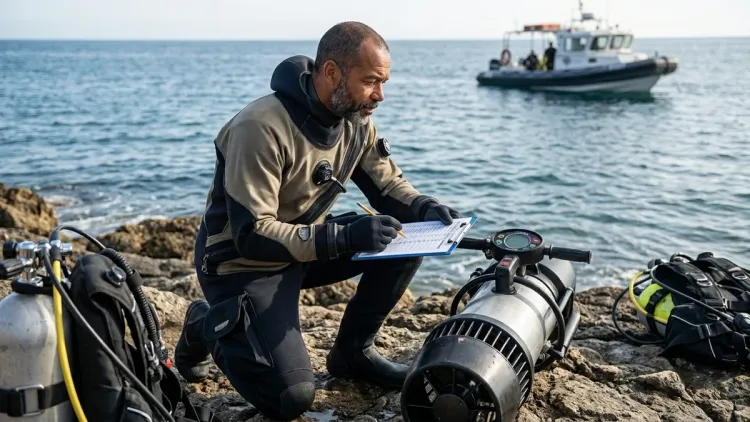
Here's your condensed dive scooter safety checklist for the final five minutes before entering the water:
- Battery at 100% charge (or planned capacity) with no warning lights or error codes
- All o-rings clean, lubricated, and properly seated in battery compartment and body seals
- Buoyancy tested in actual diving environment (salt or fresh water)
- Scooter weighted 1-2 pounds negative in water column
- Propeller spins freely with no binding or blade damage
- All body latches secured and sealing surfaces flush
- Emergency quick-release tested and functional
- Cutting tool accessible while holding scooter in operating position
- Buddy briefed on emergency procedures and communication signals
- Gas supply sufficient for complete dive profile without scooter assistance
- Both dive computers functioning and visible during scooter operation
- Depth rating verified against planned maximum depth
I run through this abbreviated checklist on every single scooter dive, even for simple reef tours where I've used the same DPV a hundred times. It takes three minutes and has caught problems ranging from a loose battery connector to a partially unlatched nose cone that would have flooded at depth.
Frequently Asked Questions
How often should I perform a complete dive scooter safety checklist inspection? You should perform the complete dive scooter safety checklist before every single dive, regardless of whether you used the scooter earlier the same day—conditions change, seals can shift, and debris can enter the propeller shroud between dives. For scooters in storage, perform a full inspection before the first dive of the season and after any transport, as vibration and temperature changes can affect seals and mechanical components.
What's the minimum battery charge level I should dive with on a DPV? Never start a dive with less than 80% battery charge unless you've specifically calculated your runtime requirements and built in a 50% reserve—the same way you would plan gas consumption for a scuba dive. Most DPV failures happen on depleted batteries, and lithium-ion packs in particular can experience sudden voltage drops below 20% remaining capacity that cause immediate motor shutdown without warning.
Can I skip the buoyancy check if I'm using the same scooter in the same location? No, you should verify buoyancy configuration before the first dive of any trip, even in familiar locations—battery age, seal condition, and even ambient water temperature (which affects water density) can change your scooter's buoyancy by 1-2 pounds between trips. That said, you don't need to repeat the buoyancy test between dives on the same day in the same water unless you've changed ballast weights or battery packs.
Final Thoughts
A dive scooter safety checklist isn't just about preventing mechanical failures—though it definitely does that. It's about building the same systematic, safety-focused approach to DPV diving that you apply to every other aspect of scuba. I've logged over 500 scooter dives across everything from shallow reef tours to 200-foot wreck penetrations, and I've never once regretted taking ten minutes for a thorough pre-dive inspection.
The most common DPV problems I see are entirely preventable: flooded battery compartments from dirty o-rings, mid-dive shutdowns from depleted batteries, and loss of control from improper buoyancy configuration. Every single one of those failures traces back to skipping a step on this checklist.
If you're new to scooter diving, review our article on how to use an underwater scooter to understand the operational techniques that complement these safety checks. And if you're shopping for your first DPV, our lab-tested performance analysis covers the models that best balance reliability, runtime, and safety features across different diving profiles. The right scooter, properly maintained and thoroughly inspected, transforms your underwater range and experience—but only if it's working when you need it.