
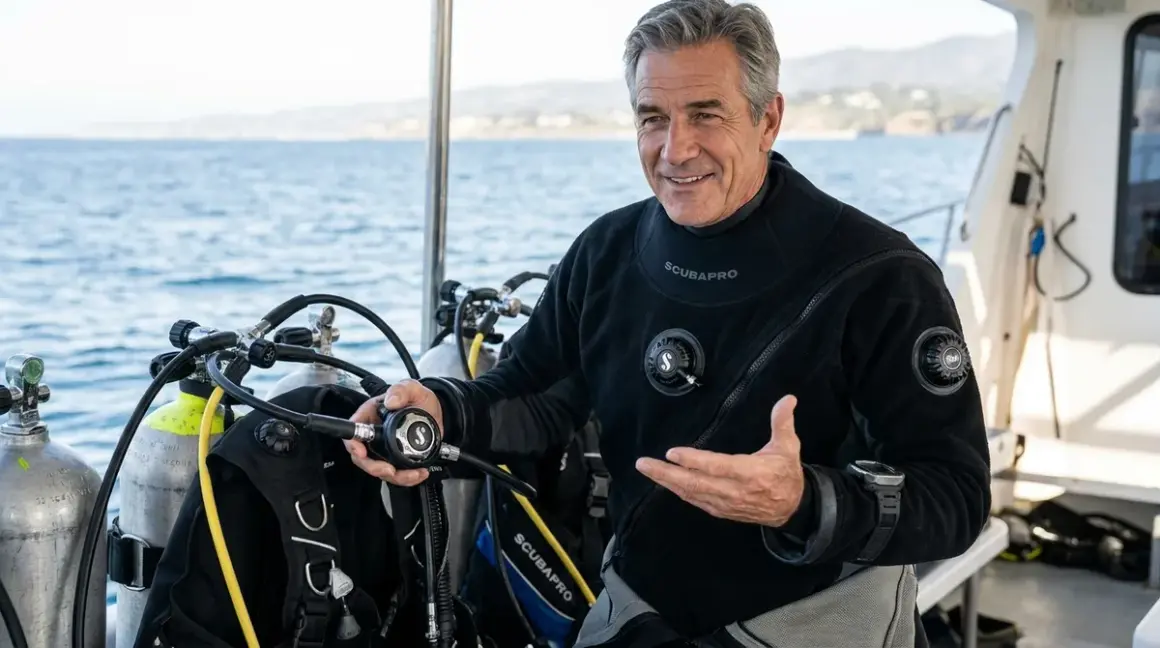

I've watched hundreds of new divers walk out of dive shops with their first regulator, and I can usually tell within five minutes whether someone helped them make a smart choice or just moved inventory. The best first regulator for new divers isn't the cheapest model that'll work, and it's not the high-end setup a tech diver would buy—it's something balanced, serviceable, and appropriate for how you'll actually dive for the next five years. Here's the thing: your regulator is the piece of gear between you and breathing underwater, so this decision matters more than your mask color or fin style. After four decades of watching gear perform (and fail) in real conditions, I've narrowed down exactly what new divers should look for and which models actually deliver.
What to Look For in Your First Regulator
Balanced vs Unbalanced First Stage Design
Balanced first stages maintain consistent breathing performance regardless of tank pressure or depth—as your tank drains from 3000 PSI down to 500, a balanced reg feels the same. Unbalanced designs get progressively harder to breathe as tank pressure drops, which isn't dangerous but gets annoying and can increase anxiety on the back half of a dive. I tell new divers to spend the extra money on a balanced first stage if they're planning more than ten dives a year. The difference becomes obvious around 60 feet when you're at half a tank.

Most entry-level regulators use diaphragm first stages rather than piston designs. Diaphragms seal the internal mechanism from water contact, which means better freeze resistance and less maintenance hassle in sandy or silty conditions. Piston regs breathe slightly easier and cost less to service, but they're more finicky about regular maintenance. For a first regulator, I lean toward diaphragm designs—they're more forgiving if you skip a service year or dive in less-than-pristine water. Understanding how scuba regulators work helps clarify why these design choices matter for breathing performance.
Service Interval and Parts Availability
Most manufacturers specify service intervals between 12-24 months or 100-200 dives, whichever comes first. Here's what nobody tells you in the shop: that service will cost between $100-200 depending on your dive shop's labor rates and whether parts are readily available. Some brands offer free parts programs if you service on schedule—Scubapro and Atomic both run these programs, and over five years they'll save you $300-500 in parts costs.
Pay attention to which brands your local shop services. I've seen divers buy regulators online from obscure European brands, then discover their nearest authorized service center is three states away. Mailing your life support equipment for service is inconvenient and adds shipping costs both ways. Stick with major brands that have widespread service networks: Scubapro, Aqualung, Apeks, Atomic, Cressi, or Oceanic. Your pre-dive regulator safety checks catch most issues, but annual service keeps small problems from becoming catastrophic failures.
DIN vs Yoke Connection Standards
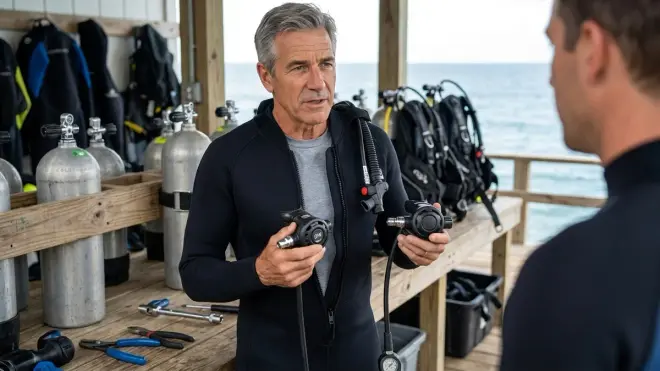
The first stage connects to your tank valve with either a yoke (A-clamp) fitting rated to 3000 PSI or a DIN threaded connection rated to 3500-5000 PSI. For warm-water recreational diving, yoke connections work fine and they're the standard at most Caribbean and tropical resorts. DIN connections provide a more secure seal, handle higher pressures, and are less prone to o-ring damage from rough handling—but they're overkill for most new divers.
I recommend yoke connections for your first regulator unless you're specifically training for technical diving or cold-water diving from the start. Most DIN regulators can convert to yoke with a simple adapter, but going the other way requires buying a new first stage. The DIN vs yoke decision matters more as you advance, but for now, match what your local dive operators use. In Florida, it's 90% yoke. In Europe, it's 60% DIN.
Breathing Performance and Cracking Pressure
Cracking pressure is the effort required to initiate inhalation—lower numbers mean easier breathing. Quality regulators crack between 0.8-1.2 inches of water pressure, which feels effortless even at depth. Cheap regulators can crack at 1.5+ inches, which creates noticeable breathing resistance beyond 80 feet. Second stages should also have adjustable breathing resistance controls, though honestly, most recreational divers set it once and forget it.
I care more about work of breathing at depth than surface performance. Any regulator breathes fine in the pool, but at 100 feet with current and elevated CO2 from exertion, differences become obvious. Look for regulators with venturi switches that boost airflow during inhalation—this feature alone makes challenging dives significantly more comfortable. If you're considering cold water from the start, check out best cold water regulators for models with specific freeze protection features.
Weight Considerations for Travel
A complete regulator set (first stage, two second stages, hoses, and gauges) weighs between 3-5.5 pounds. That might not sound like much, but when you're packing for a liveaboard and watching airline weight limits, every pound matters. Titanium first stages can cut a pound off total weight, but they cost $400-600 more than equivalent brass models.
For most new divers, I'd rather see you invest in a lightweight travel BCD than spend extra on titanium regulators. Your BCD weighs 4-8 pounds, so shaving weight there makes more sense. That said, if you're committed to frequent dive travel, paying attention to total system weight from the beginning prevents future regrets. Some manufacturers publish dry weights but not in-water weights—a titanium reg is lighter in your bag but breathes identically underwater to its brass equivalent.
Cold Water Performance and Environmental Sealing
Even if you're starting in tropical water, your diving ambitions might change. Environmentally sealed first stages fill the ambient pressure chamber with oil, grease, or a sealed diaphragm that prevents water intrusion. This design prevents freeze-ups in water below 50°F and keeps silt out of the first stage in murky conditions.
I've seen first stages free-flow catastrophically in 45°F water on North Carolina wreck dives—the expanding air chills internal components, moisture freezes, and the valve sticks open delivering full tank pressure. It's terrifying if you're not expecting it, and it drains a tank in under two minutes. If there's any possibility you'll dive quarries, lakes, or cold-water coasts, spend the extra $100-150 on environmental sealing. It's not worth saving money here. Florida divers can skip this feature since Gulf and Atlantic water rarely drops below 70°F.
Our Top Picks
Scubapro MK11/C370 Regulator Set
The Scubapro MK11 C370 Regulator🛒 Amazon delivers balanced diaphragm first stage performance with environmental sealing in a package that works from tropical reefs to temperate wrecks. The MK11 first stage uses Scubapro's proven anti-freeze chamber design rated down to 40°F, and the C370 second stage cracks at just under 1.0 inches of water with adjustable venturi switch. I've seen this regulator on recreational dive boats from Key Largo to Monterey—it's become the default recommendation for new divers at multiple shops I work with, and for good reason. The set includes a 36-inch LP hose, which is ideal for recreational diving with standard BCD routing.
Pros:
- Balanced first stage maintains consistent breathing across full tank pressure range
- Environmental sealing allows cold water diving without additional modification
- Scubapro's parts-for-life program covers replacement components with annual service
- Widely serviceable at authorized shops worldwide
- CE-certified and rated to 200 meters depth
- Total dry weight under 3.8 pounds complete
Cons:
- Second stage adjustment knob is smaller than competitors, harder to manipulate with thick gloves
- Hose routing on first stage favors right-hand tank mounting, less flexible for side-mount configurations
- Higher service costs compared to budget brands, though parts program offsets this over time
Atomic Z2X Regulator Package
The Atomic Z2X Regulator🛒 Amazon uses the same internal components as Atomic's titanium models but houses them in marine-grade brass and zirconium-plated components to hit a more accessible price point. What makes Atomic unique is their seat-saving orifice design that extends service intervals to 2 years or 300 dives—that's double the industry standard. The Z2X first stage is a balanced piston design that breathes exceptionally easy, and the second stage features Atomic's comfort swivel that reduces jaw fatigue on long dives. I've logged over 200 dives on a Z2X personally, including night dives, drift dives, and wreck penetrations, without any breathing resistance issues.
Pros:
- Extended service interval reduces long-term maintenance costs
- Comfort swivel eliminates hose pull and reduces jaw strain
- Automatic flow control adjusts to depth without manual switches
- Breathes easier than most regulators at depth below 80 feet
- Includes padded regulator bag for transport protection
Cons:
- Piston design requires more diligent rinsing after sandy or silty dives
- No environmental sealing in base model—requires upgrade kit for cold water (adds around $75)
- Slightly heavier than equivalent diaphragm models at 4.2 pounds
Cressi MC9/XS2 Compact Regulator
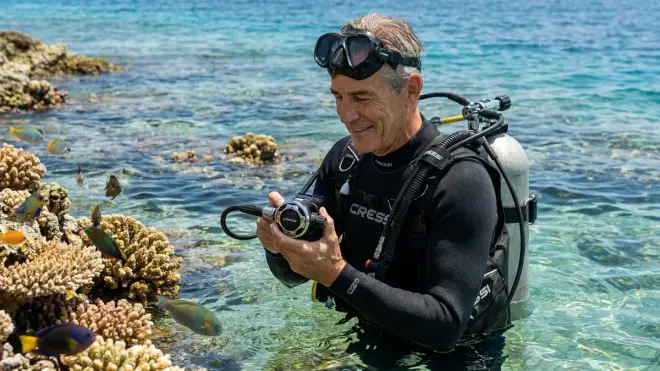
The Cressi MC9 XS2 Regulator🛒 Amazon targets divers who prioritize compact dimensions and travel weight over every last bit of breathing performance. The MC9 first stage is a balanced diaphragm design that's 15% smaller than comparable models, and the XS2 second stage is one of the lightest on the market. Total package weight is just 3.3 pounds, which matters when you're packing multiple regulators for a family dive trip. Cressi's been building regulators since 1946, and their service network covers most dive destinations worldwide. I recommend this setup for divers who know they'll be doing mostly warm-water resort diving and want something easy to pack.
Pros:
- Lightest complete regulator package in this category
- Compact first stage fits easily in travel bags
- Balanced performance across pressure range
- Lower price point than Scubapro or Atomic equivalent models
- Reversible second stage allows left or right-hand hose configuration
Cons:
- Smaller first stage ports limit upgrade options for adding additional hoses later
- Service intervals are 12 months or 100 dives, more frequent than competitors
- Second stage exhaust tee creates more bubbles in field of vision during horizontal trim
- Not environmentally sealed—suitable only for warm water above 60°F
Aqualung Core Supreme Regulator Set
The Aqualung Core Supreme Regulator🛒 Amazon uses Aqualung's balanced diaphragm first stage with dry chamber environmental sealing and pairs it with their Venturi Pneumatic Assisted second stage design. What I like about this regulator is the massive venturi boost when you switch to the dive position—it genuinely feels like breathing surface air even at 90 feet with current. The Core first stage has four LP ports and two HP ports with swivel capability, which gives you flexibility for adding drysuits, inflator hoses, or additional second stages as your diving advances. Aqualung's global service network rivals Scubapro's, so you'll find authorized service almost anywhere.
Pros:
- Strong venturi boost reduces work of breathing at depth
- Swivel first stage ports allow clean hose routing for various BCD configurations
- Environmental sealing standard, not an upcharge option
- Heat exchanger in second stage reduces free-flow risk in cold water
- Includes standard and cold-water LP port plugs
Cons:
- Heavier than competitors at 4.6 pounds complete
- Venturi switch lever protrudes more than other models, occasionally catches on BCD straps
- Slightly higher cracking pressure at 1.1 inches compared to Atomic models
- Mouthpiece is harder durometer rubber, may require replacement for comfort
Apeks XL4+ Regulator System
The Apeks XL4 Plus Regulator🛒 Amazon is Apeks' entry-level offering, but "entry-level" from a company known for making expedition-grade technical regulators means it's built like a tank. The XL4+ features a balanced diaphragm first stage with full environmental sealing and over-balanced valve design that actually improves breathing slightly as depth increases—most regulators do the opposite. The second stage is larger than competitors, which some divers dislike aesthetically but delivers excellent airflow. I've seen this regulator on working dive guides in Cozumel and cold-water charter boats in the Great Lakes—it handles abuse better than most regulators twice the price.
Pros:
- Over-balanced design improves breathing performance with increasing depth
- Exceptional build quality with marine-grade brass and Viton o-rings throughout
- High and low-pressure ports accept standard and extended port fittings
- Excellent cold-water performance down to 38°F tested
- Service technicians report fewer issues with Apeks regulators than any comparable brand
Cons:
- Larger, less streamlined second stage profile
- Limited dealer network in some US regions compared to Scubapro or Aqualung
- Adjustment knob requires multiple full rotations to feel differences in breathing resistance
- Mouthpiece tie-wraps must be cut for replacement, can't slide off like some designs
Oceanic Alpha 10 SP5 Regulator Package
The Oceanic Alpha 10 SP5 Regulator🛒 Amazon represents the best value in this category if you're budget-conscious but refuse to compromise on core performance features. The Alpha 10 first stage is a balanced diaphragm design with dynamic adjustment that compensates for tank pressure variations, and the SP5 second stage includes both venturi control and breathing resistance adjustment. Oceanic positions this as their "upgrade from rental" regulator, and that's exactly what it is—noticeably better than what you'll find on resort racks but not breaking the bank. I've recommended this setup to dozens of newly certified divers over the years, and failure rates are minimal.
Pros:
- Most affordable balanced regulator package from major manufacturer
- Standard service parts widely available at lower cost than premium brands
- Breathing performance rivals regulators costing $200 more
- Includes integrated dry valve that prevents water intrusion during storage
- Backed by parent company Huish Outdoors' established service network
Cons:
- First stage exterior finish shows wear faster than premium models
- Environmental sealing requires separate kit purchase (around $60 additional)
- Heavier brass construction at 4.8 pounds total weight
- Fewer LP ports limit expandability for technical diving progression
- Some users report stiffer purge button requiring more pressure than competitors
Frequently Asked Questions
Should I buy my first regulator from my dive shop or online?
Buy from your local dive shop for your first regulator, even if it costs $75-150 more than online retailers. Here's why: that shop will service your regulator for life, they'll walk you through setup and adjustment, and they'll warranty any issues immediately without shipping hassles. I've seen too many divers save money buying online, then discover their local shop charges an extra "unauthorized purchase" fee for service or won't service it at all. Your relationship with your dive shop matters more than the initial price difference—you'll make up that cost difference in service convenience alone. If your local shop pushes a brand they can't service or clearly doesn't know the product, that's a red flag about the shop itself. For additional context, check out mistakes new divers make when buying first gear, which covers this topic in more detail.
How often will I need to service my first regulator and what does it cost?
Expect to service your regulator annually or every 100-150 dives, whichever comes first, with costs ranging from $90-200 per service depending on your region and brand. Service includes complete disassembly, ultrasonic cleaning, replacement of all o-rings and seats, pressure testing, and breathing performance verification. Some manufacturers like Scubapro and Atomic offer free parts programs if you service on schedule—this cuts your cost in half since you're only paying labor. That said, if you're only diving 10-15 times per year in warm, clean water, I've seen properly maintained regulators go 18 months between services without issues. Cold-water divers and those logging 50+ dives annually should stick strictly to annual service. Never, ever skip service because "it seems fine"—internal wear isn't visible until catastrophic failure happens. The detailed service schedule and inspection procedures explain exactly what happens during a proper service.
Can I use the same regulator for cold water and tropical diving?
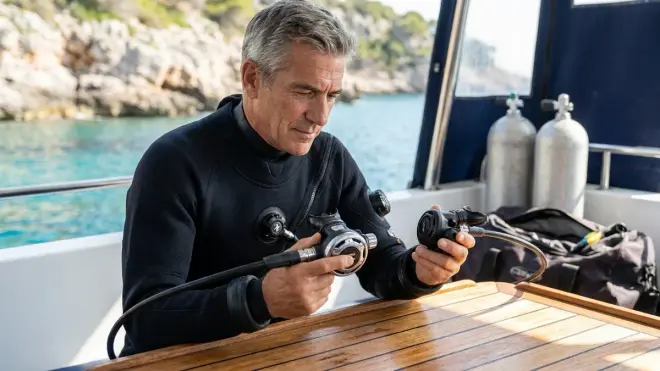
Yes, provided you buy an environmentally sealed regulator rated for cold water use. Models like the Scubapro MK11, Apeks XL4+, and Aqualung Core Supreme work in both environments without modification. The environmental sealing prevents internal freeze-ups in water below 50°F while not affecting performance in 80°F Caribbean water. What you can't do is take a tropical-only regulator into cold water—I watched a diver's unsealed first stage free-flow violently at 70 feet in 48°F water on a North Carolina wreck dive, creating a massive safety issue. If there's any chance you'll dive cold water in the future, pay the extra $100-150 for environmental sealing now rather than buying a second regulator later. The only real trade-off is slightly more weight, typically 0.3-0.5 pounds, which is negligible unless you're obsessing over travel weight.
What's the difference between balanced and unbalanced regulators and does it matter for a first regulator?
A balanced regulator maintains consistent breathing effort regardless of tank pressure or depth, while unbalanced designs get progressively harder to breathe as your tank depletes. At 3000 PSI and 30 feet, both feel identical. At 500 PSI and 90 feet, the difference is substantial—the unbalanced reg requires noticeably more inhalation effort, which increases CO2 retention and can trigger anxiety. For new divers who are already managing multiple new sensations underwater, that increasing breathing resistance is the last thing you need. Every regulator in my recommendations above is balanced because I genuinely believe the $75-125 price premium over unbalanced designs is worth it. Unbalanced regulators work fine as backup/octopus units or for very shallow diving, but not as your primary. If cost is your absolute constraint, buy a used balanced regulator with recent service rather than a new unbalanced model—you can learn more about the new vs used gear trade-offs and what to inspect.
Do I need to buy the manufacturer's octopus and gauges or can I mix brands?
You can absolutely mix brands—regulators use standardized LP (low pressure) and HP (high pressure) port connections that are universal across manufacturers. Your octopus (alternate second stage) just needs to thread onto an LP port on your first stage, and any brand will work. Same with gauges, inflator hoses, and pressure transmitters. That said, buying a complete set from one manufacturer ensures matched breathing performance between your primary and backup regulators, and you'll only need to learn one service schedule. I've seen plenty of divers running a Scubapro first stage with an Atomic octopus and an Oceanic gauge—it's functionally fine but aesthetically mismatched. Where this matters is warranty and service: if you have an issue, the manufacturer will only warranty their own components, not the mixed-brand parts. For your first setup, I'd buy a matched set, then mix and match as you add backup equipment later. Understanding your complete gear compatibility needs helps avoid purchasing mistakes.
The Verdict
The best first regulator for new divers balances performance, serviceability, and appropriate features for how you'll actually dive over the next 3-5 years. The Scubapro MK11/C370 remains my default recommendation for most new divers because it handles both warm and cold water, services anywhere, and includes features you'll appreciate as you advance without overwhelming you with technical complexity. If you're planning frequent travel, the Cressi MC9/XS2 saves meaningful weight and packs smaller. For divers on tighter budgets who still want quality, the Oceanic Alpha 10 delivers balanced performance without premium pricing.
Here's my final advice after watching divers make this decision hundreds of times: don't buy the cheapest regulator that'll work, and don't buy the regulator your instructor uses unless your diving will look like theirs. Buy something from a major brand that your local shop services, make sure it's balanced, and if there's any chance you'll dive cold water, spend extra for environmental sealing. Your regulator should be boring and reliable, not exciting—save the excitement for what you're seeing underwater, not wondering if your next breath will come easy.