
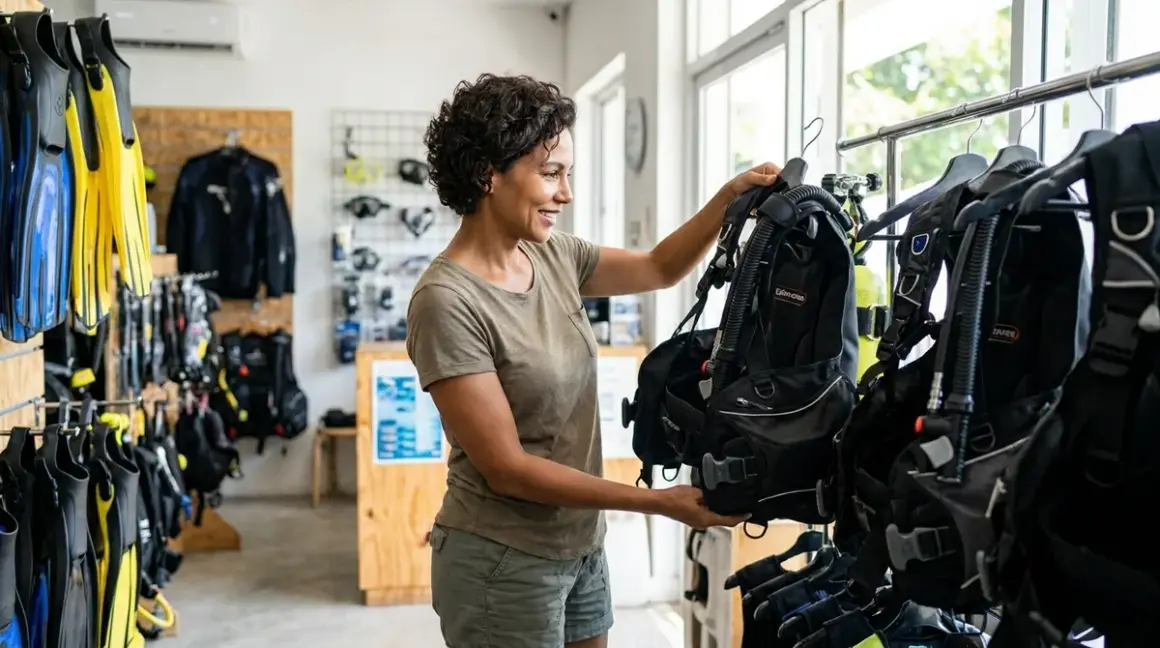

I still remember standing in the dive shop three years ago, staring at a wall of BCDs and feeling completely overwhelmed. The instructor kept throwing around terms like "integrated weights" and "lift capacity," and I just nodded along pretending I understood. Honestly, I didn't buy my BCD that day—I went home, did way too much research, and still second-guessed my choice for weeks. If you're trying to figure out how to choose first BCD and feeling lost, I totally get it. Quick verdict: Focus on fit and comfort first, then consider whether you need travel-friendly features or just something reliable for local diving—the rest of the specs matter way less than the dive shops make you think.
What to Look For When Choosing Your First BCD
Fit and Adjustability: This Matters More Than Anything
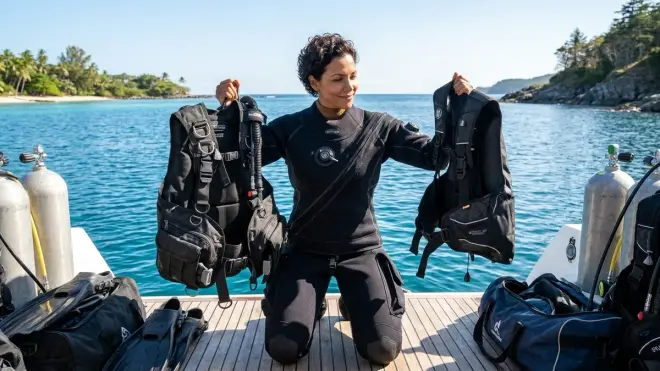
I cannot stress this enough: the best BCD is the one that actually fits your body. I made the mistake of buying a BCD online without trying it on first, and it sat too high on my torso and dug into my armpits every single dive for six months before I finally sold it. A proper fit means the bladder sits comfortably on your back, the shoulder straps don't slide around or pinch, and you can reach all the dump valves and D-rings without contorting yourself.
Most BCDs come in multiple sizes (small, medium, large, sometimes X-small and X-large too), and some manufacturers offer separate sizing for men's and women's torsos. Women's-specific BCDs typically have narrower shoulders, shorter torso lengths, and chest straps that route differently—these aren't just marketing, they actually make a difference if you have a shorter torso or wider hips. When you're trying one on, wear it over a wetsuit or thick shirt if possible, adjust all the straps, and actually move around. Bend forward like you're swimming horizontally. Twist your torso. Reach behind you. If anything pinches, rides up, or feels awkward on land, it'll be ten times worse underwater.
The strap and buckle systems vary a lot between models. Quick-release buckles are convenient, but some of them are weirdly stiff or hard to operate with gloves. Velcro cummerbunds (the waist strap) mold to your body shape really well but can loosen during a dive if they're not tight enough initially. Traditional ladder-lock buckles are reliable but can be a pain to adjust in small increments.
Style: Back-Inflate vs Jacket-Style
This is where people get really opinionated, but honestly both styles work fine for recreational diving. Jacket-style BCDs inflate around your sides and front as well as your back—they feel stable at the surface (you float more upright), and they're what most rental BCDs are, so they're familiar if you learned on rental gear. The downside is they can feel a bit bulky and sometimes squeeze your torso when fully inflated. They also tend to push you slightly forward when you're horizontal underwater, which annoyed me when I started getting serious about underwater photography and wanted perfectly flat trim.
Back-inflate BCDs (also called wing-style, though technically wings are a bit different) only inflate behind you. They keep you in a more horizontal position underwater, which feels more streamlined and is better for buoyancy control once you get the hang of it. At the surface, though, you lean forward a bit more—some people find this uncomfortable, especially in choppy water. I switched to a back-inflate after about 30 dives and loved the trim underwater, but I had to consciously remember to keep my head back at the surface so I wasn't face-planting into waves.
If you're doing mostly tropical reef diving and spend a lot of time at the surface waiting for boats or other divers, a jacket might be more comfortable. If you want to improve your buoyancy and trim for photography or you're thinking about eventually doing more advanced diving, a back-inflate is a solid choice. There's no wrong answer here—it's really about preference. If you can, rent or borrow both styles for a few dives before you buy. For more details on the differences, check out our guide on jacket BCD vs back inflate BCD.
Weight Integration and Pockets
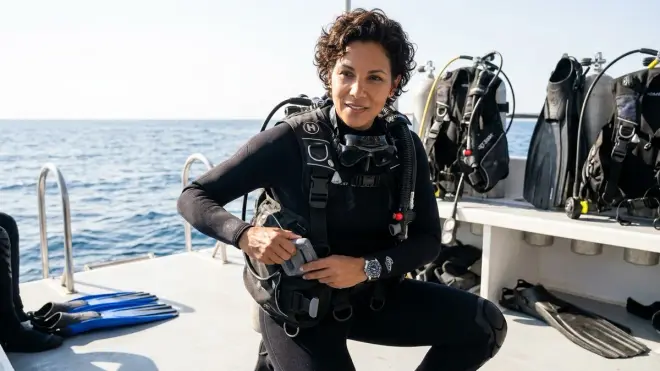
Integrated weight pockets are one of those features that seem like a luxury until you try them, and then you never want to go back to a weight belt. Instead of wearing a separate belt around your waist, you slide weight pouches into pockets built into the BCD (usually on the hips or lower back). They're way more comfortable because the weight distributes better, and you don't have that belt digging into your stomach or hips during the dive.
Most modern BCDs have at least some integrated weight capacity, but the details vary. Some have quick-release pouches that you pull a handle to drop in an emergency—this is a safety feature, so make sure you understand how your particular system works. The pouches should be easy to insert and remove on land but secure enough that they won't accidentally fall out during a dive. I've heard horror stories about poorly designed pockets where the weights shifted or slipped during entries. Test the release mechanism in a pool before you dive with it for real.
Check the weight capacity of the integrated system too. Most hold between 10 and 20 pounds total, which is fine for tropical diving in a thin wetsuit, but if you're diving in cold water with a thick wetsuit or drysuit, you might need additional weight. In that case, you'd supplement with a weight belt or ankle weights, which kind of defeats the purpose. There's no point buying a BCD with integrated weights if the capacity doesn't match your actual diving needs.
Some BCDs also have zippered cargo pockets on the sides or back for storing accessories like a surface marker buoy, slate, or reef hook. These are genuinely useful if you carry much gear, but they also add bulk. I use mine all the time for my camera accessories and SMB, but if you're trying to minimize size for travel, you might skip the pockets.
Lift Capacity: Don't Overthink This
Lift capacity is how much weight the BCD can support when fully inflated, measured in pounds or kilograms. The dive shop salesperson will probably make a big deal about this, but for most new recreational divers, it's not actually that important to obsess over. You need enough lift to support the weight of your gear plus any exposure protection (wetsuit or drysuit) that loses buoyancy at depth, but you don't need a massive bladder unless you're diving very heavy configurations.
As a general rule, 25-30 pounds of lift is plenty for warm-water diving with a single tank and a thin wetsuit. If you're doing cold-water diving with a 7mm wetsuit or a drysuit, you'll want 30-40 pounds. Anything over 40 pounds is usually overkill for single-tank recreational diving—that's more for technical diving with multiple tanks. Too much lift capacity isn't necessarily better; a bigger bladder means more drag underwater and a bulkier BCD overall.
I dive with a back-inflate that has 28 pounds of lift, and I've never once felt like I needed more, even in a 5mm wetsuit with steel tanks. If you're genuinely unsure, there's a detailed breakdown in our article on BCD lift capacity explained that walks through the math, but honestly, most BCDs in the beginner-to-intermediate category will have enough lift for typical recreational setups.
Travel Weight and Packability
If you're planning to travel with your gear—and if you're diving in Belize or the Caribbean or anywhere tropical, you probably are—weight and packability matter a lot. Some BCDs weigh 6-8 pounds and fold down to the size of a small duffel; others are closer to 10-12 pounds and barely compress at all. That difference adds up fast when you're trying to stay under airline baggage limits, especially if you're also packing a regulator, wetsuit, fins, and maybe camera gear.
Travel-oriented BCDs usually have minimal padding, fewer D-rings and accessories, and simpler harness systems to reduce weight. They're often back-inflate style because those pack smaller. The trade-off is that they might not be as plush or feature-rich as a heavier BCD. For example, my travel BCD doesn't have as much padding on the shoulders or back panel as my heavier jacket-style one, so it's slightly less comfortable for really long dives, but it weighs almost 4 pounds less and fits in my carry-on. That's a trade I'm happy to make when I'm flying.
If you're mostly diving locally and driving to dive sites, or if you're doing liveaboards where weight limits are generous, you can prioritize comfort and features over packability. But if you're a frequent traveler or planning a big dive trip, seriously consider a lightweight model. We've got a whole roundup of best travel BCDs under 5 pounds if this is a priority for you.
Our Top Picks for First BCDs
Cressi Start Pro BCD
The Cressi Start Pro BCD🛒 Amazon is a solid, no-frills jacket-style BCD that's been around forever, and there's a reason it's so popular with dive schools and newer divers. It's comfortable, reliable, and usually priced around the $300-400 range, which is affordable without feeling like a cheap compromise. The integrated weight system holds up to 12 pounds (6 pounds per pocket), and the buckles are straightforward—nothing fancy, but nothing confusing either.
Pros:
- Simple, intuitive design that's easy to learn on
- Comfortable padding on the shoulders and back panel
- Reliable integrated weight pockets with secure closures
- Available in a wide range of sizes including women's-specific cuts
- Durable 420-denier nylon construction holds up well to tropical diving
Cons:
- Weighs around 7-8 pounds, which isn't terrible but not the lightest option for travel
- The dump valves are functional but not as smooth as higher-end models
- Limited D-ring placement compared to more expensive BCDs
- Jacket style means it can feel a bit bulky when fully inflated
Zeagle Zena (Women's-Specific)
The Zeagle Zena BCD🛒 Amazon is my personal favorite for women or anyone with a shorter torso and curvier build. I switched to this after struggling with a unisex BCD that never quite fit right, and the difference was immediately obvious. It's designed specifically for women's body shapes, with a narrower shoulder harness, wraparound bladder that accommodates chest differences, and adjustable straps that actually sit where they're supposed to. It's a back-inflate style, so you get that nice horizontal trim underwater.
Pros:
- Truly designed for women's proportions, not just a smaller men's BCD in pink
- Extremely comfortable fit with well-placed padding and a wide cummerbund
- Unique wraparound bladder design that avoids chest pressure
- Integrated weight pockets hold up to 20 pounds total
- Modular system so you can replace the bladder or harness independently
Cons:
- Priced around $600-700, which is a big jump from entry-level options
- Weighs close to 8 pounds, so not ideal if you're obsessed with travel weight
- The pull-dump cords are positioned slightly differently than standard BCDs, takes a dive or two to get used to
- Only available in women's sizing, so not an option for broader-shouldered divers
Aqua Lung Rogue
The Aqua Lung Rogue BCD🛒 Amazon is a minimalist back-inflate that's become really popular with travel divers and people who want something streamlined without jumping straight into a technical wing setup. It's lightweight (around 5-6 pounds depending on size), packs down small, and has a clean, simple design without a lot of extra buckles or straps flopping around. The integrated weights go in the back rather than the hips, which felt weird at first but actually balanced me out nicely once I got used to it.
Pros:
- Very lightweight and packable for a full-featured BCD
- Back-inflate style gives excellent trim and streamlined profile
- Back-mounted weight pockets keep your center of gravity centered
- Durable construction that holds up well despite the low weight
- Easy to adjust harness with minimal excess strap once fitted
Cons:
- The back-mounted weight pockets are harder to reach yourself on land (you need a buddy or have to take the BCD off to load them)
- Not as much padding as jacket-style BCDs, so extended surface intervals can feel less cushioned
- Fewer D-ring attachment points than some divers want
- The waist buckle is a simple pinch-clip that some people find awkward with thick gloves
Scubapro Hydros Pro
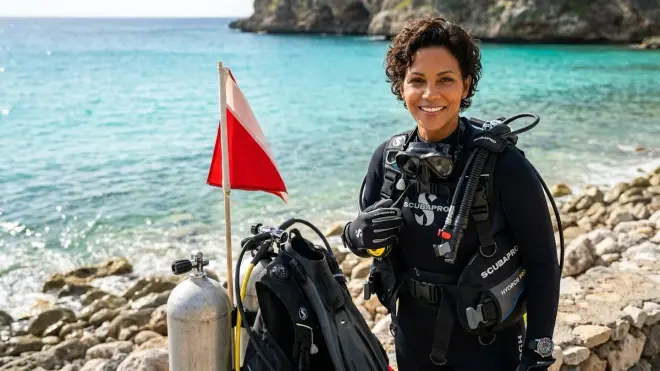
The Scubapro Hydros Pro BCD🛒 Amazon is definitely on the pricier side (usually around $800-900), but it's one of the most innovative BCDs on the market and genuinely feels like a premium product. The entire harness is made of gel-like injection-molded panels instead of traditional padded fabric, so it's incredibly comfortable, neutrally buoyant, and almost impossible to damage. It also dries in minutes and packs down surprisingly small for how much padding it has. I got to dive one during a liveaboard when my BCD was being serviced, and I spent the whole week wishing I'd bought one of these instead.
Pros:
- Unbelievably comfortable—the gel padding molds to your body perfectly
- Neutrally buoyant materials mean the BCD itself doesn't affect your weighting
- Dries in under 30 minutes, which is amazing on liveaboards or multi-dive days
- Modular design lets you swap bladder, harness, and weight pockets independently
- Available in both men's and women's fit
Cons:
- Expensive compared to entry-level BCDs—this is a long-term investment piece
- The modular system has a lot of small parts and straps that can be fiddly to adjust the first few times
- Some dive centers don't stock the specific replacement parts if you need servicing while traveling
- The unique design means you can't easily borrow parts from other BCDs if something breaks
Mares Kaila SLS (Women's-Specific)
The Mares Kaila SLS BCD🛒 Amazon is a back-inflate designed for women that strikes a nice balance between features and weight. It's lighter than the Zeagle Zena (around 6 pounds) but still has plenty of padding and comfort features. The SLS (Side Lift System) trim pockets are a clever feature—you can add or remove small weights to fine-tune your horizontal trim, which is super helpful if you're carrying camera gear or trying to get perfectly flat in the water.
Pros:
- Women's-specific sizing with a comfortable, tailored fit
- SLS trim pockets let you adjust weight distribution for better horizontal positioning
- Back-inflate design with good lift capacity (23 pounds)
- Well-placed D-rings for accessories and camera clips
- Reasonably priced around $500-600
Cons:
- The SLS trim weight system adds a bit of complexity—extra pockets to manage
- Some divers find the shoulder straps slightly narrow compared to other women's BCDs
- The integrated weight pockets only hold about 10 pounds total, which might not be enough for cold-water diving
- The dump valves are a bit stiff brand new and need breaking in
Cressi Travelight
The Cressi Travelight BCD🛒 Amazon is hands-down one of the best options if you're prioritizing packability and weight above all else. It weighs under 4 pounds and folds down to the size of a large sweatshirt. I've used one as my dedicated travel BCD for the last year, and it's been on probably a dozen flights without any issues. It's a back-inflate style, very minimalist, and built with lighter-weight materials that still feel durable enough for tropical diving.
Pros:
- Extremely lightweight at under 4 pounds—barely adds anything to your luggage
- Packs down incredibly small; easily fits in a carry-on
- Affordable for a travel-specific BCD, usually around $400-450
- Integrated weight pockets hold up to 14 pounds
- Quick-drying fabric is perfect for multi-dive days
Cons:
- Minimal padding means it's not the most comfortable for really long surface intervals
- The lighter materials don't feel as bombproof as heavier BCDs—I'd be more cautious using this for wreck diving or rough shore entries
- Fewer D-rings and attachment points than full-featured BCDs
- The pull-dump cords are thin and slightly harder to grip, especially with gloves
Frequently Asked Questions
Should I buy a BCD as my first piece of scuba gear?
Not necessarily—it depends on your diving plans. If you're diving frequently in one location and you're tired of rental gear that doesn't fit well, a BCD is a great early purchase. But if you're only diving a few times a year on vacation, you're probably better off buying a mask and fins first, since those affect comfort and performance more directly on every dive. A poorly fitting mask can ruin a dive; a rental BCD is usually just mildly annoying. I bought my mask and computer before my BCD, and I don't regret that order at all. Check out our order to buy scuba gear article for a full breakdown of what to prioritize when you're building your kit piece by piece.
How much should I spend on my first BCD?
You can find decent entry-level BCDs in the $300-500 range that'll work fine for recreational diving. I'd avoid anything under $250 unless it's a used model from a reputable brand—at that price point, you're usually getting really basic materials and construction that won't last. On the flip side, you don't need to drop $800-1000 on a high-end BCD as a brand-new diver unless you're sure you'll be diving a lot and you know exactly what features you want. I'd recommend staying in the $400-600 range for your first BCD, which gets you solid quality without overspending before you know your preferences. There's more guidance on avoiding overspending in our how to avoid overspending on first scuba equipment article.
Do I need a different BCD for cold water vs tropical diving?
Not necessarily a different BCD, but you do need to make sure your BCD has enough lift capacity for cold-water gear. A thick 7mm wetsuit or drysuit requires a lot more weight to sink, and that wetsuit loses buoyancy as you descend and the neoprene compresses, so you need more air in your BCD to compensate. If you're mostly doing tropical diving, a BCD with 25-30 pounds of lift is fine. For cold water, look for 35-40 pounds. Some people do buy separate BCDs for different environments, but that's more common with technical divers or people who dive drastically different configurations. For most recreational divers, one well-chosen BCD works for both if you plan ahead.
What's the difference between jacket-style and back-inflate BCDs?
Jacket-style BCDs inflate around your torso (front, sides, and back), which makes them stable at the surface—you float upright easily, which is nice for beginners. They can feel a bit bulky underwater and tend to push you slightly forward. Back-inflate BCDs (sometimes called wings) only inflate behind your back, which keeps you more horizontal underwater and feels more streamlined. At the surface, you pitch forward a bit more. Neither is objectively better; it's about what feels comfortable to you and what type of diving you're doing. I personally prefer back-inflate for underwater photography because the trim is better, but I know plenty of experienced divers who still love jacket-style BCDs. Our article on jacket BCD vs back inflate goes into way more detail if you're trying to decide.
Can I buy a used BCD to save money?
You can, but be careful. BCDs have a lot of moving parts—dump valves, inflator mechanisms, bladder seams—that can wear out or fail, and you won't always know the maintenance history of a used BCD. If you're buying used, make sure you can fully inspect it first: inflate the bladder and leave it overnight to check for leaks, test all the dump valves, check the inflator button for sticking, and look at the strap stitching and buckles for wear. Ideally, buy from someone you trust or through a dive shop that's selling trade-ins they've inspected. A used BCD in good condition can save you a couple hundred dollars, but a used BCD with a slow leak or sticky inflator will cost you more in frustration and repairs than you saved. There's a helpful comparison in our buying new vs used scuba gear guide that covers the pros and cons.
The Verdict
How to choose first BCD really comes down to three things: fit, diving environment, and travel needs. Try on as many models as you can, ideally in a pool if the dive shop offers demo days, and don't let anyone talk you into a BCD that doesn't feel right just because it's on sale or it's what they dive. A well-fitting BCD makes every dive more comfortable and helps you focus on buoyancy control and enjoying the reef instead of fiddling with straps or feeling squeezed. Start with your primary diving conditions—if you're mostly doing warm-water travel diving, prioritize lightweight and packable; if you're diving locally in colder water, prioritize lift capacity and durability. And remember, your first BCD doesn't have to be your forever BCD. I've upgraded once already and I'll probably upgrade again as my diving evolves. The important thing is getting something that works for you right now and lets you dive comfortably while you figure out what you actually want long-term.