
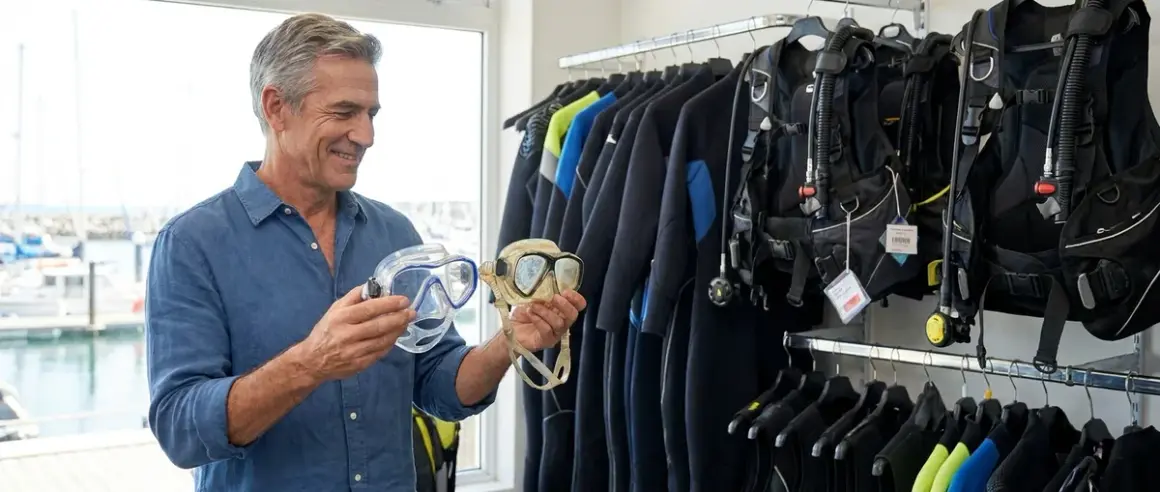

If you're a beginner on a tight budget and willing to do your homework, quality used gear can save you 40–60% without compromising safety—but only if you know what to inspect and where the hidden costs are. This guide breaks down the real financial, safety, and performance differences between buying new vs used scuba gear, with specific criteria you need to evaluate before handing over cash for either option.
I've been diving since the late '70s and running dive ops in Florida for over four decades. I've watched hundreds of new divers make both smart and catastrophically stupid gear purchases. Here's what actually matters when you're deciding between new and used equipment.
Quick Comparison: New vs Used Scuba Gear
| Criterion | New Gear | Used Gear |
|---|---|---|
| Upfront Cost | Full retail ($1,800–$3,500 complete setup) | 40–60% savings if purchased smart ($800–$1,500 typical) |
| Service History | Zero hours, full warranty (typically 2 years regulators, 1 year BCDs/computers) | Unknown or incomplete; requires immediate professional inspection ($80–$150) |
| Compatibility & Standards | Current CE/EN250 certification, modern quick-disconnect fittings, USB charging | May use obsolete connection standards (older LP/HP port configurations), discontinued battery types |
| Hidden Costs | Minimal—servicing on known schedule | Immediate service often required; hard-to-source parts for discontinued models add 15–30% to purchase price |
| Safety Assurance | Guaranteed materials compliance (marine-grade brass, Viton o-rings, current IP ratings) | Requires hands-on inspection for internal corrosion, o-ring degradation, cracked exhaust valves |
Upfront Cost: The Number Everyone Looks At First
Here's the thing about buying new vs used scuba gear: the sticker price difference looks massive until you account for what you're actually getting.
A quality new regulator setup—we're talking something like the Scubapro MK2 EVO/R195 first and second stage combo—runs around $400–$550 depending on whether you go DIN or yoke connection. Add a new BCD (jacket or back-inflate style, roughly $450–$700 for travel-weight models under 5 pounds), a dive computer with Nitrox capability ($300–$600 for a reliable wrist model), fins, mask, wetsuit, and accessories, and you're staring down a $1,800–$3,500 complete setup. That's real money for someone who just finished certification and isn't sure they'll dive more than twice a year.
Used gear knocks 40–60% off those numbers if—and this is critical—you're buying from someone who actually maintained their equipment and you verify that claim. I've seen well-cared-for regulators with documented annual service sell for $200–$250. Good used BCDs typically go for $150–$300. Computers are trickier because battery availability matters; older models using CR2032 cells are fine, but anything requiring proprietary batteries from a discontinued line is a ticking time bomb.
The catch? You're buying someone else's maintenance history. A regulator that's been rinsed in fresh water after every dive, serviced annually, and stored properly is a fantastic deal. A regulator that sat in a garage in Miami for six years, never serviced, with salt creeping into the first stage environmental seal? That's a $200 paperweight that'll cost you $150 in service parts to make diveable—if the intermediate pressure spring hasn't corroded beyond spec.
I tell people this: if the total cost of used gear plus immediate professional inspection and service still saves you 30% compared to new, and the model isn't discontinued, it's worth considering. If it saves you less than that, buy new and sleep better.
Service History: The Make-or-Break Factor
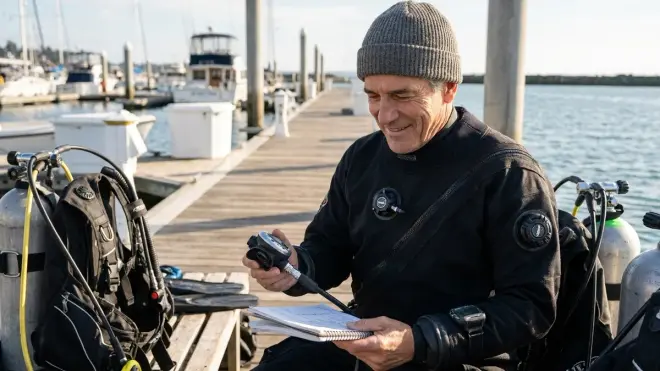
This is where most beginners buying used scuba gear get burned.
When you buy new gear, you're starting from zero hours with a manufacturer warranty. A new regulator comes with a two-year limited warranty covering materials and workmanship. Most BCDs come with one year. Dive computers typically include one to two years depending on the brand—companies like Shearwater offer excellent support, while budget brands may offer minimal coverage. You know exactly when the first service interval is due (typically 12 months or 100 dives for regulators, annually for BCDs, battery replacement schedules for computers).
Used gear? You're trusting the seller's word unless they hand you service receipts with serial numbers, technician signatures, and dated work orders. I've inspected "recently serviced" regulators where the LP seat showed obvious groove wear—a dead giveaway that it hadn't been opened in three years minimum. I've seen BCDs sold as "lightly used" with corroded inflator mechanisms and exhaust valves so stiff they wouldn't dump air reliably at depth.
Here's what you need to verify before buying used life-support equipment:
- Regulator service records: Look for annual servicing with documentation showing o-ring replacement, IP adjustment (should be 135–145 psi for most piston and diaphragm designs), and second-stage exhaust valve inspection. If the seller can't produce this, assume you'll need a full rebuild immediately—budget $80–$150 depending on parts availability.
- BCD bladder integrity: Inflate it fully, submerge it in a bathtub or pool, and watch for bubbles. Check every seam, the overpressure valve, and the inflator connection. A pinhole leak isn't a deal-breaker if you're handy with Aquaseal, but bladder replacement runs $150–$250 depending on model.
- Dive computer battery and firmware: Verify the battery type is still manufactured. Check if the brand still supports firmware updates—older models may not sync with current desktop software. If it uses a rechargeable lithium-ion battery (common in newer wrist computers), ask about capacity degradation. Anything over 500 charge cycles is suspect.
I've bought used gear myself—mostly backup regulators and spare BCDs for commercial ops. But I only buy from people I know or from sellers willing to let me take the gear to my technician for a pre-purchase inspection. If they won't allow that, walk away. If you're looking at options for your first complete setup, you might want to check out our first scuba gear purchase checklist to see what actually matters in the buying sequence.
Compatibility and Technology Standards
This is the hidden minefield when buying used scuba gear, especially for beginners who don't yet know what questions to ask.
Scuba standards evolve. Not rapidly, but enough that gear from the early 2000s may use connection types, materials, or configurations that aren't compatible with current rental tanks or trip boat setups. Here's what actually creates problems:
Regulator connections: Older yoke regulators work fine on most recreational tanks worldwide, but if you're planning cold-water diving or international travel, DIN connections are increasingly standard. Converting yoke to DIN requires a new first stage valve body in most cases—you can't just swap an adapter long-term without risking improper seating. If you're comparing connection types in depth, our guide on DIN vs yoke regulators covers the pressure rating and compatibility differences in detail.
BCD inflator quick-disconnects: Modern BCDs use standardized low-pressure inflator hoses with push-button quick-disconnects. Most gear from the past 20 years is compatible, but I've run into a few oddball European brands from the '90s that used proprietary fittings. If you can't find replacement inflator hoses easily, the BCD becomes harder to maintain.
Dive computer algorithms and connectivity: Older dive computers—particularly models from before 2015—may use outdated decompression algorithms that calculate no-decompression limits more conservatively than current Bühlmann ZHL-16C implementations. That's not necessarily bad, but it means shorter bottom times compared to your buddy's newer computer. More importantly, many older models lack USB or Bluetooth connectivity, so you can't download dive logs or update firmware. If you're trying to understand how different computers calculate safe dive profiles, we cover dive computer algorithms and how they affect your actual dive time.
Battery availability: I mentioned this earlier, but it bears repeating. Computers that use standard CR2032 button cells? Fine. Models requiring discontinued lithium batteries or proprietary rechargeable packs? You're on borrowed time. I've seen divers stuck with otherwise-excellent computers that became paperweights because the manufacturer discontinued battery production and no third-party alternative exists.
Here's my rule: if the used gear you're considering is more than 10 years old, verify parts availability and compatibility with current systems before buying. Call a local dive shop and ask if they can service that specific model and year. If they hesitate or say they'd have to special-order parts, factor that delay and cost into your decision.
Hidden Costs: What You'll Actually Spend
The purchase price is just the start when buying new vs used scuba gear. Let's talk about what you'll actually spend over the first two years of ownership.
New gear costs after purchase:
- Annual regulator service: $80–$120 (parts and labor)
- Annual BCD inspection and inflator service: $40–$60
- Dive computer battery replacement (if not rechargeable): $15–$30 every 18–24 months
- Wetsuit replacement (if you're diving regularly in saltwater): factor in 3–5 years lifespan depending on care
That's roughly $135–$210 per year in maintenance if you follow manufacturer schedules and don't abuse your gear. Over two years: $270–$420 in service costs beyond your initial purchase.
Used gear costs after purchase:
- Immediate professional inspection and servicing (required): $150–$250 for regulator, BCD, and computer diagnostic
- Parts replacement for wear items (o-rings, exhaust valves, HP spool springs): add $40–$80 if components are at end of service life
- Potential parts scarcity surcharge: discontinued models may require custom fabrication or aftermarket parts—add 15–30% to standard service costs
- Annual maintenance (same as new): $135–$210 per year
So your used gear "deal" needs to account for an immediate $200–$330 service hit right after purchase. If you bought a regulator for $200 that needs $150 in service, your real cost is $350—still cheaper than $450 new, but the margin shrinks fast.
I've seen beginners buy a "complete used setup" for $800, feel great about saving $2,000, then discover the regulator needs a full rebuild ($120), the BCD bladder has a slow leak ($180 repair), and the computer uses a discontinued battery ($0, because it's now a dive timer only). Suddenly that $800 deal cost $1,100 and still doesn't include a functioning computer.
The smart play? Buy used for non-life-support items first: masks, fins, wetsuits, gear bags. These are easy to inspect visually and have fewer catastrophic failure modes. For regulators and computers—your life-support and decompression-critical equipment—consider new unless you're buying from a known source with documented service history. If you're trying to avoid common pitfalls in that first purchase, we've documented mistakes new divers make when buying first gear based on decades of watching people learn the hard way.
Safety Assurance: The Non-Negotiable Factor
I'm going to be blunt here: buying used scuba gear for life-support systems requires technical knowledge most beginners don't have yet.
New gear offers guaranteed materials compliance with current manufacturing standards. That means marine-grade brass or titanium components in regulators (resistant to galvanic corrosion in saltwater), Viton or EPDM o-rings rated for oxygen exposure up to 40% Nitrox, and CE or EN250 certification for breathing performance at depth. You're getting equipment that's been batch-tested and meets current safety specs.
Used gear? You're trusting that the previous owner didn't:
- Service their own regulator using incorrect o-ring materials (standard Buna-N o-rings will degrade rapidly in Nitrox service above 23%)
- Store the BCD inflated, weakening bladder seams over time
- Expose the dive computer to thermal shock (like leaving it in a hot car, then immediately submerging in cold water—cracks housings and compromises depth sensor calibration)
- Flush the regulator with fresh water while the first stage was still pressurized (forces water past the environmental seal and corrodes the piston or diaphragm spring)
I've personally witnessed a used regulator free-flow at 80 feet because the previous owner had replaced the HP spool spring with an incorrect tension spec—it passed the surface breathing test, then failed under load at depth. That's terrifying and preventable.
For beginners, here's my safety framework:
Buy new for these items:
- Regulators (first and second stage)
- Dive computers (primary unit)
- Any equipment you'll use in overhead environments or beyond recreational limits
Used is acceptable for these items (with inspection):
- BCDs (if bladder passes leak test and inflator functions smoothly)
- Wetsuits (inspect seams and zippers)
- Fins and masks (zero failure risk beyond comfort)
- Accessories (gauges, compasses, lights)
If you're planning a liveaboard trip where equipment failure means sitting out $300/day diving because there's no rental replacement available, the risk calculus changes entirely. That's when redundancy matters more than budget. We cover what that looks like in our guide on what redundant dive gear means for liveaboards.
Who Should Buy New Scuba Gear
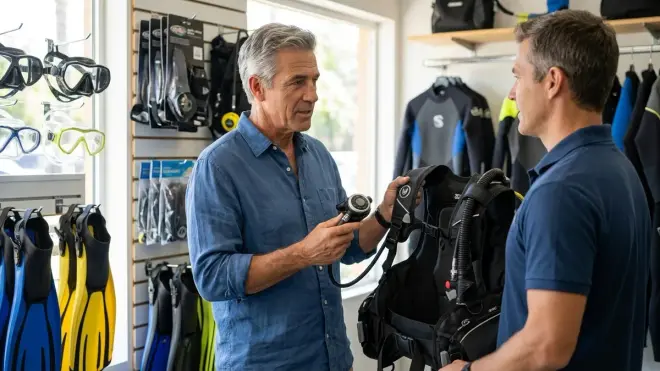
You should buy new equipment if:
You're a new diver with fewer than 20 logged dives. You don't yet have the technical knowledge to evaluate used gear properly, and you can't visually assess internal regulator wear, BCD bladder integrity, or dive computer sensor calibration. The peace of mind and warranty coverage is worth the premium while you build experience.
You're diving regularly (more than 20 dives per year) and plan to continue long-term. The cost-per-dive drops dramatically when you own gear, and starting with new equipment means you control the entire service history from day one. You'll learn exactly how your regulator breathes, how your BCD balances you in the water, and how your computer calculates profiles—knowledge that's harder to build when you're troubleshooting someone else's maintenance mistakes.
You're pursuing advanced certifications (technical diving, cave, wreck penetration, deep trimix). These disciplines require equipment you can trust absolutely, with documented service intervals and zero question marks about component condition. Instructors will (rightfully) give you grief if you show up to a tec course with mystery-history gear.
You have specific environmental requirements. Cold-water diving below 50°F requires regulators with environmental sealing and freeze-resistant designs—models like those we tested in our best cold water regulators roundup. Buying new ensures you're getting current cold-water performance specs, not a used unit that's been partially serviced with non-spec parts.
Who Should Buy Used Scuba Gear
Used gear makes sense if:
You're budget-constrained but mechanically inclined and willing to invest time learning gear maintenance. If you're comfortable disassembling, cleaning, and reassembling equipment under supervision (never service your own regulator without proper training), used gear offers substantial savings. Take a regulator maintenance course, learn to inspect o-rings and sealing surfaces, and you'll catch 90% of problems before they matter.
You have access to a trustworthy dive shop or technician who'll perform pre-purchase inspections for a reasonable fee ($50–$80 typically). Let them assess internal condition, test IP settings, verify exhaust valve function, and provide a written evaluation before you buy. That $60 inspection can save you from a $300 mistake.
You're buying from a known source—a fellow diver you've logged time with, a dive club member, or a shop selling trade-in gear they've already inspected and serviced. I've bought gear from friends who I've watched rinse their equipment religiously after every dive. I know their maintenance habits, and I trust their word when they say "serviced six months ago." That's a very different transaction than buying from a stranger on Craigslist.
You're assembling a backup or travel set and already own reliable primary gear. A second regulator setup for travel or redundancy doesn't need to be new—it needs to be functional and well-maintained. I keep backup regulators that are 15+ years old but have been serviced annually and show zero performance degradation. They're perfect for spare rental gear or loaning to visiting divers.
You're willing to prioritize certain items used, others new. Buy a used BCD and wetsuit, invest in a new regulator and computer. That hybrid approach balances budget against safety and spreads your dollars intelligently. Our order to buy scuba gear article walks through which items matter most at each stage of your diving progression.
Frequently Asked Questions
Is it safe to buy a used scuba regulator if it hasn't been serviced recently?
No, not without immediate professional servicing. A regulator that hasn't been serviced in over 12 months (or within 100 dives, whichever comes first) should be treated as non-diveable until a certified technician inspects the first stage IP setting, replaces all o-rings, checks the HP and LP seats for wear grooves, and verifies second-stage exhaust valve function. Even if the regulator breathes fine on the surface, internal component wear can cause free-flows or breathing restriction at depth where failure is dangerous. Budget $80–$150 for a full service immediately after purchase if service records aren't available—if that cost pushes your total above the price of new entry-level gear, buy new instead.
How can I tell if a used BCD bladder has leaks before buying it?
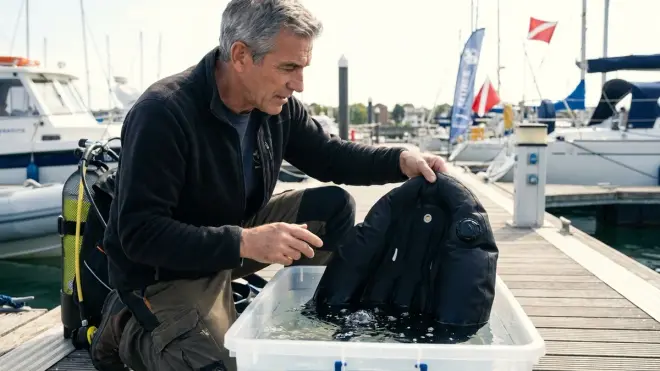
Fully inflate the BCD using the oral inflator or a low-pressure inflator hose, close the dump valves, and submerge it completely in a bathtub or pool for at least 10 minutes while watching for bubble streams from seams, valve connections, or the bladder material itself. Pay special attention to the areas around the overpressure relief valve (where the bladder fabric attaches to the valve body), the inflator hose connection point, and any stitched seams along the back or shoulders. Small pinhole leaks will show as tiny, steady bubble trails—repairable with Aquaseal or bladder patch kits, but factor repair time and cost into your purchase decision. If you see bubbles coming from seam stitching or the overpressure valve seat, bladder replacement is likely required at $150–$250 depending on model availability.
What's the biggest mistake beginners make when buying used scuba gear?
The biggest mistake is buying based solely on price without verifying parts availability and service costs for that specific model and year. I've watched new divers buy discontinued regulator models at seemingly great prices, then discover their local shops can't source replacement parts or that annual service costs 40% more due to parts scarcity. Always call a dive shop before purchasing used gear and ask: "Can you service a [exact model and year], and what's the typical service cost including parts?" If they hesitate, can't get parts easily, or quote a price that's significantly above standard service rates, the "deal" isn't a deal—it's a future headache that'll cost you more than buying current-generation equipment with wide parts availability and technician familiarity.
Bottom Line
Buying new vs used scuba gear comes down to whether you value warranty coverage and zero-history peace of mind more than upfront savings—and whether you have the technical knowledge or professional relationships to assess used equipment properly before purchase.
For most beginners, the smart play is buying new for life-support systems (regulator and dive computer) where failure consequences are serious and inspection expertise is required, while considering quality used gear for BCDs, wetsuits, fins, and accessories where visual inspection catches most problems. That hybrid approach balances budget against safety without creating false economies that cost you more in service and repairs than you saved at purchase.
I've been diving long enough to watch every gear fad and marketing pitch come and go. The gear that matters is the gear you trust, that fits your actual diving profile, and that's been maintained properly whether it's brand new or 20 years old. If you can find used equipment that meets those criteria and still saves you 30% or more after accounting for immediate service costs, buy it and dive it hard. If not, buy new and build your own service history from day one. Either way, you'll be in the water—and that's the only number that actually matters.