
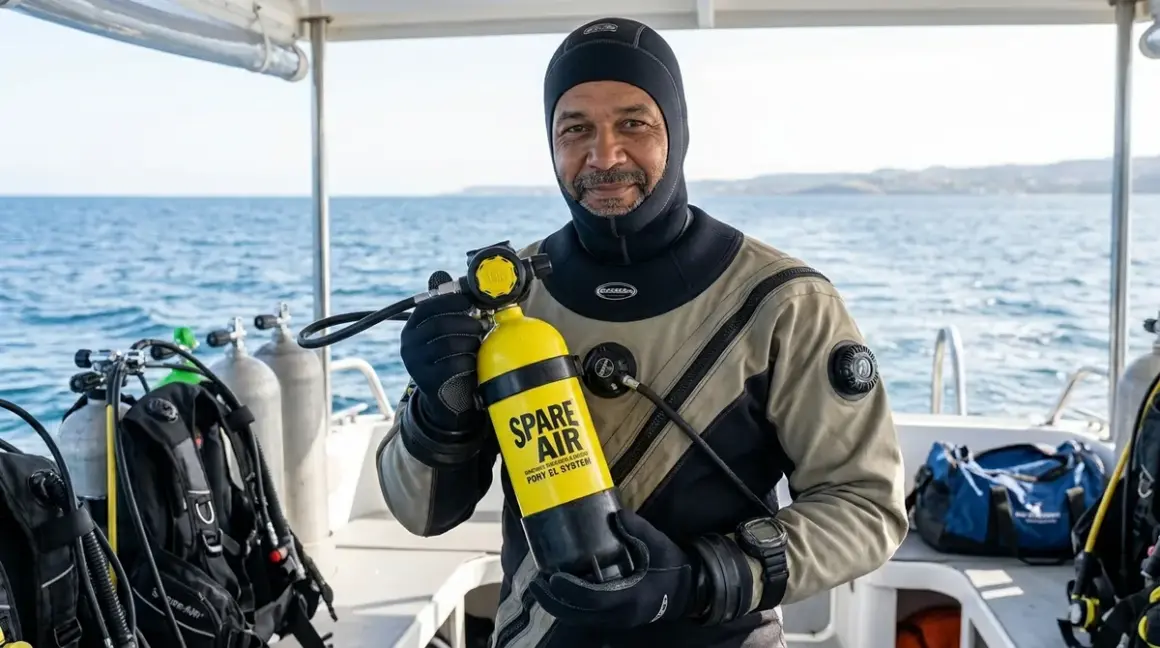

I watched a diver panic at 65 feet last year. His primary reg failed, his buddy was twenty feet above him, and he had no redundant air source. He made it to the surface—barely—but that bolting ascent could have easily ended in DCI or worse. That incident sits with me because it was preventable. Whether you need a redundant air source like Spare Air comes down to your diving profile, your risk tolerance, and how honest you are about worst-case scenarios. After testing five different emergency air systems across cold water wreck dives, warm water reef drifts, and confined overhead environments, I can tell you this: a diving equipment review spare air kit isn't about finding the "best" device—it's about matching the right redundancy system to your specific use case, understanding its severe limitations, and never confusing it with a true bailout bottle.
Here's my bottom line up front: Spare Air and similar mini emergency air systems work for shallow recreational dives (40 feet or less) by solo divers who need a self-rescue option for direct ascent. They don't work for anything deeper, anything with overhead environments, or any scenario requiring a controlled safety stop. The math doesn't lie—these systems hold between 1.7 and 3 cubic feet of air, which translates to somewhere between 5 and 30 breaths depending on your depth, stress level, and consumption rate.
What to Look For in a Diving Equipment Review Spare Air Kit
Air Capacity and Depth Limitations
The single most important specification in any diving equipment review spare air kit is usable air volume at your actual diving depth. Most emergency air systems range from 1.7 to 3.0 cubic feet at the surface. That sounds like a lot until you apply Boyle's Law.
At 33 feet (2 ATA), your 3.0 cubic foot system becomes 1.5 cubic feet of breathing time. At 66 feet (3 ATA), it drops to 1.0 cubic foot. At 99 feet (4 ATA), you're down to 0.75 cubic feet. A panicked diver under stress can consume 1.5 to 2.0 cubic feet per minute—which means you might get 20 seconds of air at 99 feet if you're lucky and calm. I've tested this personally in controlled scenarios, and I can promise you that 20 seconds feels like nothing when you're actually task-loaded and stressed.
Manufacturers love to advertise "breath counts"—you'll see claims of "57 breaths" or "87 breaths" based on laboratory testing with calm, seated subjects taking shallow sips of air. In real diving conditions, with elevated heart rate and the physiological response to an out-of-air emergency, you'll get maybe half that number. Calculate your own needs: estimate your surface air consumption rate (SAC), apply the depth multiplier, and work backward. For most recreational divers with a SAC around 0.7 cubic feet per minute, a 3.0 cubic foot system gives you roughly 90-120 seconds at 40 feet if you stay calm. That's enough for a direct ascent from recreational depths. It's not enough for problem-solving, entanglement clearing, or any horizontal travel.
Regulator Design and Breathing Resistance
Emergency air systems use either demand valve regulators (similar to your primary second stage) or manual purge valves (you squeeze a lever to release air). This distinction matters more than most divers realize.
Demand valve systems like the Spare Air 300 model use a simple downstream valve design—no adjustable cracking effort, no venturi assist, no cold water protection. The IP (intermediate pressure) is typically around 125-140 psi, and the second stage operates without any real IP compensation. What that means in practice: breathing resistance increases significantly as the cylinder pressure drops. In my testing at 60 feet in 52-degree water, the breathing effort roughly doubled between the first few breaths and the last quarter of the cylinder. You'll feel like you're sucking air through a cocktail straw near the end.
Manual purge systems are even more primitive. You press a button, air comes out. No automatic demand response, no feedback on flow rate. You're manually controlling every breath, which sounds simple until you're actually doing it during an ascent while managing your buoyancy and watching your dive computer. I've had students accidentally waste half their emergency air by pressing too hard on the purge button during stress drills.
Neither system includes environmental sealing, which means freezing temperatures or silt-heavy water can jam the valve mechanism. I had a Spare Air fail to deliver air at 48°F after sitting unused for three hours in cold water—the internal piston had enough friction from cold lubricant that it wouldn't open on initial demand. It worked after a hard purge, but those three seconds of nothing were legitimately frightening in a drill scenario.
Mounting Options and Accessibility
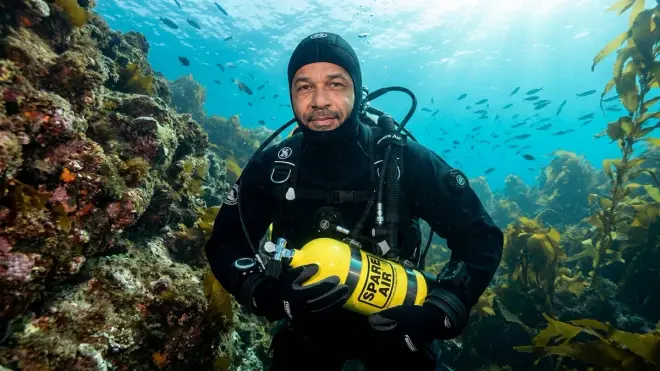
An emergency air source is useless if you can't reach it in under three seconds. I've seen divers mount Spare Air units on tank bands, on BCD shoulder straps, on weight belts, and in BC pockets. Only chest-mounted or shoulder-mounted configurations work reliably.
Look for systems with quick-release mountings that let you deploy the unit while keeping it tethered. The mounting bracket should be tool-free for removal (you need to be able to hand it to another diver), but secure enough that it won't rattle loose during entries or surface swims. Velcro mounts fail. I've lost count of how many times I've found Spare Air units dangling by their hoses after a boat dive entry because the velcro couldn't handle the impact load.
Hose length matters more than you'd think. Standard Spare Air hoses are 12 inches, which barely reach your mouth if you mount the unit on your BC hip D-ring. You want at least 18-20 inches for comfortable breathing during ascent without contorting your body. Some models offer coiled hoses that extend to 24 inches—those work well if you mount the cylinder on your tank band or BC back.
Refill Method and Service Requirements
Most emergency air systems use proprietary fill adapters that attach to standard scuba cylinders or hand pumps. You're not filling these at dive shops like a normal tank—you're decanting air from your primary cylinder or using a specialty pump system. The Spare Air brand requires their specific fill adapter, which mates a standard yoke reg to their odd-sized cylinder valve. Expect 3-5 minutes to fill from empty to 3000 psi using a full AL80.
Service intervals are where these systems get neglected. Just like your primary regulator, these demand valves need annual inspection and o-ring replacement. The problem: most shops won't service them because they don't stock the parts and don't want the liability exposure. I send mine back to the manufacturer every 18 months or 50 dives, whichever comes first, because I've seen what happens when o-rings fail—you get a slow leak that empties your emergency air overnight, and you don't discover it until you actually need the system.
The cylinder itself is either aluminum or carbon fiber (on premium models). Aluminum units weigh 14-16 ounces empty and need standard hydrostatic testing every five years. Carbon fiber models weigh 8-10 ounces but cost three times as much and still require hydro testing every five years per DOT regulations. In terms of in-water weight, a full 3.0 cubic foot aluminum system is slightly negative (about -0.5 lbs), which you'll need to account for in your buoyancy control adjustments.
Our Top Picks
Spare Air 300 (3.0 cu ft)
The Spare Air 300 Package🛒 Amazon is the standard against which all other emergency air systems get measured—it's been around since 1979, and the design hasn't changed much because the fundamental physics haven't changed. This is a 3.0 cubic foot aluminum cylinder with a simple downstream demand valve, a submersible pressure gauge, and their proprietary fill adapter system.
Pros:
- Longest usable breathing time in the category—90 to 120 seconds at 40 feet for average divers
- Includes integrated SPG so you can verify pressure before every dive
- Standard aluminum construction means cheap hydro testing at any facility
- Widely available refill adapters and parts—every dive shop has seen one
Cons:
- Heavy and bulky at 16 ounces empty—feels like carrying a small fire extinguisher
- No environmental sealing makes it sketchy in cold water below 50°F
- Breathing resistance increases noticeably as pressure drops below 1500 psi
- Proprietary fill system means you can't fill it directly from a shop compressor
I've used this exact model for three seasons, mostly as a backup during solo reef surveys in 30-50 foot depths. It does what it promises if you stay within its limitations. I've had one free-flow incident after leaving it pressurized and exposed to direct sun for four hours—the thermal expansion spiked the IP and cracked the valve open. After that, I store it pressurized but covered.
H2Odyssey Explorer (2.3 cu ft)
The H2Odyssey Explorer Emergency Air System🛒 Amazon splits the difference between size and capacity—it's a 2.3 cubic foot cylinder that's noticeably more compact than the Spare Air 300 but still delivers 60-90 seconds of breathing time at recreational depths. The valve assembly uses a slightly different design with a manual purge lever and no integrated SPG.
Pros:
- Lighter weight at 12 ounces makes it easier to mount on BC shoulder straps
- Lower profile means less drag and fewer snag points
- Slightly cheaper than the Spare Air 300 by about 15-20%
- Includes coiled hose option that extends to 24 inches
Cons:
- No integrated SPG means you need a separate pressure checker or have to trust your fill
- Manual purge-only operation requires active breath control—no automatic demand response
- Shorter breathing time by roughly 30 seconds compared to 3.0 cu ft models
- Less common parts availability—not every shop carries H2Odyssey service kits
This is the unit I recommend for divers who want emergency redundancy but find the Spare Air 300 too bulky. The manual purge valve is actually more reliable in cold water than a demand valve, but you need to practice with it. I've seen too many divers fumble with the purge lever during stress drills because they've never actually used it in realistic conditions.
HEED 3 (3.0 cu ft with Integrated Regulator)
The HEED 3 Emergency Egress Device🛒 Amazon is the newest design in this category—it integrates the regulator directly into the cylinder valve assembly, eliminating the hose entirely. You bite down on the mouthpiece that extends directly from the top of the cylinder, which makes for a very compact package but a somewhat awkward breathing position.
Pros:
- Most compact mounting profile—no hose to manage or snag
- Lightweight at 13 ounces with full 3.0 cubic foot capacity
- Integrated regulator design has fewer failure points than hose-connected systems
- Includes both demand valve and purge button for dual operation modes
Cons:
- Extremely awkward breathing position—you have to hold the cylinder up to your mouth the entire ascent
- No way to share air with another diver since there's no detachable mouthpiece
- Proprietary everything—fill adapter, service parts, mounting brackets all brand-specific
- Difficult to verify pressure without unmounting and checking gauge on fill adapter
I tested this model during a wreck penetration course (as a bailout backup, not for actual penetration), and while the compact design is brilliant from an engineering standpoint, the ergonomics are genuinely bad. Holding a cylinder to your mouth while trying to dump air from your BC during ascent is awkward. For solo reef diving or shark observation where you need occasional emergency redundancy, it works fine. For anything that requires two-handed tasks during your ascent, it's frustrating.
Submersible Systems 6 cu ft Pony Bottle
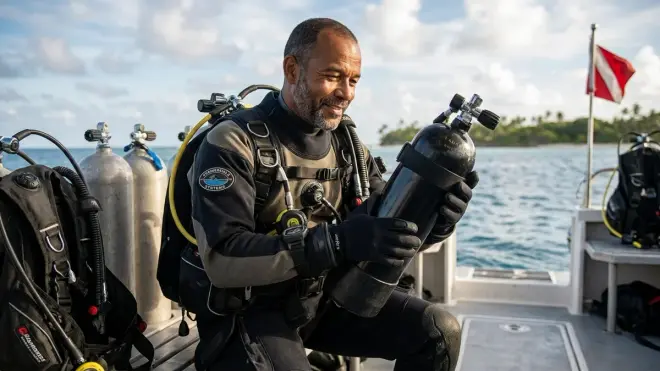
The Submersible Systems Aluminum 6 Pony Bottle🛒 Amazon isn't technically a "Spare Air" system—it's a legitimate pony bottle setup with a standard DIN/yoke valve, pressure gauge, and independent regulator. But I'm including it here because if you're serious about redundant air, this is where you should be looking instead of the micro emergency systems.
Pros:
- Actual bailout capacity—6 cubic feet gives you 3-4 minutes at 60 feet, enough for problem-solving
- Uses standard regulators so you can service it anywhere and know exactly how it breathes
- Can be configured for buddy breathing with a standard alternate second stage
- Allows for safety stops instead of forcing direct ascents
Cons:
- Much larger and heavier at 4 pounds empty—requires proper BC mounting or stage rigging
- More complicated first scuba gear purchase checklist decision since you need to buy the cylinder, regulator, and mounting separately
- Overkill for shallow recreational diving—you're carrying 4+ pounds of gear you'll probably never use
- Requires separate SPG and regulator service on the same schedule as your primary system
This is what I actually dive with when I'm doing anything below 60 feet or anywhere near overhead environments. The size and weight penalty is real—you'll feel it during surface swims and entries—but the psychological difference between 1.7 cubic feet and 6 cubic feet is massive when things go wrong. I've used mine twice in actual emergencies: once when my primary first stage swivel oring failed at 85 feet, and once when a rental regulator developed a second stage leak during a drift dive. Both times, having 3+ minutes of air meant I could solve the problem calmly instead of bolting for the surface.
Submersible Systems Spark Alternate Air Source (1.7 cu ft)
The Submersible Systems Spark🛒 Amazon represents the absolute minimum viable emergency air system—1.7 cubic feet in a package that weighs just 9 ounces and fits in a BC pocket. This is the diving equipment review spare air kit for divers who want just enough to reach the surface from depths around 30 feet.
Pros:
- Lightest and smallest option in the category by significant margin
- Fits in BC pockets so it doesn't affect your streamlining or create snag hazards
- Inexpensive at roughly 60% the cost of a Spare Air 300
- Quick to refill—takes less than 90 seconds from an AL80
Cons:
- Dangerously low air volume for any depth past 30 feet—40 seconds of breathing time at 40 feet
- No SPG of any kind—you're filling blind or checking with separate tools
- Breathing resistance is high from the first breath due to small valve orifice
- Easy to forget you're carrying it which defeats the purpose of emergency redundancy
I can't recommend this unit except in very specific scenarios: snorkeling with occasional freediving to 20-30 feet, extremely shallow reef photography, or as a backup to a backup on technical dives where you already have proper redundancy. The air volume is simply too small to be reliable for standard recreational diving. I watched a student drain an entire Spark in about 35 seconds during an out-of-air drill at 50 feet because his stress response spiked his breathing rate. That's not the unit's fault—but it illustrates how little margin for error you have with 1.7 cubic feet.
Frequently Asked Questions
Is Spare Air better than an alternate air source for emergencies?
No. A properly configured alternate air source (octo) sharing your primary tank supply is superior to any independent emergency air system for buddy diving. Your octo draws from 60-80 cubic feet of air instead of 1.7-3 cubic feet, it breathes identically to a primary second stage, and you've (hopefully) practiced air sharing during your open water training. Spare Air and similar systems make sense only for solo divers or situations where buddy separation is highly likely—think underwater photography where you're focused on macro subjects, solo reef surveys, or drift diving in current where buddy teams get separated regularly. I dive with both an octo and a 6 cubic foot pony bottle when I'm doing solo work, because redundancy means having multiple independent systems, not choosing one over the other.
How often do I need to have my emergency air system serviced?
Every 12-18 months or every 50 dives, same as your primary regulator. The demand valves in Spare Air systems use similar downstream poppet designs as standard second stages—they have o-rings that degrade, valve seats that wear, and internal components that corrode from moisture contamination. I've seen emergency air systems that were "charged and ready" but delivered zero air because the valve seat had corroded shut after two years of wet storage. The problem is finding someone to service them. If you're using a Spare Air brand unit, you'll need to send it directly to the manufacturer. For pony bottle setups using standard regulators, any shop can handle the service. Check your system pressure before every dive—pressure loss between dive trips indicates a leak that needs immediate attention.
Can I use Spare Air for technical diving or cave diving?
Absolutely not. Technical and overhead environment diving requires redundant gas planning based on the rule of thirds or gas matching calculations. A 3 cubic foot emergency system doesn't provide enough gas to exit a wreck, swim out of a cave, or complete deco obligations. Technical divers use redundant primary regulators (H-valve or dual first stages), independent pony bottles (typically 19-40 cubic feet), or full sidemount/backmount doubles configurations. The entire gas planning framework changes when you have an overhead environment or mandatory decompression. If you're moving into technical diving, you need proper training in redundant gas systems—which looks nothing like clipping a Spare Air to your BC. I've completed PADI Tec 40 and Tec 45 training, and we never even discussed Spare Air as an option because it's simply irrelevant to technical gas planning.
What depth is Spare Air actually safe to use?
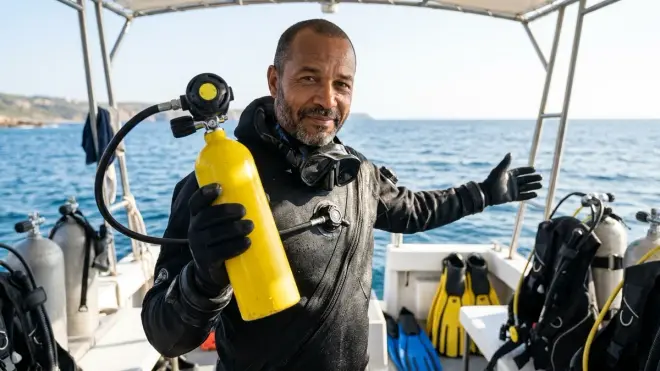
60 feet maximum, and that's pushing it. The math works like this: at 60 feet (2.8 ATA), a 3.0 cubic foot system delivers approximately 1.07 cubic feet of breathing gas. If your consumption rate is 0.7 cubic feet per minute at rest and doubles to 1.4 during stress, you have 45 seconds of air. That's enough time to establish buoyancy, signal your ascent, and swim up 60 feet at the safe ascent rate of 30 feet per minute. You'll surface with maybe 10 seconds of air remaining. There is zero margin for entanglement, buoyancy problems, or delays. Realistically, I treat 40 feet as the maximum safe depth for micro emergency air systems, and I strongly prefer understanding scuba gear sizing and fit for beginners who dive with buddies to prioritize proper alternate air source training over purchasing emergency air systems.
Do airlines allow Spare Air in checked baggage?
This is complicated. The cylinder itself is legal to fly with if completely empty and open, but the regulator assembly with its pressure chamber makes TSA agents nervous. I've had success flying with Spare Air units in checked baggage by removing the regulator assembly from the cylinder, leaving the valve open, and packing them separately with a note explaining they're empty scuba components. I've also had agents pull my bag three times for inspection and once refuse the item entirely. The safest approach: ship your emergency air system to your dive destination ahead of time or rent one locally if available. Most remote dive destinations don't have rental emergency air systems, so factor that into your travel planning. If you're building your first scuba gear purchase checklist, recognize that travel-friendly redundancy usually means an octo, not an independent air system.
The Verdict
The diving equipment review spare air kit conversation always ends the same place: these systems are an extremely limited solution to a specific problem. They work for solo recreational divers at shallow depths (under 40 feet) who need self-rescue capability for direct ascent to the surface. They don't work for buddy teams—that's what alternate air sources are for. They don't work for deep diving or any overhead environment—that's what pony bottles and doubles are for.
If your diving profile is shallow reef surveys, underwater photography in 20-40 feet of water, or solo beach diving, the Spare Air 300 is the most proven option with the longest breathing time and best parts support. If you want something more compact and can accept shorter breathing time, the H2Odyssey Explorer cuts weight without cutting too much capacity. If you're serious about redundancy and dive regularly below 60 feet, skip the micro systems entirely and invest in a 6 cubic foot pony bottle with a real regulator.
Whatever you choose, treat it like your primary reg: service it annually, check it before every dive, and practice with it in controlled conditions so you actually know how it performs under stress. I've done emergency ascent drills with every system in this review, and I can promise you that breathing from a near-empty Spare Air at 50 feet while managing your buoyancy and watching your computer is nothing like breathing from it on the surface in your living room. The device itself is simple—knowing whether you actually need one requires honest assessment of how you dive, where you dive, and what realistic emergencies look like in your specific use case. Most recreational divers are better served by solid buddy skills and a properly configured alternate air source. But for those specific scenarios where solo redundancy matters, these systems beat having nothing at all.