


When you're assembling your regulator setup or planning a dive trip abroad, the din vs yoke regulator connection isn't just a minor detail—it's a fundamental choice that affects pressure capacity, safety margins, and where you can actually dive. I've swapped between both systems for over a decade, and I've seen divers struggle with compatibility issues on liveaboards and watched connections fail in ways that could have been prevented with better understanding.
Here's what actually matters: the mechanical difference between these two systems, the real-world pressure limitations, and how to choose based on where and how you dive.

What Are DIN and Yoke Regulator Connections?
DIN (Deutsches Institut für Normung) and yoke (also called A-clamp or INT) are the two standardized valve connection systems that attach your regulator's first stage to your scuba cylinder. They perform the same basic function—creating a sealed, high-pressure connection—but they accomplish it through completely different mechanical designs.
The yoke system uses a U-shaped clamp that fits over the valve outlet. A hand-tightened screw secures the clamp, compressing an o-ring against the valve face to create the seal. The o-ring sits in a groove on the valve itself, not on the regulator. This is the older design, standardized internationally as the INT (International) system, and it's what you'll find on most rental equipment and recreational dive operations worldwide.
The DIN system threads the regulator directly into the valve body. The first stage has external threads that screw into matching internal threads in the valve opening. The o-ring sits in a groove on the regulator itself, and the threaded connection compresses it against a chamfered seating surface inside the valve. This creates a contained seal that's mechanically isolated from external forces.
Both systems are safe when properly maintained and used within their design parameters. The critical differences emerge in pressure ratings, failure modes, and physical durability under varied dive conditions.
How the Connection Mechanisms Work
Yoke Connection Mechanics
When you attach a yoke regulator, you're positioning the first stage inlet over the valve's protruding outlet post. The screw threads through one side of the yoke clamp and into a captive nut on the other side. As you tighten it—typically hand-tight, no tools required—the clamp draws the regulator face toward the valve, compressing the o-ring between them.
The o-ring creates the actual pressure seal. It sits in a recessed groove on the valve outlet face, meaning it's exposed on three sides. When pressurized, the o-ring expands slightly, improving the seal against the regulator inlet and the valve face. The clamping force from the yoke screw holds everything in position.
The mechanical limitation here is the yoke clamp itself. The metal clamp experiences tensile stress when you pressurize the system—it's literally being pulled apart by the pressure differential. Standard yoke clamps are rated to 3,000 PSI (approximately 200 bar), though the actual failure threshold is higher. I've never personally witnessed a yoke clamp failure, but the theoretical risk is stress fracture at the screw threads or the clamp arms under repeated pressure cycling.
The exposed o-ring is both a maintenance advantage (you can see it, inspect it, replace it easily) and a vulnerability. Impact damage to the valve face or contamination can compromise the seal. I've had sand grains wreck a perfect seal before a dive in Bonaire—visible leak, easy diagnosis, quick o-ring swap.
DIN Connection Mechanics
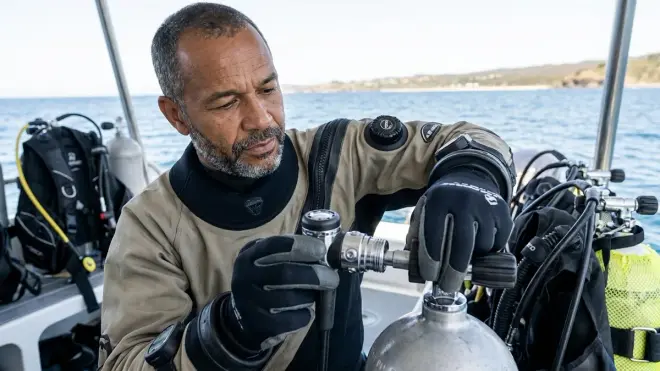
The DIN connection eliminates the external clamp entirely. Your first stage has a threaded collar (either 5-thread for 200 bar or 7-thread for 300 bar systems). You align the threads with the valve opening and hand-turn the regulator clockwise until it seats fully. The final turn compresses the captive o-ring in the regulator's inlet against the valve's internal sealing surface.
Because the o-ring sits in a groove on the regulator, it's protected inside the valve body once connected. The threaded connection distributes pressure forces evenly around the circumference rather than concentrating stress in a clamp structure. This allows DIN 300 bar connections to safely handle pressures up to 4,350 PSI (300 bar)—essential for technical diving with overfilled cylinders or high-pressure steel tanks.
The 200 bar DIN connection (5 threads) is mechanically identical in design but rated to the same 3,000 PSI as yoke. The thread count difference prevents accidentally using a 200-bar regulator on a 300-bar valve, though you can use a 300-bar regulator on any DIN valve.
The threading itself is precise. Cross-threading is possible if you force the connection at an angle, which can damage both the regulator threads and valve threads—expensive repairs. I make it a habit to start the threading with just fingertips on the regulator body, not gripping the hoses, so I can feel if it's going in straight.
Why the DIN vs Yoke Regulator Choice Matters
Pressure Capacity and Safety Margins
If you dive exclusively with standard aluminum 80s at recreational depths (3,000 PSI fills), both systems work identically. The safety difference emerges when you move into steel cylinders, overfilled tanks, or technical diving scenarios.
Steel tanks commonly filled to 3,300–3,500 PSI technically exceed yoke's pressure rating, though most operators and divers accept this with a margin-of-error tolerance. I've dived yoke regulators on 3,442 PSI steel tanks hundreds of times without incident, but I'm aware I'm outside the system's design spec. For technical diving with 300-bar fills (4,350 PSI), DIN isn't optional—it's required.
The deeper safety consideration is connection security under stress. The threaded DIN connection physically can't separate under pressure unless the threads fail catastrophically (which would require defective manufacturing or severe damage). A yoke connection, if improperly tightened or if the screw loosens from vibration, can leak or potentially blow off under pressure. I've seen minor weeping from loose yoke connections twice—never a full blowout, but enough to abort a dive.
Physical Durability and Damage Resistance

DIN regulators protrude less than yoke setups when attached to a valve. When you lay a tank down or pack it in a gear hold, the yoke clamp and hand screw stick out significantly, creating leverage points for impact damage. I've personally bent a yoke clamp when a boat mate dropped a weight onto a horizontal tank rack, rendering the regulator temporarily unusable.
DIN connections sit more compact and protected. The threaded inlet is recessed, and there's no external clamp to bend or break. For liveaboard diving where gear takes a beating, or travel scenarios with multiple handling points, DIN proves mechanically more robust.
The trade-off: yoke regulators are simpler to visually inspect and less sensitive to dirt and debris. If you get sand or salt in a DIN valve thread, you need to clean it carefully before connecting. With yoke, you wipe the o-ring and valve face, check for visible damage, and you're set.
Global Compatibility and Rental Scenarios
This is where most recreational divers hit friction with the DIN vs yoke regulator decision. Yoke valves dominate the rental market worldwide, especially in tropical resort destinations, Caribbean operations, and beginner-focused dive centers. If you own a DIN-only regulator and show up without an adapter, you may not be able to dive—I've watched this exact scenario unfold in Cozumel when a diver assumed the operator would have DIN valves available.
European dive operations, technical diving facilities, and cold-water operations more frequently stock DIN valves. In Norway, Iceland, and throughout Scandinavia, DIN is the default. Same in many cave diving regions and wreck diving operations catering to technical divers.
The practical solution most traveling divers adopt: own a DIN regulator and carry a DIN-to-yoke adapter (also called an insert or converter). These screw into a DIN valve, converting it to accept a yoke regulator, or attach to your DIN regulator to connect to a yoke valve. They're small, inexpensive (around $30–50), and weigh almost nothing. I keep one permanently in my regulator bag because I dive both systems depending on location.
Types and Variations of DIN and Yoke Connections
200 Bar vs 300 Bar DIN
The 5-thread (200 bar) DIN connection is rated identically to yoke at 3,000 PSI and designed for recreational diving. It fits into the same valve opening as a yoke connection, making it compatible with most standard tanks worldwide. Functionally, it offers the physical advantages of DIN (compact profile, threaded security) without requiring specialized 300-bar valves.
7-thread (300 bar) DIN is the technical diving standard, rated to 4,350 PSI. The valve body is physically longer to accommodate the extra threads, and the sealing surface is deeper inside. You cannot fit a 7-thread regulator into a 5-thread valve—the threads won't engage far enough to compress the o-ring.
Most technical divers choose 300-bar regulators even if they frequently dive 200-bar fills, because the regulator will work on any DIN valve, providing maximum versatility. The only downside is slightly longer setup time threading the extra turns.
Convertible and Modular Systems

Several manufacturers, including the Scubapro MK25 EVO DIN Regulator, offer convertible first stages where you can swap between DIN and yoke configurations using different valve connector kits. The first stage body remains the same; you replace the threaded DIN handwheel with a yoke clamp assembly (or vice versa).
This requires an authorized service technician for most models, as it involves partial first-stage disassembly and o-ring replacement. It's not a field-swappable modification you'd do between dives. But for divers who split time between technical/cold-water diving (DIN preferred) and tropical travel (yoke dominant), convertible regulators avoid needing two complete setups.
Adapters and Compatibility Hardware
DIN-to-yoke adapters come in two types: those that attach to the regulator (converting a DIN reg to fit a yoke valve) and those that insert into a DIN valve (converting the valve to accept a yoke regulator). The regulator-mounted type is more common for traveling divers.
Quality adapters maintain the pressure rating of the lower-rated component. Using an adapter on a 300-bar DIN regulator connected to a yoke valve limits you to 3,000 PSI, because the yoke valve itself is the restriction. Adapters add one more o-ring to the system (increasing leak points), and they protrude from the valve, reducing some of DIN's compactness advantage.
I've used adapters reliably for years, but I always carry a spare o-ring specific to the adapter model. They're not standardized like valve o-rings, and rental shops won't stock them.
Frequently Asked Questions
What is the main difference between DIN and yoke regulators?
The main difference is the connection mechanism: yoke uses an external clamp that grips over the valve with a hand screw, while DIN threads directly into the valve body, creating a mechanically stronger, more compact connection that can handle higher pressures up to 300 bar (4,350 PSI) versus yoke's 200 bar (3,000 PSI) limit.
Can I use a DIN regulator on a yoke valve?
Yes, but only with a DIN-to-yoke adapter that either attaches to your regulator or inserts into the valve to convert the connection type—these adapters are widely available, inexpensive, and essential for traveling divers who own DIN regulators but dive at operations using yoke valves.
Which is safer, DIN or yoke?
DIN is mechanically safer under higher pressures and high-stress conditions because the threaded connection can't accidentally separate like a yoke clamp could if improperly tightened, and the recessed o-ring is better protected from contamination and impact damage, though both systems are equally safe when properly maintained within their rated pressure limits.
Do most dive shops use DIN or yoke valves?
Most recreational dive shops worldwide, particularly in tropical destinations and the Caribbean, use yoke valves on rental cylinders because yoke is the international standard for recreational diving, while DIN is more common in European operations, technical diving facilities, and cold-water dive centers.
Should a beginner choose DIN or yoke?
Beginners diving recreationally should start with yoke because it's universally compatible with rental equipment worldwide, simpler to operate, and adequate for standard recreational pressure ratings—switching to DIN becomes relevant only when advancing to technical diving, regularly using overfilled steel cylinders, or diving primarily in regions where DIN is standard.
Summary
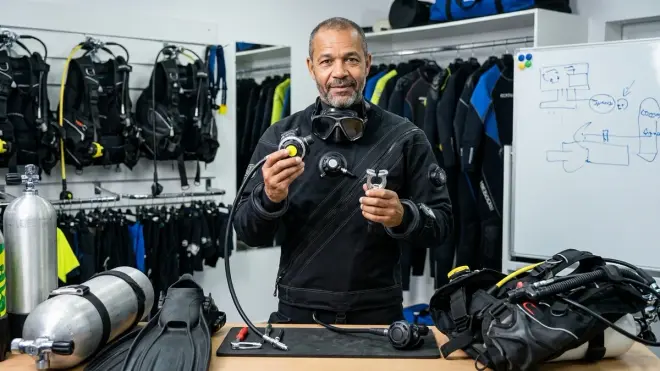
The din vs yoke regulator choice comes down to your diving profile and where you dive. Yoke wins for simplicity, global rental compatibility, and recreational diving within standard pressure limits. DIN wins for pressure capacity beyond 3,000 PSI, mechanical durability, and technical diving applications.
For traveling recreational divers, I recommend owning whichever system matches your primary dive destination, then carrying an adapter for flexibility. For technical divers, photographers hauling gear through boat holds, or anyone regularly diving overfilled steel tanks, DIN is the clear choice. Neither system is obsolete—they serve different use cases, and understanding the mechanical realities behind each helps you dive safely and avoid compatibility headaches when you're 10 days into a remote liveaboard with the wrong connection.
If you're building your first regulator setup, read our complete guide to choosing a scuba regulator to understand how valve connections integrate with first stage design, and check the regulator safety inspection checklist for pre-dive checks specific to both connection types.