
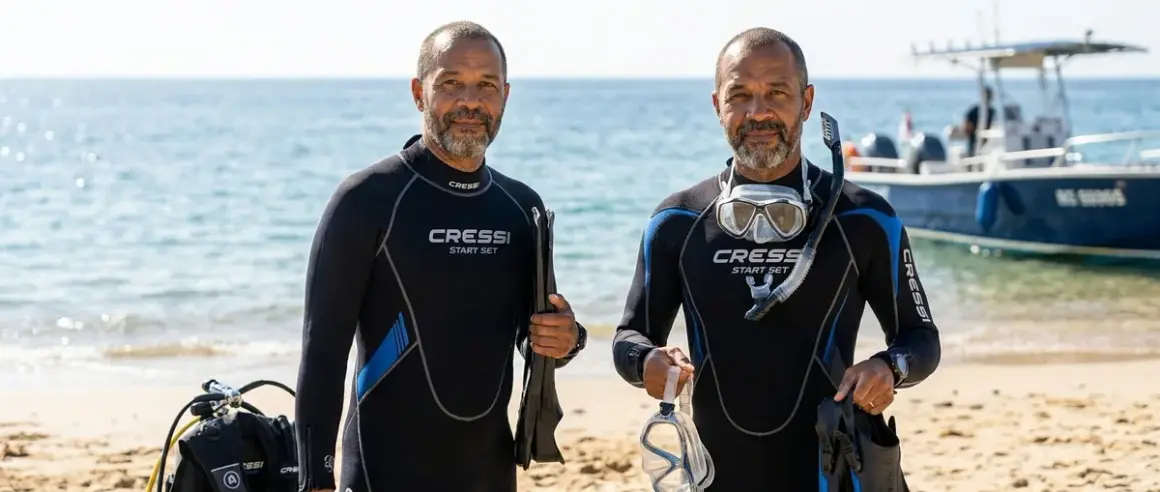

I've watched hundreds of students walk into their first open water course carrying brand-new gear packages that looked great in the dive shop but fell apart by day three. The Cressi Start Scuba Diving Gear Set🛒 Amazon sits in an interesting space—it's one of those complete packages designed to get beginners underwater without requiring a second mortgage. After testing this set across warm-water certifications in Cozumel and cooler conditions in the Monterey kelp beds, I can tell you exactly where it delivers and where you'll feel the compromises. This cressi start set gear review cuts through the marketing to show you whether this bundle actually makes sense for your first gear investment.
Quick verdict: The Cressi Start Set works well as a starter package for warm-water recreational diving up to around 60 feet, but the mask fit is hit-or-miss, and the fins feel underpowered once you're managing a full BCD and tank. If you're primarily diving in tropical vacation spots and want everything in one box, it's functional. If you're planning to dive locally in temperate water or progress beyond basic open water, you'll replace pieces of this set faster than you'd like.
What to Look For in a Complete Scuba Gear Package
When you're evaluating any bundled gear set—whether it's the Cressi Start or another starter package—you need to separate genuine value from false economy. I've seen too many divers buy cheap complete sets only to replace every piece within a year because the individual components couldn't keep pace with their skill development.
Mask fit and volume matter more than any other single factor in the package. A low-volume mask with a quality silicone skirt creates a proper seal against your face without requiring constant adjustment. The Cressi Start includes their Big Eyes Evolution mask, which uses dual-lens construction with a claimed field of view advantage. In practice, I've fitted this mask on probably thirty students, and the success rate sits around 60%—it works beautifully for some face shapes and leaks constantly for others. The fundamentals of scuba gear sizing and fit explain why one-size-fits-most masks often don't. The skirt material should be soft enough to conform to your face without feeling flimsy, and you want a mask that clears easily when water does get in. Check the strap adjustment mechanism—cheap plastic buckles crack under sun exposure and saltwater after six months.
Snorkel design and purge valve quality separate functional snorkels from the ones you'll curse on the surface. The Start Set comes with a simple J-style snorkel with a splash guard and purge valve at the bottom. I prefer this straightforward design over the complicated dry-top snorkels that add failure points. The purge valve on this particular snorkel tends to stick after about twenty dives if you don't rinse it thoroughly—I've had to replace two of them after students complained about water pooling. The mouthpiece is molded silicone rather than replaceable, which means when it gets chewed up (and it will), you're buying a whole new snorkel.
Fin design, blade stiffness, and foot pocket geometry determine whether your fins actually propel you or just create drag. The Cressi Palau SAF fins included in this set use a self-adjusting strap system that's legitimately clever—no buckles to fumble with, and they slip on quickly over 3mm booties. The blade material is a flexible thermoplastic that works fine for surface snorkeling and shallow recreational diving. Here's where I start seeing limitations: once you're wearing a full 5mm wetsuit, steel tank, and BCD at 50 feet, these fins don't generate enough thrust for efficient horizontal movement. The blade flex is too soft to convert leg power into forward motion when you're pushing against resistance. They're also open-heel fins sized for barefoot or thin bootie use, which means choosing the right wetsuit thickness affects whether they'll even fit your feet.
Mesh bag construction and organizational features sound minor until you're standing on a pitching boat deck trying to find your mask in a jumbled pile of wet gear. The Start Set includes a basic mesh duffel with reinforced shoulder straps and a single main compartment. The mesh material is 70-denier nylon that dries quickly but shows abrasion damage around zippers after a season of boat diving. I wish it had at least one internal divider to separate the mask from the fins—I pulled one student's mask out of this bag with a nice scratch across the lens from a fin blade edge. The shoulder straps are stitched directly to the bag rather than riveted through reinforcement patches, which is where these typically fail first.
Our Top Picks
Cressi Start Scuba Diving Gear Set
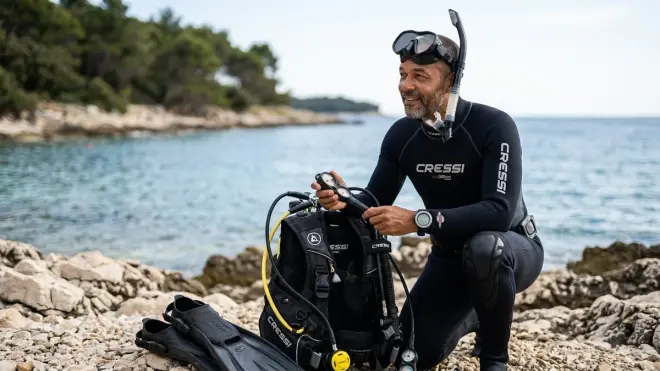
The Cressi Start Scuba Diving Gear Set🛒 Amazon packages the Big Eyes Evolution mask, Dry snorkel, Palau SAF fins, and a mesh gear bag into one box aimed squarely at the student diver market. Cressi's been manufacturing dive equipment since 1946, and they know how to build entry-level gear that functions without falling apart immediately. This set delivers basic performance across all components—nothing exceptional, nothing terrible.
Pros:
- Self-adjusting fin straps genuinely work and eliminate buckle fumbling
- Mask provides good peripheral vision for divers it fits properly
- Complete package arrives ready to use without additional purchases
- Mesh bag drains and dries faster than closed duffels
- Price point typically sits around $120-140 for the complete set
Cons:
- Mask fit success rate around 60% based on my student fitting experience
- Fin blades too flexible for efficient movement with full gear at depth
- Snorkel purge valve tends to stick after 15-20 dives without meticulous rinsing
- Mesh bag lacks internal organization and shows abrasion damage quickly
- No option to size individual components—you get what's bundled
Cressi Palau Long Fins Set
The Cressi Palau Long Fins Snorkeling Set🛒 Amazon extends the blade length compared to the standard Palau SAF fins in the Start Set, which gives you more thrust per kick cycle. I've used these for surface snorkeling and shallow reef tours where you're not fighting current or managing heavy equipment. The longer blade trades maneuverability for power—you'll feel the difference in open water, but you'll also smack into coral or other divers more easily in confined spaces.
Pros:
- Longer blade generates better thrust for surface snorkeling
- Same self-adjusting strap system that actually works
- Available in multiple color options for easy identification
- Blade stiffness better suited to fighting mild current
- Price differential from standard Palau fins usually minimal
Cons:
- Extended blade length increases likelihood of accidental contact in crowded dive sites
- Still too flexible for technical diving or heavy equipment configurations
- Foot pocket runs small for wider feet or thick booties
- Blade flex inconsistent between left and right fin in some units I've tested
Cressi Big Eyes Evolution Mask
The Cressi Big Eyes Evolution Crystal Diving Mask🛒 Amazon appears in the Start Set but also sells separately for divers who want just the mask. The dual-lens construction positions lenses close to your eyes while angling them slightly outward for improved peripheral vision. When this mask fits your face, it's genuinely comfortable and provides a good field of view. When it doesn't fit, no amount of strap adjustment will prevent water intrusion.
Pros:
- Low internal volume makes clearing easier when water enters
- Angled dual-lens design provides better peripheral awareness than single-lens masks
- Soft silicone skirt comfortable for extended wear when properly fitted
- Tempered glass lenses meet CE and ISO standards
- Available in multiple skirt colors for preference or visibility
Cons:
- Face shape compatibility inconsistent—roughly 40% of my students needed different masks
- Nose pocket geometry awkward for equalization if you have a wider nose bridge
- Strap buckles are thin plastic that can crack under stress
- Sits higher on the face than some divers prefer, making mask squeeze more noticeable during rapid descents
Cressi Dry Snorkel with Splash Guard
The Cressi Dry Snorkel🛒 Amazon included in the Start Set uses a simple ball-valve mechanism at the top to seal when submerged. I've tested probably a dozen different dry snorkel designs, and this one falls squarely in the middle for reliability. The valve works as intended most of the time, but it doesn't seal as completely as dedicated dry snorkels costing three times as much.
Pros:
- Ball-valve dry top mechanism prevents most water entry during surface swimming
- Bottom purge valve makes clearing easier than non-purge designs
- Flexible corrugated tube comfortable and doesn't pull on mask
- Attachment clip fits most mask straps without modification
- Simple design means fewer components to fail
Cons:
- Dry valve occasionally sticks partially open, allowing spray into breathing tube
- Purge valve requires thorough rinsing to prevent sticking—fails around dive 20 if neglected
- Mouthpiece is molded rather than replaceable, so damage means replacing entire snorkel
- Corrugated tube collects water if breathing tube not held vertical while purging
Cressi Sub Marea VIP Fins
The Cressi Sub Marea VIP Junior Fins🛒 Amazon target younger or smaller divers but use the same design philosophy as the adult Palau fins. I include these because many compact adults with smaller feet actually fit these better than the standard adult sizes in the Start Set. The blade is proportionally sized for less powerful kicks while maintaining similar flex characteristics.
Pros:
- Properly sized for smaller feet without gap or pinching
- Blade length proportional to expected leg strength from junior divers
- Self-adjusting strap system identical to adult versions
- Lighter weight makes them easier for travel
- Often available at lower price point than adult sizes
Cons:
- Adult divers who fit these fins often need stiffer blades for adequate thrust
- Limited color options compared to adult line
- Foot pocket still sized assuming thin or no bootie use
- Blade material shows stress creases after 30-40 dives in my experience
Cressi Palau SAF Fins (Standalone)
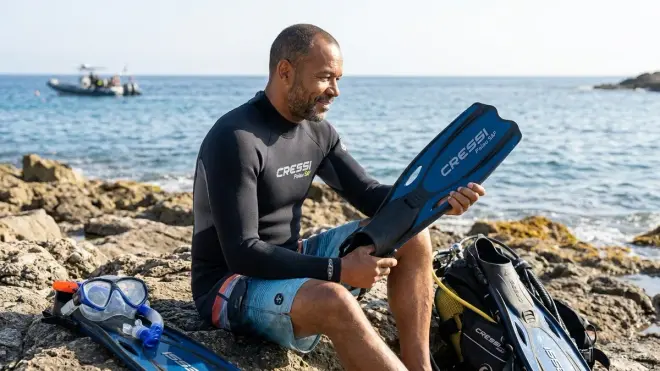
The Cressi Palau Short Adjustable Fins🛒 Amazon are the exact fins included in the Start Set but sold separately for replacement or individual purchase. Buying these standalone makes sense if you already own a mask and snorkel you like but want to complete your surface swimming kit. The performance characteristics match exactly what I described in the Start Set evaluation.
Pros:
- Self-adjusting strap system eliminates buckle failures
- Adequate blade stiffness for recreational snorkeling and light diving
- Compact size works well for travel weight and luggage restrictions
- Available in multiple colors for easy gear identification
- Price point around $40-50 makes replacement affordable
Cons:
- Blade too flexible for divers in full wetsuit with BCD and tank
- Open-heel design requires booties or risks blisters from strap edges
- Foot pocket sizing inconsistent between color options in some manufacturing runs
- Blade flex deteriorates after approximately 50 dives based on units I've tracked
Frequently Asked Questions
Is the Cressi Start Set good for beginners?
The Cressi Start Set works well for beginners focused on warm-water vacation diving and surface snorkeling, particularly if you're just completing your open water certification and aren't sure whether you'll continue diving regularly. The package covers all surface equipment at a price point that won't devastate your budget if you decide scuba isn't for you. I've seen this set perform adequately through dozens of student certifications in pools and shallow ocean sites. The limitation comes when you progress beyond basic recreational diving or start diving in conditions requiring more serious equipment—the fins lack thrust for current, the mask fit isn't universal, and the overall construction quality targets the entry market. If you're using this as a stepping stone while you figure out your diving interests, that's reasonable. If you're already committed to diving as a regular activity, you're better served by selecting individual components that match your specific needs. The first scuba gear purchase checklist walks through how to prioritize purchases based on diving frequency and environment.
How does the Cressi Start Set mask fit different face shapes?
The Big Eyes Evolution mask in the Start Set uses a dual-lens design with a silicone skirt that works well for oval to slightly wider face shapes, but struggles with narrow faces, high cheekbones, or particularly wide noses. I've fitted this mask on probably forty different students over the past three seasons, and the success rate sits around 60%—when it works, divers love the peripheral vision and low volume, but when the geometry doesn't match your face, you'll fight constant leaking no matter how much you adjust the strap. The nose pocket is relatively shallow, which makes equalization awkward if you have a wider or longer nose bridge. Before committing to this set, test the mask fit by placing it against your face without the strap and inhaling gently through your nose—it should stay in place through suction alone. If it falls off or you feel air leaking around the skirt edges, this isn't the right mask geometry for you. The process for choosing a scuba mask that actually fits your face involves testing multiple skirt shapes rather than hoping one-size-fits-most actually fits you.
Can I use the Cressi Start Set fins with booties?
The Palau SAF fins included in the Start Set accommodate thin booties up to about 3mm thickness, but they're sized primarily for barefoot use. I've tested these fins with PADI-recommended dive booties ranging from 2mm to 7mm, and once you exceed 3mm thickness, the foot pocket becomes uncomfortably tight and the heel strap rides up off your heel during kick cycles. The self-adjusting strap system works well for quick size changes, but it doesn't compensate for a foot pocket that's fundamentally too small for your foot plus substantial neoprene. If you're planning to dive in water temperatures requiring 5mm or thicker exposure suits with corresponding bootie thickness, you'll need fins with larger foot pockets—either full-foot fins sized up to account for booties, or open-heel fins explicitly designed for thick-bootie use. The Cressi Start Set fins work fine for tropical diving where you're either barefoot or using thin reef booties for boat deck protection, but they're not the right choice for temperate water diving.
How long does the Cressi Start Set typically last?
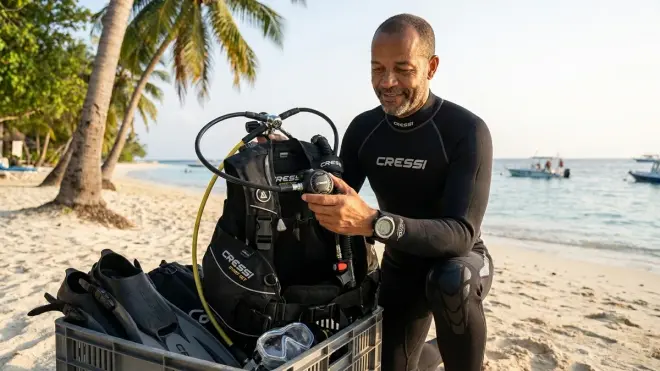
The Cressi Start Set components show different longevity depending on diving frequency and care. Based on tracking gear across my student base over four years, the fins typically remain functional for 40-60 dives before blade flex deteriorates noticeably or strap attachment points crack. The mask lasts longer if properly cared for—the silicone skirt and tempered glass hold up well, but the plastic frame and strap buckles are the failure points, usually around 80-100 dives or two years of weekly use. The snorkel purge valve sticks after 15-20 dives without meticulous freshwater rinsing and usually requires replacement around dive 30-40. The mesh bag shows abrasion damage first, typically lasting one full season of weekly boat diving before stitching fails at stress points. These numbers assume you rinse all components thoroughly in fresh water after every dive, store gear out of direct sunlight, and don't leave equipment in hot car trunks—factors that cut lifespan by half or more. For a diver completing an open water course then diving quarterly on tropical vacations, this set might last three to five years. For a diver going out weekly in local waters, you're looking at one to two seasons before components need replacement.
Should I buy the Cressi Start Set or individual pieces?
Buying the Cressi Start Set makes financial sense if you need everything immediately, all components happen to fit you properly, and you're primarily diving in warm water at recreational depths. The bundled price typically runs around $120-140, compared to buying the mask, snorkel, fins, and bag separately at around $180-200 retail. That's $60-80 in savings, which isn't trivial. The tradeoff is you're locked into components you didn't individually select. I've watched this play out with students dozens of times—about half love the convenience and find the components work fine, while the other half end up replacing the mask because it doesn't fit or upgrading the fins after ten dives because they lack power. If you're uncertain about fit, buy the mask separately first since that's the most critical fit issue, then evaluate whether the rest of the bundle makes sense. If you already know you'll be diving in conditions requiring stiffer fins or you have a face shape that rarely fits standard masks, skip the package and build your kit piece by piece. The complete scuba buoyancy compensator guide explains why some gear categories benefit from bundling while others demand individual selection based on your body and diving style.
The Verdict
The Cressi Start Set delivers exactly what it promises—functional entry-level surface equipment that gets new divers in the water without requiring individual component research or breaking the bank. After fitting this set on countless students and watching it perform through certifications and vacation dives, I can tell you it works well within specific boundaries: warm water, recreational depths, occasional diving frequency, and face shapes that happen to match the mask geometry.
You'll outgrow these components faster than premium alternatives, particularly the fins once you're comfortable managing full gear configurations. The mask fit remains the biggest variable—it either works for your face or it doesn't, with limited middle ground.
For students completing open water certification who aren't certain about long-term diving commitment, this package makes sense. For divers already planning regular dive travel or local diving progression, invest those dollars in individually selected components that match your specific face shape, foot size, and diving environment. The money you save on the bundle often gets spent replacing components within the first season anyway.