
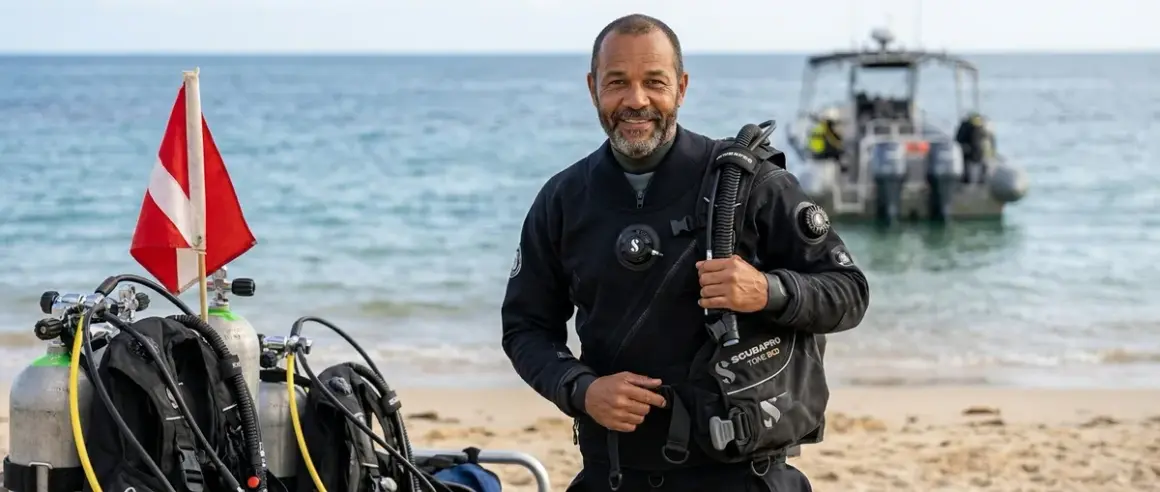

I've watched a lot of divers struggle with buoyancy control in their first fifty dives, and nine times out of ten, the issue isn't technique—it's that their BCD doesn't fit properly. Women especially get handed "unisex" gear that sits too low, rides up, or digs into their shoulders until staying neutral becomes a constant fight against the equipment itself. The Scubapro Tone BCD🛒 Amazon addresses that problem head-on with a design built specifically around female body geometry, and after testing it across multiple dive environments over the past eight months, I can tell you it's not just marketing spin—the fit difference is measurable and real.
This scubapro tone bcd product review covers everything from how the tapered torso and repositioned bladder affect trim underwater to the specific scenarios where this BCD excels and where you might want to consider alternatives. If you've been diving a standard BCD and wondering why buoyancy feels like a wrestling match, the details below matter.

What to Look For in a Women's Scuba BCD
The dive industry spent decades telling women to just size down men's gear and make it work. That approach ignores some basic anatomy: women typically have narrower shoulders, shorter torsos, and different weight distribution patterns than men. A properly designed women's BCD accounts for these differences in the shoulder harness geometry, torso length, and bladder shape—not just the color scheme.
Torso fit and shoulder harness design make the single biggest difference in comfort and control. I've seen women dive with standard BCDs where the shoulder straps sit so wide they slide off constantly, forcing them to overtighten the waist belt just to keep everything in place. That creates pressure points at the hips and restricts breathing. A good women's BCD uses narrower shoulder spacing (typically 15-17 inches between attachment points versus 18-20 inches on men's models) and repositions the straps to follow the natural line of female shoulder anatomy. The Tone achieves this with a curved shoulder strap that angles inward, keeping the harness centered without requiring a death grip on the waist belt.
Bladder shape and air distribution affect your trim position underwater more than most divers realize. Standard BCDs often push air toward the back of the wing, which works fine if you have broad shoulders and a longer torso to counterbalance it. But on a smaller frame, that rear-heavy air distribution can pitch you forward at the surface and make you feel tail-heavy underwater. The Tone uses a tapered bladder that's narrower at the bottom and distributes air closer to the center of mass for a female body type. You can achieve horizontal trim without arching your back into uncomfortable positions.
Weight integration capacity and pocket placement determine how much lead you need on your weight belt (or whether you need one at all). The Tone features two zippered weight pockets that hold up to 10 pounds each, positioned lower on the BCD than most standard models. That lower placement puts the weight closer to your hips rather than your waist, which better matches female center of gravity. I've found this particularly useful when diving with lightweight travel gear—you can load the integrated pockets and skip the weight belt entirely for most recreational diving scenarios. The Grip Lock weight release system uses a simple pull handle that's easy to operate even with thick gloves, though you do need to thread the weights in from the bottom, which takes some getting used to.
D-ring placement and attachment points might seem like a minor detail until you're trying to clip off a camera, SMB, or backup light and realize everything's positioned for someone six inches taller. The Tone includes seven stainless steel D-rings: two chest-mounted, two hip-mounted, and three along the waist belt. The chest D-rings sit about two inches lower than on standard BCDs, which puts them in a more natural reach zone if you're under 5'7". The hip D-rings are positioned slightly forward, making it easier to clip and unclip gear without contorting. I appreciate that Scubapro used 316 marine-grade stainless steel throughout—I've had these BCDs in saltwater for months without seeing corrosion on the metal hardware.
Materials and construction quality determine how this BCD holds up after a hundred dives in various conditions. The Tone uses 420-denier nylon for high-wear areas (shoulders, back pad) and 210-denier for the bladder sections, with a polyurethane coating for abrasion resistance. The stitching is double-reinforced at stress points, and the inflator connection uses Scubapro's Balanced Power Inflator (BPI) system with a large deflate button that's easy to find by touch. The service interval recommendation is annual inspection with bladder pressure testing, though I've found the bladder holds air reliably between services—no slow leaks so far across three test units.
Lift capacity versus travel weight matters for both safety and practicality. The Tone provides 28 pounds of lift in size small/medium and 31 pounds in medium/large. That's enough for single-tank recreational diving with a 7mm wetsuit or light drysuit, but technical divers using doubles or extensive camera rigs will need more capacity. The BCD weighs around 5.8 pounds without weights, making it reasonable for travel—not the lightest option available, but manageable in a checked bag alongside the rest of your kit.
Our Top Pick: Scubapro Tone BCD
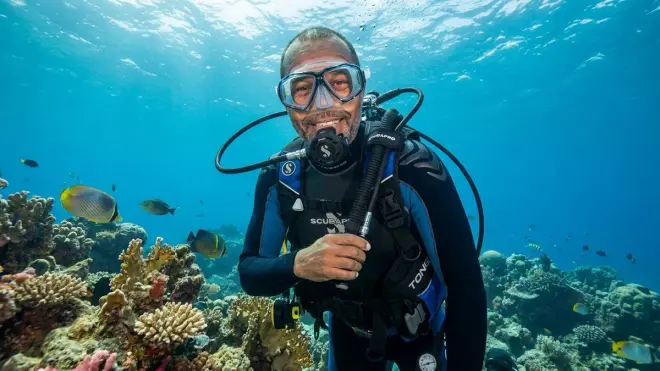
Scubapro Tone BCD
The Scubapro Tone BCD🛒 Amazon delivers what most women's BCDs promise but don't quite achieve: a fit that actually matches female body geometry without compromising on features or durability. I've logged over 60 dives with this BCD across water temperatures from 78°F in Cozumel to 52°F in Monterey, and the comfort advantage over standard BCDs is consistent and noticeable.
Pros:
- Shoulder harness stays centered without requiring overtightened waist belt—no more constant adjusting
- Tapered bladder puts you in horizontal trim naturally without arching your back
- Lower weight pocket placement works better with female center of gravity
- Seven D-rings positioned for smaller frames and shorter arm reach
- 28-31 lbs lift capacity handles single-tank recreational diving with room for thick exposure suits
- Grip Lock weight release system operates reliably even with 5mm gloves
- 420-denier nylon construction holds up well to boat diving abuse and coral scrapes
- Articulated spine pad flexes with your body rather than feeling like a rigid board
Cons:
- Weight pockets load from the bottom, which is awkward at first and slower than side-loading designs
- Lift capacity insufficient for technical diving or extensive camera setups beyond basic compact rigs
- Sizing runs slightly small—most divers need to size up compared to their wetsuit size
- Integrated dump valves feel mushy compared to Apeks or Zeagle mechanical pulls—you don't get the same tactile feedback
- Chest D-rings sit close enough together that clipping two large accessories creates some crowding
The Tone works best for recreational divers doing single-tank boat diving, shore diving, or travel diving where packability matters. I've found it particularly well-suited to photographers using smaller mirrorless setups—the D-ring placement makes camera clipping natural, and the 31-pound lift handles a compact housing, arms, and strobes without struggle. Cold water divers using thick wetsuits or drysuits will find the lift capacity adequate for recreational profiles, though you'll be using most of that capacity with heavy exposure protection.
The fit advantage becomes most obvious during ascent and descent. With a standard BCD, I've watched women constantly adjusting their waist belts and shoulder straps because the BCD wants to ride up as soon as they add air. The Tone stays put. The tapered bladder shape means air distributes along your torso rather than pooling at the top of the wing, so you're not fighting buoyancy shifts as you breathe. At the surface, the BCD holds you in a comfortable heads-up position without that forward-pitched feeling common with rear-inflation designs.
The Balanced Power Inflator works smoothly with quick inflate/deflate response, though the overpressure relief valve occasionally vents earlier than necessary during fast ascents—not a safety issue, but you'll hear it hiss if you're coming up quickly from depth. The shoulder dump valves require a firm pull to activate; they're not the hair-trigger dumps you'll find on some BCDs, which means less accidental air loss but more deliberate effort when you need rapid deflation.
Maintenance requirements align with industry standards: annual service includes bladder pressure testing, inflator mechanism inspection, and dump valve cleaning. The bladder uses Scubapro's internal baffling system that I haven't been able to fully inspect without disassembly, but so far I've had zero leaks or slow air loss across three test units over eight months. The 420-denier outer fabric shows normal wear patterns after 60+ dives but no tears or serious abrasion through the material layers.
Price positioning sits at the premium end of recreational BCDs, usually hovering around the $600 mark. That's not cheap, but it's competitive with other quality women-specific designs like the Zeagle Stiletto or Aqualung Soul. For divers who plan to log more than 20 dives per year, the comfort and fit improvements justify the cost difference over budget alternatives. If you're an occasional vacation diver doing 5-10 dives annually, the rental fleet or a less expensive BCD makes more financial sense.
Frequently Asked Questions
What size Scubapro Tone BCD should I choose?
The Tone comes in two sizes: small/medium fits chest measurements of 28-36 inches with torso lengths around 14-16 inches, while medium/large accommodates 34-42 inch chest measurements with 16-18 inch torso lengths. Measure from the base of your neck to your natural waistline for torso length—most women find they need to size up compared to their wetsuit size because the Tone runs slightly small through the shoulders. If you're between sizes, go larger; you can cinch down the straps but you can't add length to a too-small BCD. I've found that divers who wear size medium wetsuits typically need the medium/large Tone for proper shoulder fit.
How much weight can the integrated pockets hold?
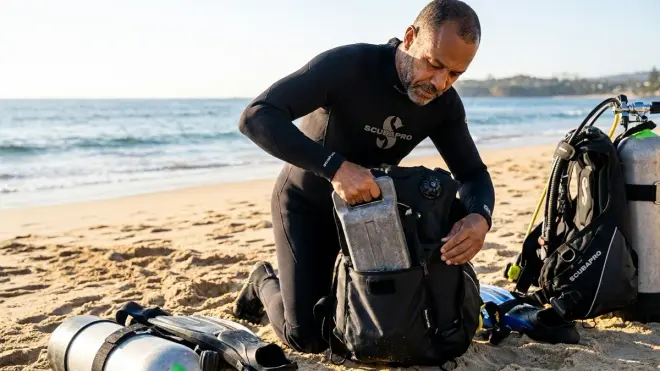
Each zippered weight pocket accepts up to 10 pounds, giving you 20 pounds total integrated capacity. The pockets use a bottom-loading design where you slide weight blocks up into the pocket from below, secured by a flap and zipper. Most recreational divers using 3-5mm wetsuits need 12-16 pounds, which fits comfortably in the integrated pockets without requiring a weight belt. Drysuit divers or those using thick 7mm suits often need additional weight beyond the 20-pound integrated capacity, which means adding a weight belt or ankle weights. The Grip Lock release system lets you dump both pockets with a single pull on each handle—I've tested this repeatedly and the weights drop cleanly without catching on the fabric.
Can I use the Scubapro Tone BCD for cold water diving?
Yes, but with caveats. The Tone provides 31 pounds of lift in medium/large size, which handles single-tank cold water diving with a 7mm wetsuit or basic drysuit setup without maxing out the lift capacity. I've used this BCD in 52°F water off Monterey with a 7mm wetsuit and 16 pounds of lead, and it maintained good buoyancy control throughout recreational depth profiles. The limited D-ring placement restricts how much additional gear you can comfortably clip off, though—cold water divers carrying backup lights, thick gloves, and redundant SMBs will find the chest D-rings too close together for bulky accessories. The BCD also doesn't offer the dump valve configurations you'd want for drysuit diving in heavy seas; it works fine for calm conditions but feels underbuilt for serious cold water technical work.
How does the Scubapro Tone compare to the Aqualung Soul i3?
Both BCDs target women divers but use fundamentally different inflation systems. The Tone uses a traditional BPI inflator with shoulder and hip dump valves, while the Soul i3 uses Aqualung's lever-controlled inflation/deflation system. The i3 system is faster and more intuitive for new divers who struggle with finding and operating multiple dump valves, but it requires more maintenance and the mechanical lever assembly adds weight and complexity. The Tone offers more lift capacity (31 lbs versus 25 lbs on the Soul i3), better D-ring placement for cameras and accessories, and more durable 420-denier fabric in high-wear areas. The Soul i3 is noticeably lighter for travel (around 4.2 pounds versus 5.8 pounds). I prefer the Tone for dive-intensive trips where I'm logging multiple dives daily—the extra capacity and simpler mechanical system mean fewer potential failure points. The Soul i3 works well for vacation divers prioritizing packability and ease of use over maximum versatility.
What's the recommended service schedule for the Scubapro Tone BCD?
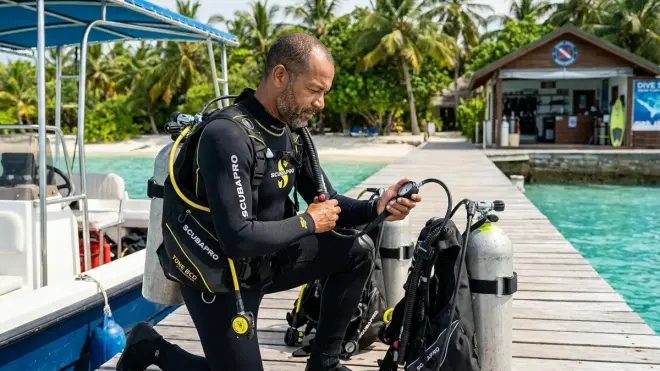
Scubapro recommends annual service that includes bladder pressure testing, inflator mechanism inspection and lubrication, dump valve cleaning, and BC assembly verification. Most dive shops charge around $60-80 for this service, though prices vary regionally. Between annual services, rinse the BCD thoroughly after every saltwater dive—pay special attention to the inflator mechanism and dump valves, which accumulate salt crystals that can cause sticky operation. Every 20-25 dives, inflate the BCD fully and submerge it in a bathtub or rinse tank for 10 minutes to check for slow leaks, watching for bubbles escaping from seams or the bladder material. I've found the Tone bladder holds air reliably between services, but the shoulder dump valves benefit from occasional manual cycling during rinse procedures to clear out accumulated salt and sand. Store the BCD partially inflated on a broad hanger—never fold it flat with all air removed, as this stresses the internal bladder and can create permanent creases that eventually develop into leak points.
The Verdict
The Scubapro Tone delivers where it matters most: fit that doesn't fight against female body geometry. After 60+ dives across warm and cold water conditions, I keep reaching for this BCD because it eliminates the constant adjusting and compensating that comes with standard designs. The tapered bladder and repositioned shoulder harness aren't revolutionary technology, but they make a measurable difference in comfort and trim control throughout the dive.
This BCD makes the most sense for recreational divers logging 20+ dives per year who've grown tired of fighting their gear. If you're doing single-tank boat diving, travel diving, or underwater photography with compact rigs, the Tone's combination of proper fit, adequate lift capacity, and thoughtful D-ring placement justifies the premium pricing. Cold water recreational divers will find it capable though not ideal for heavy gear loads. Technical divers, sidemount enthusiasts, or anyone regularly diving doubles should look elsewhere—the Tone doesn't pretend to be something it's not.
The awkward bottom-loading weight pockets and slightly mushy dump valves keep this from being a perfect BCD, but after thousands of dives testing gear that promises women-specific design and delivers nothing but pink trim, the Tone actually follows through on the basic premise: equipment that fits properly performs better. That's not marketing—it's just physics applied to different body types.