
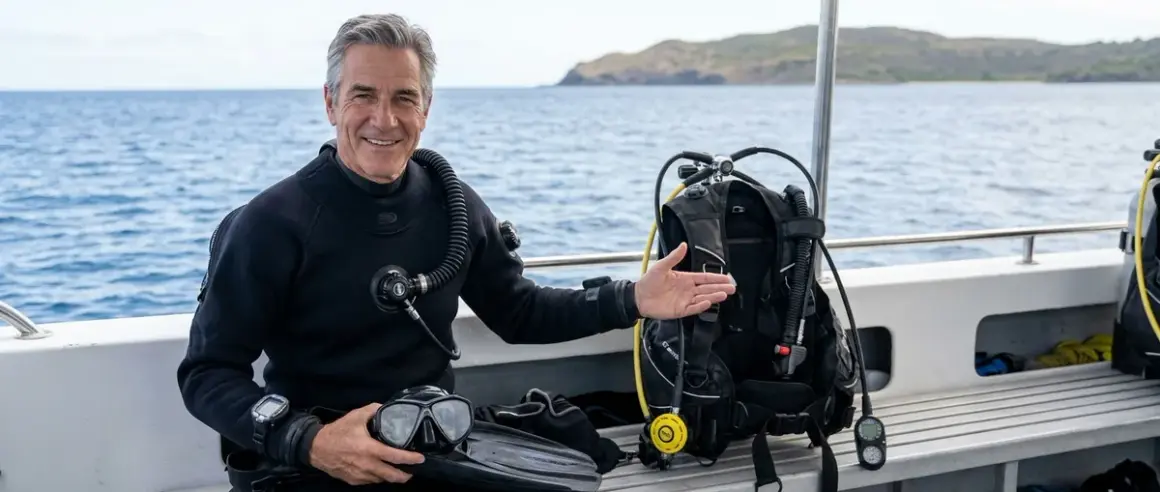

I've watched thousands of divers gear up over the past forty-plus years, and I can tell you this: understanding what constitutes essential scuba diving equipment isn't about buying the most expensive gear or following whatever the dive magazines are pushing this season. It's about knowing which pieces of equipment keep you alive underwater and which ones just make the experience more comfortable. The difference matters, especially when you're standing in a dive shop with a salesperson telling you that you absolutely need a $1,500 computer for your first open water dive.
What Is Essential Scuba Diving Equipment?
Here's the thing: essential scuba diving equipment falls into two categories, and new divers often confuse them. There's life-support equipment—the gear that literally keeps you breathing and safe underwater—and then there's necessary equipment that makes diving possible but doesn't directly support life. The life-support category includes your regulator, BCD, dive computer (or depth gauge and timer), and exposure protection appropriate for the environment. The necessary category covers fins, mask, weights, and a few other items.
I tell people that if a piece of equipment failing at depth would create an immediate life-threatening situation, it's essential. If it failing would just make your dive uncomfortable or require you to surface normally, it's important but not essential in the strictest sense.
The confusion comes from marketing. I've seen dive shops bundle everything from mesh gear bags to underwater slates as "essential," which drives me crazy. In my experience, you need to understand what each piece does and why it matters before you can make smart decisions about where to invest your money. The must have scuba gear foundation hasn't changed much since I started diving in the late 1970s, even though the technology has improved dramatically.
How Essential Scuba Diving Equipment Works Together
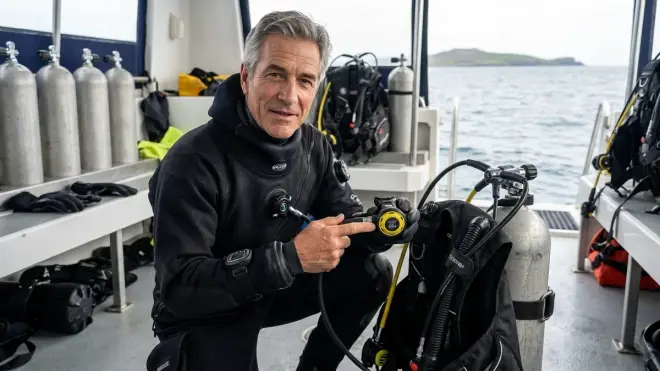
Understanding essential scuba diving equipment means understanding how each component fits into a complete life-support system. I've witnessed equipment failures in just about every category, and the scary ones always involve multiple points of failure—when one problem cascades into another.
Your regulator system is the most critical piece. It consists of a first stage (attaches to the tank valve), second stage (what you breathe from), alternate air source (your backup), and low-pressure inflator hose for your BCD. The first stage reduces high-pressure air from your tank (typically 3,000 PSI) down to an intermediate pressure around 140 PSI. The second stage further reduces that to ambient pressure—matching the water pressure at whatever depth you're at. When this system works correctly, you don't even think about it. When it doesn't, you're dealing with free-flows, inadequate air delivery, or complete failure.
I've seen cheap regulators ice up in 78-degree Florida water because the intermediate pressure wasn't properly balanced. That's not a cold-water problem—that's a quality problem.
Your buoyancy compensator does exactly what the name suggests: it compensates for buoyancy changes as you descend and ascend. At depth, your wetsuit compresses and you become negatively buoyant. The BCD lets you add air to maintain neutral buoyancy, which is the whole point of recreational diving. Different scuba BCD types serve different purposes, but they all do this fundamental job. You add air through the low-pressure inflator connected to your regulator first stage, and you dump air through various valves positioned around the BCD. The bladder inside holds the air, and the harness system keeps everything attached to your body.
What kills people isn't usually catastrophic BCD failure—it's not understanding how to use the dump valves during an uncontrolled ascent or getting so negatively weighted that the BCD can't compensate.
Your dive computer tracks depth, time, and nitrogen loading. It's running calculations based on decompression models to tell you how long you can stay at a given depth and when you need to surface. Before computers became affordable and reliable, we used depth gauges, dive timers, and printed tables. I still teach people to understand the tables because when your computer dies at sixty feet, you need to know how to get back to the surface safely. Modern computers also track ascent rates, surface intervals, and multi-level dive profiles with far more precision than we could manage in the analog days.
Exposure protection—your wetsuit or drysuit—prevents hypothermia. Even in tropical water, you lose body heat twenty-five times faster than in air at the same temperature. I've pulled shivering divers out of 82-degree water after hour-long dives because they wore a 2mm shorty when they needed a 3mm full suit. The neoprene traps a thin layer of water against your skin, your body heats it, and that warm layer insulates you. Different thicknesses, materials, and suit styles provide different levels of thermal protection.
Why Understanding Essential Scuba Diving Equipment Matters
The practical significance of knowing your essential scuba diving equipment inside and out comes down to three things: safety, money, and confidence.
Safety first, always. I've been diving since the Carter administration, and I've seen exactly two drownings in recreational diving situations. Both involved equipment that the diver didn't understand or couldn't operate under stress. In one case, the diver panicked at ninety feet, couldn't locate his alternate air source, and bolted for the surface instead of signaling his buddy. He had the equipment—he just didn't know how to use it when his brain was screaming at him to breathe.
When you understand what each piece of essential equipment does and how it can fail, you stop panicking. You develop what we used to call "task loading capacity"—the ability to handle multiple problems simultaneously because you're not burning mental energy trying to figure out which button dumps air from your BCD.
The dive industry loves selling upgrades and add-ons, and some of them are genuinely useful. Most aren't. If you don't understand what's essential, you'll drop $3,000 on your first gear package when $1,200 would have given you everything you actually need. I tell new divers to rent everything for their first twenty dives except a mask and fins—get comfortable in the water, figure out what kind of diving you actually enjoy, then invest in your own life-support gear. You might decide you only dive on warm-water vacations twice a year, in which case buying your own regulator doesn't make financial sense.
Confidence is the quiet benefit. When I see experienced divers gearing up, there's a calm efficiency to it. They know exactly where everything is, how it functions, and what to do if something goes wrong. That confidence shows up in your air consumption, your buoyancy control, and your overall enjoyment of the dive. New divers who understand their essential equipment progress faster and have more fun because they're not constantly worried about whether something is going to fail.
Types and Variations of Essential Equipment
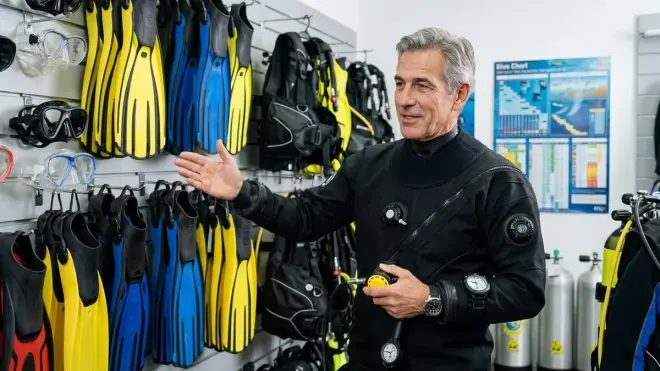
Essential scuba diving equipment comes in configurations for different diving environments and experience levels. The core components stay the same, but the specifications change dramatically based on what you're doing.
Regulator configurations vary by environment. A balanced diaphragm first stage with environmentally sealed components handles cold water and silty conditions where an unbalanced piston design would freeze or clog. Yoke versus DIN connections matter—DIN provides a more secure, higher-pressure connection preferred by technical divers and common in Europe, while yoke dominates the recreational rental market in the Caribbean and Pacific. I dive DIN exclusively now, but I keep a yoke adapter in my bag for resort diving.
BCD styles break down into jacket-style, back-inflate, and sidemount configurations. Jacket-style BCDs (sometimes called vest-style) put air around your entire torso and tend to push you face-up at the surface, which new divers find comfortable. Back-inflate BCDs keep all the air behind you for better horizontal trim underwater but feel less stable at the surface. Sidemount configurations attach tanks to your sides instead of your back and are primarily used for cave diving or tight wreck penetrations. For recreational diving, it's jacket versus back-inflate, and both work fine—it's about personal preference.
Dive computer categories range from basic air-integrated wrist models to full-featured technical diving computers with multiple gas mix capability and trimix algorithms. A recreational diver doing no-decompression ocean dives needs different functionality than someone doing multi-level wreck diving or using nitrox. I dive with a computer that has nitrox capability even though I don't always dive enriched air—the flexibility matters when I'm doing repetitive dives on multi-day trips.
Exposure protection variations depend entirely on water temperature and dive duration. A 3mm full wetsuit handles water from about 75-85°F. Below that, you're looking at 5mm or 7mm suits, hooded vests, or drysuits. Above that, you can get away with 2mm or even a rash guard for short dives. I dive year-round in Florida, and I wear everything from a 2mm shorty in August to a 7mm with a hooded vest in February when the Gulf drops to 68°F.
Frequently Asked Questions
What are the absolute essentials for scuba diving?
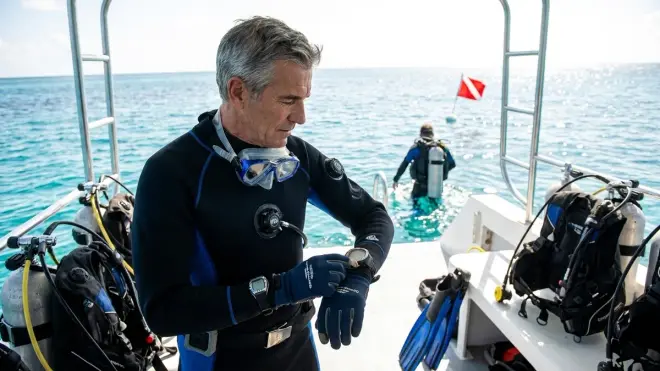
The absolute essentials for scuba diving are a regulator system (first stage, second stage, and alternate air source), a buoyancy compensator, a pressure gauge or dive computer, exposure protection appropriate for the water temperature, a mask, fins, and proper weighting. These items form your life-support system and enable you to descend, maintain depth, breathe, and surface safely. Everything else is either comfort equipment or specialized gear for specific diving situations.
Can I start diving without owning any equipment?
Yes, you can absolutely start diving without owning any equipment by renting everything from the dive shop or resort. I actually recommend this approach for your first ten to twenty dives until you figure out what type of diving you enjoy and what equipment configurations work best for your body type and diving style. Most divers eventually purchase their own mask and fins first since these items need to fit perfectly, then invest in their own regulator and BCD once they're committed to diving regularly.
How much should I expect to spend on essential scuba diving equipment?
You should expect to spend between $1,200 and $2,000 for a complete set of quality essential scuba diving equipment including a regulator system, BCD, dive computer, wetsuit, mask, fins, and basic accessories. You can spend less by choosing entry-level models or more by selecting premium brands and advanced features, but that range gets you reliable, well-built gear that will last years with proper maintenance. Buying used equipment can reduce costs, but I only recommend that if you have an experienced diver helping you evaluate condition and service history.
What's the difference between essential equipment and nice-to-have accessories?
Essential equipment directly supports life underwater or enables you to dive safely—your regulator lets you breathe, your BCD controls buoyancy, your computer tracks nitrogen loading. Nice-to-have accessories improve comfort or convenience but aren't required for basic diving—things like dive lights, underwater cameras, gear bags, or surface marker buoys. The distinction matters because you can spend thousands on accessories that don't actually make you a better or safer diver, while skimping on essential equipment can put you at risk.
How often does essential scuba diving equipment need to be serviced or replaced?
Regulators require professional service annually or after every 100 hours of diving, whichever comes first, which typically involves replacing o-rings, checking intermediate pressure, and inspecting all sealing surfaces. BCDs need annual inspection and occasional bladder replacement depending on use and storage conditions. Dive computers need battery replacement every one to three years and should be tested for accuracy periodically. Wetsuits and exposure protection gradually lose effectiveness as neoprene compresses and loses elasticity, typically needing replacement every three to five years for regular divers. I've seen divers stretching service intervals to save money, and I've also seen the regulators that free-flow or fail completely because of that decision.
Summary
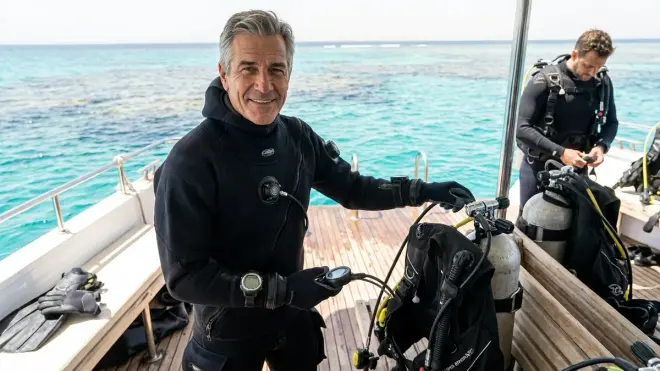
Essential scuba diving equipment is the life-support system that keeps you breathing and safe underwater—your regulator, BCD, dive computer, exposure protection, and basic accessories. Understanding what each component does, how they work together, and how they can fail gives you the foundation you need to make smart purchasing decisions and dive confidently. The dive industry will try to sell you everything under the sun, but the essentials haven't changed in forty years: you need to breathe, control buoyancy, track your depth and time, and stay warm enough to think clearly.
Start by understanding these core systems before you worry about anything else. Rent gear until you know what you need, then invest in quality equipment that fits your diving style and environment. If you're ready to make your first purchase, how to choose your first scuba gear set walks through the decision-making process step by step. Get your essential equipment right, maintain it properly, and you'll have the foundation for decades of safe, enjoyable diving.