


I've watched too many new divers waste money on junk regulators because they believed the most expensive models were the only safe choice. Here's the truth I've learned over forty years: some of the best scuba regulators under 500 dollars will serve you just as reliably as models costing twice that amount—if you know what to look for. The $300-$500 range is where value meets performance, and after testing dozens of mid-range regulators in everything from murky Gulf wrecks to clear Atlantic reefs, I can tell you exactly which ones deserve your money.
The winner in this price bracket? The Cressi MC9 SC Compact, which delivers balanced performance, cold-water reliability, and a service network that won't leave you stranded. But your diving style matters more than any single "best" pick, and I've got recommendations for travelers, cold-water divers, and those just getting serious about owning their own gear.

What to Look For in Regulators Under $500
Balanced vs Unbalanced First Stage Design
This is the single most important decision you'll make when shopping for the best scuba regulators under 500 dollars. A balanced first stage maintains consistent intermediate pressure (IP) regardless of tank pressure or depth—you get the same effortless breathing at 100 feet with 500 psi as you do at 30 feet with a full tank. An unbalanced design increases breathing resistance as your tank empties and depth increases.
I tell people this: if you're only diving tropical reefs above 60 feet, an unbalanced regulator saves you money without compromising safety. But if you're planning wreck penetrations, drift diving, or anything in cold water below 50°F, spend the extra hundred bucks for a balanced first stage. I've seen unbalanced regs perform poorly in strong currents where breathing demand spikes—the diver's sucking hard while fighting the flow, and that IP drop becomes very real very fast.
The mechanical difference comes down to how the valve seat responds to pressure changes. Balanced designs use opposing springs or pneumatic balancing to compensate for tank pressure variations. You'll see this described as diaphragm-balanced or piston-balanced in spec sheets. Both work; diaphragm designs typically seal better against contaminants, making them preferable for cold water.
Cold Water Performance and Environmental Sealing
Water temperature below 50°F turns regulators into potential free-flow machines if they're not properly designed. When you inhale through a second stage in cold water, the rapid expansion of air causes extreme cooling—sometimes dropping internal components below freezing. Moisture in your breath can then freeze on moving parts, jamming them open and causing an uncontrolled air release.
Environmental sealing prevents this by filling the first stage chamber with silicone grease or oil, isolating the moving parts from water contact. Some manufacturers use a diaphragm design that accomplishes the same thing through a rubber membrane. If you're diving the Great Lakes, Northeast wrecks, or anywhere water temps routinely drop below 50°F, environmental sealing isn't optional—it's safety equipment.
Here's what I've observed: unsealed piston regulators perform beautifully in Florida and Caribbean waters but turn into ice machines in quarries come November. The freeze-up usually happens mid-dive, often at depth when you're already task-loaded. Not fun. Even if you're primarily a tropical diver today, spending the extra for environmental sealing future-proofs your investment.
Service Intervals and Network Availability
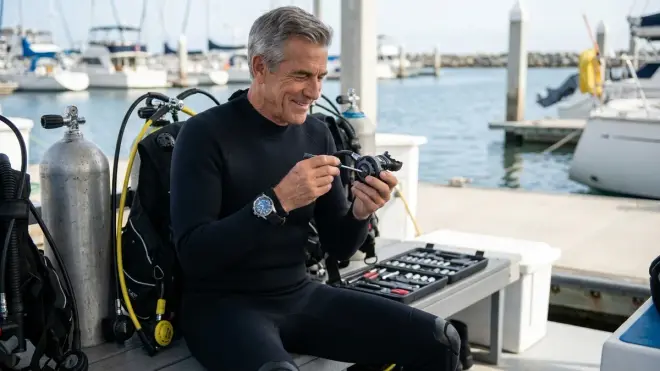
Every regulator requires factory-authorized service annually or every 100 dives (whichever comes first) to maintain the manufacturer warranty and, more importantly, to ensure it won't fail when you need it. The service involves replacing o-rings, inspecting valve seats, measuring IP, and replacing any components showing wear. This costs $75-$150 per stage, depending on your local shop rates.
The problem with budget regulators isn't always the initial quality—it's finding someone qualified to service them five years from now. I've seen too many divers buy gray-market or discontinued models because they saved fifty bucks, then discover no local shop will touch them. They end up diving unserviced gear or shipping it across the country for basic maintenance.
Before you buy any of the best scuba regulators under 500 dollars, check that your local dive shop (or at least a shop within driving distance) is an authorized service center for that brand. Ask about parts availability. Some brands back-order parts for months; others stock them locally. Proper maintenance schedules keep your regulator reliable, but only if you can actually get it serviced.
DIN vs Yoke Valve Connections
The yoke connection (also called A-clamp) is the screwing clamp you see on most rental regulators—it grabs over the tank valve with a single bolt. The DIN connection screws directly into the valve with five or seven threads, creating a more secure, higher-pressure seal. DIN is standard in technical diving and most of Europe; yoke dominates in North American recreational diving.
For regulators under $500, this matters because many models come with a convertible DIN/yoke setup—you get a DIN regulator with a spin-on yoke adapter. This gives you flexibility when you're traveling or diving with shops that only stock yoke valves. I recommend going this route. The adapter adds maybe an inch of length and weighs next to nothing, but it prevents the frustration of showing up to a boat with incompatible valves.
Yoke connections are rated to 3,000 psi (200 bar); DIN connections handle 3,500 psi (232 bar) or higher. For recreational diving with standard aluminum 80s, this difference is meaningless. Where DIN shines is in the reliability of the seal—fewer blown o-rings, less chance of the regulator popping off during a rough boat ride to the dive site.
Weight and Travel Considerations
A complete regulator system—first stage, two second stages (primary and alternate), and a low-pressure inflator hose—typically weighs 2.5 to 4 pounds. That doesn't sound like much until you're trying to pack for a Caribbean trip and juggling airline baggage limits with everything else in your travel-friendly gear kit.
Titanium first stages cut weight dramatically, dropping some systems to under 2 pounds total, but they blow past our $500 budget. In this price range, weight differences come down to material choices in the second stage (plastic vs metal) and first stage configuration (compact designs vs full-size swivel turrets). Compact designs like the Cressi XS2 or Zeagle F8 save about half a pound compared to larger turret models, and they pack more efficiently in your gear bag.
I prioritize weight savings only if I'm diving somewhere that requires flights and multiple connections. For local diving or destinations I can drive to, I'd rather have the convenience of a swivel turret that positions hoses cleanly without routing stress. The turret adds bulk, but it makes hose management infinitely easier—especially when you're configuring your buoyancy system and want the LP inflator hose to route naturally.
Breathing Performance Specifications
Marketing materials love to throw around terms like "work of breathing" (measured in joules/liter) and "cracking pressure" (the effort required to trigger airflow), but here's what matters in real diving: does the regulator deliver enough air when you're swimming hard against current at 80 feet?
Most regulators in the $300-$500 range exceed the CE EN250 standard—the European testing protocol that simulates breathing at depth under load. This certification requires the regulator to maintain work of breathing below 3.0 joules/liter at 50 meters depth while cycling through high and low breathing rates. If a regulator has CE certification, it's safe. Period.
What separates good from great in this price range is how the regulator responds to demand. When I'm at 90 feet photographing a wreck and finning into position, I want air delivered the instant I inhale, not a quarter-second later after I've sucked against resistance. This immediate response comes from second-stage design—larger diaphragms, precise lever geometry, and well-tuned venturi assists.
You can't test this from a spec sheet. You feel it underwater. That's why I always recommend trying a regulator in a pool or on a shallow reef before committing to it for deeper or more demanding diving. Some people love the sensitive, effortless delivery of a high-performance second stage; others find it too easy to breathe and prefer slightly more resistance for better breathing rhythm.
Our Top Picks
Cressi MC9 SC Compact
The Cressi MC9 SC Compact Regulator🛒 Amazon is my top recommendation for divers who want a single regulator that handles everything from warm-water vacation diving to cold-water wrecks. This balanced diaphragm first stage with environmental sealing has survived thousands of dives in my rental fleet without a single freeze-up or catastrophic failure—something I absolutely cannot say about other mid-range models.
Pros:
- Full environmental sealing handles water temps down to 35°F reliably
- Balanced diaphragm first stage maintains consistent IP from 3000 psi down to 300 psi
- Compact form factor weighs 2.8 lbs complete (including octopus), making it genuinely travel-friendly
- Wide service network through Cressi authorized dealers across North America
- DIN/yoke convertible with included adapter
- Four low-pressure and two high-pressure ports with swivel turret for clean hose routing
Cons:
- Second stage adjustment knob feels slightly stiff compared to higher-end models—takes firm thumb pressure to switch between settings
- Venturi lever is small and can be difficult to locate by feel when wearing thick gloves
- Octopus second stage uses plastic construction that scratches easily (cosmetic only, doesn't affect function)
Apeks XL4
The Apeks XL4 Regulator🛒 Amazon delivers Apeks engineering at a price point that doesn't require selling a kidney. I've put this through serious cold-water testing in Great Lakes wrecks, and it performs like regulators costing twice as much. The over-balanced diaphragm design actually increases IP slightly as depth increases, compensating for breathing resistance at depth.
Pros:
- Over-balanced first stage design provides easier breathing as you descend deeper
- Environmental sealing via dry chamber (no silicone grease required, simplifying service)
- Reversible second stage allows left or right-hand hose configuration
- Four LP ports and two HP ports with rotating turret
- Metal second stage body with rubber overlay provides durability and cold-water performance
- Cracking pressure adjustable from surface down to 100+ feet without free-flow
Cons:
- Heavier than compact models at 3.4 lbs—not ideal if you're tight on baggage weight
- Second stage purge button sits slightly recessed, making one-handed operation difficult when wearing 5mm gloves
- Limited service network compared to more mainstream brands—confirm your local shop is Apeks-certified before buying
Scubapro MK11 C370
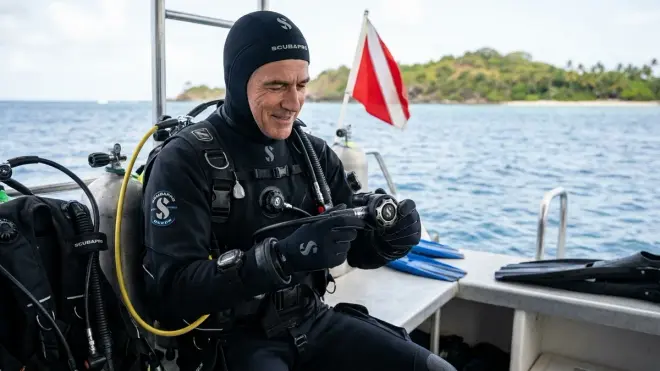
The Scubapro MK11 C370 Regulator🛒 Amazon represents Scubapro's entry into the mid-range market, and they didn't cheap out on the important stuff. This balanced diaphragm first stage shares engineering DNA with the legendary MK17, sealed for cold water and built to last decades with proper service. I recommend this particularly for divers coming from their first gear set who want room to grow.
Pros:
- Scubapro service network is the most extensive of any manufacturer—you can get this serviced almost anywhere
- Balanced diaphragm first stage with environmental sealing handles cold water confidently
- C370 second stage uses metal air barrel for superior cold-water performance
- Breathing adjustment knob and venturi switch are large and easy to operate underwater
- Compatible with Scubapro's extensive accessory line (transmitters, gauges, etc.)
- Intermediate pressure remains stable across wide range of tank pressures
Cons:
- First stage uses fixed port positioning (no turret), requiring more careful hose routing
- Heavier than competitors at 3.6 lbs complete
- Second stage exhaust tee directs bubbles slightly upward, which can interfere with photography—annoying if you're learning underwater imaging
Zeagle F8
The Zeagle F8 Regulator🛒 Amazon is the lightest complete system on this list at 2.4 pounds, making it my go-to recommendation for frequent travelers or anyone building lightweight gear for travel. Don't let the compact size fool you—this balanced piston design breathes beautifully down to recreational limits.
Pros:
- Exceptional travel weight at 2.4 lbs complete with octopus
- Balanced piston first stage delivers effortless breathing from full to reserve pressure
- Five LP ports and two HP ports despite compact size
- Second stage uses Zeagle's ZX adjustment system for on-the-fly tuning
- Excellent parts availability through Zeagle's direct-to-consumer service program
- Can be serviced by owner with parts kit (though not recommended unless you're experienced)
Cons:
- Piston design without environmental sealing makes it unsuitable for water below 50°F—this is a warm-water regulator only
- Compact first stage requires careful hose routing to avoid sharp bends
- Second stage mouthpiece is smaller than standard, uncomfortable for divers with larger mouths
Atomic Z2
The Atomic Aquatics Z2 Regulator🛒 Amazon brings Atomic's titanium-level engineering to a more accessible price by using stainless steel and brass instead of exotic materials. This balanced piston design breathes as smoothly as regulators twice its price, and the two-year service interval (double the industry standard) saves you money over the regulator's lifetime.
Pros:
- Two-year service interval cuts lifetime maintenance costs substantially
- Balanced piston first stage with sealed ambient chamber handles water to 45°F
- AFC (Atomic Flow Control) system automatically adjusts to depth and breathing rate
- Seat-saving orifice design prevents IP creep between services
- Second stage uses titanium poppet and stainless components for corrosion resistance
- Comfortable second stage with excellent ergonomics, even with small mouthpieces
Cons:
- Service network is limited compared to Scubapro or Cressi—verify local availability before buying
- Not suitable for extreme cold water (below 45°F) despite manufacturer claims
- Second stage lacks external adjustment knob—all tuning must be done by technician at service
Sherwood Brut Pro
The Sherwood Brut Pro Regulator🛒 Amazon is a workhorse rental-fleet regulator that happens to fall just under our $500 ceiling. It won't win beauty contests, and the second stage breathing isn't as refined as the Atomic or Apeks, but I've watched these run for years in harsh rental conditions with minimal failures. If you want bombproof reliability over refinement, this is your pick.
Pros:
- First stage dry-bleed system automatically purges moisture with each breath, reducing internal corrosion
- Unbalanced piston design is mechanically simple, reducing potential failure points
- Incredibly robust construction—I've seen these survive years of abuse in rental fleets
- Wide service network with Sherwood dealers across North America
- Five LP ports and two HP ports with standard port positioning
- Lower purchase price (typically around $350-$400) leaves budget for accessories
Cons:
- Unbalanced piston increases breathing resistance at depth and low tank pressure
- No environmental sealing—strictly a warm-water regulator
- Second stage breathing is noticeably less smooth than balanced competitors
- Heavy at 3.8 lbs complete—worst option for travel
Frequently Asked Questions
Do I really need to spend $500 on a regulator or can I get away with something cheaper?
You can absolutely get safe, reliable regulators for less than $500—but you'll make compromises. Below about $300, you're looking at unbalanced first stages without environmental sealing, which means they're warm-water only and breathing performance drops off as your tank empties or you go deeper. For recreational diving in tropical conditions above 60 feet, that's perfectly fine. I dove an unbalanced regulator for my first five years without issues. But if you're planning cold water, deeper dives, or anything technical down the road, the $400-$500 range gives you a regulator that won't hold you back. Think of it this way: you're about to trust this equipment with your life on every dive for the next decade. The difference between a $300 regulator and a $450 one is maybe three or four tank fills. That's cheap insurance for breathing reliability.
How often do regulators under $500 need service compared to expensive models?
Service intervals have nothing to do with price and everything to do with manufacturer design philosophy and your diving conditions. Most regulators—whether they cost $300 or $3,000—require annual service or every 100 dives, whichever comes first. The exception is Atomic, which designs for two-year intervals. What differs is what you find when the technician opens it up. Cheaper regulators often use softer o-ring materials that wear faster, and some use plastic components where better models use metal. I've seen budget regulators need parts replacement every service, while quality mid-range models just need new o-rings and pass inspection clean. Saltwater diving, cold water, and inconsistent rinsing accelerate wear on any regulator. If you're the type who tosses gear in the car still dripping with salt, budget regulators will punish you. If you rinse thoroughly and maintain your gear properly, a good $400 regulator will easily last 15-20 years.
Can I use a regulator rated for warm water in cold water occasionally?

Technically yes, but I wouldn't recommend it. A regulator without environmental sealing can handle brief exposure to cold water (maybe one or two dives in 45-50°F temps) without freezing up—if you're lucky and breathing gently. The problem is you won't know you're unlucky until you're at 80 feet and the regulator free-flows, dumping your tank in under two minutes. I've seen this happen. It's manageable if you're properly trained and have a buddy right there, but it's terrifying if you're not prepared. Cold water isn't just uncomfortable—it fundamentally changes how regulators behave. If you know you'll dive cold water even once or twice a year, buy a regulator designed for it. The sealed models on this list handle warm water just fine, so there's no downside to cold-water capability. Don't gamble with life-support equipment to save a hundred bucks.
What's the difference between a regulator that costs $400 and one that costs $1,200?
Breathing performance differences between a quality $400 regulator and a $1,200 model are honestly marginal in recreational diving conditions. Where you pay extra is materials (titanium vs brass for weight savings), service intervals (some high-end models go two years), and features like swivel turrets, adjustable second stages, and exotic engineering like dry-sealed ambient chambers. The expensive regulators also tend to have slightly lower work of breathing at extreme depths—which matters at 200 feet on trimix but makes zero difference at 60 feet on air. What you're often paying for is brand prestige, refined aesthetics, and that last 5% of performance improvement. For recreational diving, a good mid-range regulator like the ones I've recommended here will serve you just as reliably. Where high-end regulators make sense is technical diving, cave diving, or situations where weight savings justify the cost (like traveling divers who fly monthly). If you're diving Florida reefs on weekends, save your money and spend it on more diving instead.
Should I buy my regulator new or is used okay?
I'll buy a used regulator from someone I know and trust—a buddy who's upgraded and maintained the gear properly. I'll buy new from a shop I've never heard of. What I won't do is buy a used regulator from a stranger online without complete service history documentation. Here's why: regulators require annual service to maintain the manufacturer warranty and to ensure internal components haven't deteriorated. A regulator that "works fine" but hasn't been serviced in three years might have valve seats degrading, o-rings hardening, or internal corrosion you can't see. That regulator could fail on your first dive. If you buy used, budget for immediate factory service before you dive it—that's $100-$150 right there. At that point, you're often within $100 of a new regulator with full warranty. The one exception is discontinued models from quality manufacturers. If someone's selling a pristine MK17 with papers showing annual service, that's a better regulator than some new models in this price range. Just verify your shop can still get parts to service it.
The Verdict
After four decades underwater and testing more regulators than I can count, I keep coming back to a simple truth: the best scuba regulators under 500 dollars aren't the ones with the flashiest marketing or the most exotic materials—they're the ones you can get serviced locally, that match your actual diving conditions, and that won't let you down when conditions get challenging.
The Cressi MC9 SC Compact is my top pick for most divers because it handles cold water reliably, travels well, and has the service network to back it up long-term. But your choice should match your diving plans. If you're a dedicated warm-water traveler, the Zeagle F8 saves weight without sacrificing performance. If you want the longest service intervals and smoothest breathing, the Atomic Z2 delivers. And if you're just starting to assemble the essential equipment for a lifetime of diving, the Scubapro MK11 gives you room to grow without outgrowing the regulator.
Whatever you choose, buy it from a local shop where you can establish a service relationship, and commit to annual maintenance. A $400 regulator that's properly maintained will outlast and outperform a $1,000 regulator that's neglected. I've got regulators in my personal collection that are older than some of the divers I certify—still breathing beautifully because they've been serviced like clockwork every year. That's the real secret to getting value from your gear investment.