
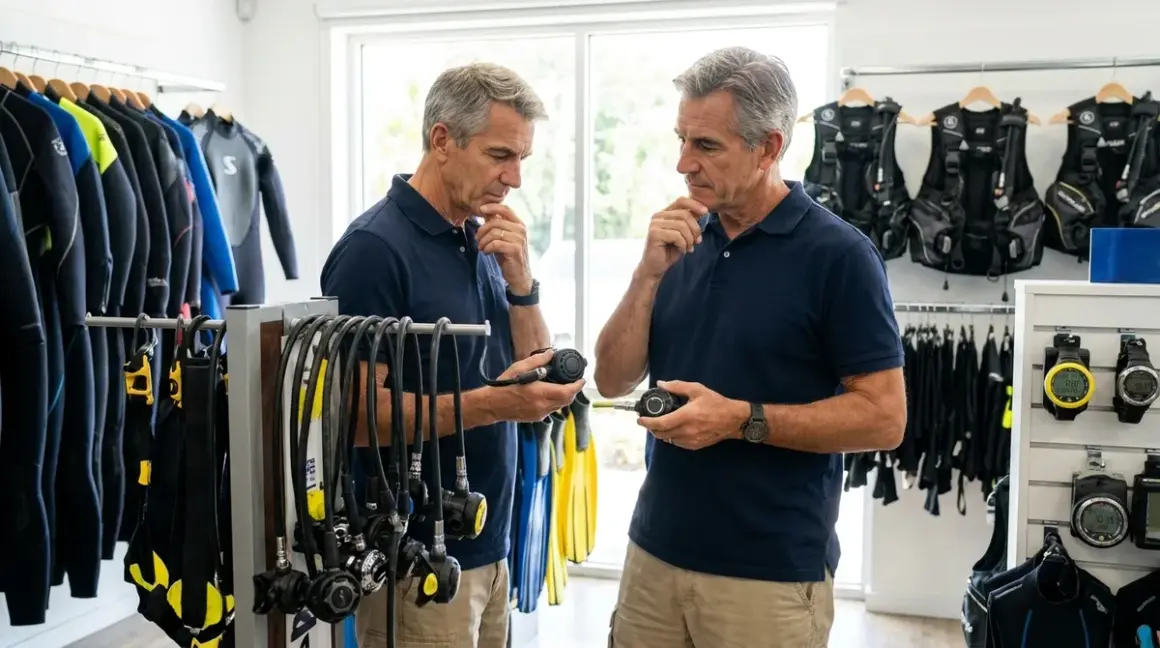

I've watched new divers walk out of shops with $5,000 worth of gear they didn't need more times than I can count. Usually happens right after certification, when the excitement's running high and the sales pitch is running smooth. Here's the thing: you can assemble a solid first equipment kit for less than half that and still have everything you actually need to dive safely and comfortably. Over four decades in this business, I've learned that avoiding overspending on your first scuba equipment comes down to understanding what's essential versus what's optional, buying the right gear for your actual diving plans, and recognizing when you're being upsold. This guide will walk you through a systematic approach to building your first equipment set without the buyer's remorse.
Skill level: Certified diver or currently in certification
Time to complete: 2-3 weeks of research and shopping
Expected outcome: A complete equipment package matched to your diving needs, typically saving $1,500-$2,500 compared to buying everything the shop suggests
What You'll Need
Before you start shopping, gather these resources:
- Your dive certification card (confirms your training level)
- Written list of your planned diving environments (tropical vacation twice a year, local quarry diving, liveaboards, etc.)
- Your body measurements (height, weight, wetsuit size if known, boot size)
- Budget worksheet (total available funds and priorities)
- Copy of your training materials (reference for equipment you actually used)
- Access to dive shop try-before-you-buy programs (most shops offer this)
- List of local rental costs (helps calculate break-even point)
- Notebook for tracking specs and prices across different shops
Step 1: Calculate Your Actual Break-Even Point on Rental vs Purchase
First thing I tell people: run the real numbers before you buy anything. I've seen divers purchase full equipment kits before their checkout dives, then make three dives over two years. That's insanity from a financial standpoint.
Start with rental costs in your area. Most shops charge $40-$60 for a full equipment rental per day. If you're doing a typical two-tank boat dive, that's one rental day. Now be brutally honest about your diving frequency. If you're planning two vacation trips per year with four dive days each, that's eight rental days annually, or roughly $400-$480 in rental fees.
Here's where people mess up: they calculate break-even on total cost. Instead, calculate it per category. A mask, snorkel, fins, and boots might run $300-$400 total and get used every single dive. That's your personal exposure gear, and it makes sense to own it immediately—you'll want the fit anyway. But a BCD at $600 and regulator at $550 won't break even for years if you're only diving occasionally.
I've logged over 8,000 dives, and I can't count how many barely-used equipment sets I've seen sold at massive losses because the diver's eyes were bigger than their dive log. One guy bought a $4,500 technical diving setup after his Open Water certification because it "looked professional." He made 11 dives with it over three years, then sold it for $1,800. Do the math first.
Track this on paper: estimated annual dive days multiplied by rental cost, divided by purchase price for each category. Anything over three years to break even should wait unless you're certain about your commitment.
Step 2: Start with the "Personal Contact" Gear Only
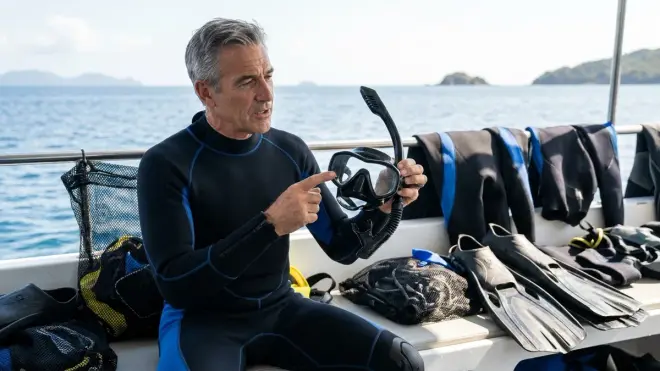
This is where you actually open your wallet first, and it's the one area where I'm comfortable telling new divers to buy immediately. Your mask, fins, boots, and possibly a wetsuit are the only things you should purchase before you've got 15-20 dives logged.
Why? Because these items contact your body directly, and fit matters exponentially more than brand or features. I've seen more dives ruined by a leaking mask or cramping fins than any other equipment issue. A mask that fits your face perfectly at $60 will outperform a $200 mask that doesn't seal properly every single time.
For masks, ignore the fancy coatings and color schemes. You want a soft, flexible silicone skirt that seals without pressure, a wide field of view, and easy nose pocket access for equalization. The scuba fin sizing process is equally personal—your fin pocket needs to grip your boot without pressure points, and the blade stiffness should match your leg strength and typical currents.
Budget breakdown for this stage: $80-$150 for a quality mask, $100-$200 for fins, $40-$80 for boots, $200-$400 for a 3mm or 5mm wetsuit depending on your water temperatures. That's $420-$830 total, and it's money well spent because you'll use these items on every dive regardless of what else you own or rent.
I still dive with a mask I bought in 1994. It's been on wrecks at 130 feet, through kelp forests, under ice, and in water so murky I couldn't see my gauges. Cost me $75 back then. Meanwhile, I've replaced three regulators and four BCDs over the same period. That's the difference between personal contact gear and life support equipment—one is about fit, the other is about maintenance and technology updates.
Step 3: Rent Everything Else for Your Next 15-20 Dives
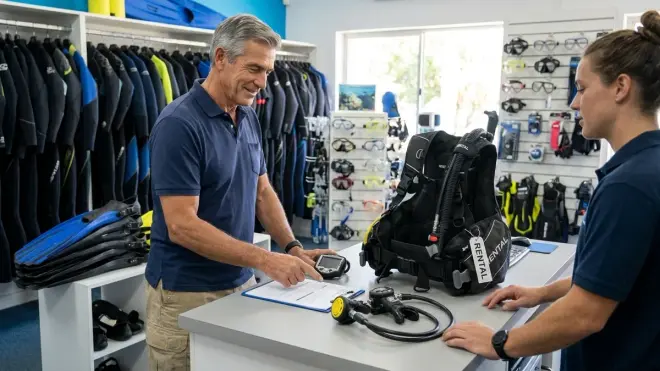
Here's where you save the real money, and where most new divers completely ignore my advice because they want to look like "real divers" with their own gear. I get it. I really do. But renting your BCD, regulator, and gauges for your first season of diving is the smartest financial and safety decision you can make.
Why? Because you don't actually know what kind of diver you are yet. You might think you want to do deep wreck diving, then discover you prefer shallow reef photography. You might believe you'll be a warm-water vacation diver, then get hooked on local quarry diving that requires cold water gear. The regulator and BCD that work brilliantly in 82°F Caribbean water are often completely wrong for 52°F Pacific Northwest diving.
I've been diving Florida waters since the late 1970s, and I can spot a new diver's overspending mistake from fifty feet away: it's usually a expensive technical diving BC or a high-end cold-water regulator being used for recreational reef diving in 80-degree water. They bought aspirationally instead of practically.
Rental also gives you hands-on comparison experience with different equipment types. You'll try back-inflate BCDs, jacket-style BCDs, different regulator breathing characteristics, and various gauge configurations. This real-world testing is worth far more than any amount of online research or shop recommendations. After 15-20 dives with varied rental equipment, you'll know exactly what features matter to you and which are just marketing hype.
Plus, rental equipment is maintained by the shop. If something fails, it's their problem, not yours. You're not yet experienced enough to properly perform the regulator safety check procedures, and you shouldn't be responsible for life support equipment you don't fully understand yet.
Step 4: Identify Your Actual Diving Profile Before Buying Life Support
This step requires honesty that most new divers don't want to hear. You need to wait until you've actually established a diving pattern before buying your regulator, BCD, and instruments. I know the shop told you differently during your sales pitch. I know your instructor mentioned deals on equipment packages. But understanding your real diving profile is worth waiting for.
After 15-20 dives spread over several months, you'll know several critical things: your actual diving frequency, your preferred environments, your air consumption rate, your thermal comfort needs, and whether you're serious enough about diving to justify ownership costs.
Let me give you a real example from my shop days. Diver gets certified in summer, buys a full equipment set in September for $2,800, dives it four times that fall, then doesn't touch it again for eight months because life got busy. The regulator still needed annual service at the 12-month mark whether he used it or not—that's $80-$120 in maintenance for equipment that sat in a closet. Over three years, he spent $3,100 total (purchase plus three annual services) for 14 dives. Rental would have cost $840.
Your diving profile determines everything. If you're actually doing 30+ dives per year in similar conditions, ownership makes financial sense. If you're doing 8-10 vacation dives annually in varied locations, rental often stays cheaper for years. If you're diving cold water locally but warm water on vacation, you might need two complete regulator sets—that changes the math entirely.
Also consider transportation. If you're flying to dive destinations, a full equipment set adds 40-50 pounds to your baggage. Some divers find it easier to travel light and rent regulators and BCDs at destination, owning only their personal contact gear. That's a legitimate strategy that saves both money and hassle.
Step 5: Buy Regulators and BCDs Based on Service Infrastructure, Not Brand Prestige
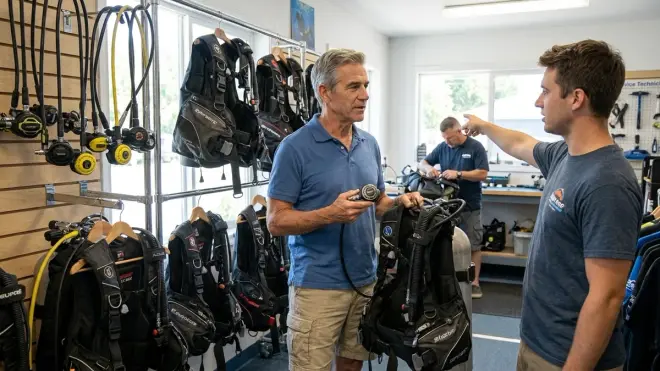
When you're finally ready to buy your life support equipment, here's what matters: service availability, parts availability, and proven track record. Not the brand your instructor uses, not what looks cool, not what's "technical diving rated" when you're doing recreational reef diving.
I've watched this industry long enough to see manufacturers come and go, see popular brands get bought out and quality decline, and see "revolutionary" designs fail in the real world. The regulator that matters is the one you can get serviced locally within 24 hours if something goes wrong before a dive trip.
Start with your local dive shop's authorized service brands. If they're an authorized service center for Scubapro, Atomic, and Apeks, those are your realistic choices unless you want to mail your regulator away for service. A $400 regulator you can service locally beats a $600 regulator you have to ship to California and wait three weeks to get back.
For BCDs, ignore the marketing about weight-integrated systems versus traditional weight belts, or back-inflate versus jacket-style. Here's what actually matters: how it fits your torso, how easily you can reach your own dumps and inflators, and whether the lift capacity matches your exposure suit. A 30-pound lift BCD is worthless if you're diving a 7mm wetsuit and need 35 pounds of buoyancy to compensate.
Budget for a solid mid-range regulator package (first stage, second stage, octopus, gauge console) at $450-$650. Budget for a BCD at $350-$550. Anything above these ranges in your first purchase is paying for features you don't yet know if you need. Save the titanium first stages and fancy wireless air integration for after you've logged 100 dives and actually understand what you're buying.
When shops recommend redundant dive gear for liveaboards or backup systems, that's future planning. You don't need redundancy for resort diving with a guide.
Step 6: Handle Dive Computers Separately from Equipment Packages
This deserves its own step because it's where I see the most egregious upselling. A dive shop will bundle a computer into an equipment package and suddenly you're paying $900 for a wrist computer with features you'll never use when a $250 computer would serve you perfectly for years.
Your first dive computer should be simple, conservative, and air-integrated only if you're certain about owning your own regulator. That's it. You don't need multi-gas capability for recreational diving. You don't need CCR modes. You don't need dive log software that syncs to your phone via Bluetooth. You need a device that tracks depth, time, no-decompression limits, and surface intervals accurately.
I carried a basic Suunto Zoop for seven years and over 800 dives before upgrading. It cost around $300 and never failed once. Meanwhile, I watched divers with $1,200 computers struggle through menu systems to check their remaining bottom time. Complexity is not your friend underwater, especially when you're still building fundamental skills.
If you're renting regulators long-term, avoid computers with wireless air integration—you'll need a transmitter that fits the rental regulator's first stage, and shops rarely have compatible transmitters available. Stick with a basic wrist computer that tracks your profile from depth and time alone.
The decision between Suunto and Shearwater platforms is legitimate but comes much later. Understanding how to choose a biometric dive computer matters more once you've established serious diving habits and want features like heart rate monitoring or breathing rate tracking. For your first 50 dives, basic is beautiful.
Budget $250-$350 for a quality entry-level computer. Anything more is optional features you're paying to learn.
Step 7: Skip the Accessories Until You Know You Need Them
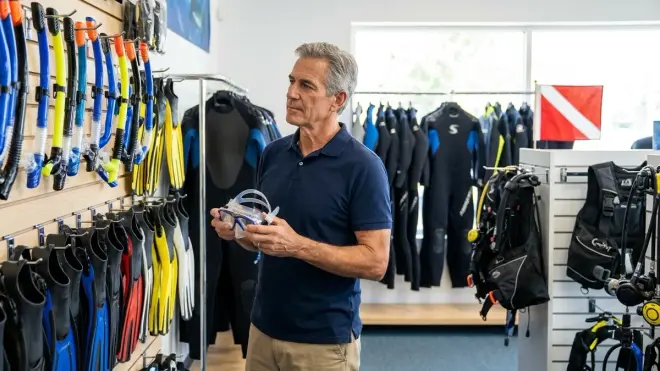
This is where dive shops make their margins, and where you can waste hundreds of dollars on gear that sits unused in your scuba gear bag. I'm talking about GoPro mounts, underwater lights, cutting tools, surface markers, slates, compasses, redundant gauges, gear clips, retractors, and the seventeen other items that get pitched as "essential."
Here's what's actually essential for recreational diving: your mask, fins, exposure suit, BCD, regulator, and computer. That's the list. Everything else is situational or optional.
Buy accessories only after you've encountered the specific problem they solve. Got tangled in fishing line on a dive? Now you know you need a cutting tool. Doing dusk dives and can't see your gauges? Now you need a small light. Diving in areas with boat traffic and need to signal your location? Now you need a surface marker buoy and spool.
I've seen new divers show up with $400 worth of accessories dangling off them like Christmas trees, then struggle with buoyancy because they're so distracted managing all their gear. Worse, I've seen divers skip proper weighting and trim practice because they spent their mental energy learning to deploy a surface marker they don't yet need to use.
The only accessory I recommend purchasing early is a simple compass if you're diving sites with low visibility or want to practice navigation. That runs $40-$80 for a basic wrist-mount model. Everything else can wait until you've identified an actual need through experience.
One exception: if you're doing any overhead environment diving—even simple swim-throughs—carry a backup light. But most new divers aren't doing that type of diving in their first season, so it's not a first-purchase item.
Step 8: Research Used Equipment Markets, But Only for Non-Life-Support Items
The used market can save you serious money, but it requires knowledge and caution most new divers don't yet possess. I'm comfortable recommending used BCDs, fins, wetsuits, and accessories—but I'm very cautious about used regulators.
A regulator is life support equipment with internal components you can't easily inspect. Unless you personally know the seller's maintenance history and can verify recent professional service, you're gambling. I've seen used regulators sold as "works great" that had corroded first stage springs, worn piston head o-rings, and intermediate pressure drift that could lead to freeflow or inadequate air delivery at depth. A new diver doesn't have the experience to test these things properly.
BCDs are different. You can visually inspect the bladder for leaks, test all dumps and inflators, check stitching and buckles, and verify the overall condition without specialized knowledge. A three-year-old BCD that's been well maintained and stored properly is functionally identical to a new one, often available at 40-50% off retail.
Same with wetsuits, fins, boots, and masks—these are items where condition is visually obvious. Look for stretched neoprene, separated seams, cracked rubber, cloudy silicone, or other visible wear. If it looks good and fits properly, it's probably fine.
For used equipment purchases, always factor in immediate service costs. That used regulator at $250 still needs $100 in professional inspection and rebuild before you should breathe from it underwater. A used BCD should get new inflator o-rings and a thorough leak test. These costs can eliminate the savings if you're not careful.
My general rule: if the used price plus required service costs equal 75% or more of new price, buy new and get the manufacturer warranty. If you can stay under 60% of new price after service costs, used makes sense for items you can properly evaluate.
Pro Tips & Common Mistakes
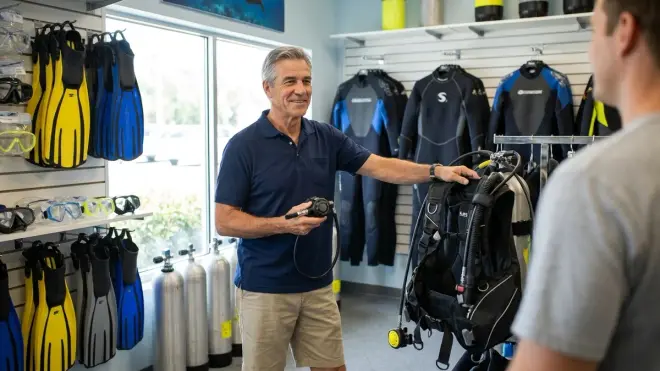
Don't fall for equipment package deals unless you've calculated per-item value. I've dissected hundreds of "complete diver packages," and most bundle a quality mask and fins with a mediocre regulator and overpriced computer to hit a psychologically appealing total price. Do the math on each component separately. Often you can buy better individual pieces for the same total cost.
Service intervals are ongoing costs that destroy the economics of cheap equipment. A $350 regulator that needs annual service at $120 costs more over five years than a $550 regulator that needs service every two years at $100. Always ask about manufacturer-required service intervals and local shop labor rates before buying.
Avoid bleeding-edge technology in your first equipment set. New features mean higher prices, limited service technician training, and potential reliability issues that haven't been discovered yet. Stick with equipment that's been on the market for at least two years and has established performance history. I've seen "revolutionary" regulators fail in common conditions because the design hadn't been adequately field-tested.
The biggest mistake I see is divers buying equipment sized for future plans instead of current needs. They purchase a technical diving BC with 40 pounds of lift because they "might do wreck diving someday," then struggle with the excess bulk and unnecessary features on recreational reef dives. Buy for what you're actually doing now. If your diving evolves, you can sell and upgrade—equipment holds decent resale value when it's appropriate for its category.
Another common error: matching your instructor's or buddy's equipment setup. Your instructor might use specific gear because they're doing 400 dives per year in unique conditions or because they're sponsored by a manufacturer. Your needs are different. Your buddy might have bought aspirationally or incorrectly themselves. Make independent decisions based on your actual diving profile.
Frequently Asked Questions
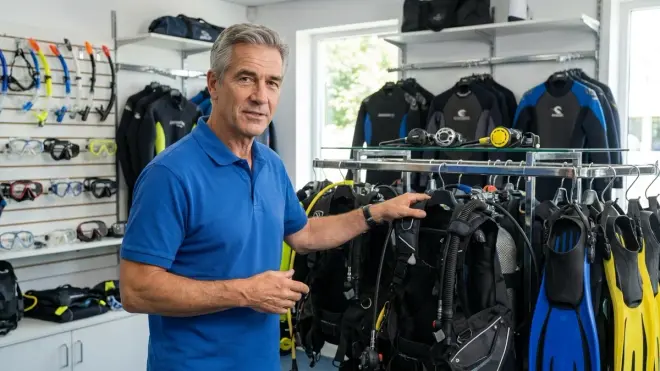
Should I buy equipment during my Open Water certification course or wait until after?
Wait until after you're certified and have completed at least 15-20 dives in varied conditions. During certification, you're still developing basic skills and don't yet understand your personal preferences, thermal needs, or diving frequency. The only exception is your mask, fins, and boots—these personal contact items benefit from immediate purchase because fit matters so much. I've seen countless divers buy complete equipment sets during certification, then discover they prefer different styles, need different thermal protection, or don't dive frequently enough to justify ownership costs. Give yourself time to learn what kind of diver you actually are versus what kind you think you'll be.
Is it worth spending more on a high-end regulator for my first purchase?
Not usually, and here's why: a quality mid-range regulator from a major manufacturer will breathe comfortably at recreational depths and last for years with proper maintenance. The performance difference between a $500 regulator and a $900 regulator is barely noticeable for the type of diving you'll be doing in your first few years. High-end regulators are optimized for technical diving depths, extended cold water use, or specific breathing characteristics that matter more to experienced divers. Spend the extra money on additional dive trips or professional training instead—that investment improves your skills and safety far more than marginal equipment upgrades. Once you've logged 100+ dives, you'll have enough experience to identify what regulator characteristics actually matter to you personally.
How much should I budget for my first complete equipment set if I'm diving 20-30 times per year?
For someone diving that frequently, ownership makes financial sense, and you can assemble a quality first set for $1,800-$2,400 total. Break it down like this: mask, fins, boots, and snorkel for $300-$450; wetsuit appropriate for your waters at $250-$400; regulator package with octopus and gauges at $450-$650; BCD at $350-$550; and basic dive computer at $250-$350. This budget gets you reliable equipment from reputable manufacturers with established service networks. Anything significantly cheaper usually means you're sacrificing service availability, parts support, or quality control. Anything significantly more expensive is paying for features or brand prestige you don't yet need. Save premium purchases for after you've identified specific performance requirements through experience.
Should I prioritize certain equipment categories over others when spreading purchases across several months?
Yes, absolutely, and there's a logical priority sequence. First purchase should be your mask, fins, boots, and snorkel—these are personal fit items you'll use on every dive and need immediately for comfort and safety. Second purchase should be your exposure suit, because thermal comfort dramatically affects your diving enjoyment and because rental wetsuits never fit properly. Third purchase should be your dive computer, because it's the one piece of rental equipment that might not be available or might use algorithms you're unfamiliar with. Fourth purchase should be your regulator, because it needs to match your diving conditions and service availability. Fifth purchase should be your BCD, because it's the most expensive single item and rental BCDs are usually adequate while you're building your initial equipment set. This sequence keeps you diving comfortably while you spread the financial investment across multiple months.
Summary: Buy Smart, Dive More
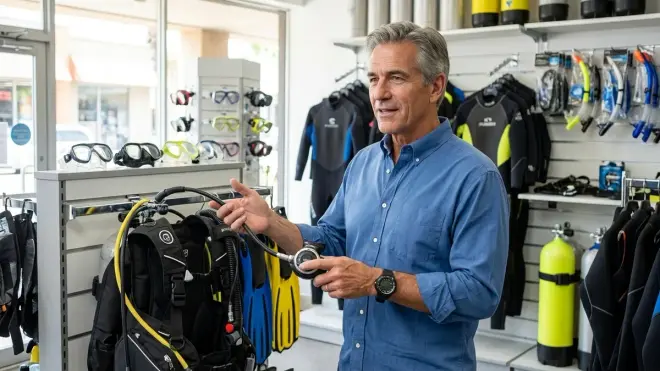
Avoiding overspending on your first scuba equipment comes down to patience, honesty about your diving commitment, and systematic purchasing based on actual need rather than sales pressure. Start with personal contact gear that affects every dive, rent life support equipment until you've established your diving profile, and buy regulators and BCDs based on service infrastructure rather than brand prestige. Calculate real break-even points before any purchase, resist the temptation to buy aspirationally for diving you're not yet doing, and skip accessories until you've encountered the specific problems they solve.
I've been helping divers make these decisions for over forty years, and the pattern is always the same: divers who buy gradually, based on experience and demonstrated need, end up with better-matched equipment and more money left for actual diving. Divers who buy everything at once, early in their diving journey, usually end up replacing or selling equipment within two years. Learn what kind of diver you are first, then build your equipment set deliberately around that reality.
The goal isn't to avoid buying equipment—it's to buy the right equipment at the right time for the right reasons. That approach keeps you diving for decades instead of becoming another barely-used equipment set gathering dust in someone's garage.