
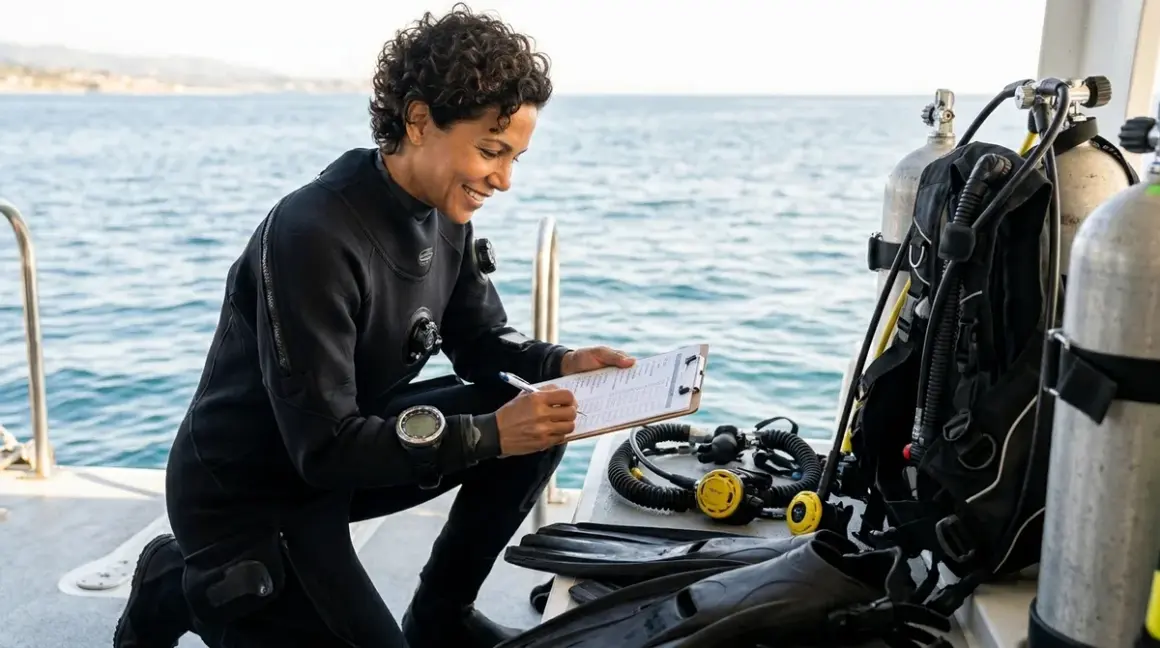

When I bought my first regulator, I was so excited to finally own my own breathing system that I didn't even think about whether it would actually fit my tank. Spoiler alert: the connection type was wrong, and I stood there at the dive shop looking completely lost. That embarrassing moment taught me that a scuba gear compatibility checklist isn't just helpful—it's essential. Whether you're buying your first full setup or adding pieces over time like I did, making sure everything works together saves you from stress, wasted money, and potentially unsafe situations. This checklist covers the major compatibility points every new diver should verify before hitting the water, written by someone who learned most of these lessons the hard way.
Regulator and Tank Valve Compatibility
Your regulator is useless if it can't actually connect to your tank. I learned this at a dive resort in Honduras when I borrowed a tank with a different valve type than what my regulator was designed for.
DIN vs Yoke connection type: Your first stage comes in either DIN (threaded screw-in) or yoke (clamp-style) configurations, and they're not interchangeable without an adapter. Most rental tanks in the Caribbean use yoke, but DIN is becoming more common for personal gear because it handles higher pressures better and creates a more secure seal.
Pressure rating match: If you have a DIN regulator, check whether it's rated for 200 bar or 300 bar—the valve on your tank needs to match. Using a 300-bar first stage on a 200-bar valve works fine, but you can't safely do the reverse.
Port configuration on the first stage: Count how many low-pressure and high-pressure ports your first stage has, and make sure you have enough for everything you want to connect—primary second stage, octopus, BCD inflator hose, and pressure gauge at minimum. I didn't think about this when I added a dive computer with air integration later and realized I was one port short.
Hose length for your body size and setup: Standard hoses are usually around 32 inches for the primary second stage, but taller divers or those planning to add a camera rig might need longer hoses. Too short and you'll feel restricted; too long and you're dealing with excess hose flopping around.
O-ring sizes: Most modern regulators use standard O-ring sizes, but older or specialty equipment might need specific dimensions. Keep a small O-ring kit that matches your regulator's specifications—your manual should list these sizes.
Cold water environmental sealing: If you're diving in water below 50°F (10°C), your regulator needs to be environmentally sealed or you risk free-flows. Tropical-only regulators don't have this feature, and trying to use them in cold water is asking for trouble.
Understanding the pre-dive regulator safety checklist helps ensure these connections are secure before every dive, not just when you first buy your gear.
BCD and Weight System Integration
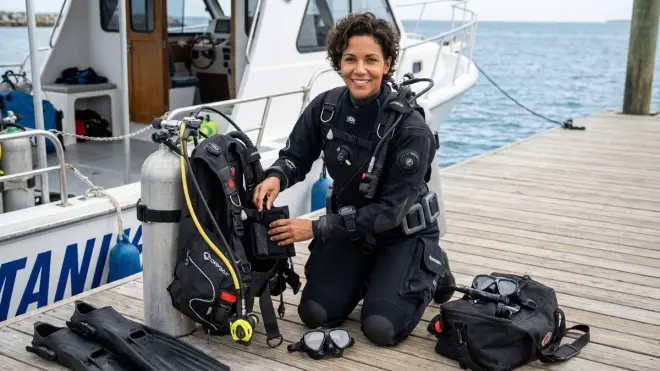
Your BCD is the hub that connects you to your tank and your weights, so compatibility here affects your entire dive experience and your safety.
Tank band size and cylinder diameter: BCDs come with specific tank band sizes—usually designed to fit standard aluminum 80s (around 7.25 inches diameter) or steel tanks (often slightly narrower). If you switch between tank types frequently, make sure your BCD's cam band can accommodate both or consider getting adjustable bands.
Integrated weight pocket capacity vs your actual weight needs: I made the mistake of buying a travel BCD with integrated pockets that maxed out at 12 pounds total, then realized I needed 16 pounds in my 3mm wetsuit. Check the manufacturer's weight capacity and be honest about how much lead you actually need—it varies wildly based on your wetsuit thickness and body composition.
Quick-release weight system accessibility: Some BCDs have pull-handle releases, others use buckle systems or Velcro pouches. Whatever style yours has, you need to be able to reach and operate it easily while wearing it. I've seen divers struggle with releases positioned too far back on their hips.
Inflator hose connection type: Most BCDs use standard low-pressure inflator connections, but double-check this matches your regulator's LP port. The corrugated hose should reach comfortably to your left shoulder area without pulling tight or having excessive slack that creates drag.
D-ring placement for your accessories: If you're planning to add a camera, dive light, surface marker buoy, or other gear, make sure your BCD has D-rings positioned where you need them. I added underwater strobes before realizing my BCD only had chest D-rings and nothing convenient on my hips where I wanted to clip accessories.
Wetsuit thickness compatibility with lift capacity: Your BCD's lift capacity (measured in pounds or liters) needs to offset not just your weight system but also the positive buoyancy of your wetsuit. A thick 7mm wetsuit in cold water requires way more lift than a 3mm shorty in the tropics—usually an extra 14-18 pounds of lift for every 5mm increase in thickness.
Exposure Suit and Weighting Considerations
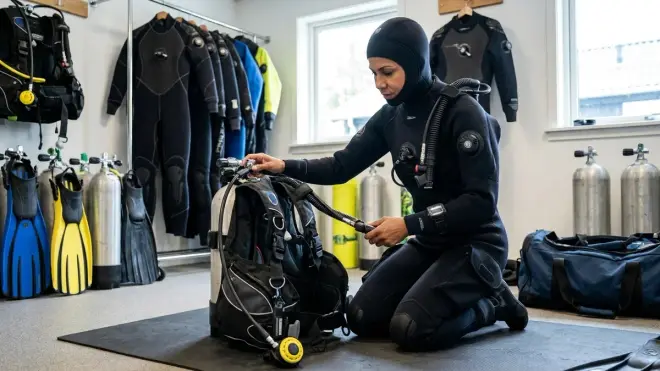
Your wetsuit or drysuit dramatically affects how much weight you need and how your other gear performs, but this is something many new divers underestimate.
Neoprene thickness vs buoyancy shift at depth: Thicker wetsuits compress more as you descend, which changes your buoyancy throughout the dive. A 5mm full suit might provide 12-15 pounds of positive buoyancy at the surface but compress to provide only 6-8 pounds at 60 feet. Your weight system needs to compensate for this range, which is why you might feel perfectly weighted at depth but struggle to stay down during your safety stop.
Suit type compatibility with your BCD's weight capacity: If you switch from a 3mm to a 7mm wetsuit or move to a drysuit, you might need to add 10-20 pounds of additional weight. Make sure your BCD's integrated pockets or your weight belt can actually handle this increase before you buy a thicker suit.
Hood and glove buoyancy addition: When I added a 5mm hood and 3mm gloves for diving in slightly cooler water, I was surprised to find I needed an extra 2-3 pounds of weight. Neoprene accessories add up, and forgetting to account for them means you'll be fighting to stay down.
Ankle weights for drysuit feet or thick boots: If you're using a drysuit with built-in boots or wearing chunky wetsuit boots, air can migrate to your feet and make you feel like you're standing on balloons. Ankle weights (usually 1-2 pounds per ankle) help counteract this, but they need to fit over or under your boots depending on the design.
Proper fit to minimize water flushing: A wetsuit that's too loose lets water circulate constantly, which not only makes you cold but also affects buoyancy as water flushes in and out. The suit should fit snugly without restricting movement—if you're between sizes, go smaller rather than larger for better thermal protection and more predictable buoyancy.
Mask, Fins, and Accessory Fit
These pieces might seem straightforward, but incompatibility here ranges from annoying to genuinely dangerous underwater.
Mask strap interference with hood or regulator: Some masks have wide straps that sit exactly where your hood's neck seal needs to be, creating gaps that let water seep in. Others have buckles that press uncomfortably against your head when you turn it to look at your buddy. Try your mask on while wearing your hood and with your regulator in your mouth—everything should sit comfortably together.
Fin foot pocket size for your boots: If you're using full-foot fins, they obviously won't fit over wetsuit boots. Adjustable strap fins need to accommodate your boot's thickness—I've seen rental booties that were so chunky they wouldn't fit in a diver's personal fins. The scuba fin sizing and fit checklist breaks this down in more detail if you're shopping for new fins.
Computer mounting position with your wetsuit sleeve: Wrist-mounted dive computers sit over your wetsuit, so you need to make sure your suit's cuff isn't so tight that it restricts blood flow when you add a computer on top. Similarly, if you wear a thick jacket-style wetsuit with elastic wrist seals, some larger computers won't fit comfortably over them at all.
Snorkel keeper compatibility with mask strap: Not every snorkel attachment works with every mask strap design. Some masks have thin silicone straps that don't play well with rigid plastic snorkel keepers. This seems minor until your snorkel pops loose on the surface in choppy water and you're swimming after it.
Glove fit over computer watch or compass: If you're wearing a dive computer or compass on your wrist and then trying to pull thick gloves over them, you might find it impossible or so tight it's uncomfortable. I eventually switched to pulling my glove cuff over my computer band, but it took some trial and error to figure out what worked.
Prescription lens inserts with mask volume: If you need vision correction underwater, not all low-volume masks work with prescription lens inserts—they're designed for a specific internal geometry. The best low volume scuba masks discusses which models accommodate prescription options if you need them.
Dive Computer and Gauge Compatibility
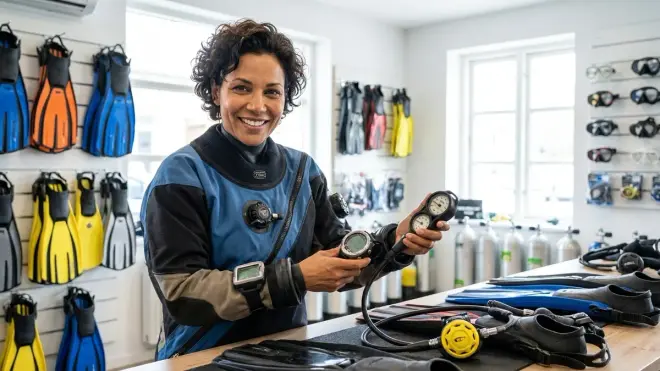
Your monitoring equipment needs to work with your regulator setup and provide information in a format you can actually use underwater.
Air-integrated computer compatibility with your first stage: If you want a wireless air-integrated computer, the transmitter needs to screw into one of your first stage's high-pressure ports. Check the thread type (most are 7/16-20 UNF standard, but confirm) and make sure the transmitter brand is compatible with your computer brand—not all systems talk to each other.
SPG hose length and routing: Your pressure gauge hose should be long enough to clip off comfortably to a chest D-ring or let you check it without contorting, but not so long it dangles and drags on the reef. Standard lengths are 24-28 inches—I use a 26-inch hose that works perfectly for my setup but might be too short for taller divers.
Console configuration with BCD clips: If you're using a console that combines your SPG, depth gauge, and compass, make sure it's not so bulky it bangs against your hip or catches on things. I've seen consoles that were too heavy for the retractor clip divers tried to use, which meant they ended up dragging it across the bottom.
Battery replacement intervals vs service schedules: Some dive computers have user-replaceable batteries (usually CR2032 or similar), while others require factory service to change the battery. If you're diving somewhere remote or frequently, you want a computer you can service yourself. Check the battery life rating too—they range from 200 hours to several years depending on features and backlight use.
Display readability with aging vision: This is something I didn't think about as a younger diver, but if you're over 40 or have any vision limitations, some computer screens are much easier to read than others. Larger digits, high contrast displays, and adjustable backlighting make a huge difference when you're trying to check your no-deco limit at 80 feet.
If you're looking at more advanced features, understanding how to choose a biometric dive computer can help you decide which monitoring capabilities match your diving style.
Final Check Before You Go
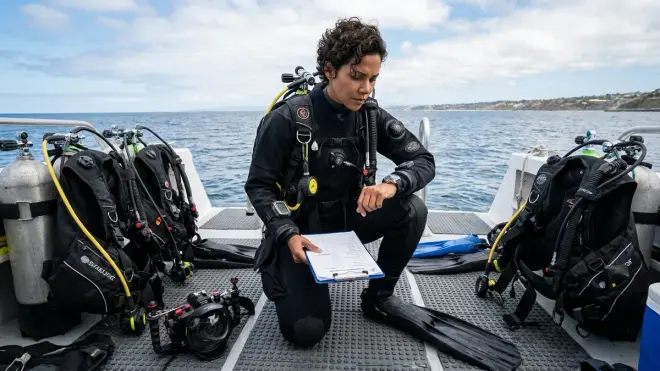
Here's your condensed scuba gear compatibility checklist to run through before your dive trip:
Connection Verification
- Regulator first stage physically connects to your tank valve (DIN or yoke match)
- All hoses reach comfortably without pulling tight or excessive slack
- BCD inflator hose clicks securely onto your BCD
Weight and Buoyancy Balance
- Total weight system matches your exposure suit's buoyancy at depth
- BCD lift capacity offsets your wetsuit and weight combined
- Weight pockets or belt can accommodate your actual needs
Physical Fit Check
- Fins accommodate your boots if using open-heel style
- Mask sits comfortably with hood and regulator in place
- Computer fits over or under wetsuit cuff without cutting circulation
Monitoring and Safety
- Dive computer battery is fresh (check within last month)
- SPG or transmitter connects to regulator's high-pressure port
- All gauges are readable and functioning during pre-dive check
Accessory Integration
- Sufficient D-rings for your planned gear configuration
- Clips and retractors work with your BCD's attachment points
- Camera or light systems don't interfere with buoyancy or streamlining
I keep a printed version of this checklist in my gear bag because even after dozens of dives, it's easy to forget something when you're excited about getting in the water.
Frequently Asked Questions
Do I need to buy all my scuba gear from the same manufacturer to ensure compatibility? No, you definitely don't need to buy everything from one brand—in fact, most divers mix and match based on what works best for them in each category. The scuba industry uses standardized connections for critical interfaces like regulator hoses (low-pressure and high-pressure ports follow universal threading standards), BCD inflator hoses, and tank valves, so equipment from different manufacturers will work together. That said, some proprietary systems like wireless air integration may require matching brands between your computer and transmitter, so check compatibility for those specific features.
How do I know if my regulator will work in cold water if I bought it for tropical diving? Most regulators designed for warm water aren't environmentally sealed, which means the first stage's internal components are exposed to water and can freeze in temperatures below around 50°F (10°C), causing dangerous free-flows. Check your regulator's manual or the manufacturer's website for its temperature rating—it should explicitly state whether it's designed for cold water use. If you want to dive cold water with a warm-water regulator, you'd need to have it converted to an environmentally sealed version if the manufacturer offers that option, though it's often more cost-effective to simply purchase a cold-water rated regulator from the start.
Can I use my dive computer with any rental gear, or are there compatibility issues to watch for? Your dive computer will work with any rental gear setup as long as it's either a standalone wrist unit or a gauge-style computer—these don't physically connect to anything except your wrist or console. The only compatibility issue arises if you have a wireless air-integrated computer and want to use its tank pressure monitoring feature, because you'd need to attach your personal transmitter to the rental regulator's high-pressure port, and not all dive operators are comfortable with customers installing their own equipment on rental regulators (some prohibit it entirely due to liability concerns). For basic dive tracking and safety monitoring, any modern computer works independently of your other gear.
Final Thoughts
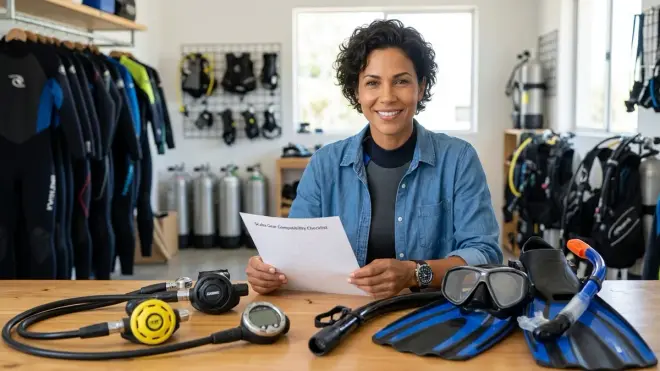
Building a scuba gear collection that actually works together doesn't happen overnight, and honestly, I'm still figuring some of this out as I add new pieces. The important thing is checking compatibility before you make purchases rather than discovering problems when you're about to dive.
I now keep notes on my phone about the specs that matter—my regulator's port configuration, my BCD's weight capacity, my wetsuit's buoyancy at different depths—so when I'm researching new gear, I can verify compatibility on the spot. It sounds a bit nerdy, but it's saved me from at least three impulse purchases that wouldn't have worked with my existing setup.
Your scuba gear compatibility checklist will evolve as you gain experience and figure out what kinds of diving you love most. The basics I've covered here will get you started safely, and you'll naturally learn the nuances as you log more dives. Just remember: if something doesn't feel right or doesn't fit properly, trust your instinct and double-check before you get in the water. Your dive buddies and your future self will thank you.